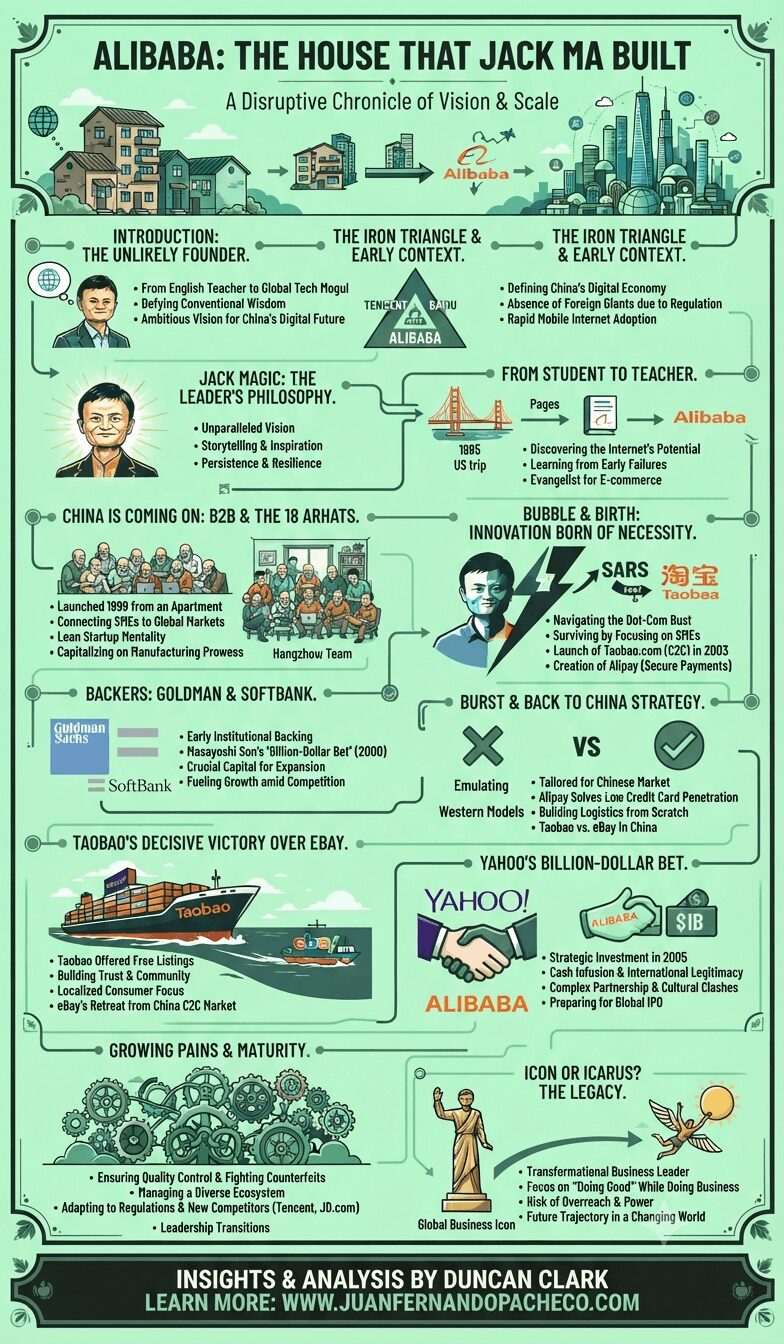
A vertical infographic titled "Alibaba: The House That Jack Ma Built," set against a light mint-green background with illustrations and text detailing the company's history, from Jack Ma's early life as a teacher to its global e-commerce dominance, including sections on Taobao, Alipay, the "Iron Triangle," and key investors like SoftBank and Yahoo, ending with a reflection on Ma's legacy.

In “Alibaba: The House That Jack Ma Built,” Duncan Clark delivers a compelling and meticulously researched narrative that goes beyond a mere corporate history. It is a story about vision, resilience, leadership, and the unique alchemy that allowed an audacious entrepreneur from a developing nation to build a global empire that redefined commerce and technology.

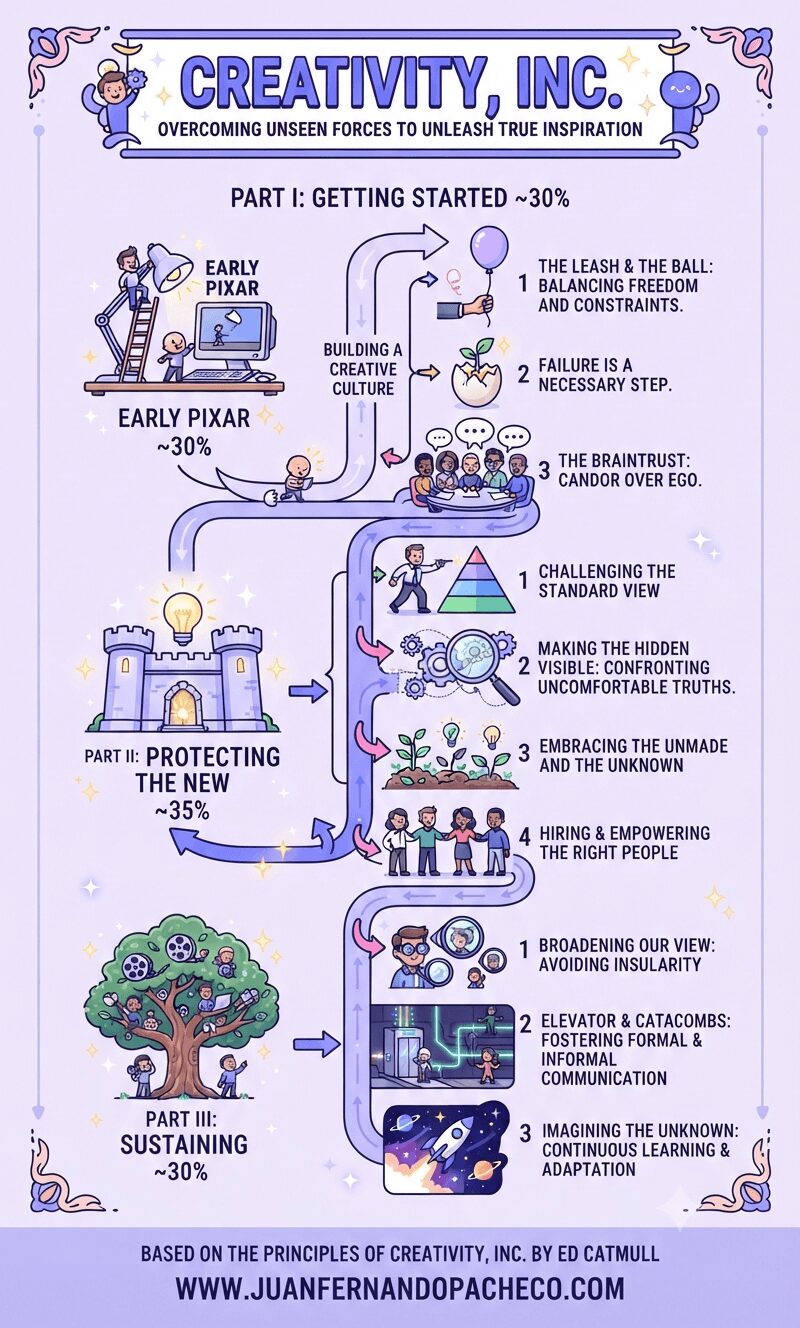
A vertical infographic titled "CREATIVITY, INC." summarizing principles for fostering a creative culture. It is organized into three parts following an upward-spiraling path: "Part I: Getting Started (~30%)" with icons for Early Pixar, The Leash & The Ball, Failure, and The Braintrust; "Part II: Protecting The New (~35%)" with icons for Challenging the Standard View, Making the Hidden Visible, Embracing the Unknown, and Hiring the Right People; and "Part III: Sustaining (~30%)" with icons for Broadening View, Elevator & Catacombs, and Imagining the Unknown. The background is light lavender with decorative borders.

Creativity, Inc. is more than a business book; it’s a testament to the enduring power of human creativity and the leadership principles required to unleash it.

Ed Catmull, through his unique blend of technical expertise and empathetic leadership, provides a masterclass in building a culture where talent can flourish, ideas can be rigorously challenged yet nurtured, and true innovation can become a consistent output.
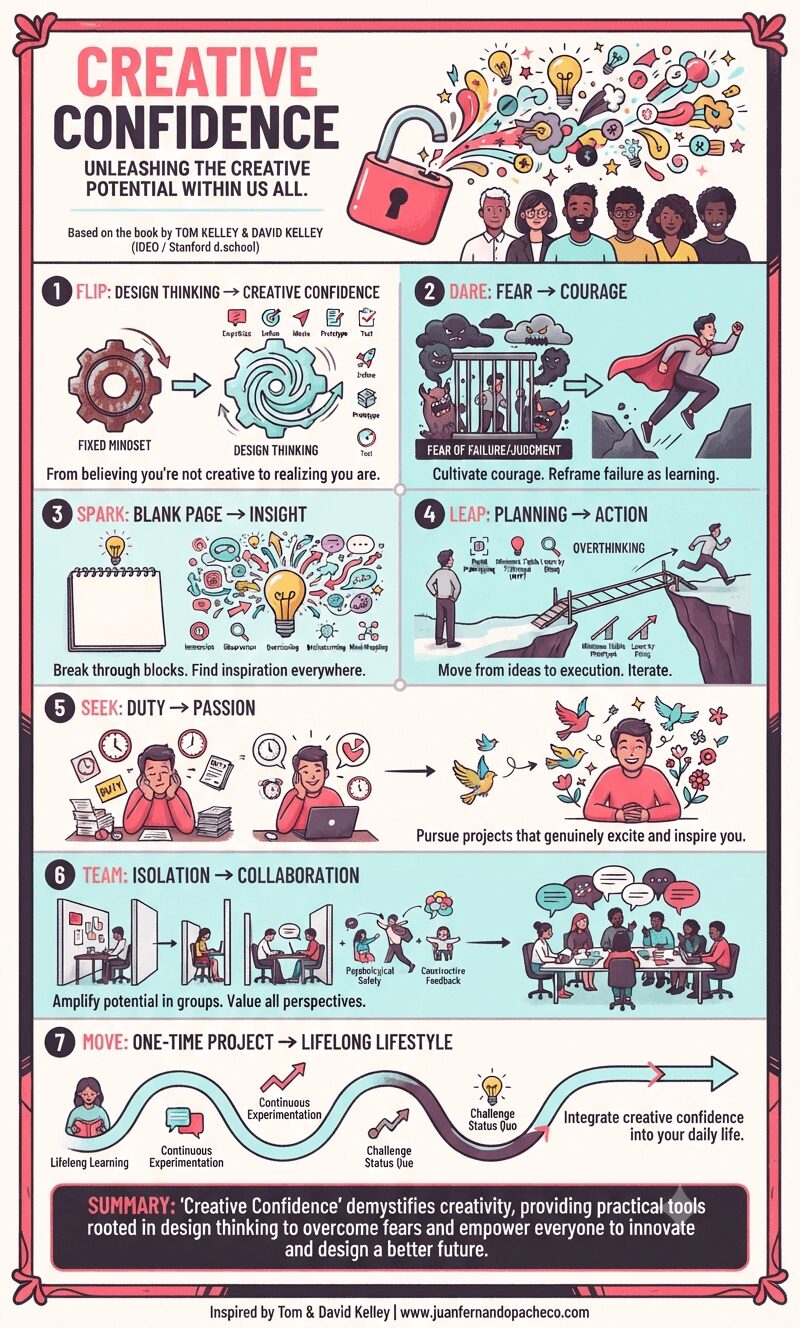
An infographic summarizing the book "Creative Confidence" by Tom and David Kelley. The image is structured in seven numbered steps, titled Flip, Dare, Spark, Leap, Seek, Team, and Move, illustrating processes from design thinking and overcoming fear to collaborative innovation and lifelong creative habits.

Creative Confidence is a profoundly inspiring and practical book that demystifies creativity and makes it accessible to everyone. Tom and David Kelley skillfully blend personal anecdotes, insightful observations, and concrete methodologies (rooted in design thinking) to illustrate how creative potential can be unlocked and harnessed.
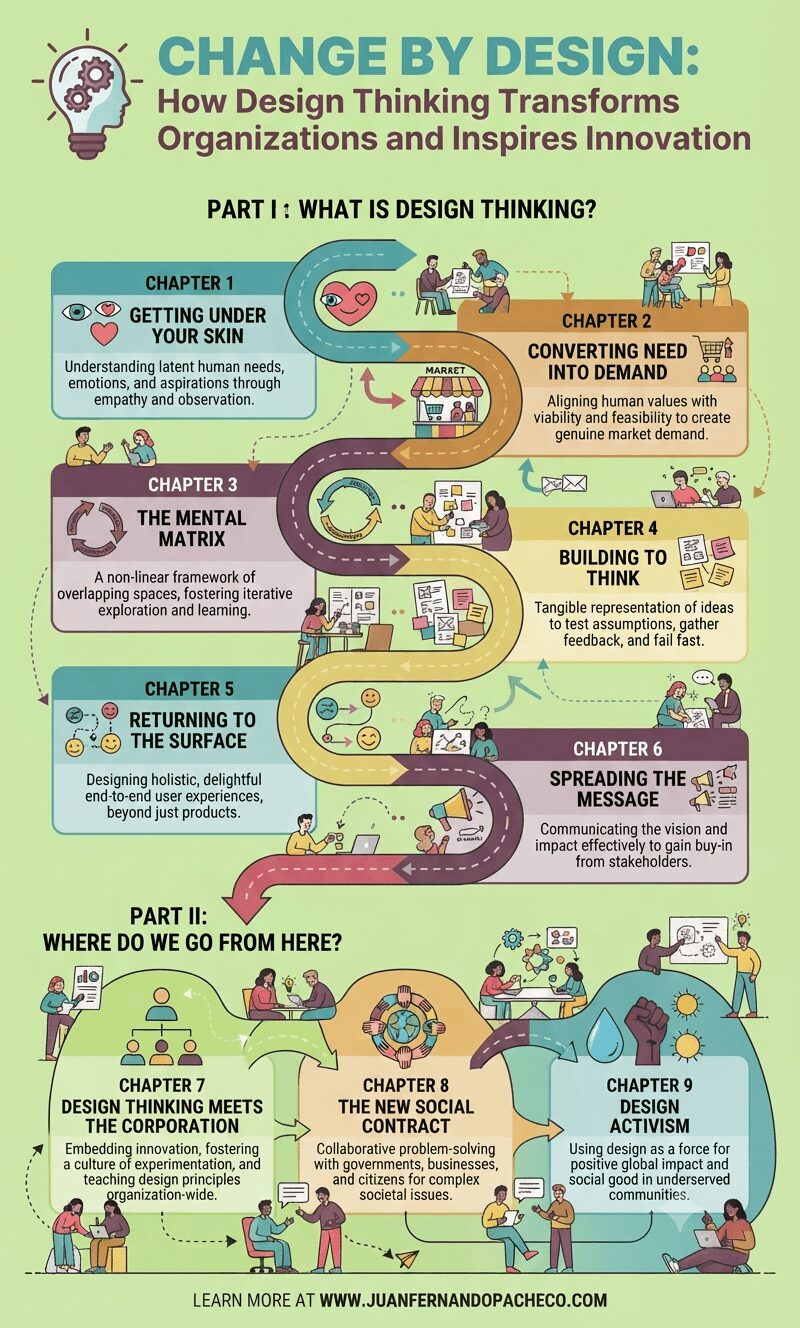
An infographic titled "CHANGE BY DESIGN: How Design Thinking Transforms Organizations and Inspires Innovation." The image is structured as a winding, colorful path with illustrated icons and text blocks representing the ten chapters and introduction of Tim Brown's book. The light green background (#c3e991) is overlaid with a vibrant palette of teals, maroons, oranges, and yellows, featuring small illustrations of diverse people collaborating, brainstorming, and prototyping.

In essence, “Change by Design” is a powerful testament to the transformative potential of design thinking. Tim Brown meticulously dismantles traditional notions of design, repositioning it as a versatile and potent tool for innovation that extends far beyond aesthetics.
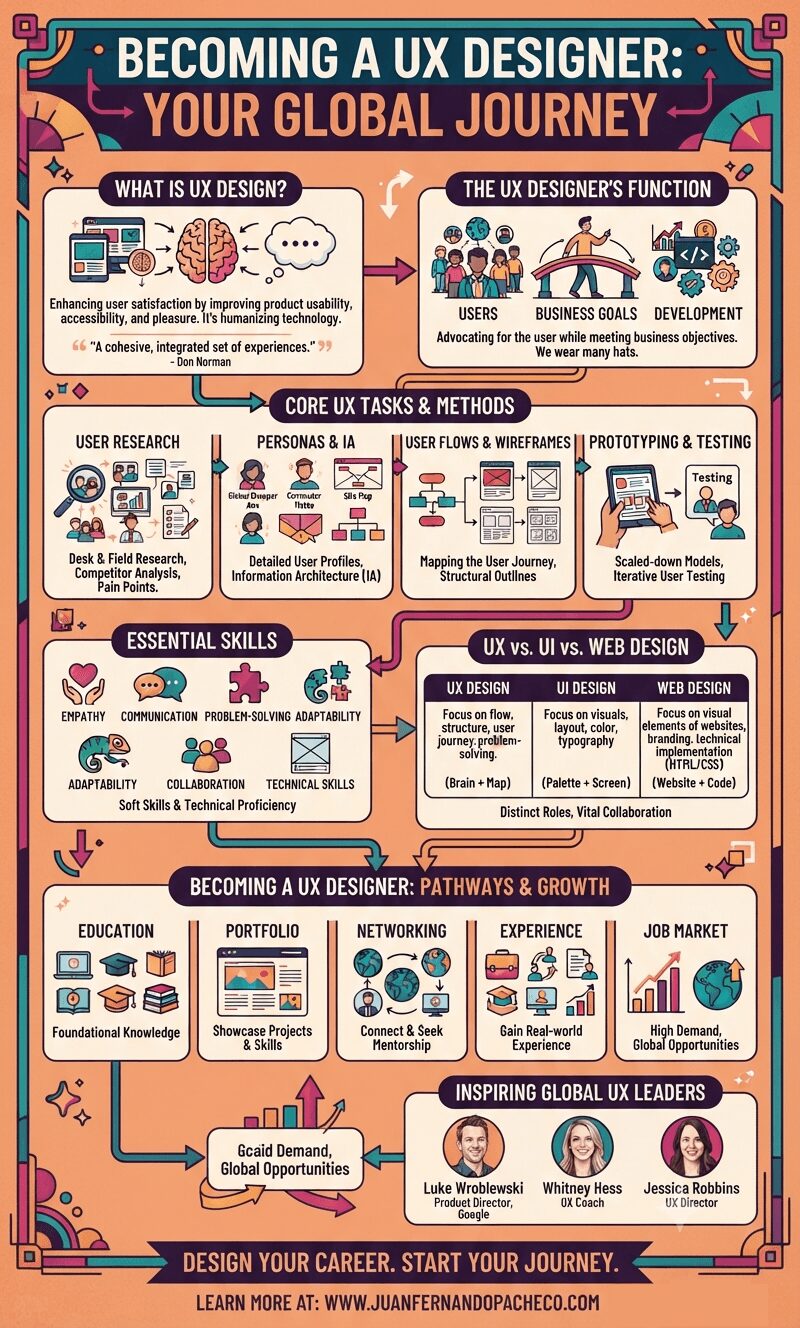
An intricate infographic titled "BECOMING A UX DESIGNER: YOUR GLOBAL JOURNEY" with a peach background. It outlines key UX concepts including definitions, the designer's function as a bridge between users and business, core methodologies (research, personas, flows, prototyping, testing), essential skills, comparisons to UI and web design, career paths (education, portfolio, networking), and features three inspiring leaders. Arrows connect the sections, and a footer directs to www.juanfernandopacheco.com.

Becoming a UX Designer: Learn User Experience Design by William N. Aldrich serves as a foundational guide for anyone looking to enter or better understand the field of User Experience (UX) design. The book aims to demystify UX design, clarifying its purpose, the responsibilities of a UX designer, and the essential skills required to succeed in this dynamic profession.
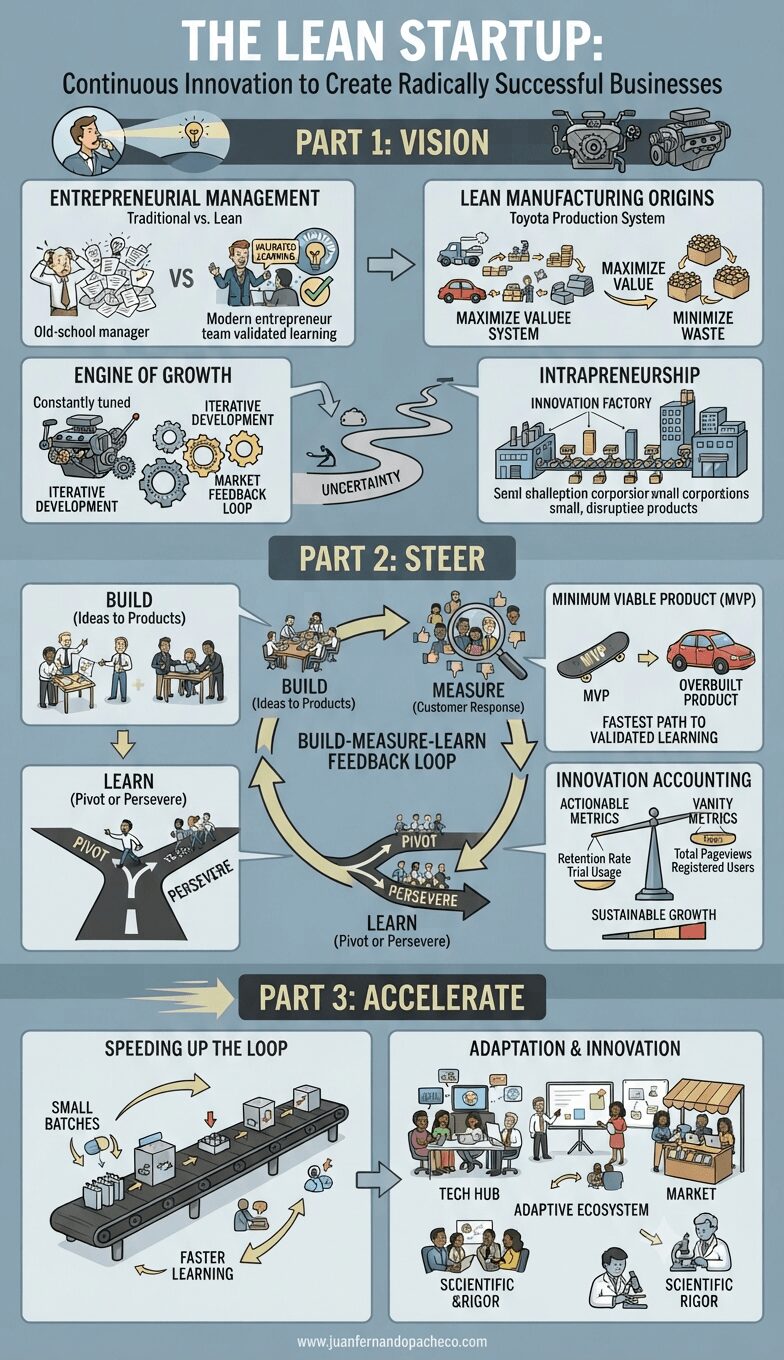
A comprehensive infographic illustrating Eric Ries's "The Lean Startup" methodology, divided into three sections: Vision, Steer, and Accelerate. The graphic features illustrations of business concepts like the Build-Measure-Learn loop, MVPs, pivoting, and intrapreneurship, using a color palette of blues, beiges, and warm oranges on a muted background.

“The Lean Startup” offers a comprehensive framework for entrepreneurs and innovators to navigate the uncertainties of creating new ventures. By advocating for validated learning, iterative development, and a scientific approach to experimentation, Ries provides a pathway to build sustainable businesses and drive continuous innovation.
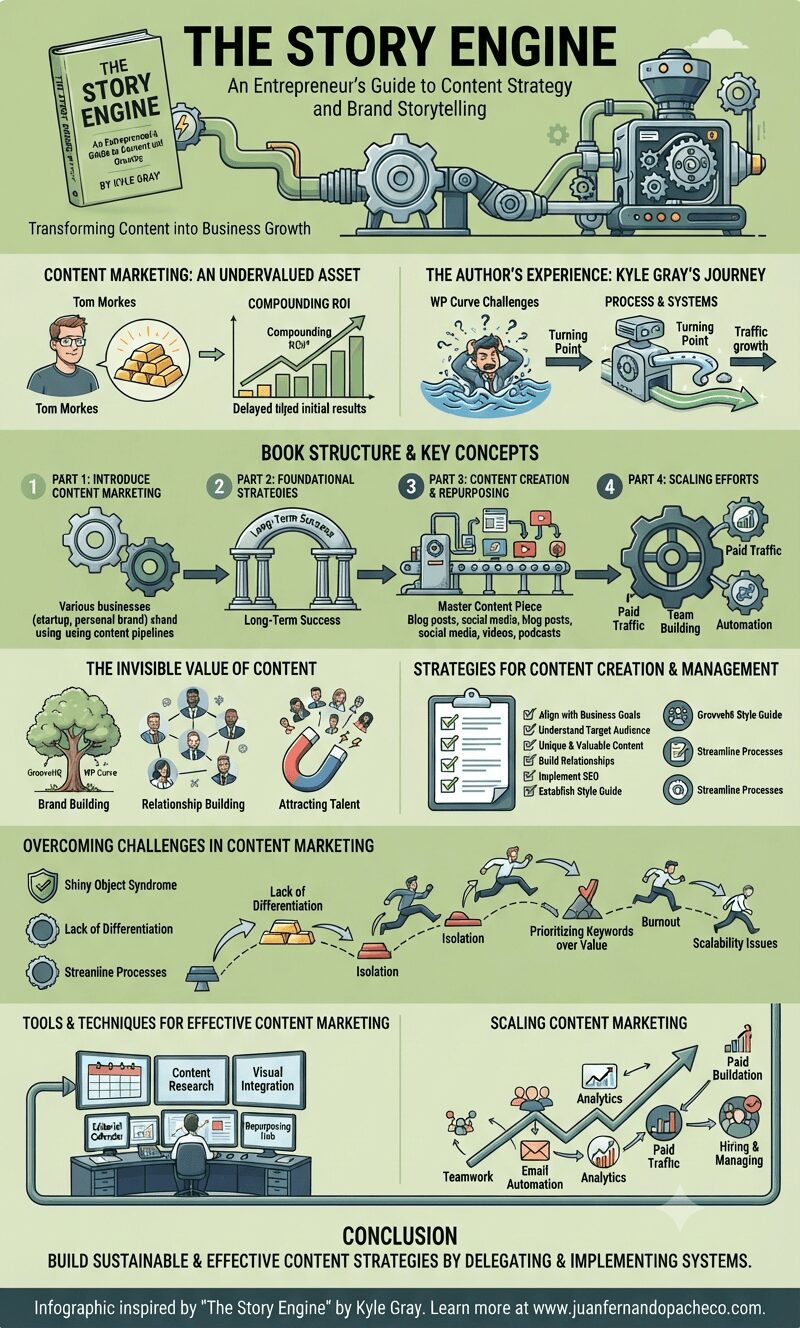
A comprehensive infographic illustrating the concepts of "The Story Engine" by Kyle Gray. It uses a visual metaphor of a machine and gears to show the journey from content challenges to a scalable marketing system, covering strategy, creation, invisible value, and overcoming common pitfalls.

“The Story Engine” provides a comprehensive guide to content marketing, focusing on strategy, efficiency, and scalability. It combines practical advice with insights on the broader value of content marketing, aiming to help entrepreneurs build sustainable and effective content strategies.
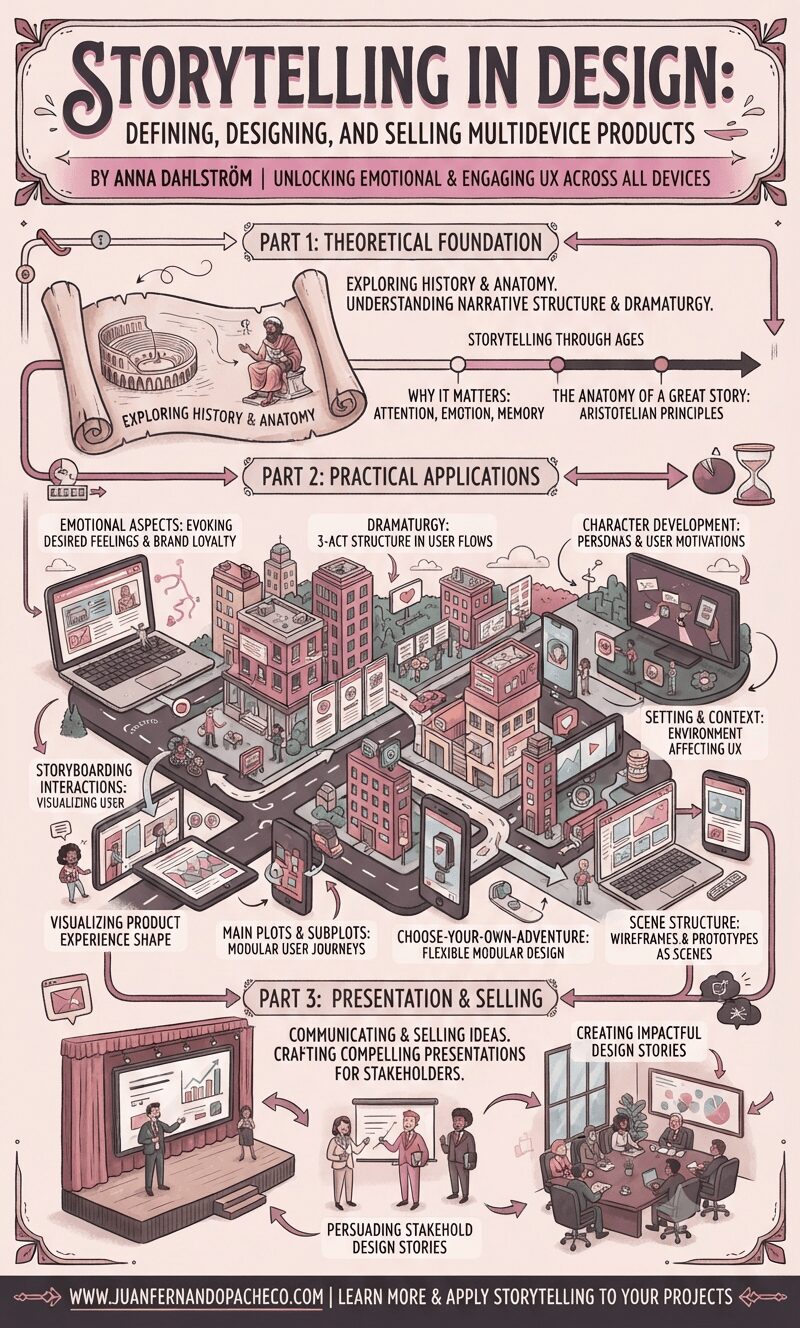
A detailed infographic titled "Storytelling in Design," summarizing Anna Dahlström's book. It is divided into three parts: "Theoretical Foundation" (history, Aristotelian principles), "Practical Applications" (using a 3D city map of devices to show UX, dramaturgy, and storyboarding), and "Presentation & Selling" (communicating ideas to stakeholders). The illustration uses a vintage, hand-drawn style with a dusty rose and grey color palette.

Throughout the book, Dahlström provides practical exercises and examples to help readers apply storytelling principles to their design projects.

She emphasizes that storytelling is not just about creating entertaining narratives but also about designing effective and user-centered experiences.

By drawing on the power of storytelling in design, designers can create products that are not only functional but also engaging, meaningful, and memorable.
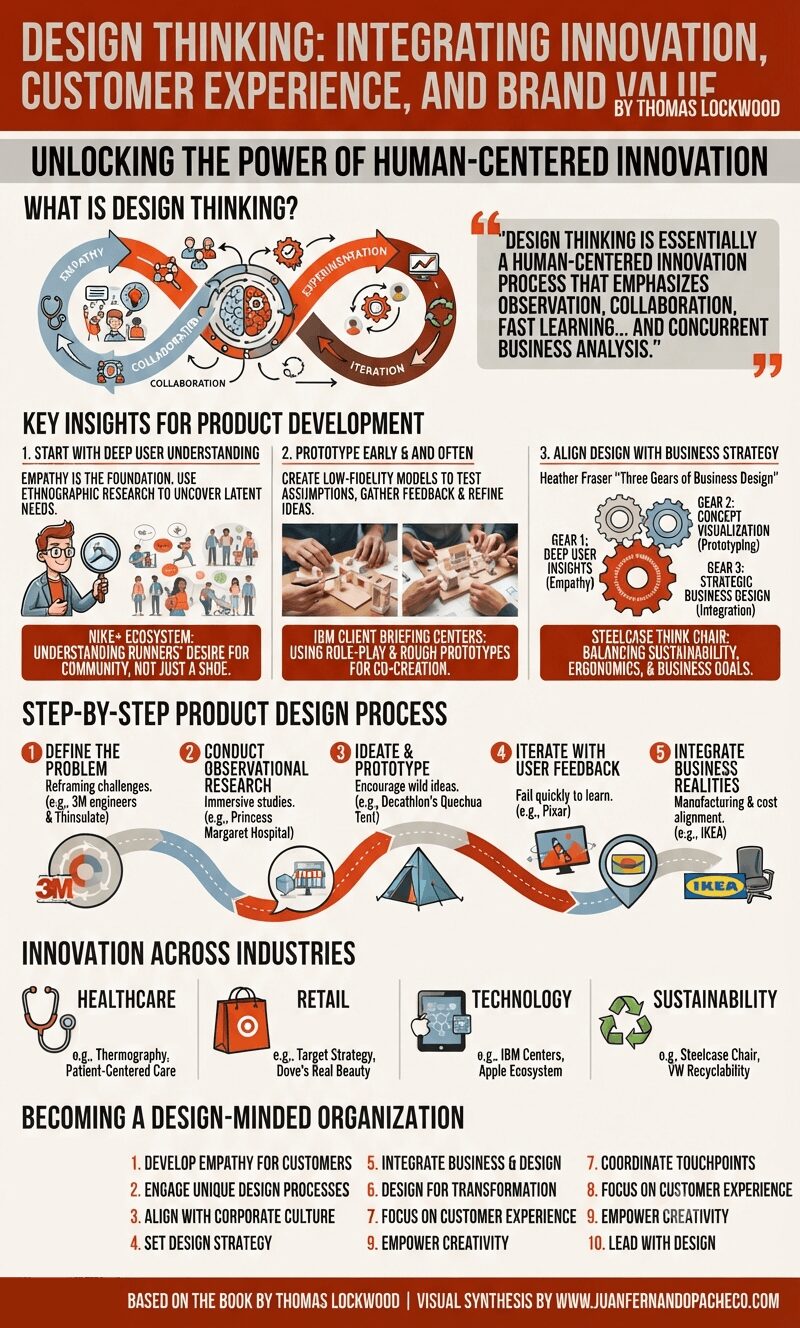
An infographic titled "Design Thinking: Integrating Innovation, Customer Experience, and Brand Value by Thomas Lockwood" set against a light off-white background. The image is a comprehensive visual guide, structured in sections with bold text and diagrams in a palette of red, orange, grey, and blue. It covers "What is Design Thinking?" with a cyclical process diagram and a quote from Lockwood; "Key Insights for Product Development" with examples from Nike, IBM, and Steelcase; a "Step-by-Step Product Design Process" timeline; "Innovation Across Industries" (Healthcare, Retail, Technology, Sustainability); and "Becoming a Design-Minded Organization" listing ten principles. The bottom footer references "www.juanfernandopacheco.com".

Design Thinking: Integrating Innovation, Customer Experience, and Brand Value is more than a manual—it’s a call to action. By blending human insight with business acumen, organizations can navigate complexity, foster loyalty, and drive growth. As Lockwood writes:

“The real value of design is in discovering and solving all manner of problems. It’s not about what design is—it’s about what design does.”

Whether you’re refining a product, reimagining a service, or transforming a business model, this book offers the tools and inspiration to lead with creativity. In a world where change is the only constant, design thinking isn’t just an advantage—it’s a necessity.