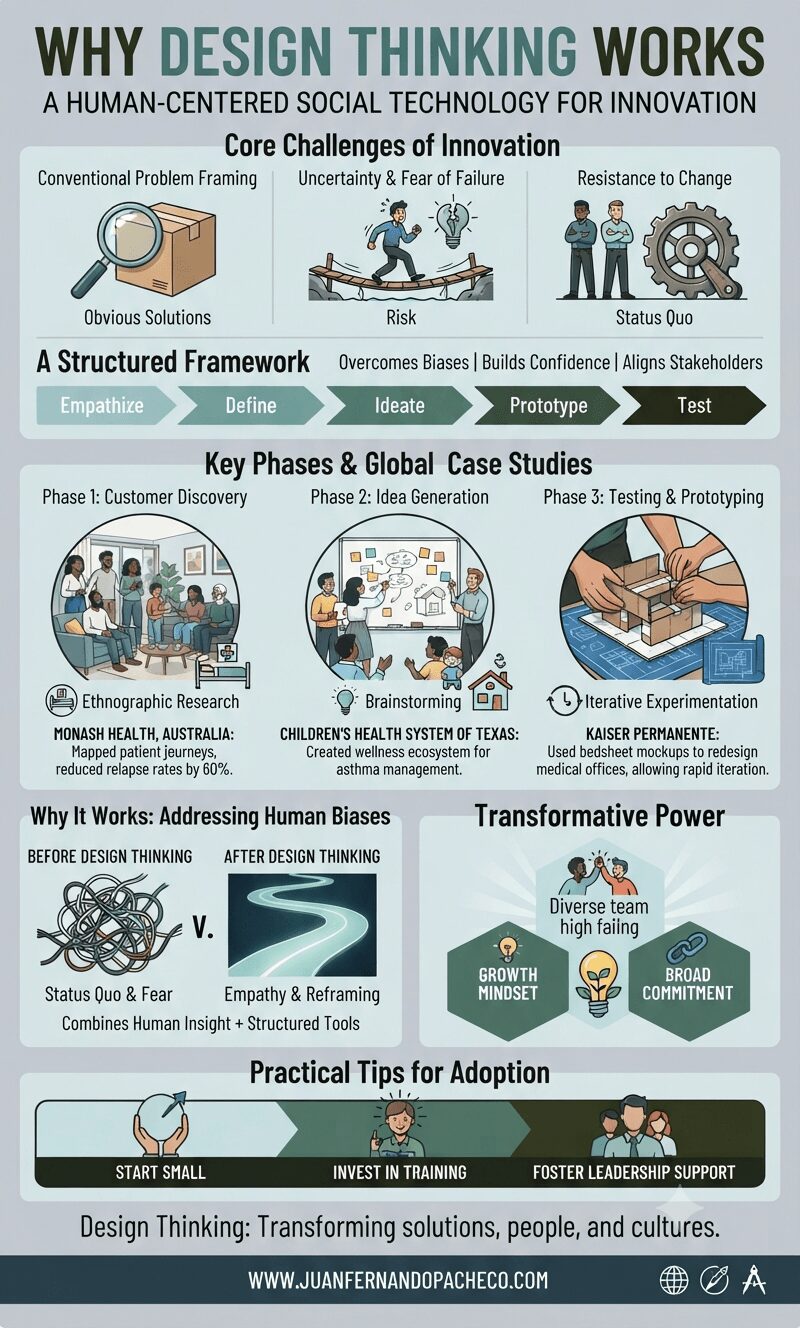
An infographic titled "Why Design Thinking Works" detailing the methodology's core principles, phases, and impact through text blocks and illustrations, including global case studies from Monash Health, Children's Health System of Texas, and Kaiser Permanente. The footer includes the URL WWW.JUANFERNANDOPACHECO.COM.

Design Thinking works because it combines the best of human insight with structured tools to drive innovation.

By addressing biases, fostering collaboration, and emphasizing empathy, it transforms not only the solutions organizations create but also the people and cultures behind them. As a social technology, its potential to reshape industries is unparalleled, making it a cornerstone of modern innovation strategies.
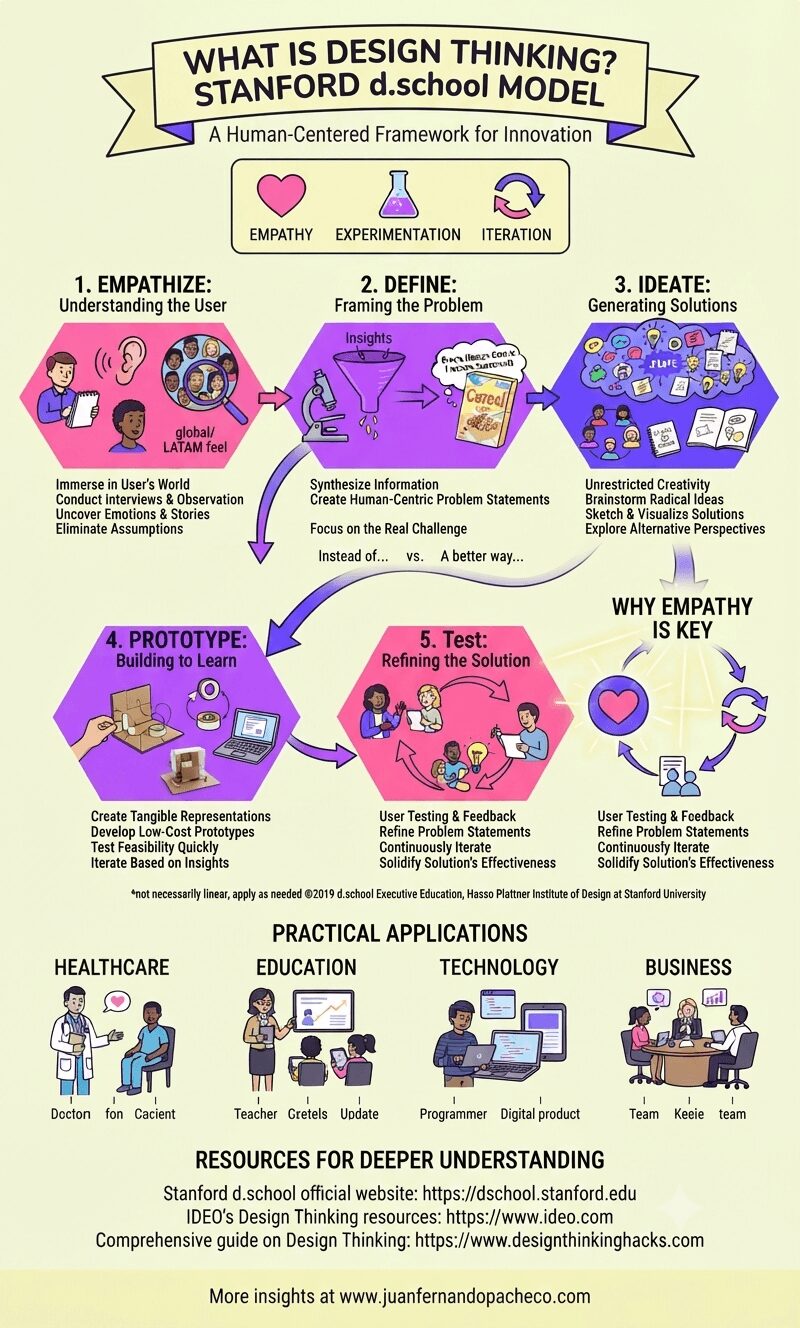
Infographic illustrating the five stages of the Stanford d.school Design Thinking model: Empathize, Define, Ideate, Prototype, and Test, presented as an interconnected, non-linear process with examples and applications for a global and LATAM context.

The Stanford d.school’s Design Thinking model is more than a methodology; it’s a mindset that fosters creativity, innovation, and human-centered problem-solving.

By emphasizing empathy, iteration, and flexibility, it equips teams to tackle complex challenges and deliver impactful solutions.

Whether you’re a seasoned designer or a newcomer to the field, embracing this model can transform how you approach problems, unlocking new possibilities for success.

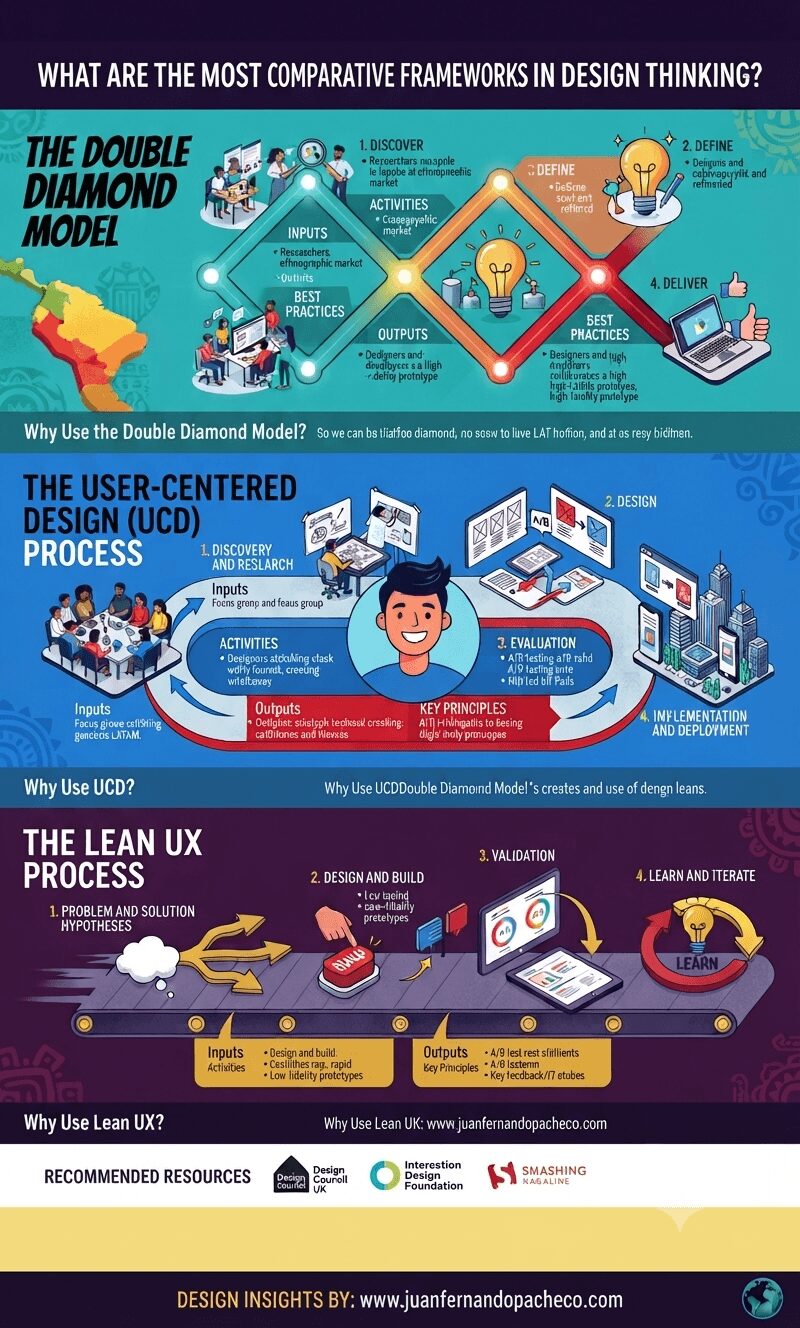
A comprehensive infographic comparing three design thinking frameworks: the Double Diamond Model, the User-Centered Design (UCD) Process, and the Lean UX Process. It details the stages, inputs, activities, outputs, and key principles for each, including illustrations of people, a map of Latin America, and a conveyor belt system for Lean UX.

Each of these frameworks—the Double Diamond model, UCD process, and Lean UX process—offers unique advantages. The Double Diamond excels in providing a structured approach to complex problems, UCD ensures user-centricity, and Lean UX fosters rapid experimentation and delivery. By understanding these methodologies, UX teams can choose the one that best aligns with their project goals and constraints.

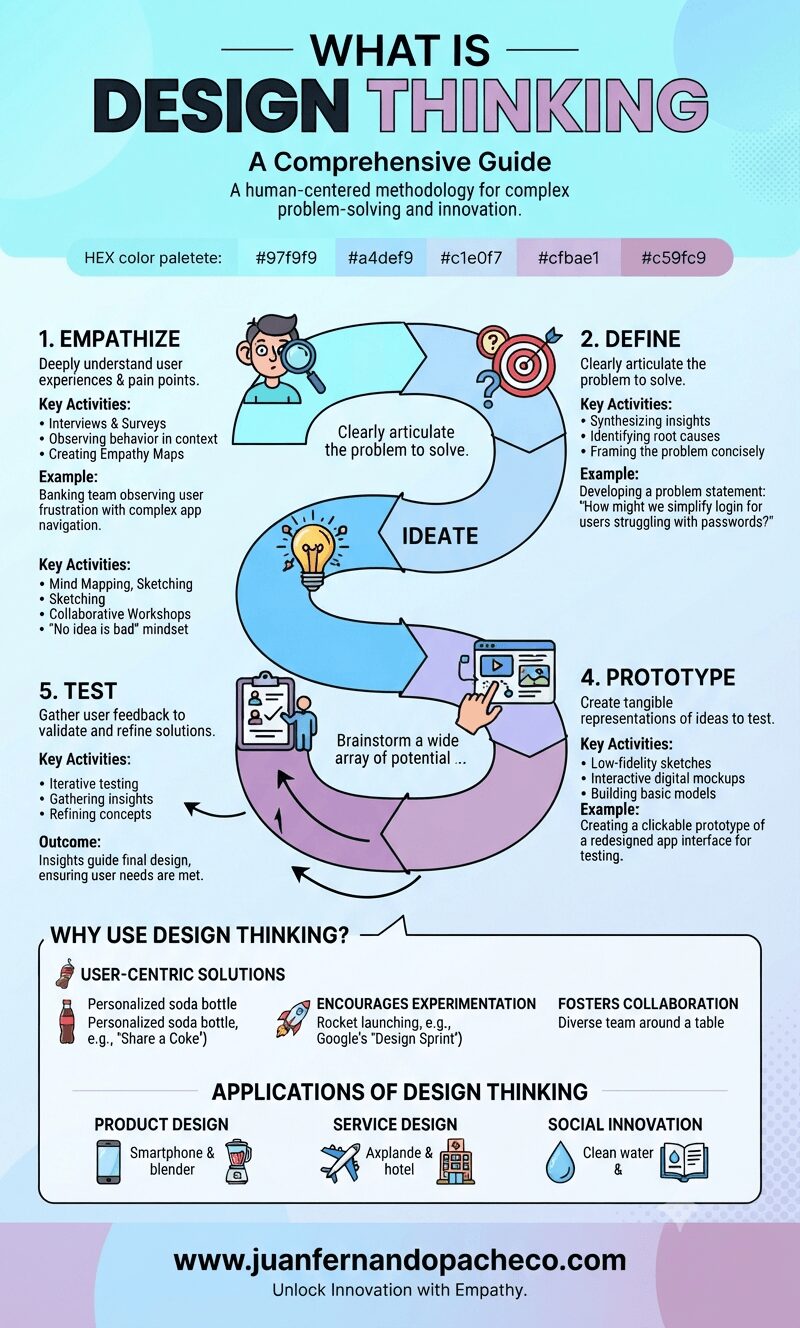
An infographic titled "WHAT IS DESIGN THINKING" on a light blue background, illustrating a five-stage process: Empathize, Define, Ideate, Prototype, and Test. Each stage has an icon, description, and key activities, highlighting its iterative nature for problem-solving. The infographic concludes with "WHY USE DESIGN THINKING?" and "APPLICATIONS," prominently featuring the URL www.juanfernandopacheco.com.

Design Thinking is not just a process but a mindset—a way of approaching problems with curiosity, empathy, and creativity. Focusing on end-user needs and fostering collaboration, the framework enables teams to create solutions that are impactful, user-friendly, and sustainable. Whether you’re a designer, developer, marketer, or business leader, adopting this approach can drive meaningful innovation and success.