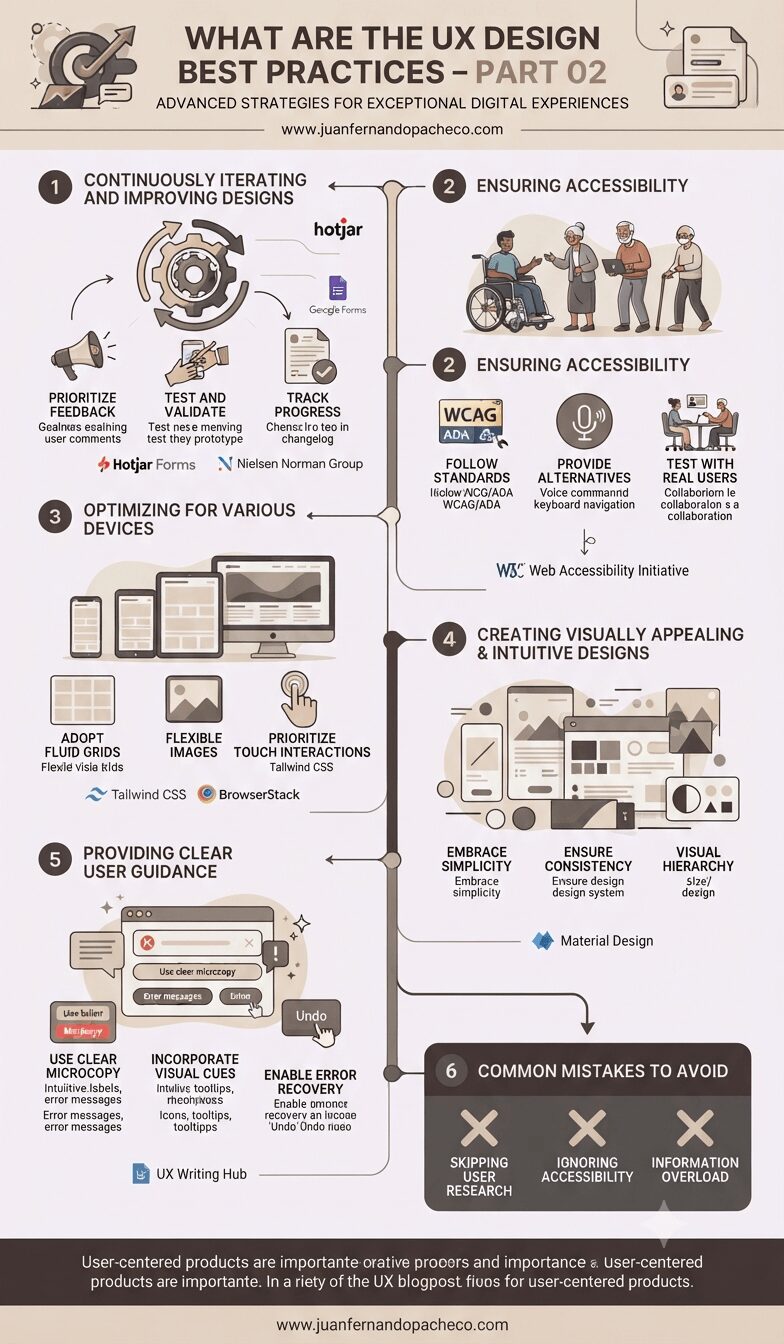
An infographic titled "WHAT ARE THE UX DESIGN BEST PRACTICES – PART 02" from www.juanfernandopacheco.com, presented in a vertical timeline format against a muted, professional background. It details six strategic steps: 1. Iterating based on feedback (with Hotjar and Nielsen Norman Group resources); 2. Ensuring accessibility (following WCAG/ADA standards and including a diverse group of users); 3. Optimizing for various devices (using fluid grids and tools like Tailwind CSS and BrowserStack); 4. Creating visually appealing designs (referencing Material Design and visual hierarchy); 5. Providing clear guidance (including microcopy and error recovery); and 6. Avoiding common mistakes (skipping research, ignoring accessibility, and information overload).

Adhering to UX design best practices ensures the creation of intuitive, inclusive, and visually compelling digital experiences. By embracing continuous iteration, prioritizing accessibility, optimizing for diverse devices, crafting intuitive designs, and providing clear guidance, designers can deliver products that delight users and drive engagement.
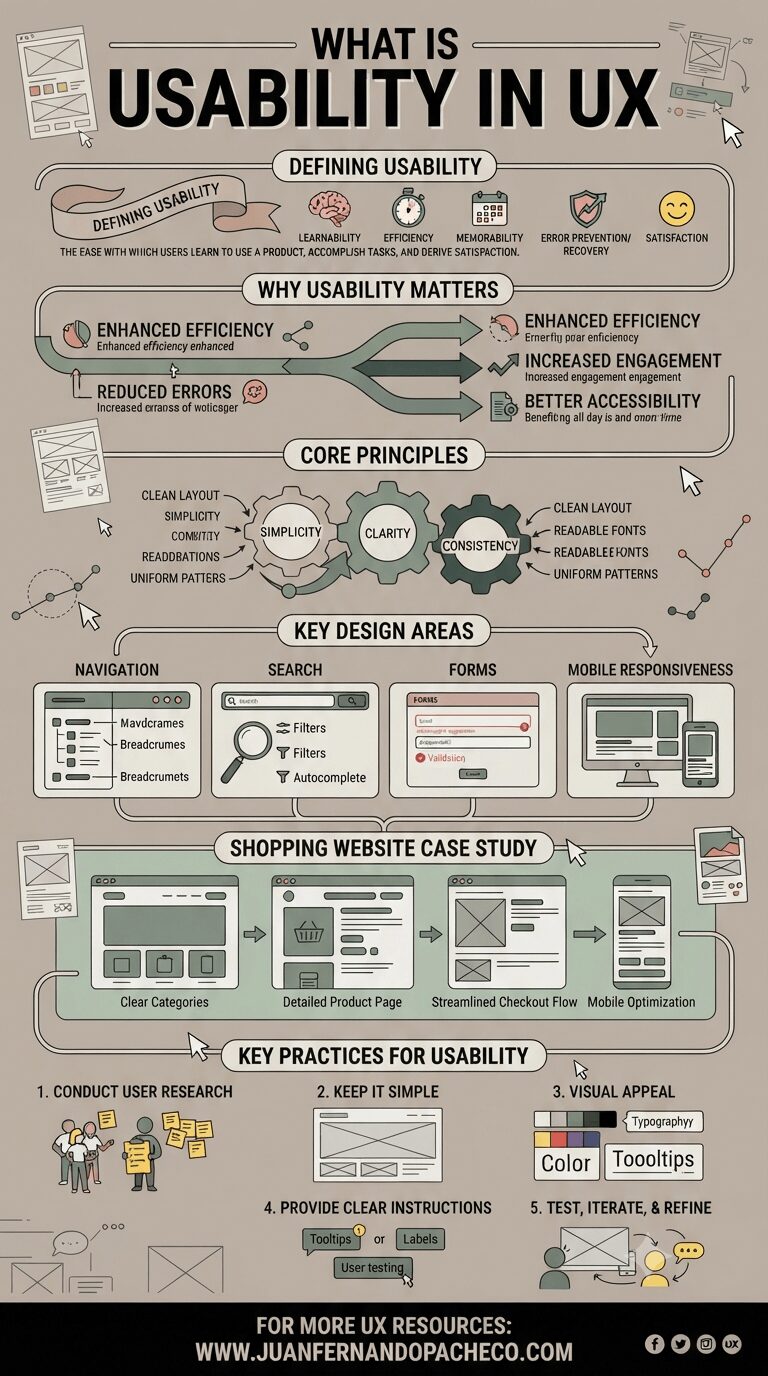
A detailed vertical infographic titled "WHAT IS USABILITY IN UX" illustrating the definition, importance, principles, key areas, and best practices of usability. It uses a muted color palette of beige, green, and dark gray against a light background, featuring icons, wireframes, and a shopping website case study.

Usability is the backbone of exceptional UX design, ensuring products are intuitive, efficient, and satisfying to use.

By focusing on simplicity, clarity, and consistency, and addressing critical areas like navigation, forms, and mobile responsiveness, designers can craft experiences that delight users.
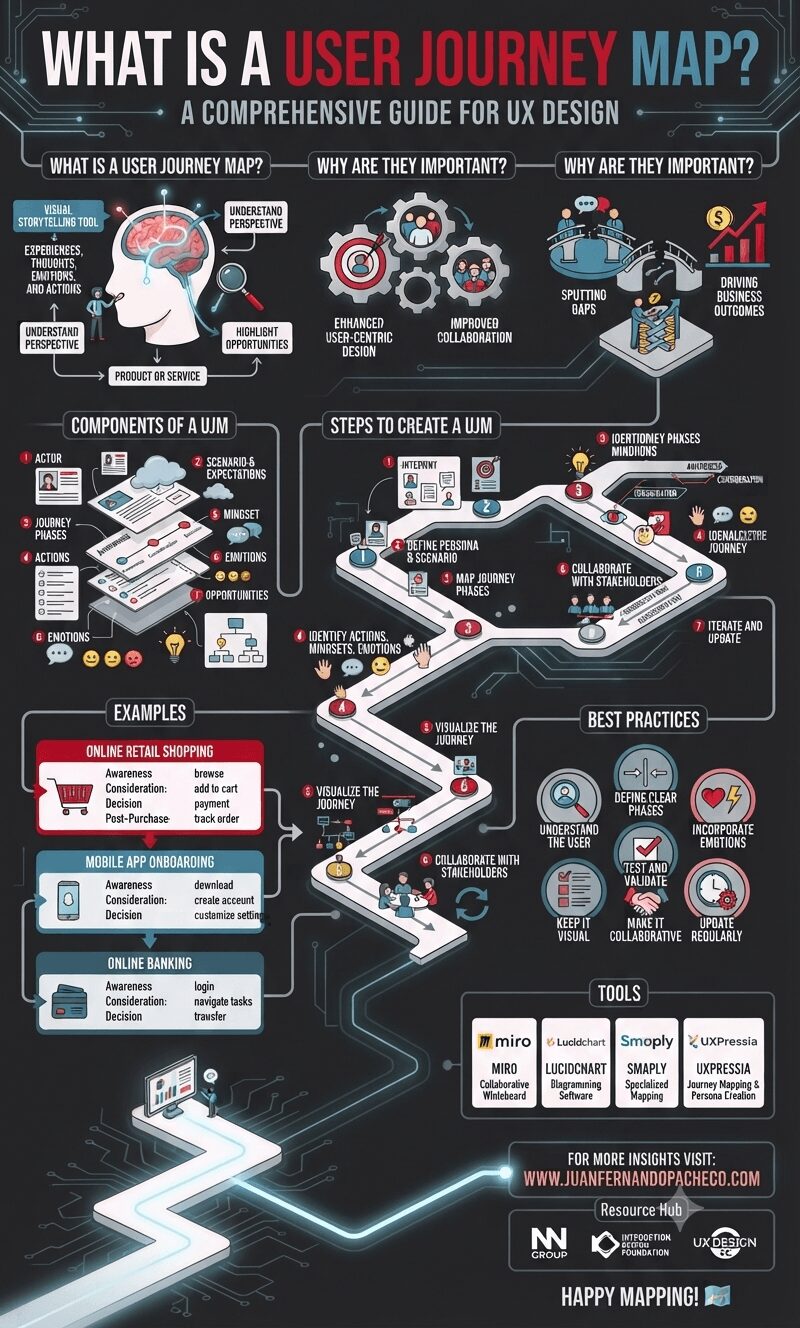
A detailed infographic titled "What is a User Journey Map?" set against a dark background with a glowing, circuit-like path. The infographic is structured in vertical sections, starting with the definition and importance of User Journey Maps. It then details the core components (Actor, Scenario, Phases, Actions, Mindset, Emotions, Opportunities, Visualization) and outlines a 7-step creation process. Following this, it provides three distinct examples (Online Retail Shopping, Mobile App Onboarding, Online Banking) and lists best practices and popular tools (Miro, Lucidchart, Smaply, UXPressia). The bottom section includes the URL "WWW.JUANFERNANDOPACHECO.COM" and resource logos.

A User Journey Map is an indispensable tool in UX design, enabling teams to create user-centric products and services. By capturing the user’s actions, emotions, and pain points, it provides valuable insights that drive innovation and improve overall user satisfaction.
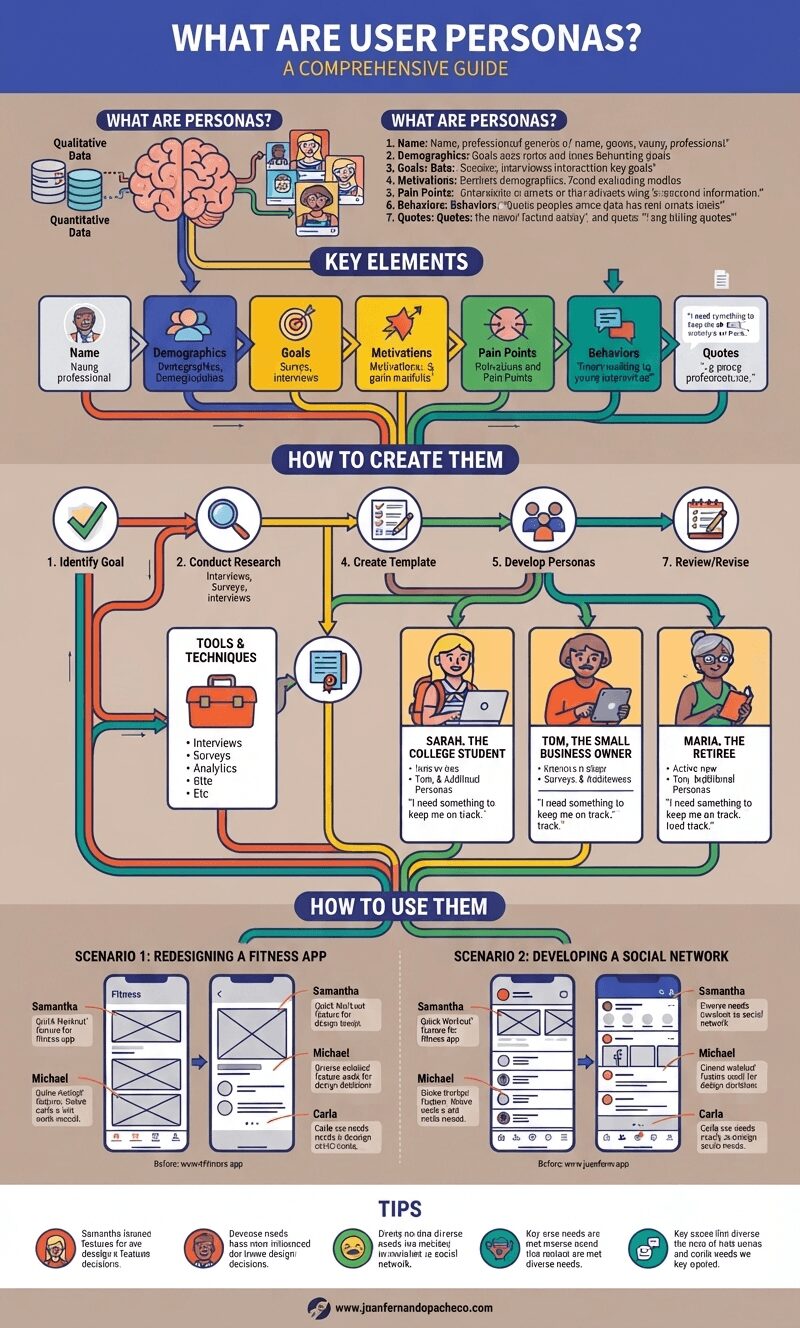
A detailed infographic titled "WHAT ARE USER PERSONAS? A COMPREHENSIVE GUIDE," set against a muted, earthy background. The image is a flowchart and structured text guide that explains user personas. It features sections for "What are Personas?" with a brain icon and data inputs, "Key Elements" with seven categorized steps, "How to Create Them" with a seven-step process, "Tools & Techniques," and "How to Use Them" with two detailed scenarios (Redesigning a Fitness App, Developing a Social Network). It concludes with "Tips." The infographic includes illustrative portraits of Sarah, Tom, and Maria, and app wireframe examples. The URL www.juanfernandopacheco.com is at the bottom.

In the world of user experience (UX) design, User Personas play a pivotal role. These fictional, yet representative, characters embody the different types of users for a product or service.

Crafted from extensive research and data, personas help designers and stakeholders understand the diverse needs, goals, and behaviors of their target audience. In this blog post, we’ll dive deep into the concept of user personas, how to create them, and their role in the design process.
An infographic titled "What is Lean UX: A Comprehensive Guide to Agile Design" presented in a clean, illustrative style on a light green background. The central element is a circular flow diagram detailing the Lean UX Process: Define the Problem, Ideate, Prototype, Test, and Iterate. Additional sections outline Core Principles (Collaboration, User-Centric Design, Rapid Experimentation, Outcome Over Output), Key Benefits, Best Practices, and Challenges, with illustrative icons for each point. A footer includes the website "WWW.JUANFERNANDOPACHECO.COM".

Lean UX, a methodology rooted in these principles, has emerged as a transformative approach to creating user-centric products efficiently.

By focusing on collaboration, rapid experimentation, and iterative processes, Lean UX addresses the dynamic needs of modern businesses and users alike.

A detailed infographic titled "What are Dark Patterns" explaining manipulative UI/UX design techniques. It illustrates seven common examples: Forced Continuity, Sneak into Basket, Misdirection, Bait-and-Switch, Hidden Costs, Roach Motel, and Privacy Zuckering. Central sections outline why they persist and their impact on users, followed by regulatory pushback from GDPR, CCPA, and FTC. The footer promotes ethical design and lists the website www.juanfernandopacheco.com.

Dark patterns represent the darker side of design, exploiting user vulnerabilities for profit. While effective in the short term, they erode trust, invite regulatory scrutiny, and harm users. By embracing ethical design principles, businesses can foster loyalty, build sustainable relationships, and lead with integrity.

An extensive vertical infographic titled "What is UX? A Comprehensive Guide to User Experience." It is organized into sections with illustrations and text: Origins (Don Norman), Core Principles (Usability, Accessibility, Emotional Design, Feedback, Efficiency, Learnability), The UX Design Process (Empathize, Define, Ideate, Prototype, Test), Applications (Product, Service, Digital Experiences, Social Innovation), Importance, Challenges, Future Trends (AI, Voice, Sustainability, Immersive), and a Conclusion with a call to action for www.juanfernandopacheco.com.

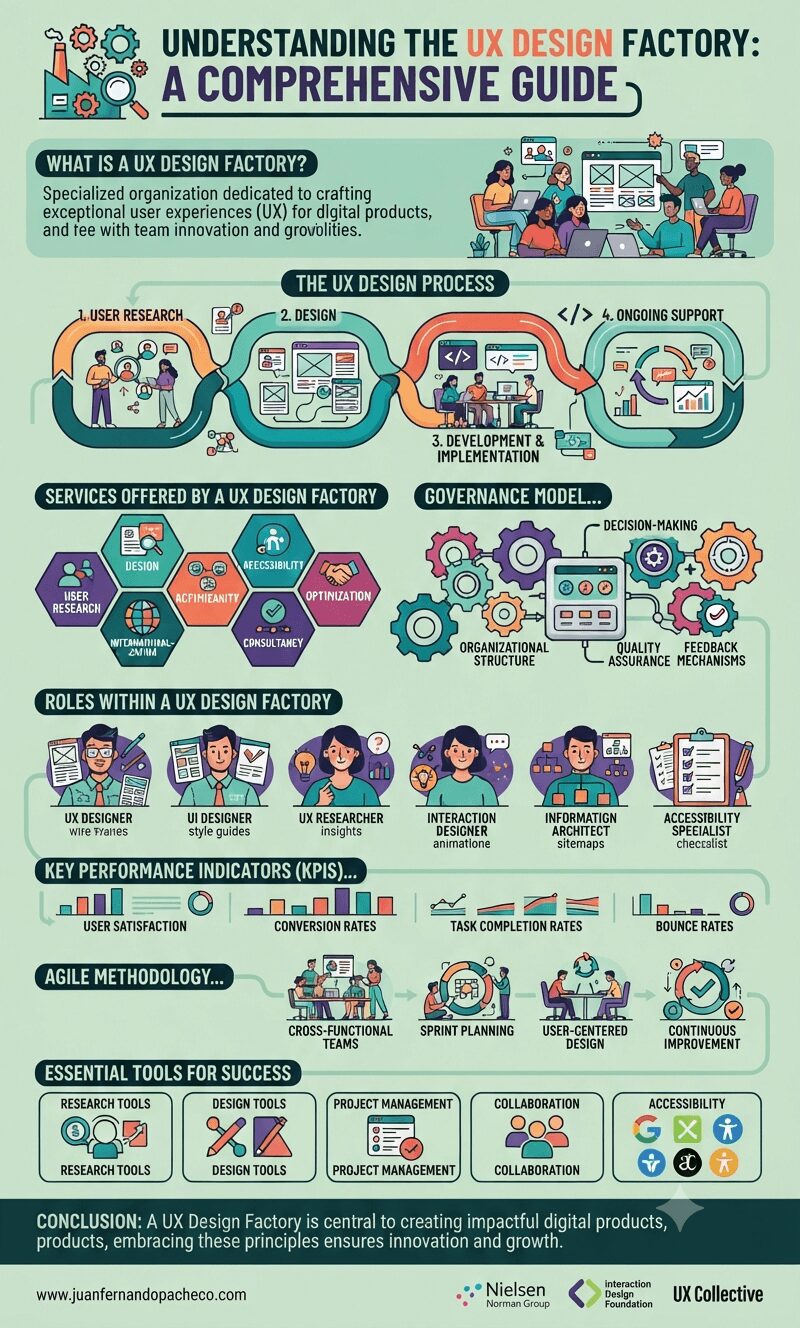
UX is the overall interaction and satisfaction a person derives from using a product, system, or service. User Experience design focuses on crafting seamless, efficient, and enjoyable experiences for users, emphasizing usability, accessibility, and emotional resonance.