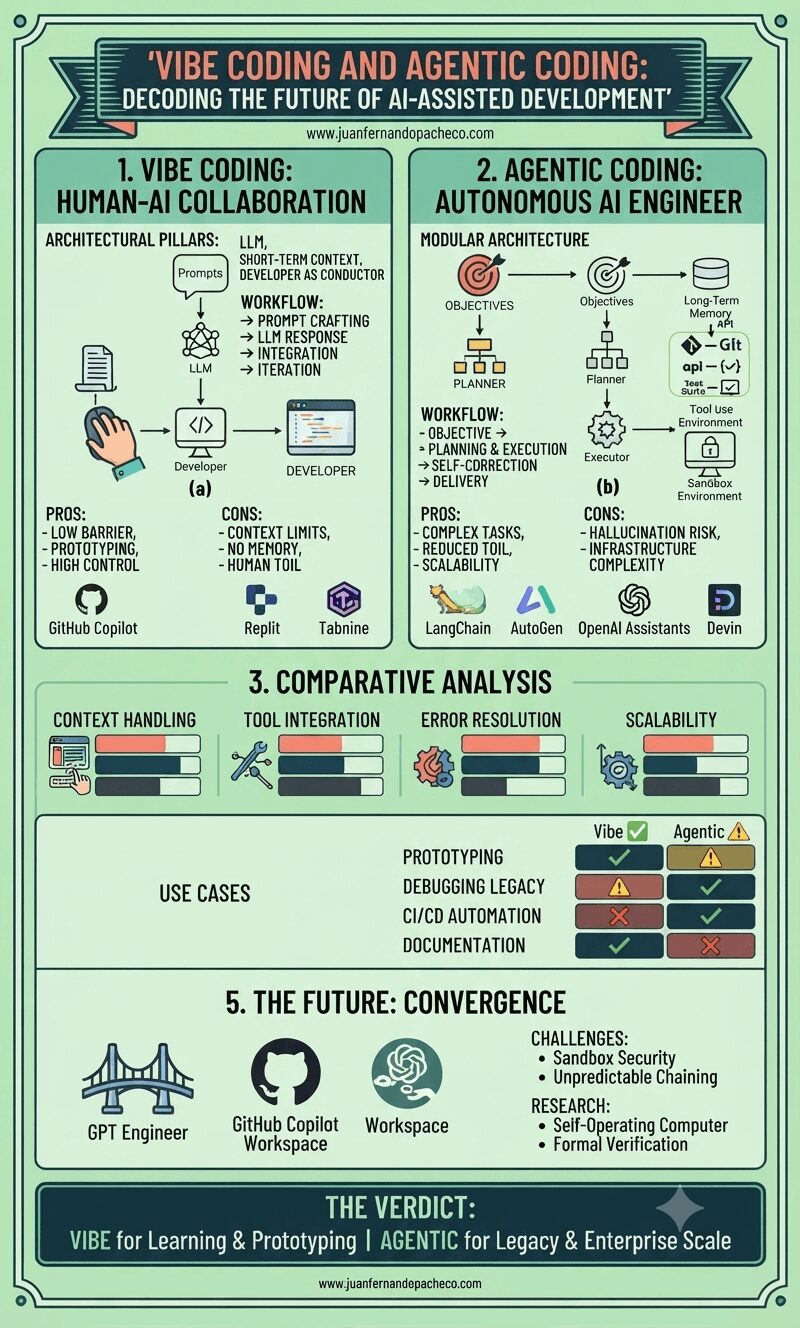
An infographic titled 'Vibe Coding and Agentic Coding' comparing two paradigms of AI-assisted software development across architecture, workflows, pros/cons, tools, and future convergence. The graphic includes detailed diagrams, a comparative analysis, use-case matrices, and logos for tools like GitHub Copilot, LangChain, and Devin.

Vibe Coding democratizes AI assistance, augmenting developers’ creativity without disrupting workflows.

Agentic Coding, however, is poised to revolutionize software engineering by automating entire pipelines—akin to an “AI workforce.” While Vibe suits daily coding, Agentic shines in systematic, tool-heavy environments.
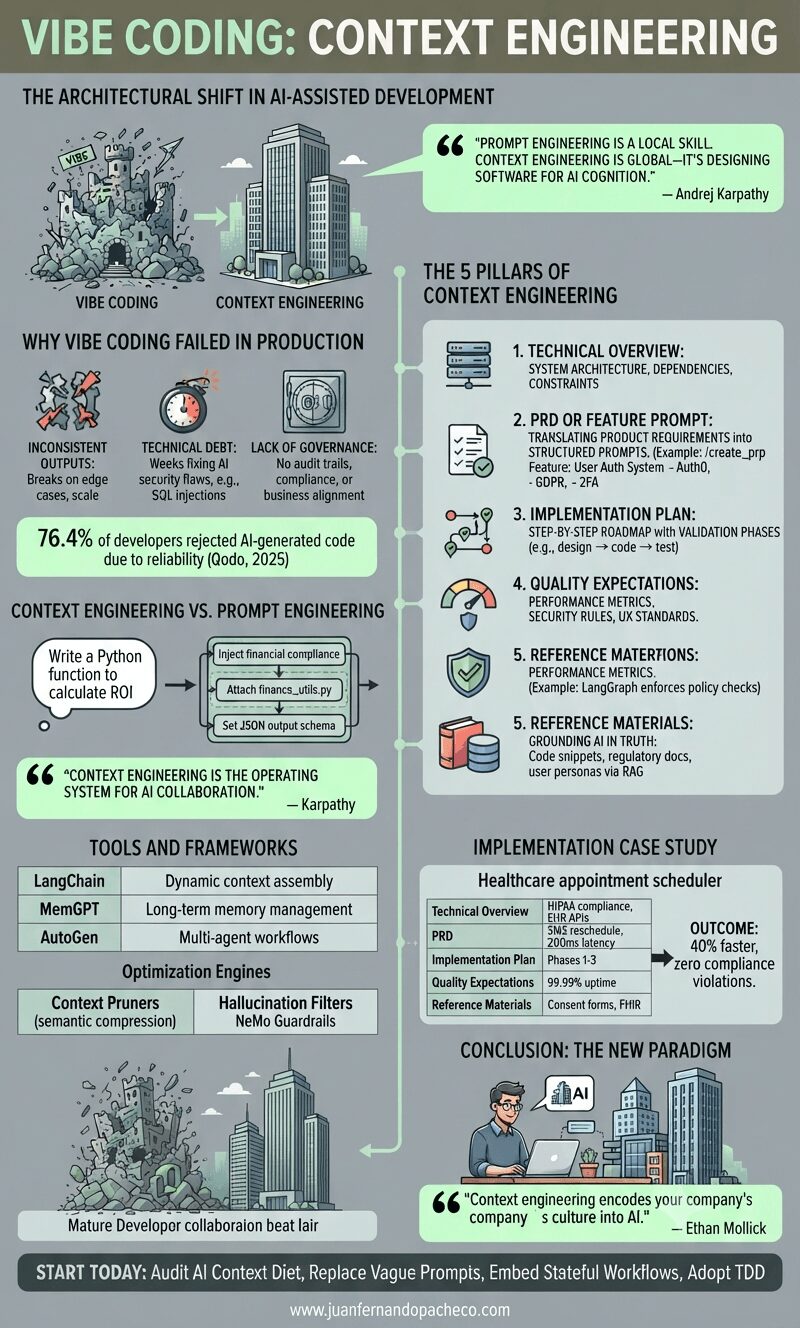
An infographic titled "Vibe Coding: Context Engineering," illustrating the shift from unstructured AI coding to a structured, engineering-based approach. It details the failings of "vibe coding," outlines the "5 Pillars of Context Engineering," compares context versus prompt engineering, lists relevant tools, and presents a healthcare case study before concluding with best practices and a website URL.

Vibe coding was the prototype; context engineering is the production system. It demands upfront investment—defining rules, curating knowledge, designing workflows—but slashes technical debt and unlocks reliable, scalable, and ethical AI collaboration. As Karpathy notes:

“Calling this a ‘ChatGPT wrapper’ is wrong. It’s a new software paradigm.”