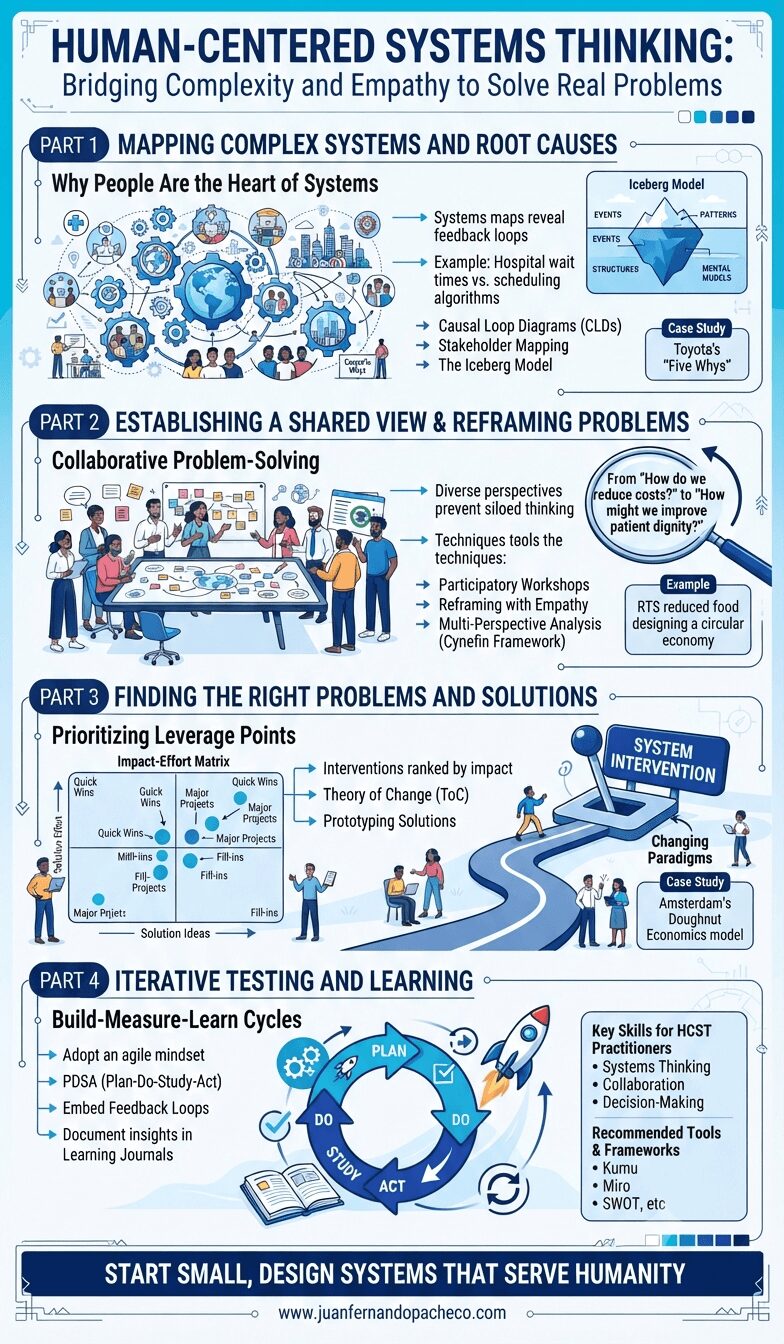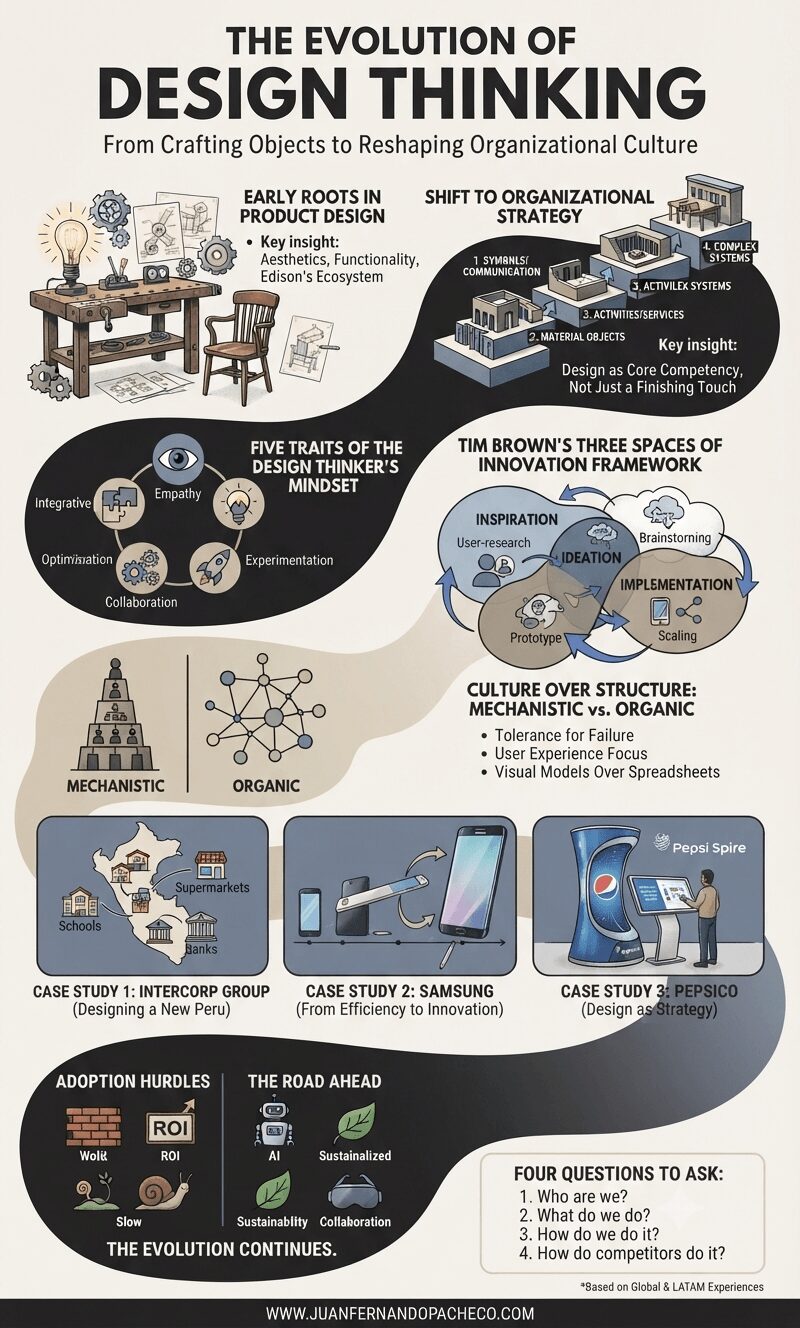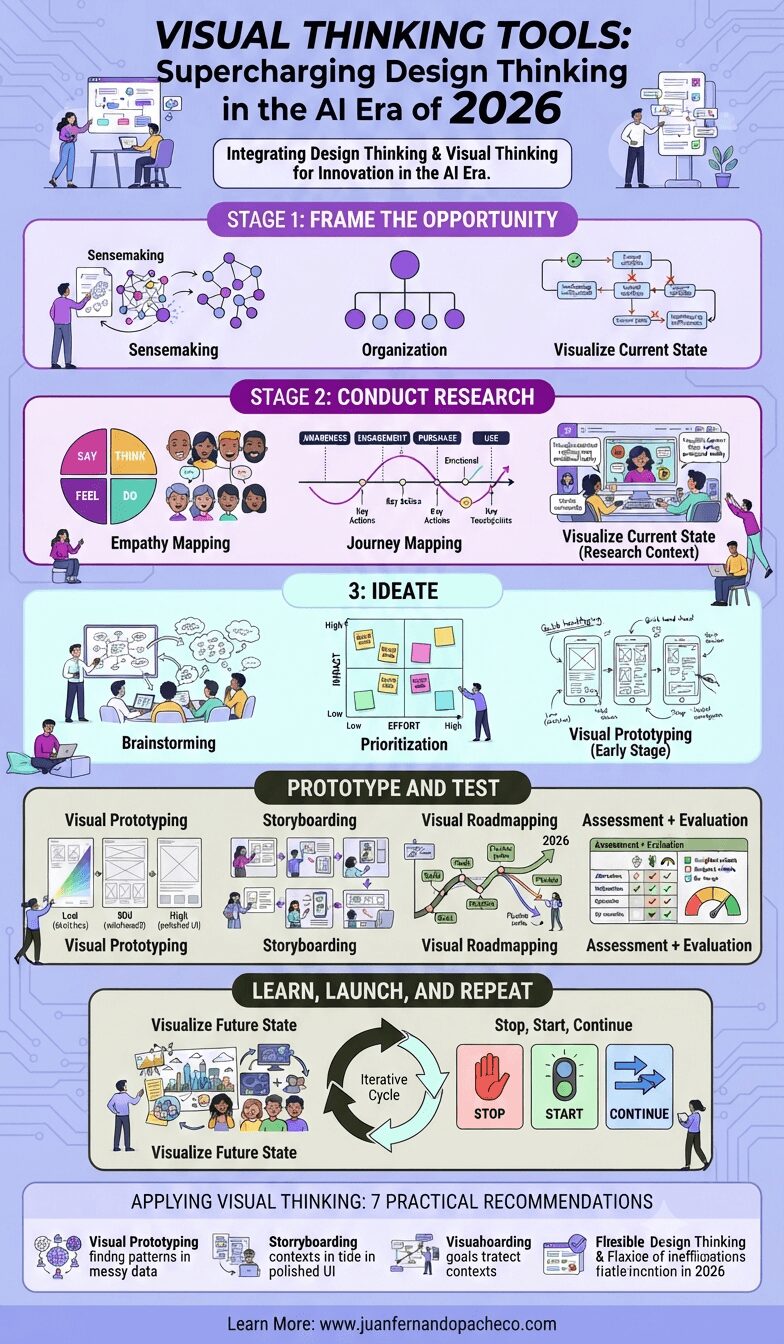
A comprehensive vertical infographic illustrating the four stages of Human-Centered Systems Thinking, using complex diagrams, charts, and illustrations to explain mapping, reframing, prioritizing interventions, and iterative testing.

Human-Centered Systems Thinking isn’t a checklist—it’s a mindset. By grounding systemic analysis in empathy and experimentation, we can redesign education, healthcare, and organizations to prioritize human dignity and resilience.

Start small: map a personal challenge, host a reframing workshop, or prototype a solution. The systems of tomorrow depend on the choices we make today.

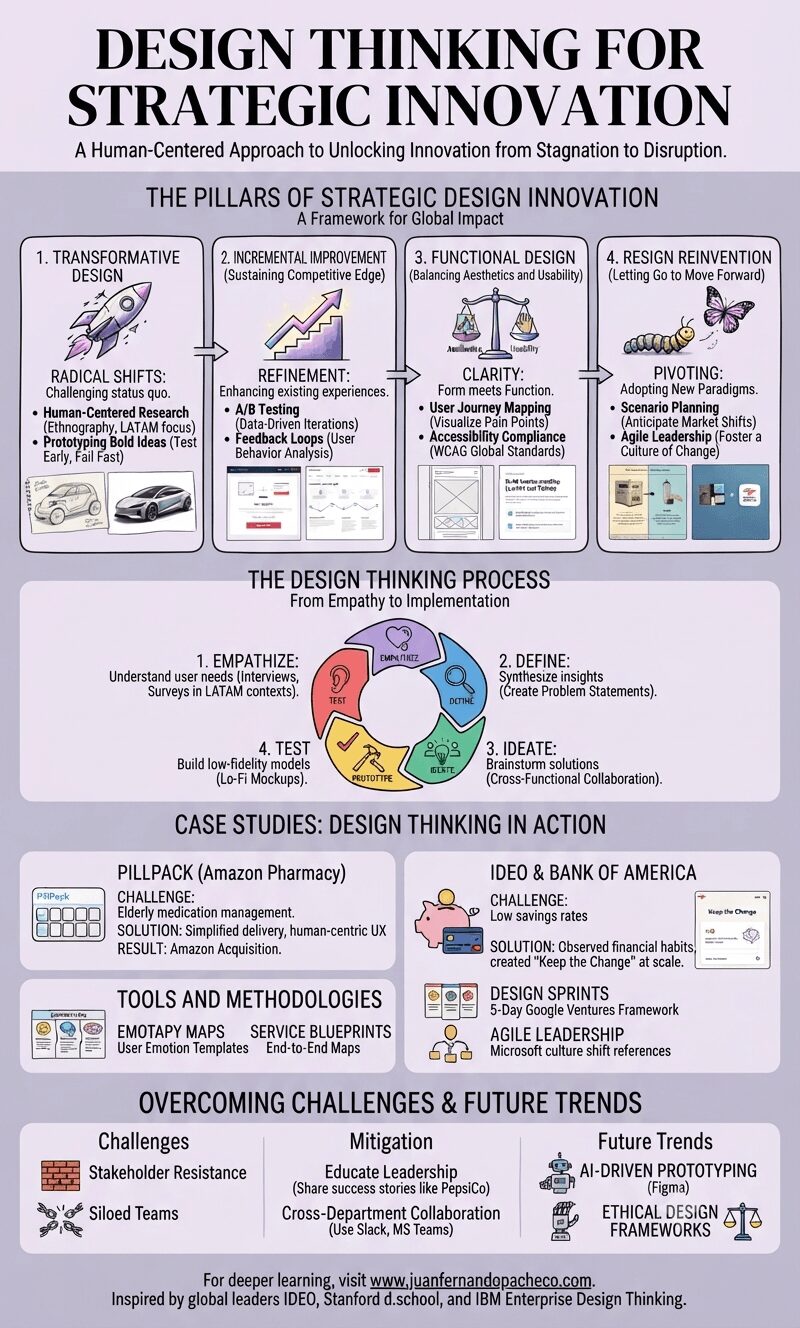
An infographic titled "DESIGN THINKING FOR STRATEGIC INNOVATION" with a human-centered approach, detailing the four pillars (Transformative Design, Incremental Improvement, Functional Design, Resign Reinvention), the five-stage process, case studies (PillPack, IDEO & Bank of America), tools, challenges, future trends, and a final call to action and website reference www.juanfernandopacheco.com.

Design Thinking is more than a buzzword—it’s a human-centered approach to solving complex problems and unlocking strategic innovation.

By blending empathy, creativity, and iterative learning, organizations can pivot from stagnation to disruption. This post unpacks how Design Thinking intersects with four pillars of innovation: Transformative Design, Incremental Improvement, Functional Design, and Resign Reinvention.

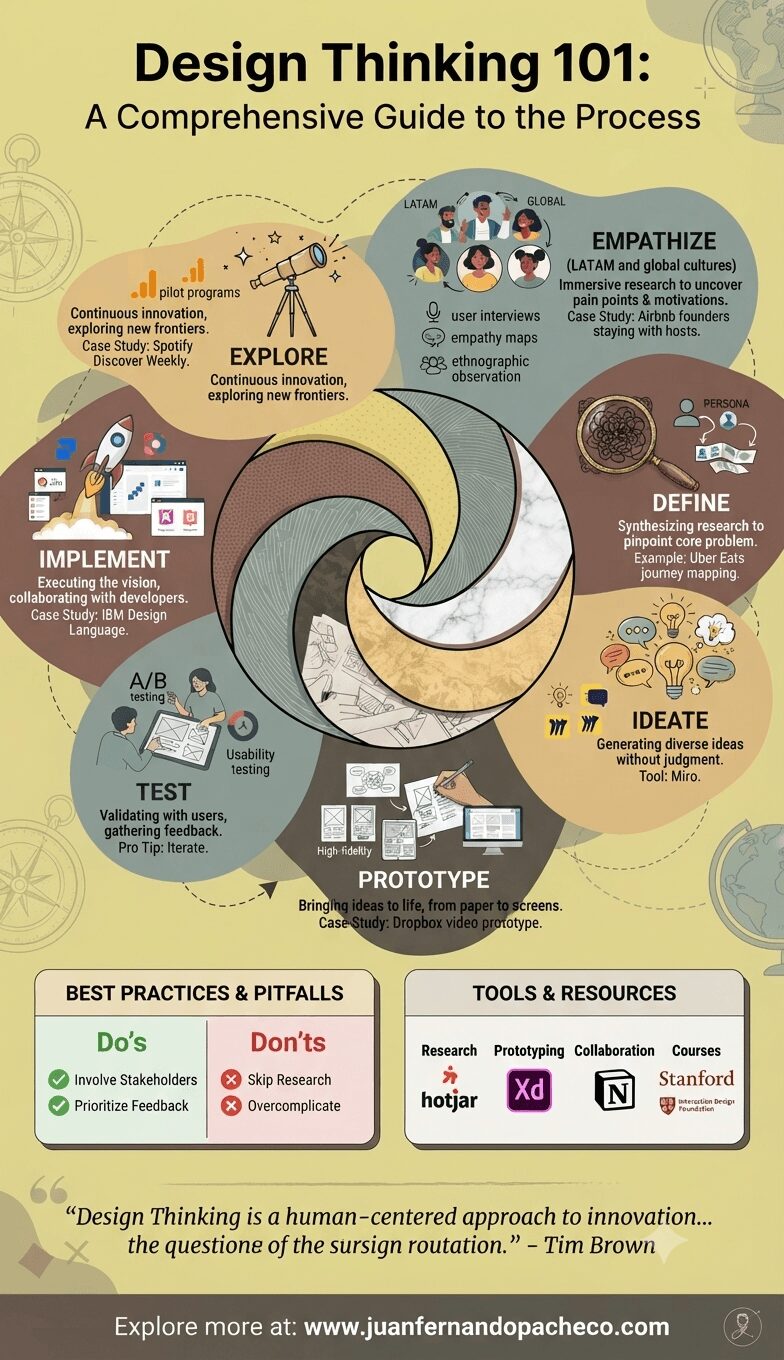
An infographic titled "Design Thinking 101" displaying the seven-phase design thinking process (Empathize, Define, Ideate, Prototype, Test, Implement, Explore) in a circular, flowing design on a beige background, featuring icons, key case study references, best practices, and links to professional tools.

Design Thinking is a human-centered methodology that empowers teams to solve complex problems through creativity, empathy, and iterative learning.

Rooted in disciplines like UX design and systems thinking, it bridges the gap between user needs and business goals. According to the Stanford d.school, Design Thinking is “a methodology for innovation that combines creative and analytical approaches.”

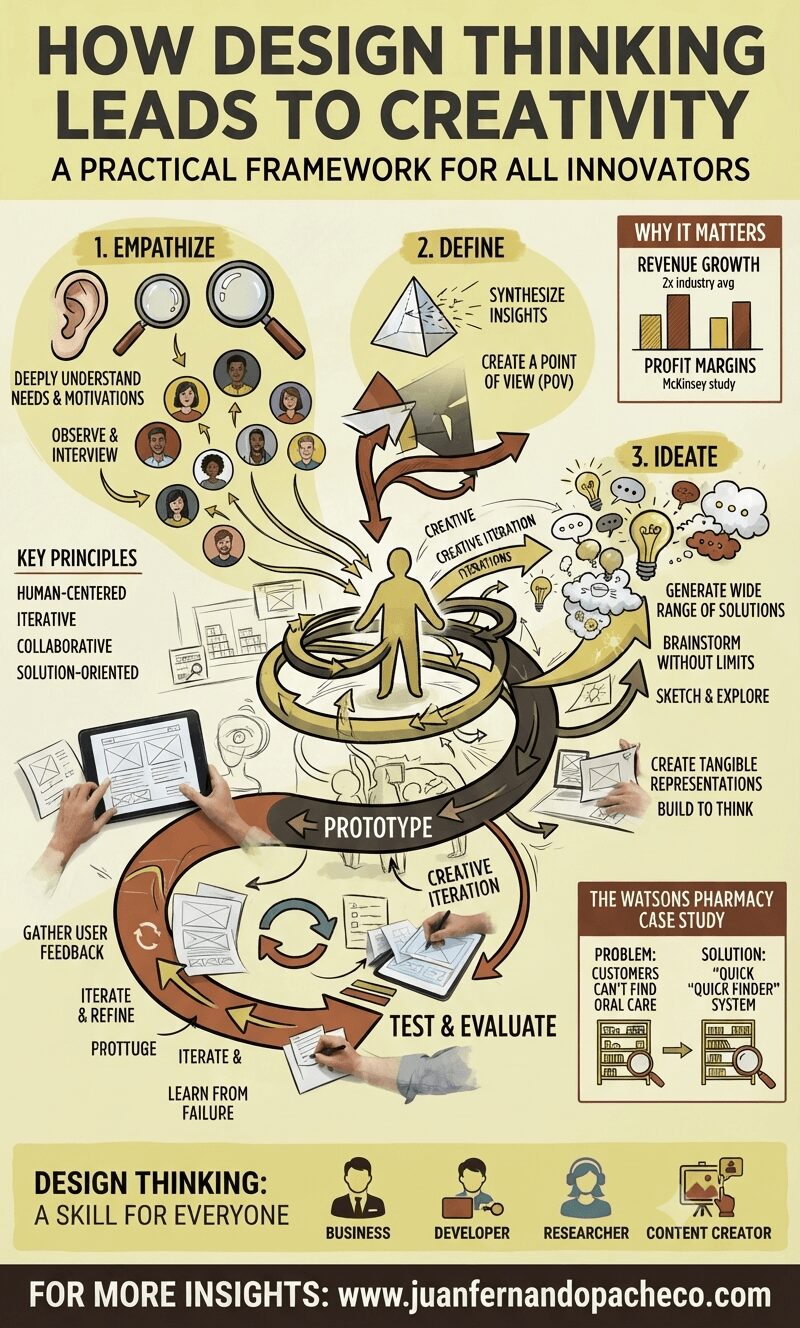
An intricate vertical infographic titled "How Design Thinking Leads to Creativity" (1,200px x 2,000+px). The design is structured around a central spiraling pathway connecting five distinct stages visualized with illustrations, icons, and text: 1. Empathize (ear, magnifying glasses, user portraits), 2. Define (pyramid, insights), 3. Ideate (lightbulbs, brain), 4. Prototype (hands with tablet and paper), 5. Test & Evaluate (feedback loops). The background is a pale yellow, using a color palette of mustards, browns, and charcoal. Sidebars detail "Why It Matters" (McKinsey study stats), "Key Principles," and a "Watsons Pharmacy Case Study." The bottom features a banner: "Design Thinking: A Skill for Everyone" with four persona icons and the URL "www.juanfernandopacheco.com".

Design Thinking isn’t limited to professional designers. It’s a valuable skill for anyone who wants to solve problems creatively and drive innovation. By adopting a human-centered approach and embracing the iterative nature of design thinking, individuals and organizations can unlock their creative potential and achieve remarkable results.

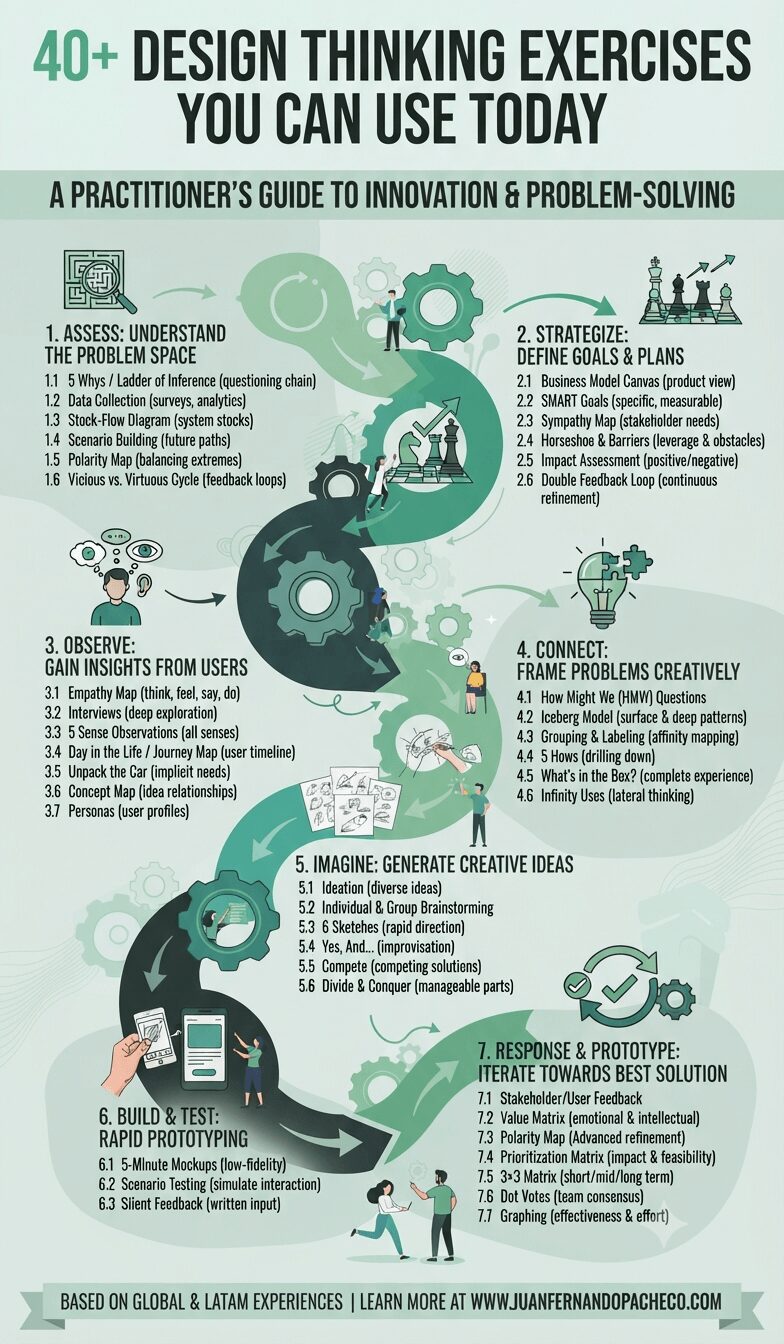
An infographic titled "40+ DESIGN THINKING EXERCISES YOU CAN USE TODAY" laid out as a continuous, winding flowchart across seven distinct phases: Assess, Strategize, Observe, Connect, Imagine, Build & Test, and Response & Prototype. Each section includes specific exercise lists and small illustrations of people engaging in design activities. The bottom banner includes the URL "WWW.JUANFERNANDOPACHECO.COM".

These 45+ design thinking exercises provide a practical and structured approach to problem-solving.

By incorporating these exercises into your UX practice, you can foster creativity, enhance user understanding, and drive impactful results.

Remember that design thinking is an iterative process, so don’t be afraid to experiment and adapt these exercises to fit your specific needs.

An infographic titled "Why Design Thinking Works" detailing the methodology's core principles, phases, and impact through text blocks and illustrations, including global case studies from Monash Health, Children's Health System of Texas, and Kaiser Permanente. The footer includes the URL WWW.JUANFERNANDOPACHECO.COM.

Design Thinking works because it combines the best of human insight with structured tools to drive innovation.

By addressing biases, fostering collaboration, and emphasizing empathy, it transforms not only the solutions organizations create but also the people and cultures behind them. As a social technology, its potential to reshape industries is unparalleled, making it a cornerstone of modern innovation strategies.

Infographic illustrating the five stages of the Stanford d.school Design Thinking model: Empathize, Define, Ideate, Prototype, and Test, presented as an interconnected, non-linear process with examples and applications for a global and LATAM context.

The Stanford d.school’s Design Thinking model is more than a methodology; it’s a mindset that fosters creativity, innovation, and human-centered problem-solving.

By emphasizing empathy, iteration, and flexibility, it equips teams to tackle complex challenges and deliver impactful solutions.

Whether you’re a seasoned designer or a newcomer to the field, embracing this model can transform how you approach problems, unlocking new possibilities for success.