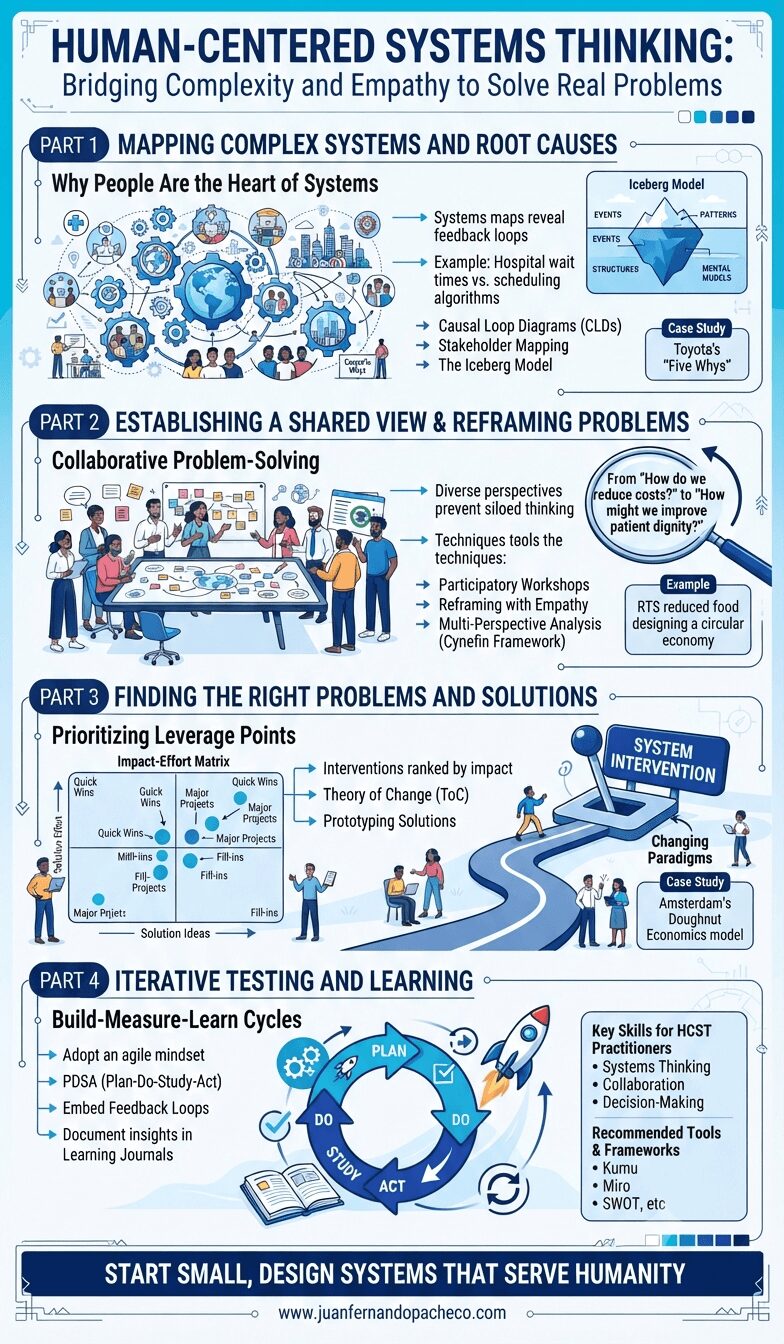
A comprehensive vertical infographic illustrating the four stages of Human-Centered Systems Thinking, using complex diagrams, charts, and illustrations to explain mapping, reframing, prioritizing interventions, and iterative testing.

Human-Centered Systems Thinking isn’t a checklist—it’s a mindset. By grounding systemic analysis in empathy and experimentation, we can redesign education, healthcare, and organizations to prioritize human dignity and resilience.

Start small: map a personal challenge, host a reframing workshop, or prototype a solution. The systems of tomorrow depend on the choices we make today.
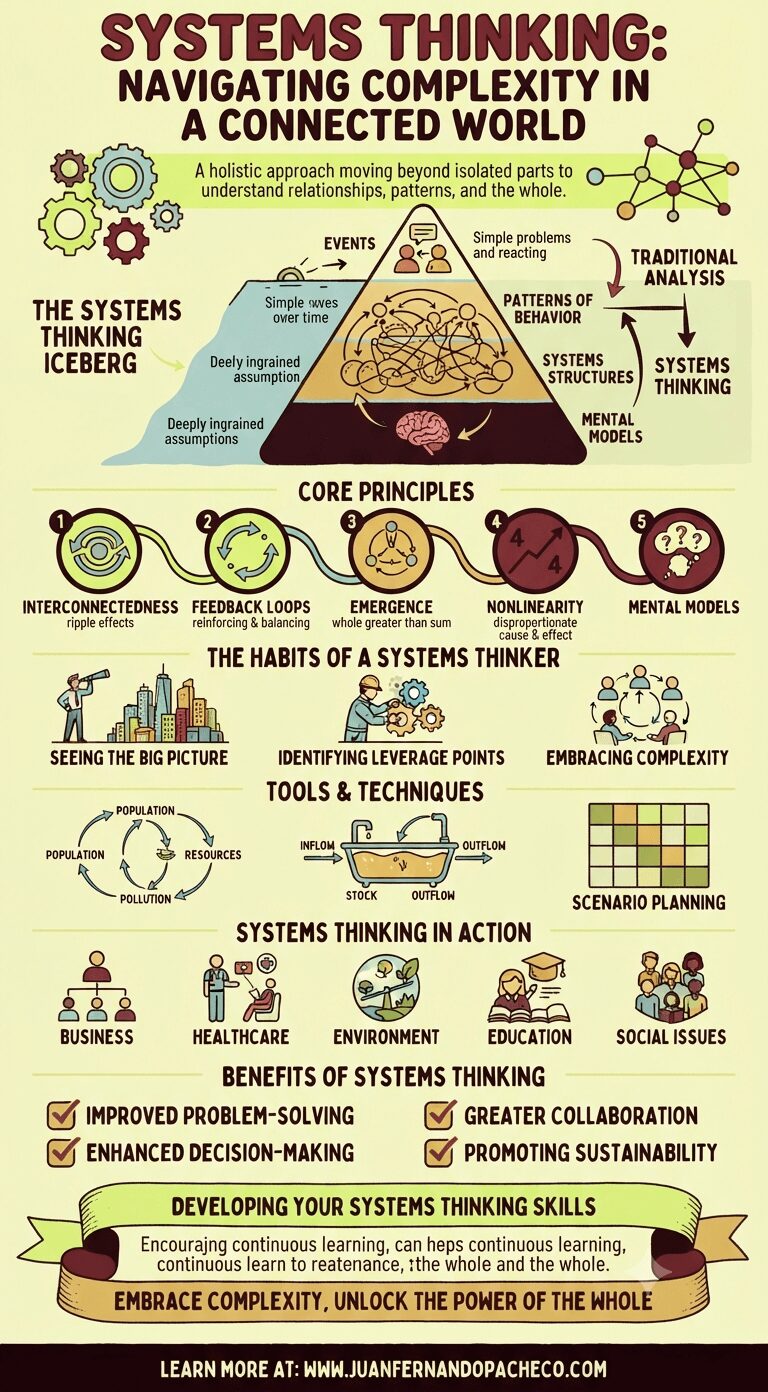
An infographic titled "Systems Thinking: Navigating Complexity in a Connected World," featuring a "Systems Thinking Iceberg" diagram that contrasts traditional analysis with systems thinking, followed by sections on core principles, habits, tools, applications, and benefits, all presented in an illustrative, illustrative style with a light cream and maroon color palette.

In a world characterized by complexity and rapid change, systems thinking is no longer a luxury, but a necessity.

By understanding the interconnectedness of systems and developing the skills to think holistically, we can unlock the power of the whole and create a more sustainable and prosperous future.