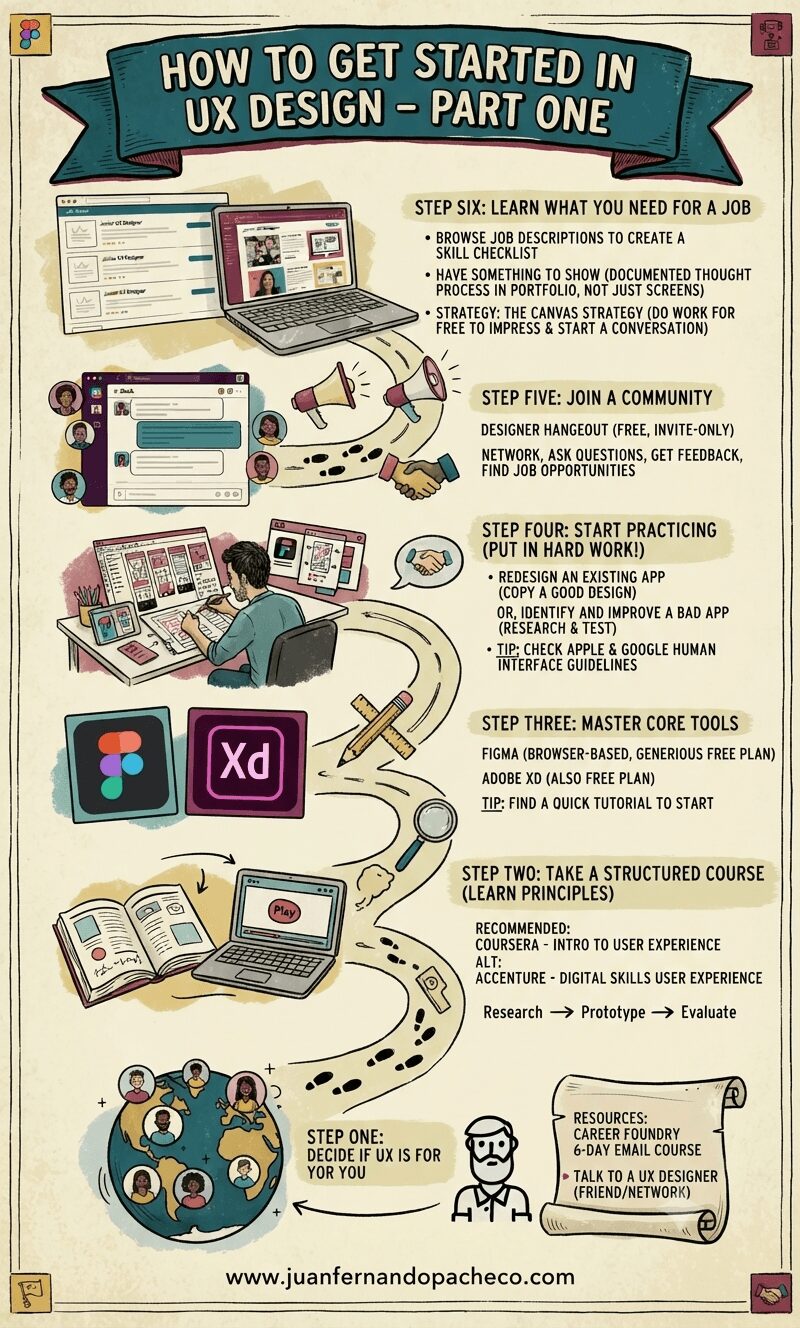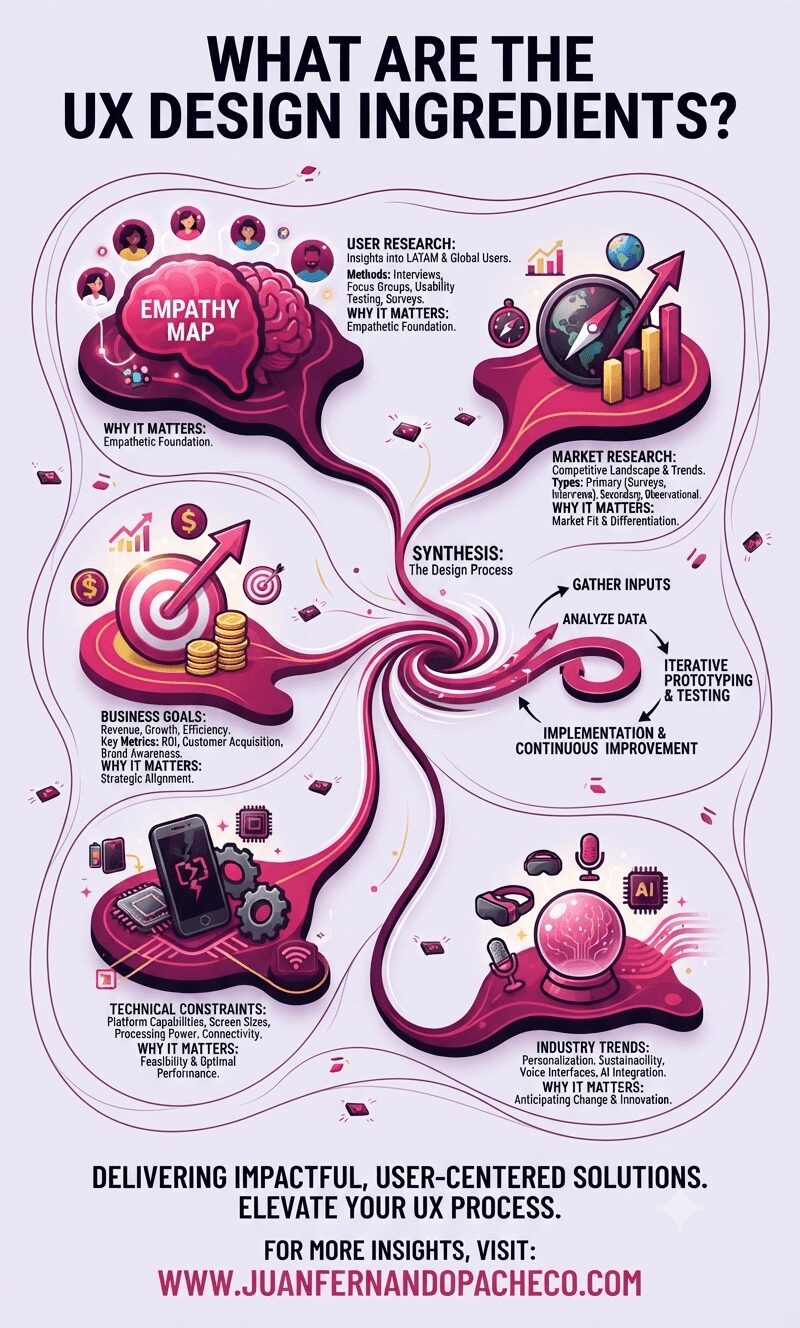
An illustrative infographic titled "WHAT ARE THE UX DESIGN INGREDIENTS?" displayed against a light purple background. It features five distinct, interconnected sections—User Research, Market Research, Business Goals, Technical Constraints, and Industry Trends—represented by 3D icons like a brain, compass, target, broken phone, and crystal ball. These sections flow into a central spiral labeled "Synthesis: The Design Process." Below the diagram, the text reads: "DELIVERING IMPACTFUL, USER-CENTERED SOLUTIONS. ELEVATE YOUR UX PROCESS." followed by the website "WWW.JUANFERNANDOPACHECO.COM".

UX design (user experience design) is a multifaceted field requiring the integration of diverse inputs to create user-centric solutions.

The term “UX design ingredients” refers to the core elements that inform and shape the design process. These ingredients provide the foundation for building products and services that meet both user needs and business goals.
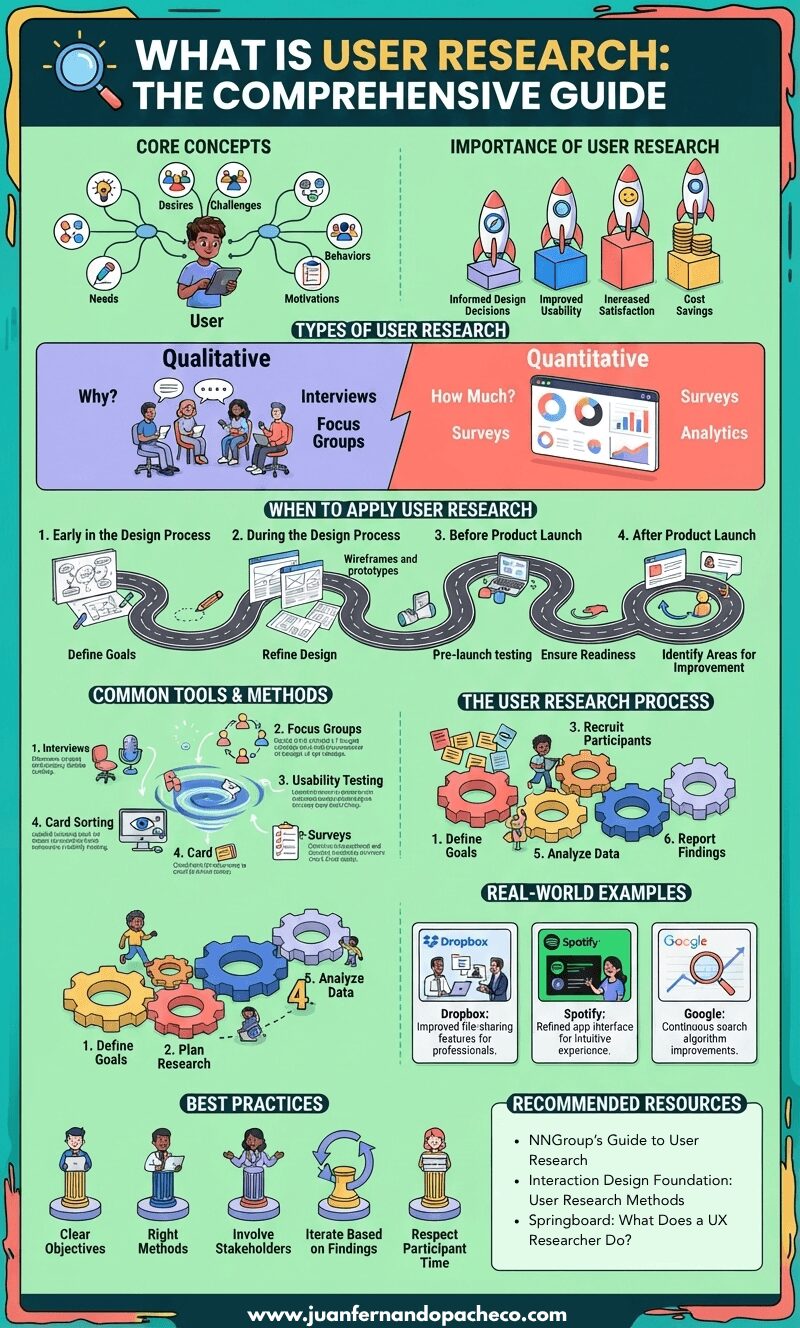
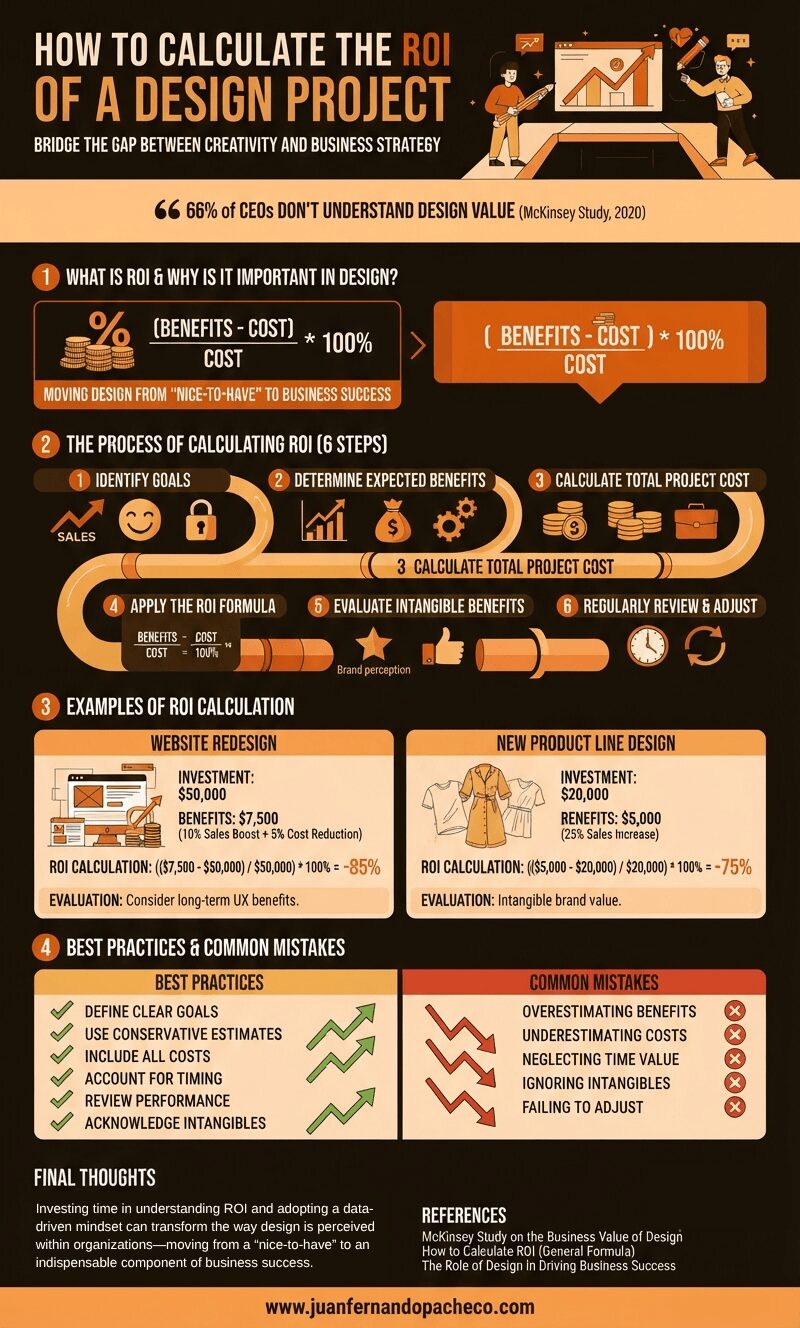
Infographic titled "What is User Research: The Comprehensive Guide" featuring sections on core concepts, importance, qualitative and quantitative types, a timeline of when to apply research, common tools, the research process, real-world examples, best practices, and recommended resources, all grounded in a user-centered design approach.

User research is the process of analyzing, studying, and understanding the needs, desires, challenges, behaviors, and motivations of the people who use a product or service.

It’s typically conducted to inform the design of new products or features or to improve an existing product. By uncovering how real users interact with a product, user research ensures that your designs are grounded in reality rather than assumptions.

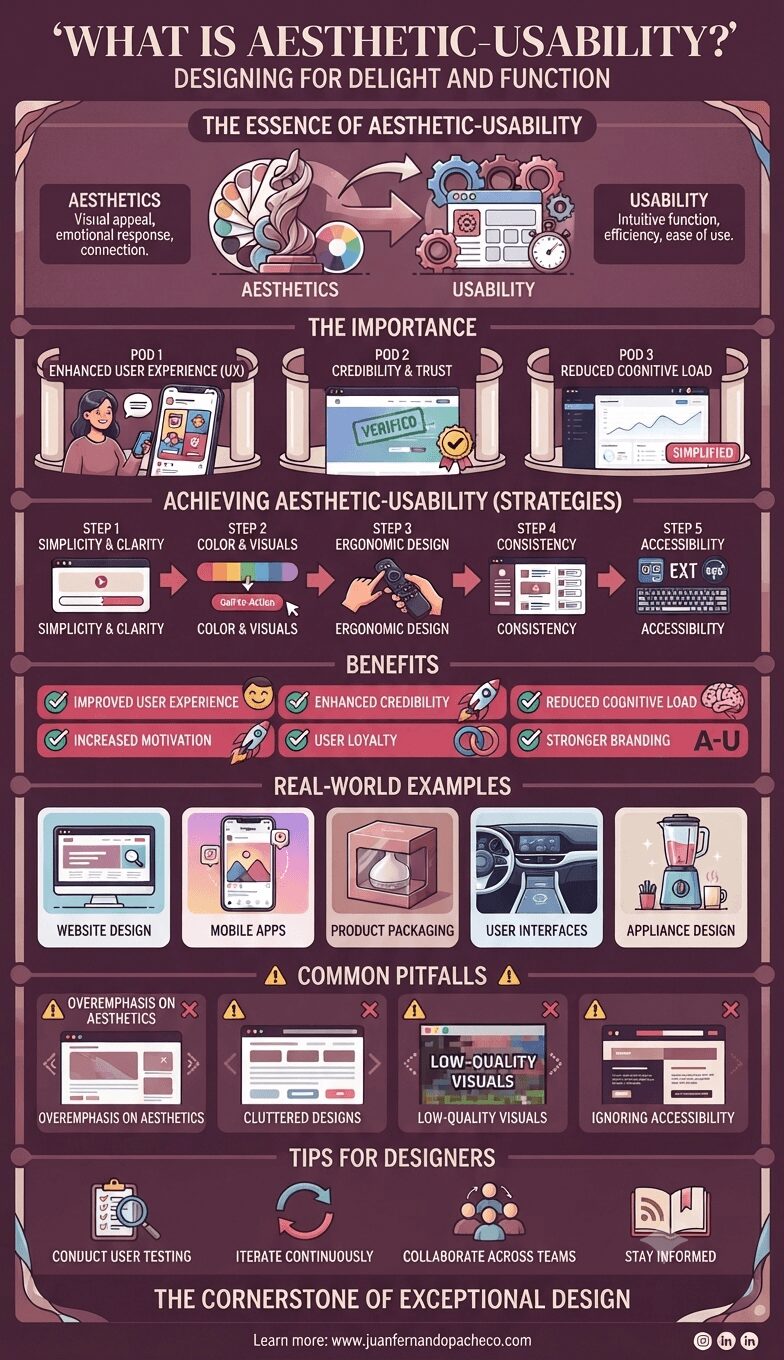
An infographic titled "WHAT IS AESTHETIC-USABILITY? DESIGNING FOR DELIGHT AND FUNCTION" on a deep plum background. It visually explains the concept through six main sections: The Essence, Importance, Achieving Strategies, Benefits, Real-World Examples, Common Pitfalls, and Tips. Illustrations include a balance scale for aesthetics and usability, user interface examples, step-by-step icons, and a footer referencing juanfernandopacheco.com.

Aesthetic-Usability is a fundamental concept in user experience (UX) design, emphasizing that a product should be both visually appealing and easy to use.
Rooted in the idea that beauty can enhance functionality, aesthetic-usability plays a pivotal role in shaping how users interact with and perceive a product.

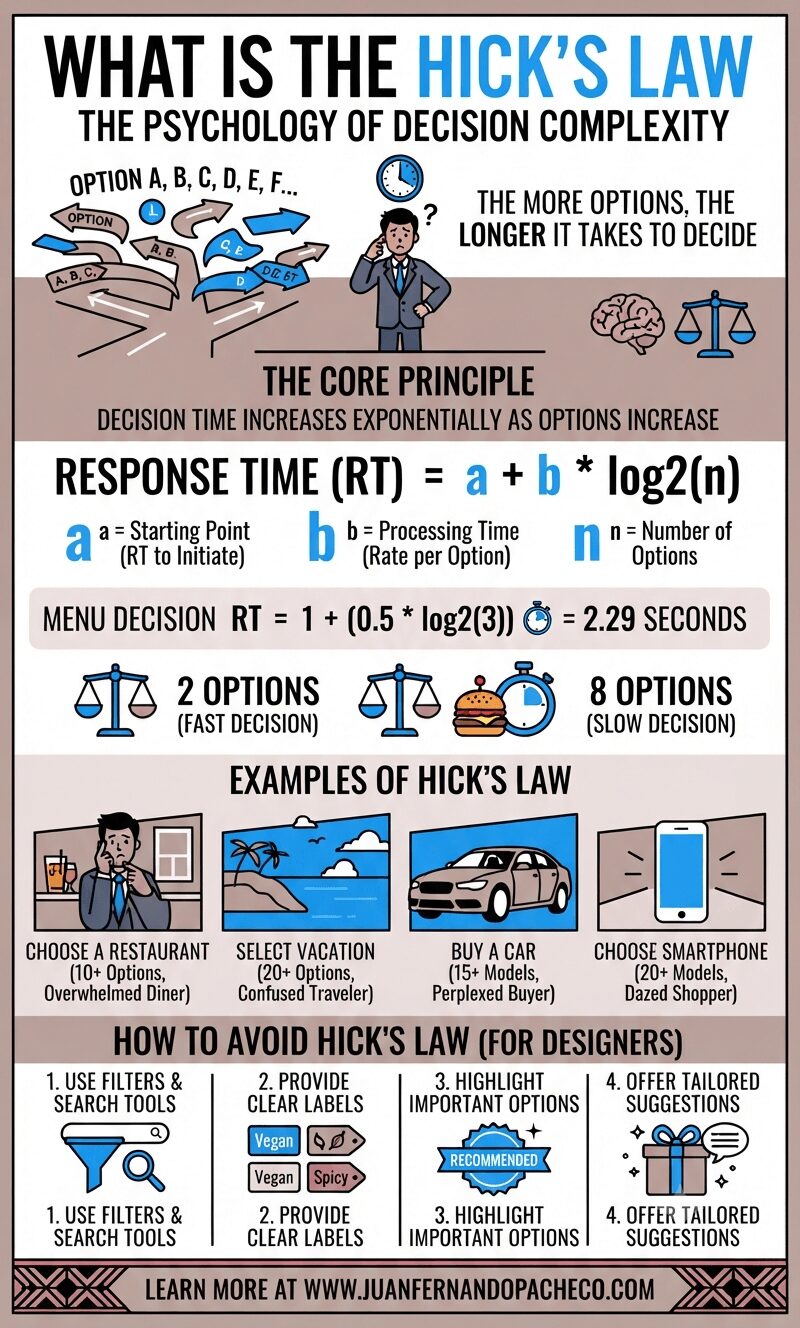
An infographic illustrating Hick's Law, showing that more options lead to longer decision times. It includes the mathematical formula (RT = a + b * log2(n)), a menu example resulting in 2.29 seconds, examples like choosing a restaurant or car, and four tips for designers to avoid decision overload.

Hick’s law, also known as the Hick-Hyman law, is a psychological principle that describes the relationship between the complexity of a decision and the time it takes to make that decision.
The law states that the more options a person has to choose from, the longer it will take them to make a decision.

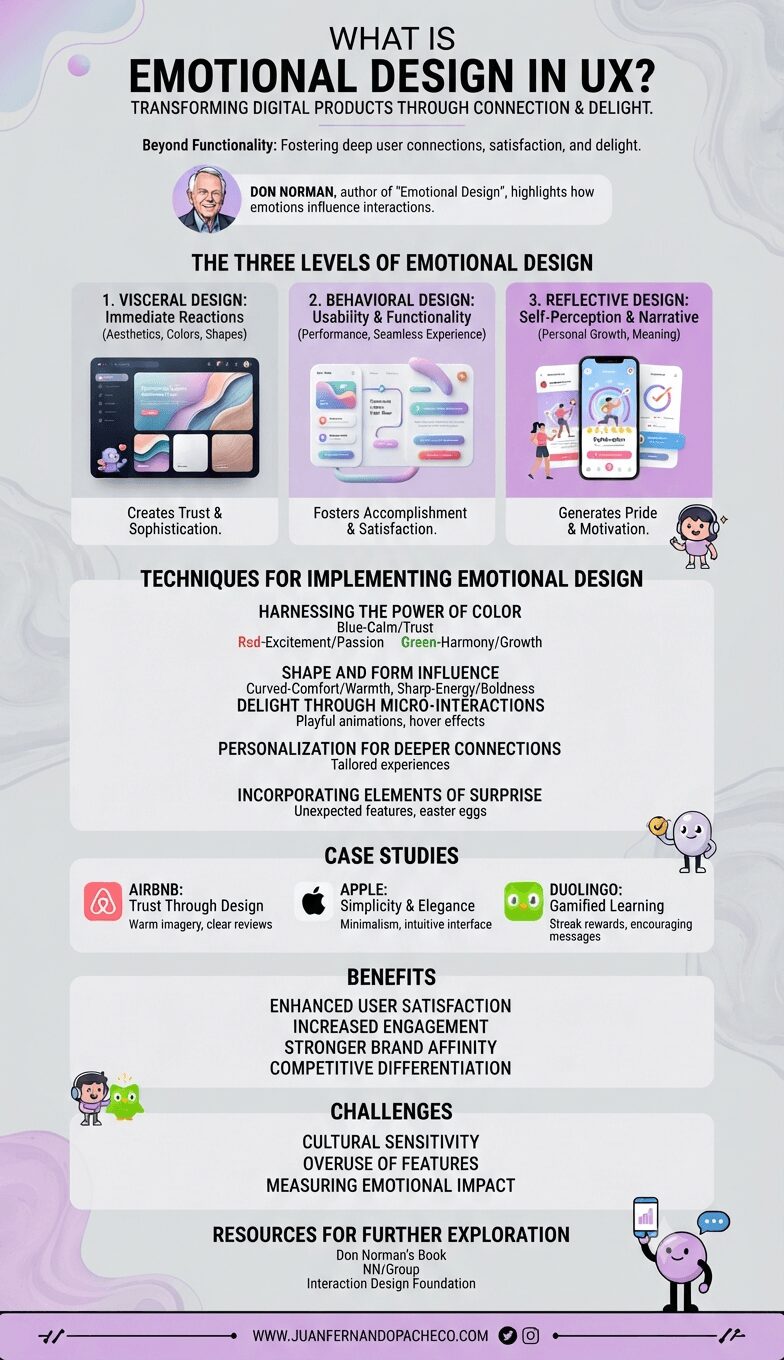
An infographic titled "What is Emotional Design in UX?" detailing Don Norman’s framework of Visceral, Behavioral, and Reflective Design. The image outlines techniques like using color psychology and micro-interactions, provides case studies of Airbnb, Apple, and Duolingo, and lists key benefits and challenges. It includes a footer with the website JuanFernandoPacheco.com.

Emotional Design in UX (User Experience) represents a transformative approach to creating products and services that resonate deeply with users.
By crafting experiences that evoke specific emotional responses, designers can foster a sense of connection, satisfaction, and delight that extends beyond mere functionality.