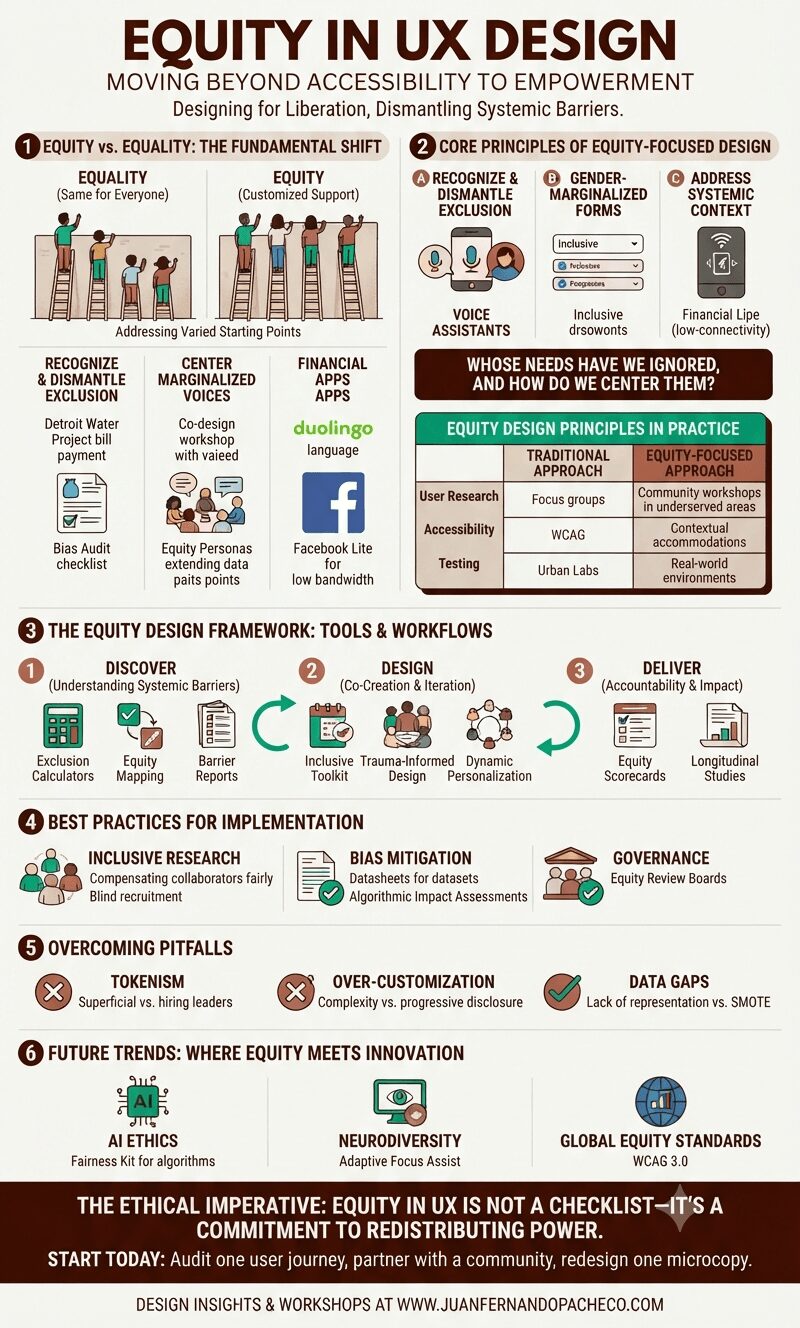
For decades, UX design focused primarily on usability and accessibility—creating products that functioned efficiently for the “average” user. Today, we recognize that this approach perpetuates exclusion.
Equity in UX design demands that we create experiences that actively address systemic barriers, ensuring all users—especially those from historically marginalized groups—can thrive in digital spaces.
As a veteran UX designer and architect, I’ve witnessed how equity transforms not only products but societal narratives.