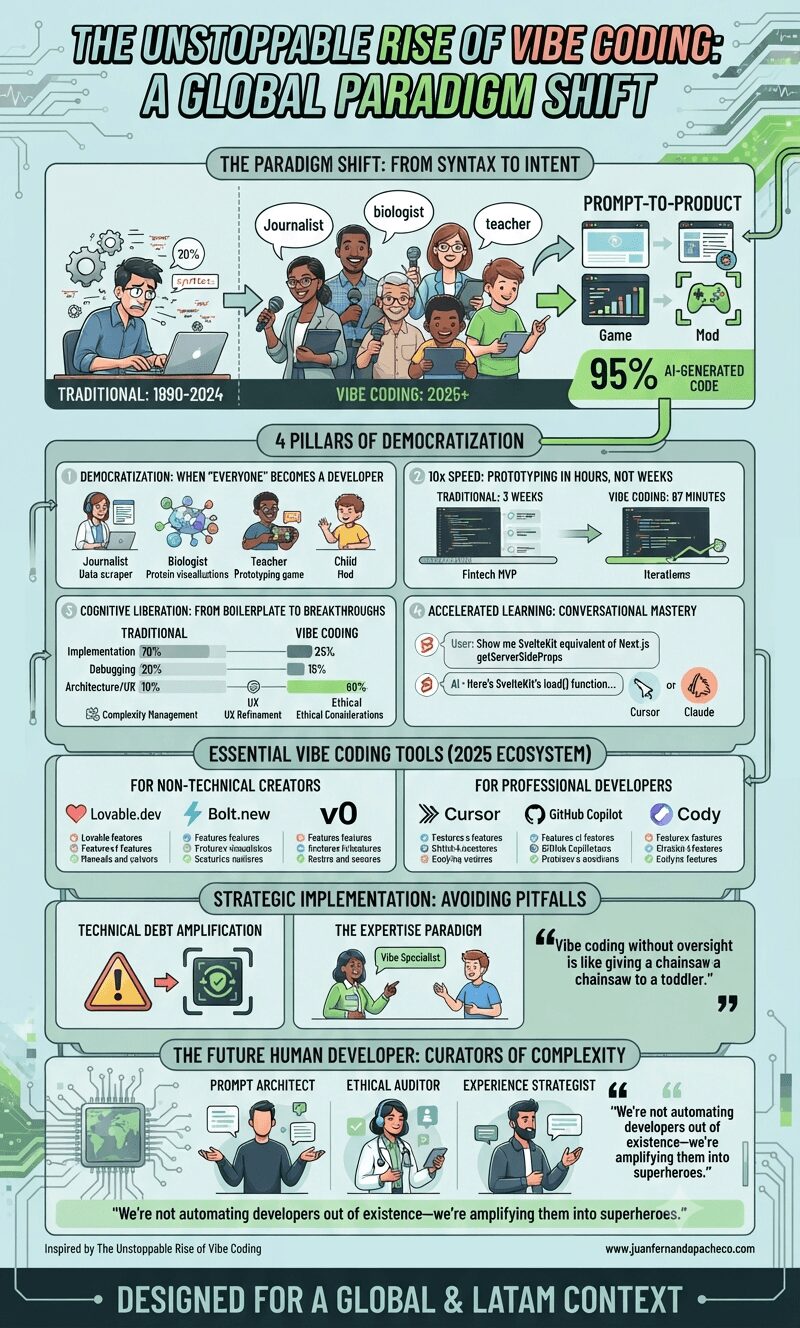
Vibe coding doesn’t eliminate developers—it elevates them. By offloading syntactic implementation to AI, professionals gain capacity for:
Category: Vibe Coding
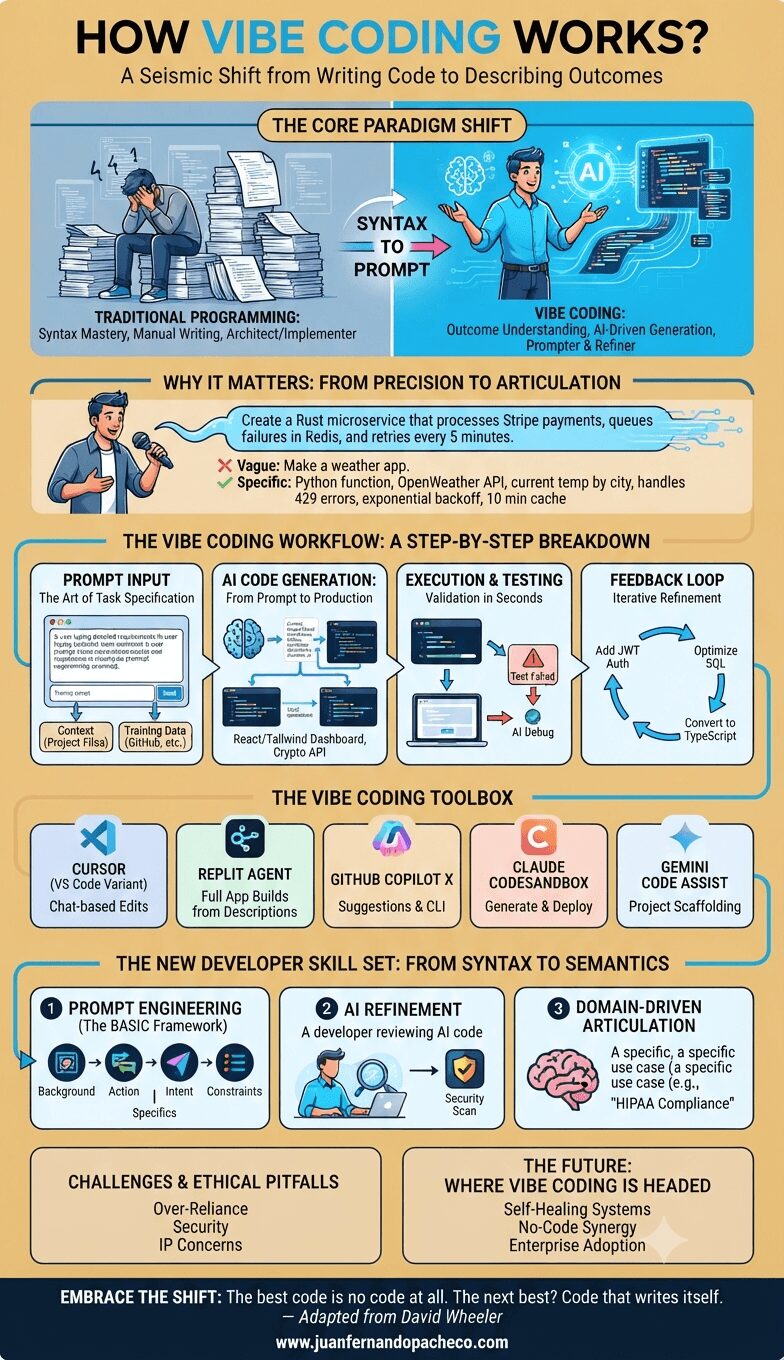
Vibe Coding isn’t replacing developers—it’s elevating us. By offloading syntax to AI, we focus on creative problem-solving, architecture, and innovation.
Start small: use GitHub Copilot for boilerplate code, then graduate to building full features with Claude CodeSandbox. The future belongs to those who describe outcomes, not just write instructions.
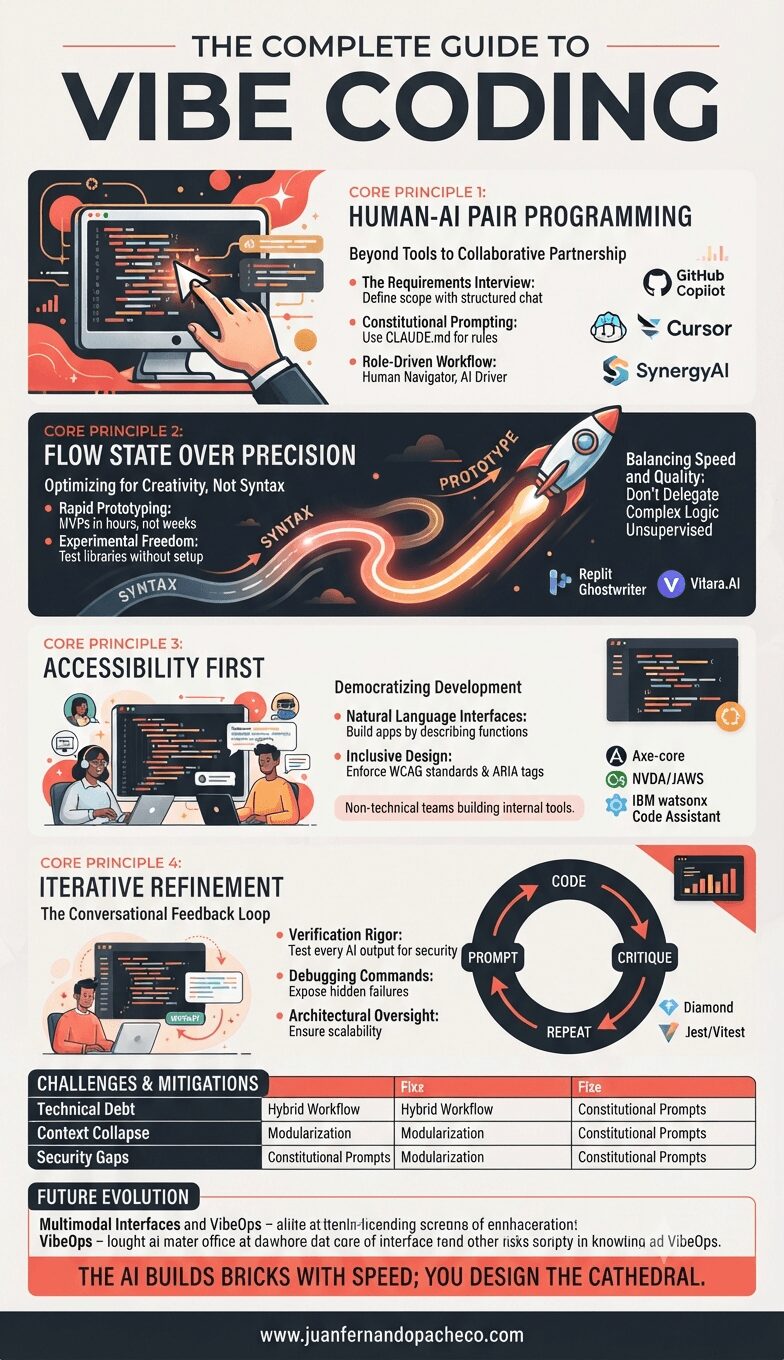
Coined by AI researcher Andrej Karpathy in 2025, vibe coding transcends traditional programming by treating natural language as the primary interface between human intent and machine execution.
For UX designers and architects like us, this represents more than a productivity boost—it’s a fundamental shift in how we translate vision into reality.
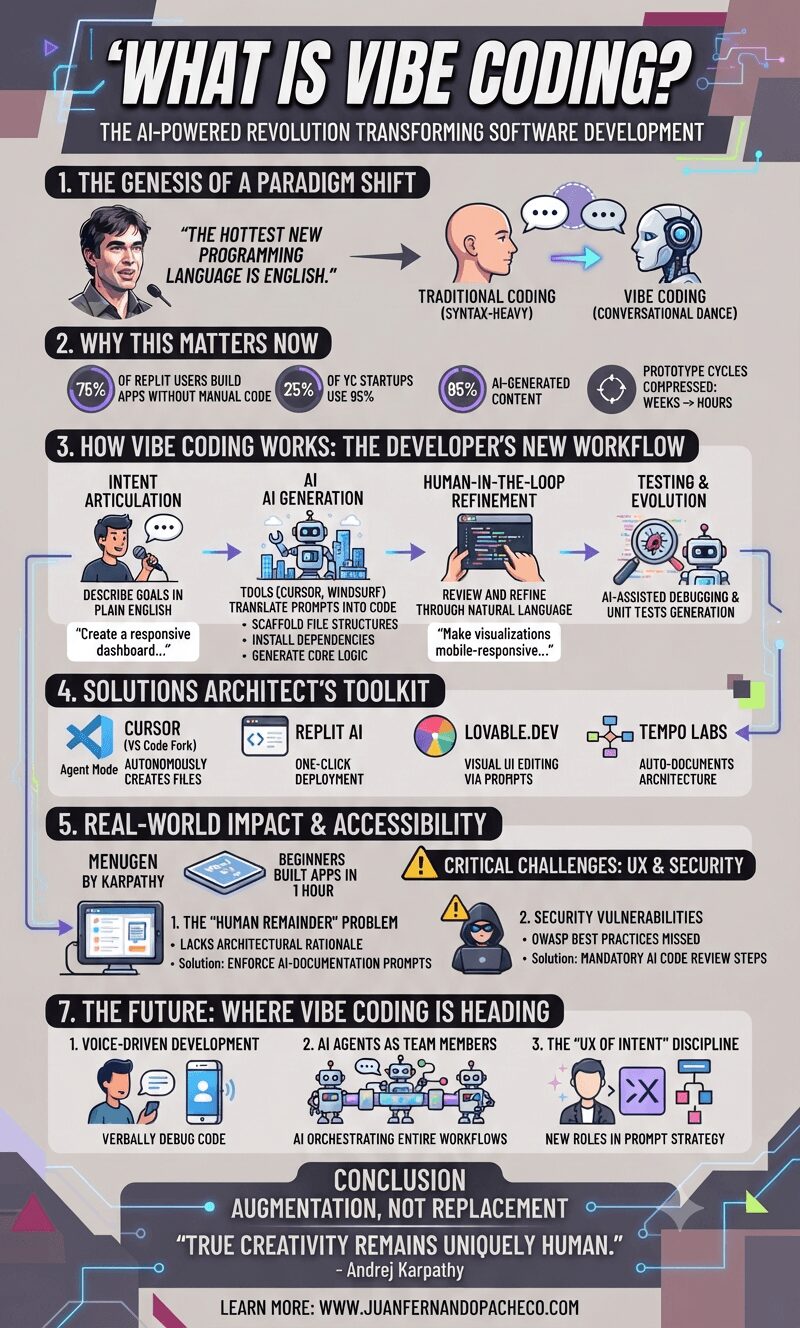
Coined in February 2025 by AI pioneer Andrej Karpathy (former Tesla AI director and OpenAI founding member), this methodology reimagines software creation as a conversational dance between human intention and AI execution.
Unlike traditional programming, vibe coding treats natural language as the primary interface: developers describe goals (e.g., “Build a REST API with JWT authentication”), and AI tools like GitHub Copilot generate executable code in real-time