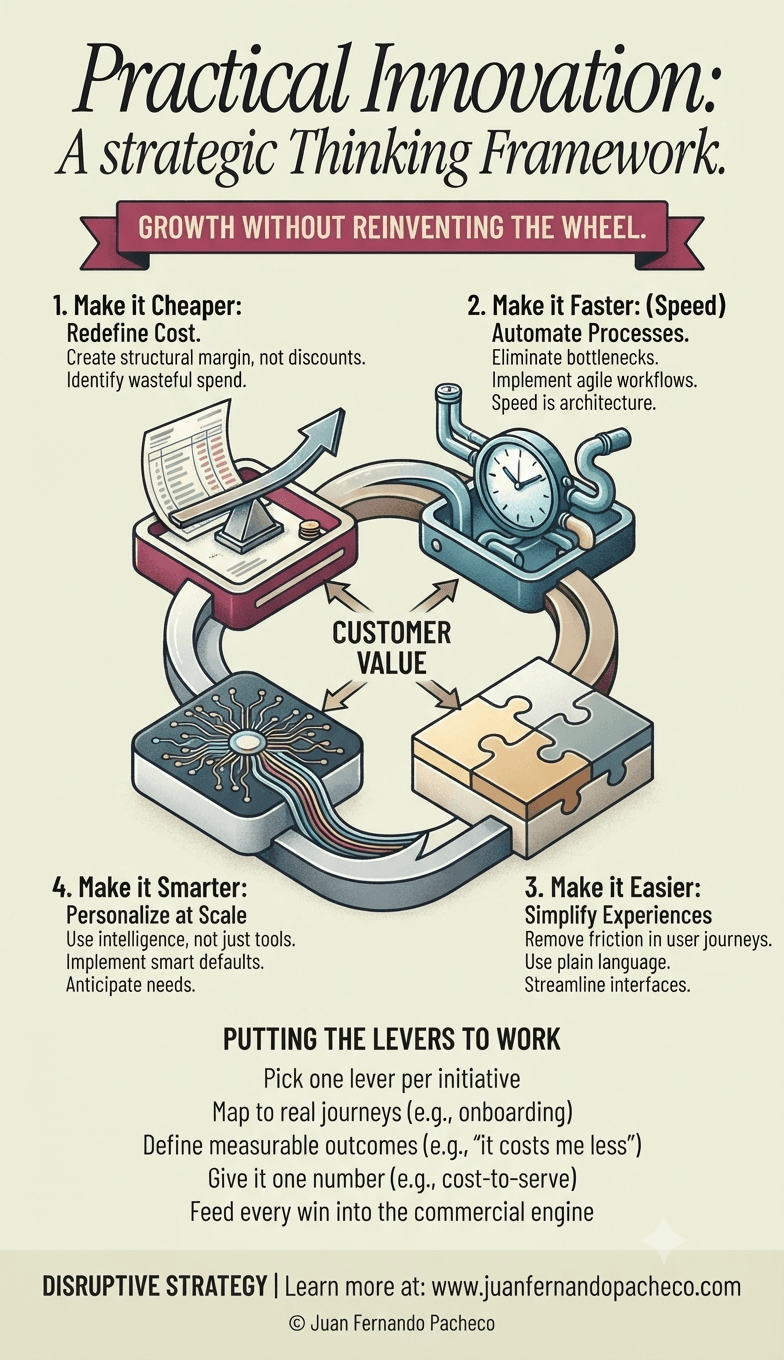
An infographic titled "Practical Innovation: A strategic Thinking Framework," featuring a central circular diagram made of four interconnected modules (red financial ledger, blue clock, gold puzzle, and grey AI network) with arrows pointing to "CUSTOMER VALUE." Detailed text below lists the four levers: 1. Make it Cheaper (Cost), 2. Make it Faster (Speed), 3. Make it Easier (Ease of Use), and 4. Make it Smarter (Personal). The bottom section outlines how to apply the framework with five steps. The footer includes the URL www.juanfernandopacheco.com.

Lasting growth rarely arrives as a breakthrough; it arrives as a habit. This post breaks down the four levers of practical innovation — cheaper, faster, easier, smarter — and shows how to apply them to products, services and enterprise deals so the value keeps compounding for years.

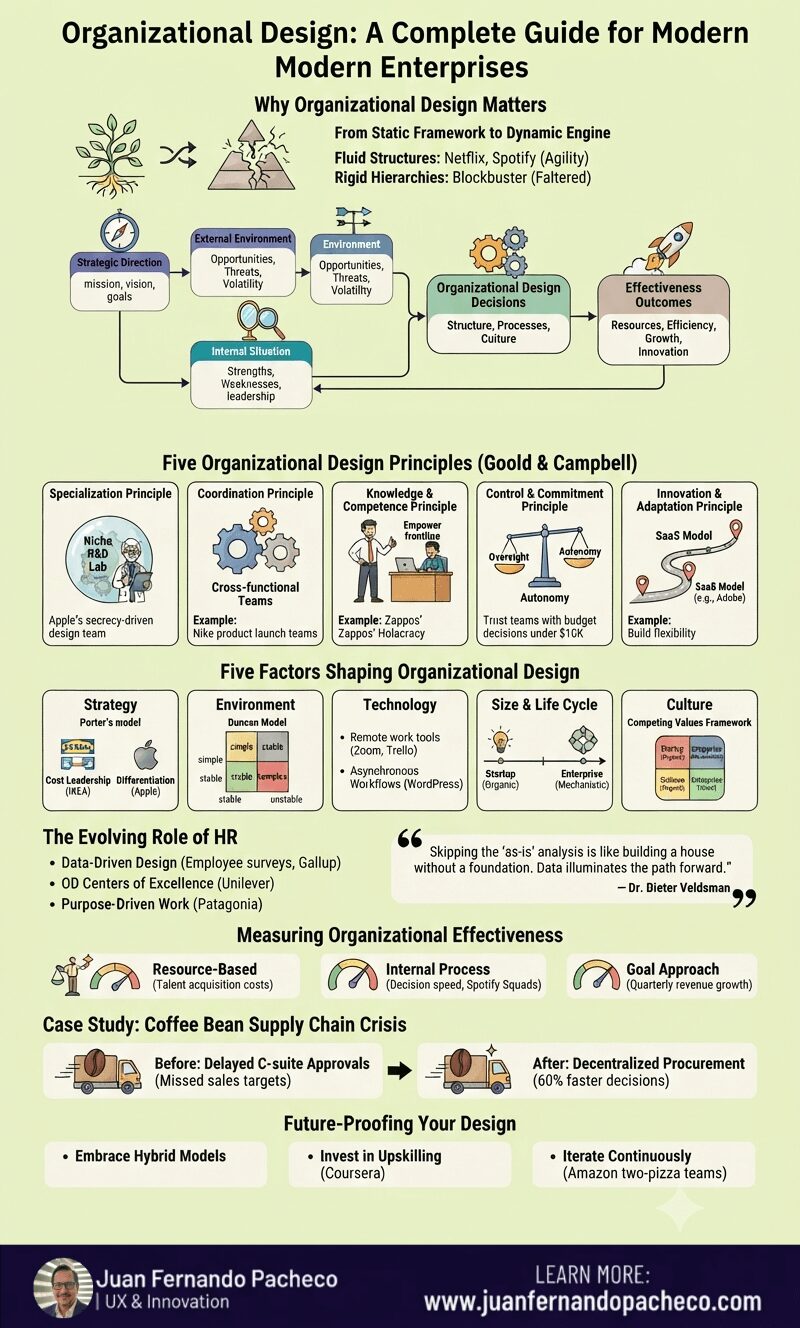
A vertical infographic titled "Organizational Design: A Complete Guide for Modern Enterprises," featuring a redesigned Figure 1 flowchart, key principles, drivers, HR roles, and measuring tools, all using a modern pastel color palette and abstract graphics, concluding with a website reference.

Organizational design isn’t a one-time project—it’s a journey. By aligning strategy, culture, and structure, businesses can navigate disruption, attract top talent, and outperform competitors. Start small: Audit your current design, involve cross-functional stakeholders, and prioritize flexibility. As the Greek philosopher Heraclitus said, “Change is the only constant.” Design for it.
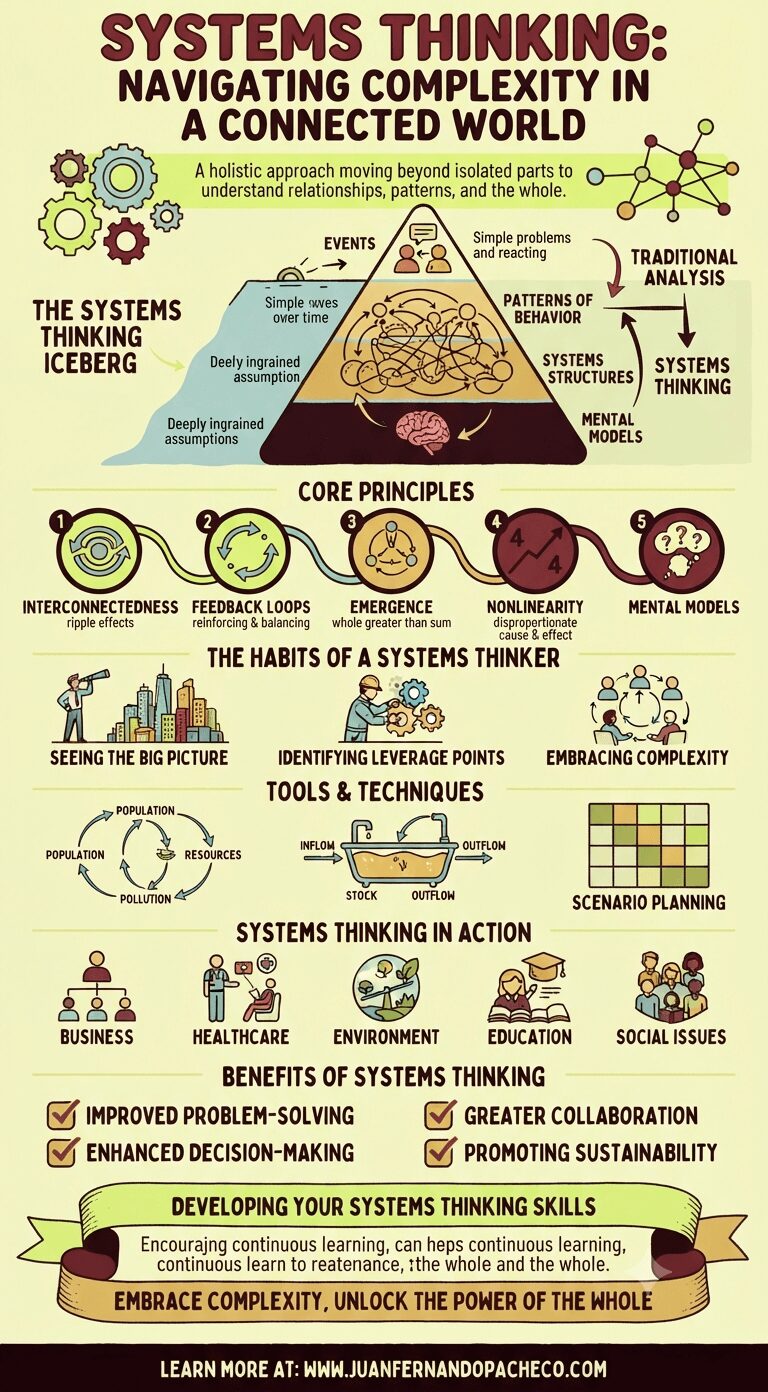
An infographic titled "Systems Thinking: Navigating Complexity in a Connected World," featuring a "Systems Thinking Iceberg" diagram that contrasts traditional analysis with systems thinking, followed by sections on core principles, habits, tools, applications, and benefits, all presented in an illustrative, illustrative style with a light cream and maroon color palette.

In a world characterized by complexity and rapid change, systems thinking is no longer a luxury, but a necessity.

By understanding the interconnectedness of systems and developing the skills to think holistically, we can unlock the power of the whole and create a more sustainable and prosperous future.