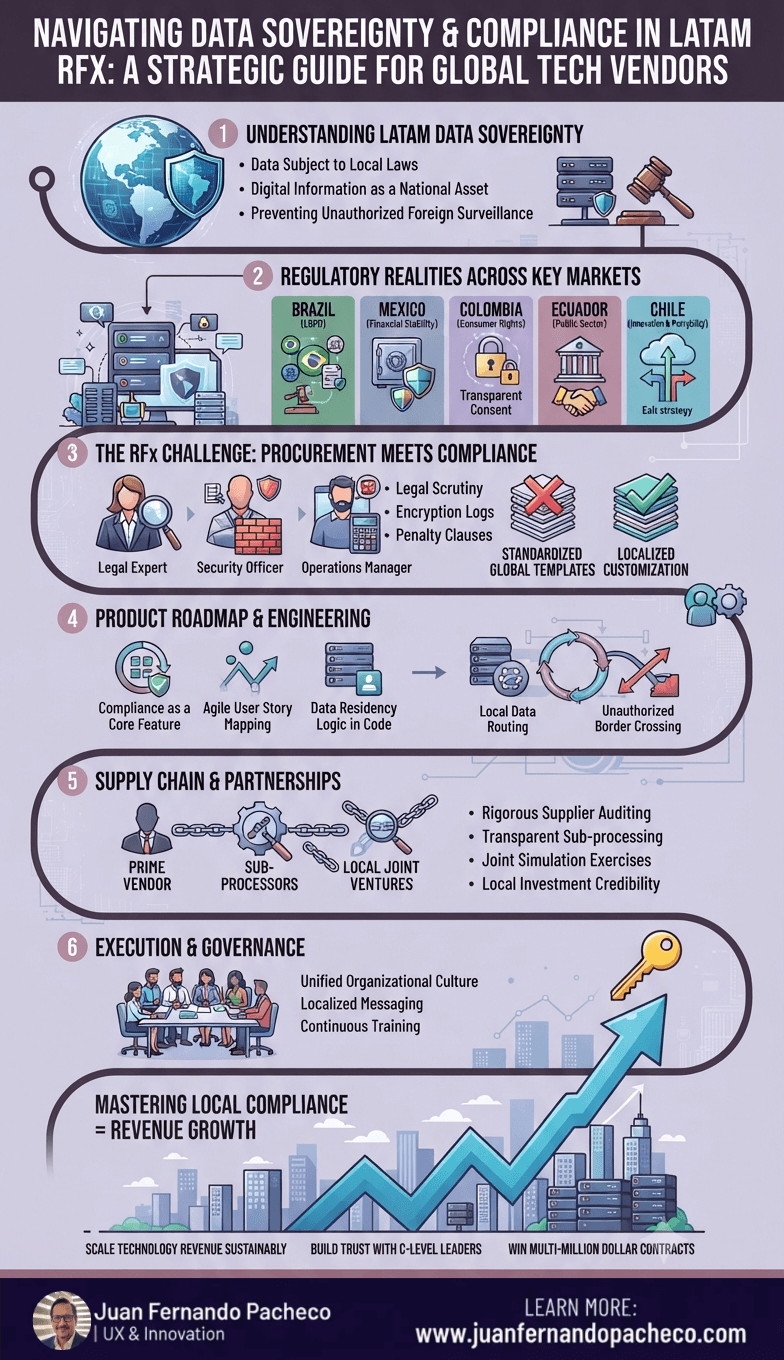
Technology leaders face complex regulatory hurdles when bidding on enterprise contracts in Latin America. This guide explores strategies to align product roadmaps with local compliance mandates and win high-stakes deals involving LATAM data sovereignty RFx.
Category: Business
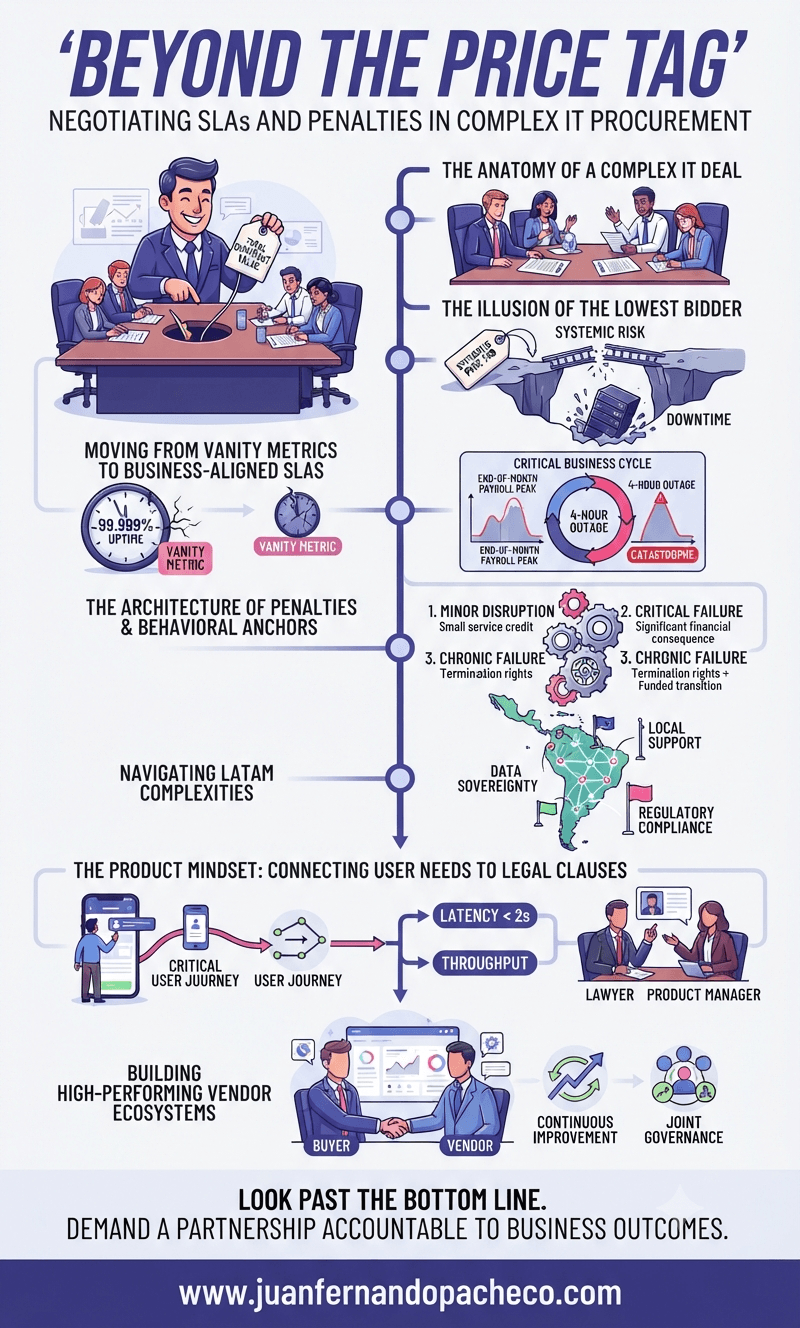
In high-stakes IT procurement, the initial price tag is merely the cost of entry. This guide explores how strategic leaders can negotiate SLAs and penalties that protect enterprise value, ensure regulatory compliance, and align vendor performance with actual business outcomes across complex markets.
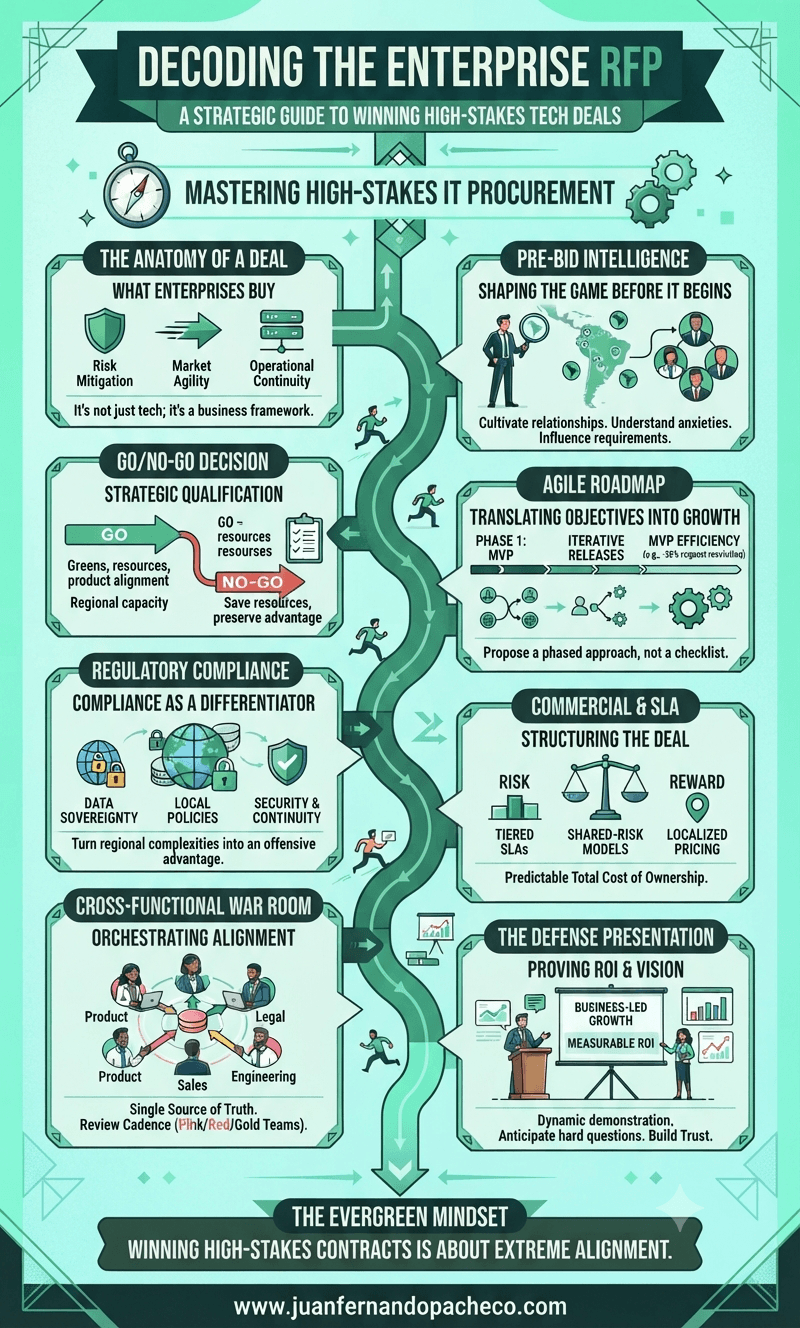
Winning multi-million-dollar technology contracts requires more than just compliance; it demands a deep understanding of commercial-product synergy, risk mitigation, and regional nuances. This guide breaks down the anatomy of a winning enterprise RFP strategy from pre-bid intelligence to final defense.
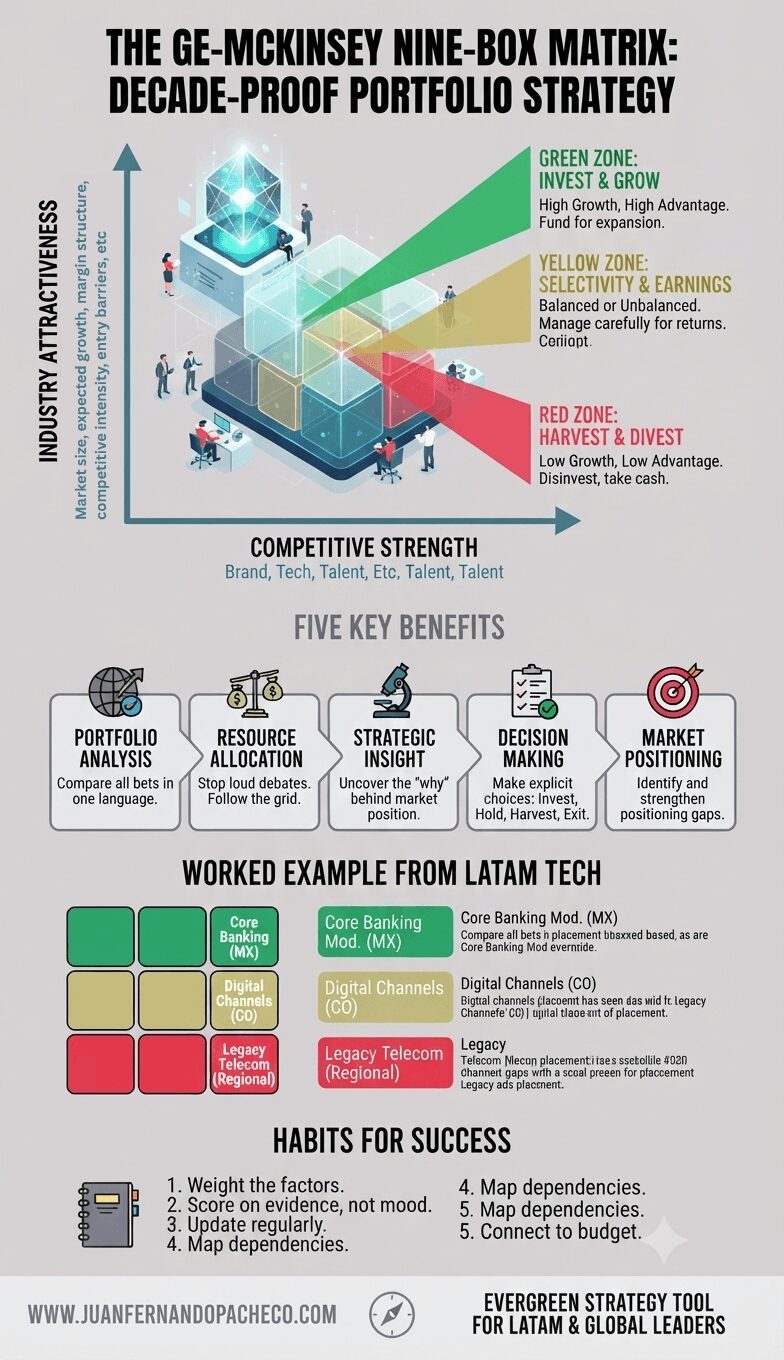
A field-tested, plain-language guide to the GE-McKinsey nine-box matrix, from scoring the two axes honestly to turning the nine boxes into clear invest, hold, and exit decisions. Written for leaders who manage products, services, markets, or deal pipelines and want a portfolio tool that stays useful for years.
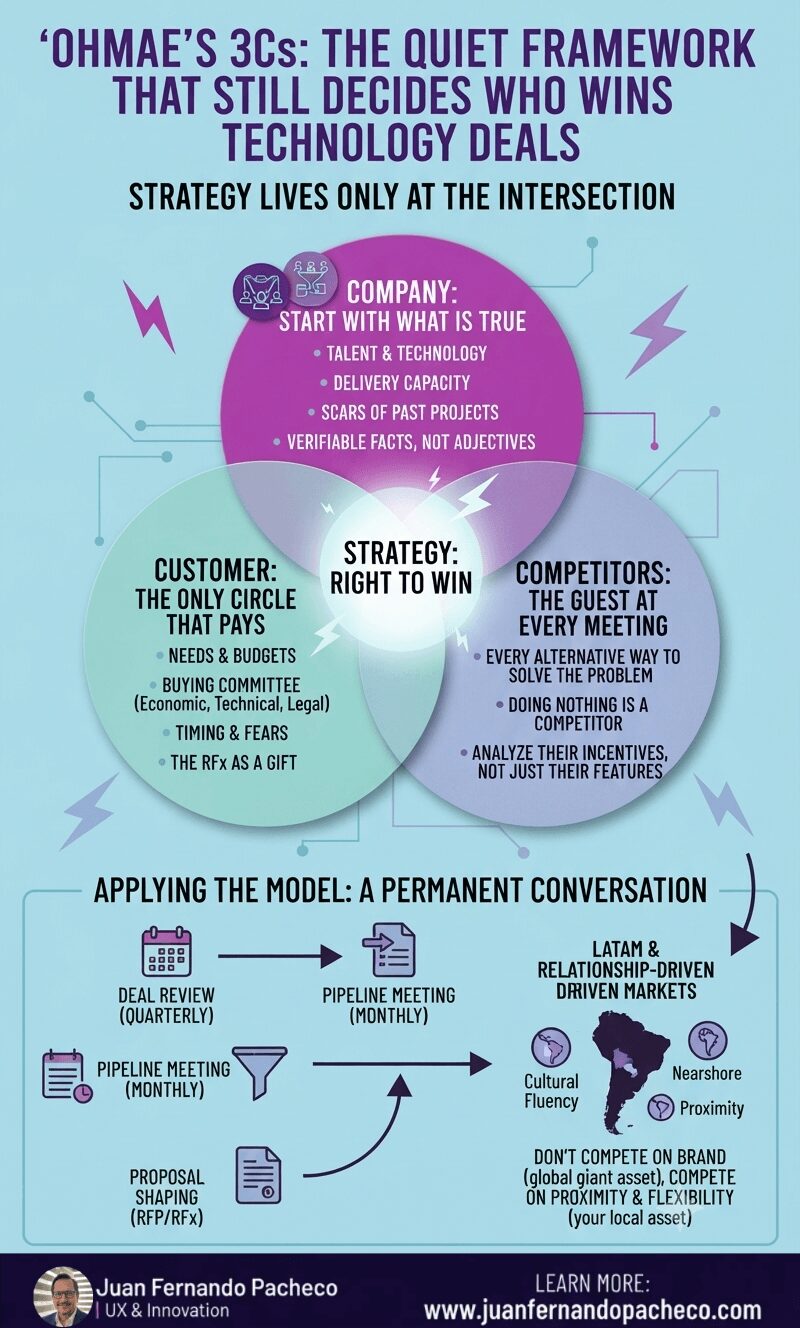
Ohmae’s 3Cs — company, customer and competitors — remain one of the clearest tests of whether a strategy actually exists. This post explains the triangle in plain language and shows how to use it in offers, RFx responses and LATAM deal strategy, today and five years from now.
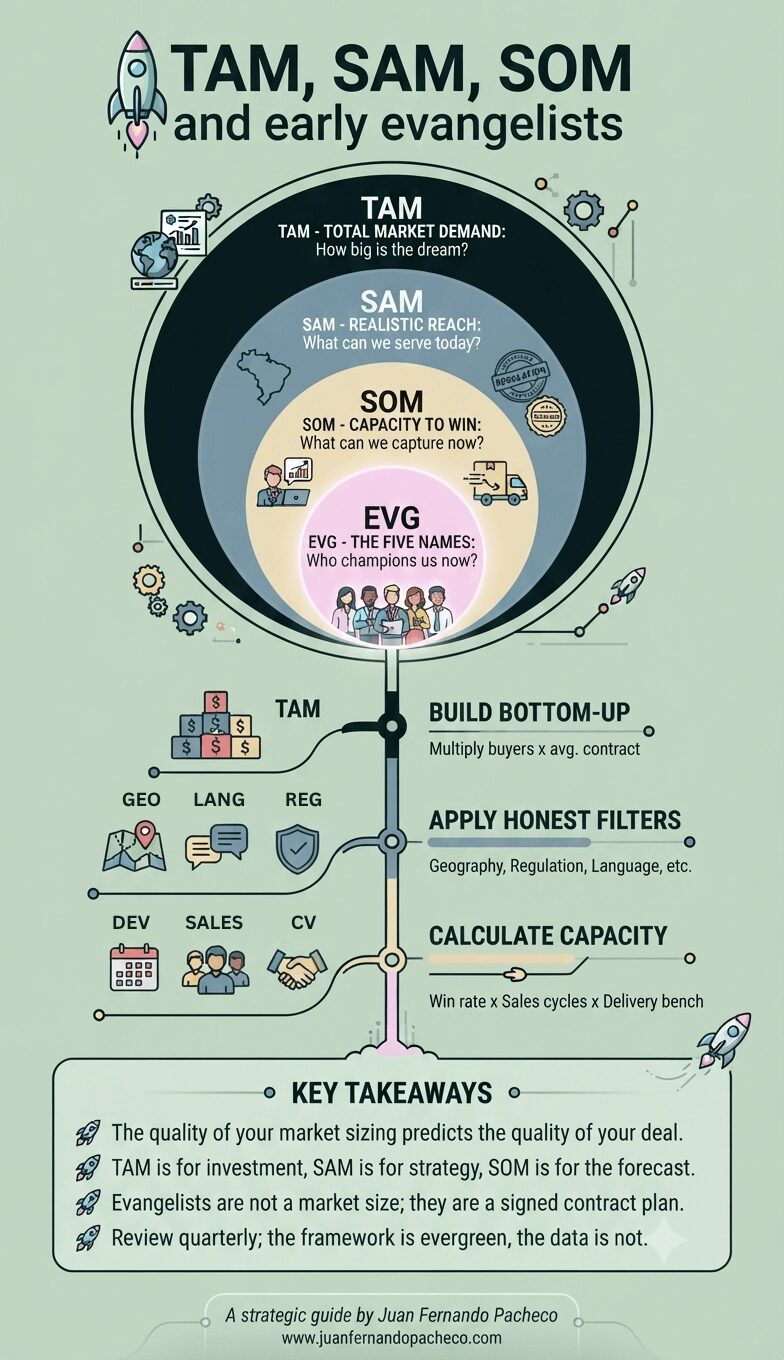
A plain-language, evergreen guide to the tam sam som framework and the early evangelist layer that turns market maps into signed contracts. Written from more than twenty years of designing, selling and delivering technology across Latin America.
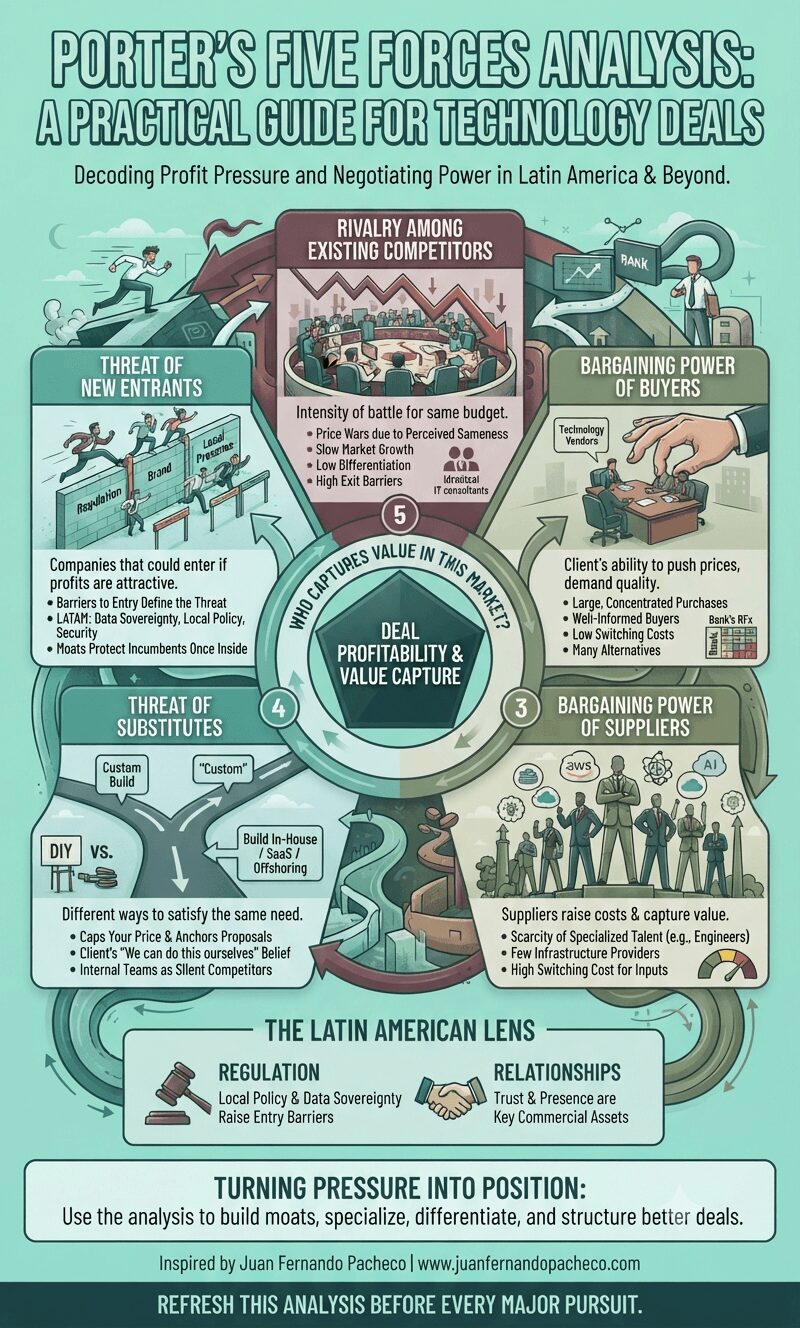
For most of my career, I learned to read those pressures by instinct, deal by deal, loss by loss.
Then I realized Michael Porter had already given us a disciplined way to see them in advance. His five forces model, first published in 1979, is still one of the most practical strategy tools ever created, not because it is sophisticated, but because it forces you to look beyond the competitors you can name and examine the entire structure of the market you fight in.
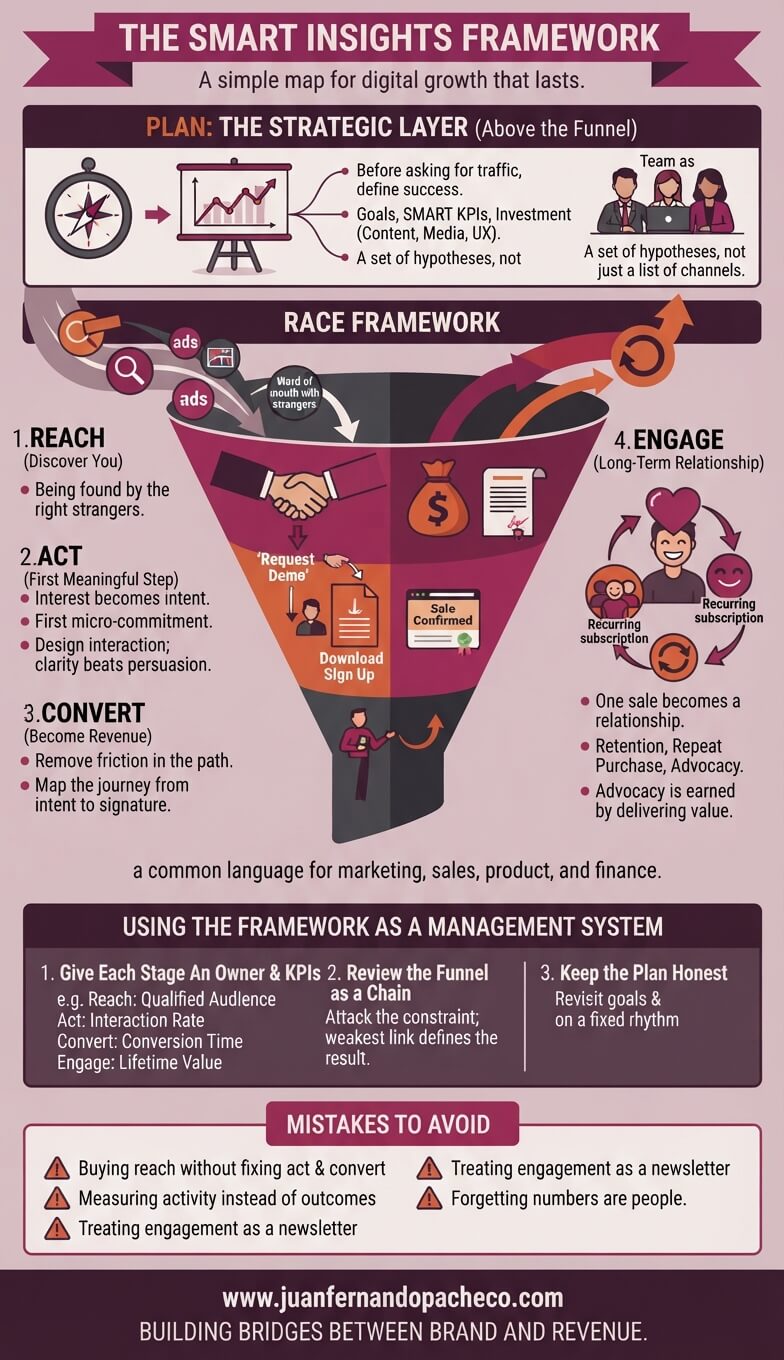
Tools, platforms, and algorithms will keep changing. The journey of a customer, to discover, interact, decide, and stay, is human, and therefore stable.
The smart insights framework endures because it is organized around that human journey and wrapped in the discipline of planning and measurement. Use it as your map, keep your KPIs honest, attack the constraint, and build engagement as seriously as you build acquisition.
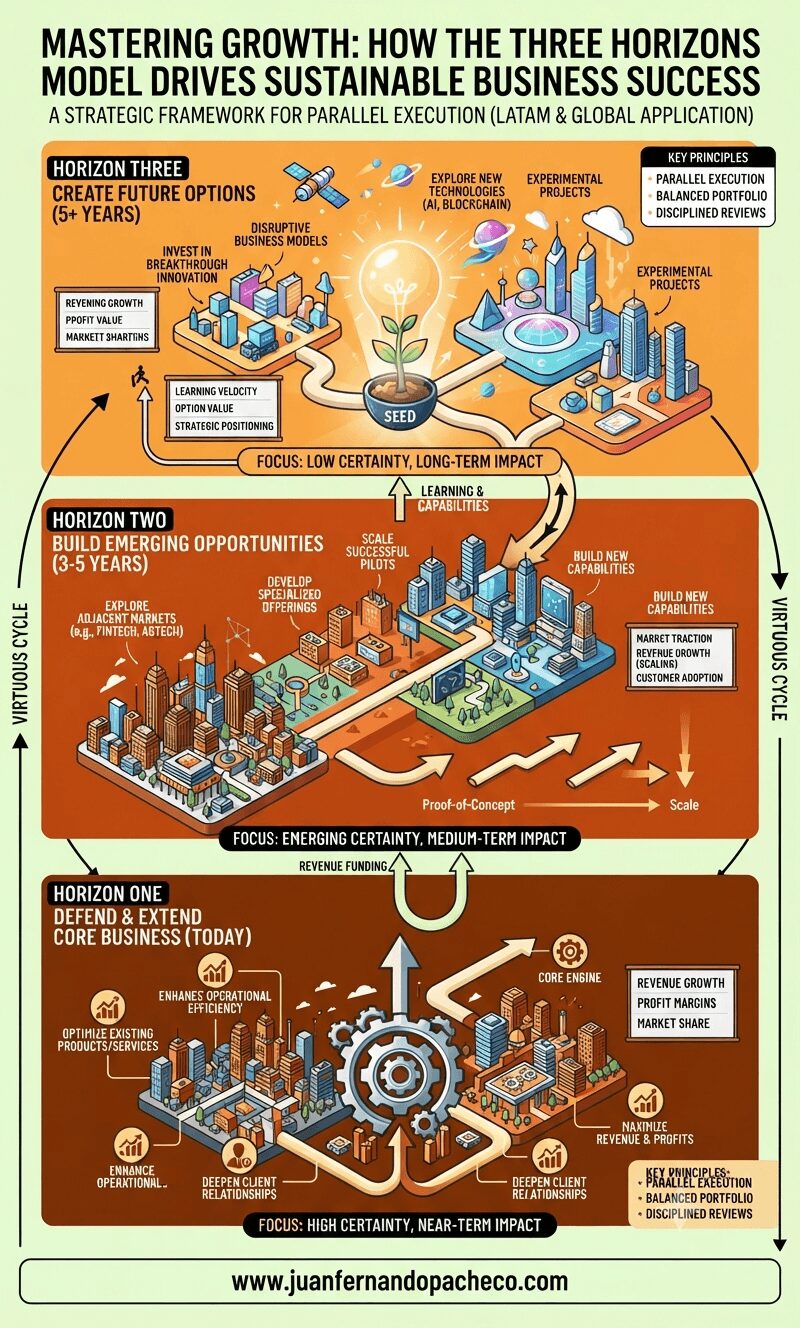
The three horizons model endures because it addresses a fundamental truth about business: sustainable success requires simultaneously managing the present and creating the future. It’s not enough to excel at what you do today. You must also build what you’ll do tomorrow and explore what you might do beyond that.
For leaders navigating complex markets, rapid technological change, and intense competitive pressure, this framework provides clarity amid complexity. It helps you make better decisions about where to invest, how to organize, and what to measure. Most importantly, it prevents the all-too-common trap of choosing between short-term results and long-term innovation.
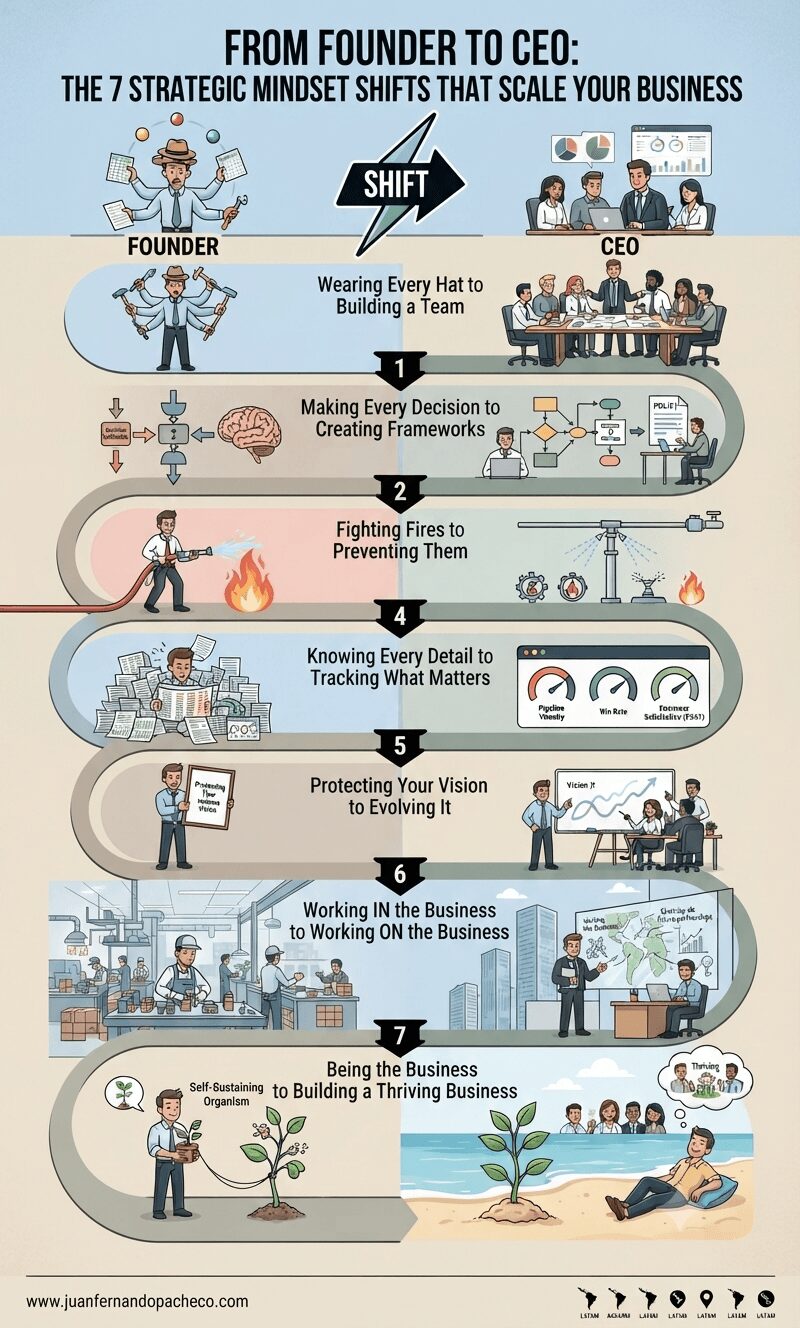
Transitioning from founder to CEO requires more than a title change—it demands a fundamental rewiring of how you think, work, and lead. Discover the seven strategic mindset shifts that separate scalable businesses from perpetual startups.