Strategies for cross-border success
Latin America presents a massive opportunity for technology companies
The region boasts a rapidly growing digital economy. Businesses constantly seek innovative software solutions. Yet many foreign enterprises fail to capture this value. They treat the region as a single monolithic market. This approach guarantees failure. Success requires deep local knowledge. You must understand distinct cultural and regulatory environments. My two decades of experience taught me valuable lessons. I navigated complex deals from Mexico to Brazil. I led cross-functional teams through stringent procurement processes. Today, I share my blueprint for success. We will explore the mechanics of enterprise sales. You will learn how to bridge product development with commercial strategy. Let us dive into the core pillars of regional expansion.
The myth of a unified market
Many executives view Latin America as a single entity
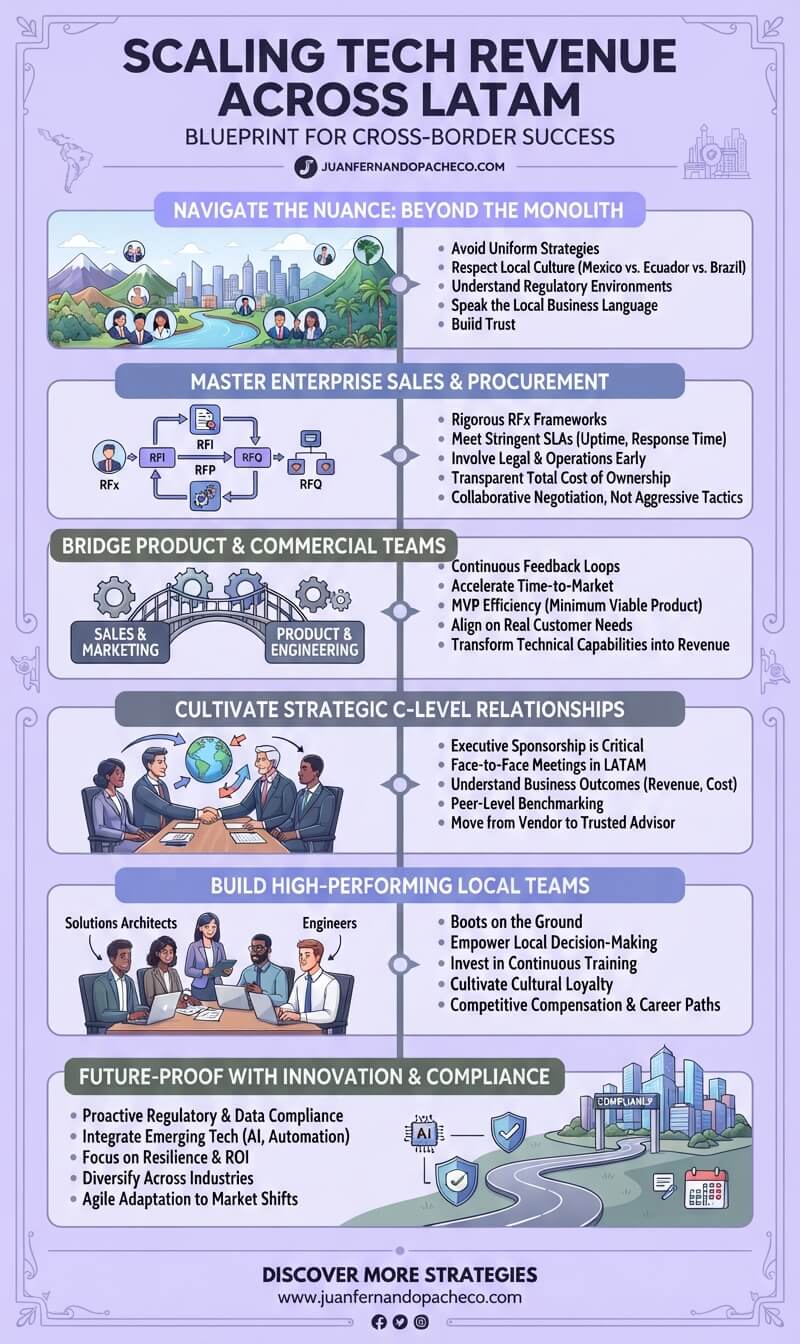
They apply a uniform go-to-market strategy. This mindset ignores profound regional differences. Consider the contrast between Mexico and Ecuador. Mexican enterprises often mirror United States procurement cycles. Ecuadorian businesses prioritize deep personal relationships first. Colombian markets demand intense focus on local partnerships. Brazilian organizations navigate incredibly complex tax structures. You cannot scale effectively without acknowledging these nuances. I spent years adapting my approach for each country. Local stakeholders expect vendors to understand their specific reality. Generic pitches immediately alienate decision-makers. You must tailor your value proposition. Research local industry pain points thoroughly. Speak the local business language fluently. This foundational respect opens doors to C-level boardrooms. Trust forms the bedrock of every lucrative contract.
Banking and finance sectors dominate regional technology spending
These industries demand extreme operational resilience. Retail companies focus heavily on customer experience platforms. Telecommunications providers invest massively in network modernization. Each sector possesses unique procurement behaviors. A solution working perfectly in Bogota might fail in Lima. Economic volatility also impacts purchasing decisions. Currency fluctuations force companies to adjust budgets constantly. Smart vendors build flexible pricing models. They offer localized payment terms to ease financial strain. This commercial empathy wins massive enterprise deals. You must anticipate these macroeconomic challenges. Proactive financial structuring demonstrates true partnership. Clients remember vendors who support them during tough times.
Mastering high-stakes procurement processes
Enterprise technology deals involve rigorous procurement cycles
Large organizations utilize complex RFx frameworks. These include requests for information, quotes, and proposals. Navigating these processes demands extreme precision. A single missed compliance requirement ruins your chances. I managed multi-million-dollar contracts for top regional banks. These institutions enforce incredibly strict vendor guidelines. You must address stringent service level agreements. Uptime guarantees and response times require careful negotiation. Penalties for non-compliance can destroy your profit margins. Therefore, involve your legal team early. Subject matter experts must review every technical clause. Operations leaders need to validate delivery timelines. Cross-functional alignment prevents costly operational risks. I always ensure one hundred percent on-time delivery. This track record builds immense credibility. Procurement officers reward reliable partners with long-term renewals.
Requests for information serve as initial filtering mechanisms
Buyers use them to map the competitive landscape. Provide comprehensive but concise capability overviews here. Highlight your unique differentiators clearly. Requests for proposals demand deep technical architectures. Your engineering team must design robust solutions. Include detailed implementation timelines and resource allocations. Financial evaluators will scrutinize your total cost of ownership. Break down licensing, maintenance, and support fees transparently. Hidden costs immediately disqualify vendors from serious consideration. Requests for quotes focus purely on commercial terms. Negotiate volume discounts and multi-year commitments strategically. Always maintain a collaborative tone during these negotiations. Aggressive tactics backfire in relationship-driven cultures. Mutual value creation should guide every concession.
Navigating regulatory compliance and data sovereignty
Governments across the region increasingly prioritize data protection
Local policies dictate strict data sovereignty rules. Financial institutions face intense regulatory scrutiny. You must host sensitive information within national borders. Ignoring these mandates invites severe legal consequences. I helped global firms adapt their cloud architectures. We structured deployments to satisfy local regulators. This proactive approach mitigates massive operational risks. Security requirements also vary significantly by sector. Retail companies prioritize consumer privacy frameworks. Telecommunications providers focus on network resilience standards. Your engineering team must build flexible infrastructure. Modular architectures allow rapid compliance adjustments. Always consult local legal counsel before launching. They understand the subtle shifts in government mandates. Staying ahead of regulatory curves provides a distinct competitive advantage.
Central banks enforce stringent cybersecurity protocols
They require annual third-party vulnerability assessments. Your security team must prepare extensive documentation. Auditors will examine your incident response plans thoroughly. Demonstrating mature security postures accelerates procurement approvals. Furthermore, labor laws impact software deployment strategies. Some countries mandate local technical support teams. You cannot route all helpdesk calls to offshore centers. Factor these operational requirements into your pricing models. Compliance is not just a legal hurdle. It represents a fundamental component of your value proposition. Clients pay premiums for vendors who simplify regulatory burdens. Position your compliance expertise as a core differentiator. This strategy elevates your brand above cheaper competitors.
Bridging the gap between sales and product
Commercial teams often overpromise capabilities
Product teams frequently build features nobody wants. This disconnect destroys enterprise value. I specialize in translating client requests into agile roadmaps. Sales leaders must communicate market gaps accurately. Product owners need to prioritize user stories effectively. This synergy accelerates time-to-market significantly. We boosted user adoption by fifteen percent recently. The secret lies in continuous feedback loops. Engagement managers should relay client frustrations directly. Engineers must understand the commercial impact of delays. I championed streamlined proof of concept development. Rapid prototyping reduces customer request resolution times. High-performing teams focus on minimum viable product efficiency. This methodology satisfies demanding enterprise stakeholders. It also keeps development costs remarkably low. Alignment transforms technical capabilities into scalable revenue engines.
User story mapping sessions bridge this divide beautifully
Gather sales, marketing, and engineering in one room. Map out the exact customer journey together. Identify friction points that hinder adoption. Prioritize features that solve actual business problems. Avoid building vanity metrics or complex dashboards nobody uses. Agile methodologies thrive on this collaborative environment. Sprint reviews should always include commercial stakeholders. Let them see the product evolving in real time. This transparency builds immense internal confidence. Sales teams sell products they genuinely understand and trust. Product teams build solutions they know will generate revenue. This virtuous cycle drives sustainable business growth. Break down departmental silos ruthlessly. Shared goals unite diverse teams effectively.
Cultivating C-level relationships
Transactions rarely happen without executive sponsorship
You must forge connections with board members. Face-to-face meetings remain crucial in Latin America. Virtual calls cannot replace shared physical presence. I travel extensively across the region. Sitting across a table builds genuine rapport. Decision-makers evaluate your character closely. They want partners who share their long-term vision. Regular check-ins demonstrate your commitment. Do not just appear when renewing contracts. Share valuable industry insights proactively. Introduce them to your global subject matter experts. These interactions elevate your status from vendor to advisor. Trusted advisors win sole-source negotiations. They also secure massive multi-year commitments. Relationship management requires consistent effort. Dedicate resources to nurturing these vital connections. Your network ultimately determines your regional ceiling.
Executive stakeholders care about strategic business outcomes
They rarely discuss technical specifications or code quality. Frame your conversations around revenue generation and cost reduction. Explain how your technology accelerates their digital transformation. Discuss risk mitigation and competitive positioning. Bring case studies from similar global enterprises. Show them how industry leaders solve identical challenges. This peer-level benchmarking resonates deeply with executives. Invite them to exclusive industry roundtables. Facilitate networking opportunities with other regional leaders. Become a central hub of valuable business intelligence. This approach cements your indispensable status. Clients will defend your pricing to their procurement teams. They view you as a strategic asset rather than an expense.
Building high-performing local teams
Foreign companies often rely entirely on remote support
This strategy limits your market penetration. You need boots on the ground. Local talent understands the cultural context perfectly. I built diverse teams across multiple countries. We hired brilliant solutions architects and designers. These professionals bridge the communication gap. They translate global capabilities into local solutions. Empower your regional staff to make decisions. Autonomy fosters immense loyalty and productivity. Provide them with continuous training opportunities. Certifications in digital marketing and cloud computing help. A well-equipped team executes complex deals flawlessly. They also identify emerging market opportunities early. Invest heavily in your human capital. Your people represent your most valuable regional asset.
Retention poses a significant challenge in tech hubs
Top engineers receive constant offers from global firms. You must create compelling employee value propositions. Offer competitive compensation packages tied to regional realities. Provide clear career progression paths. Mentorship programs cultivate deep organizational loyalty. Celebrate local cultural holidays and traditions. Foster an inclusive environment that respects diverse backgrounds. High morale translates directly to better customer experiences. Happy employees build stronger client relationships. They act as passionate brand ambassadors in the market. Your reputation depends entirely on their daily interactions. Treat your local teams with immense respect. They are the true engines of your regional success.
Executing flawless proof of concept deployments
Enterprise buyers demand tangible proof before committing
Lengthy pilot programs drain your resources. You must design highly efficient proof of concept phases. Define clear success metrics upfront. Limit the scope to critical business problems. My teams reduced resolution times by thirty percent. We achieved this by scoping pilots ruthlessly. Avoid feature creep during these crucial evaluations. Focus entirely on demonstrating core value propositions. Gather user feedback continuously during the trial. Adjust the implementation strategy based on real data. A successful pilot naturally leads to enterprise-wide adoption. Document every victory meticulously. Use these case studies to accelerate future sales cycles. Efficient executions separate market leaders from struggling vendors.
Stakeholder alignment ensures pilot success
Identify the key users who will test the system. Train them thoroughly before the evaluation begins. Provide dedicated support channels during the trial period. Address technical glitches immediately to maintain momentum. Quantify the business impact using hard data. Calculate time saved or revenue generated during the pilot. Present these findings to the executive steering committee. Visual dashboards communicate value much faster than spreadsheets. Secure formal sign-off before expanding the deployment. This disciplined approach minimizes financial risks. It also builds tremendous trust with cautious buyers. Prove your worth quickly and move to full production.
Leveraging partner ecosystems effectively
Direct sales models cannot cover entire continents
You need strategic local alliances. Channel partners possess established relationships with key buyers. They understand local procurement nuances intimately. Identify system integrators with strong regional footprints. Build mutually beneficial revenue-sharing agreements. Provide them with extensive technical enablement. Train their sales teams on your value propositions. Joint marketing campaigns generate high-quality leads. Co-selling accelerates market penetration significantly. I coordinated relationship-building efforts with numerous partners. We aligned our engagement managers with their account teams. This unified front presents a seamless experience to clients. Partners extend your reach without massive capital expenditure. Choose your allies carefully and nurture those relationships.
Conflict resolution requires clear rules of engagement
Define lead registration processes transparently. Protect your partners from direct channel conflict. Compensate them fairly for their origination efforts. Regular partnership reviews identify areas for improvement. Share your product roadmaps with them early. This foresight allows them to plan their own strategies. A thriving ecosystem generates predictable recurring revenue. It also provides valuable market intelligence. Partners hear rumors about competitor movements first. They alert you to shifting client priorities. Treat your channel network as an extension of your own company. Their success directly fuels your regional growth.
Measuring progress and optimizing strategy
You cannot improve what you do not measure
Establish clear quarterly targets with regional leaders. Track pipeline velocity and win rates diligently. I routinely report progress against these benchmarks. Analyze lost deals to identify systemic weaknesses. Perhaps your pricing model misses the mark. Maybe your technical proposal lacked sufficient detail. Use these insights to refine your approach. Market conditions change rapidly across the region. Agile businesses adapt their strategies continuously. Celebrate small wins to maintain team morale. Recognize outstanding performance publicly. A data-driven approach ensures sustainable growth. It also highlights areas requiring immediate intervention. Keep your finger on the pulse of your operations.
Customer relationship management systems require strict discipline
Sales representatives must update deal stages accurately. Forecasting accuracy depends entirely on clean data. Review pipeline health weekly with your management team. Identify stalled deals and develop rescue strategies. Bring in subject matter experts to unblock technical hurdles. Executive sponsors can help navigate procurement bottlenecks. This proactive pipeline management prevents revenue shortfalls. It also provides visibility to global leadership. Accurate forecasts secure necessary corporate investments. They justify hiring additional local talent. Treat your CRM as a strategic asset. It guides your daily tactical decisions effectively.
Future-proofing your regional operations
The technology landscape evolves at a blistering pace
Artificial intelligence and automation disrupt traditional business models. LATAM enterprises actively seek these advanced capabilities. You must integrate emerging technologies into your offerings. Upskill your local teams continuously. Host hackathons to solve regional problems using new tools. Innovation labs attract top-tier engineering talent. They also generate compelling marketing narratives. Clients view innovative vendors as future-proof partners. Stagnant companies quickly lose market share. Anticipate regulatory shifts regarding artificial intelligence ethics. Build responsible AI frameworks into your product designs. This foresight protects your clients from future compliance risks. Continuous adaptation guarantees long-term relevance.
Economic cycles will inevitably test your resilience
Recessions force companies to slash technology budgets. Your solutions must demonstrate undeniable return on investment. Focus on cost-optimization and efficiency-boosting features. Help your clients do more with limited resources. Flexible subscription models ease their cash flow burdens. Maintain strong relationships during economic downturns. Be the first vendor they call when budgets recover. Loyalty forged in difficult times yields massive dividends. Your strategic patience will pay off handsomely. Build a diversified portfolio across multiple industries. This strategy insulates you from sector-specific shocks. Resilience defines true market leadership.
Conclusion
The Latin American technology market offers incredible potential. However, capturing this value demands strategic discipline. You must respect local nuances and cultural differences. Mastering complex procurement frameworks is essential. Regulatory compliance requires proactive architectural planning. Furthermore, aligning product roadmaps with commercial goals drives adoption.
Ultimately, success hinges on deep executive relationships. Build trust through consistent face-to-face engagement. Empower local teams to navigate regional complexities. My two decades of experience prove this formula works. We secured multi-million-dollar contracts using these exact methods. The landscape will undoubtedly evolve over the next decade. Yet these foundational principles remain completely timeless. Focus on delivering genuine value to your clients. They will reward you with enduring partnerships.
Start implementing these strategies today. Your cross-border success story begins right now.