![An infographic titled "The Point of View Strategy Formula" on a light green background, illustrating a three-step process of Insight, Action, and Outcome. The Insight section shows an iceberg labeled "HUMAN TRUTH," the Action section shows a gear mechanism, and the Outcome section shows an upward-trending graph with a rocket. Below the steps, the formula reads: "This [key insight] means we should do [action] and it will create [outcome]." It includes sections on "Common Shallow Traps to Avoid" and "Case Examples" for a Designer, Business Developer, and Career Manager. The footer contains the URL "www.juanfernandopacheco.com".](https://juanfernandopacheco.com/wp-content/uploads/2026/08/The-Point-of-View-POV-Strategy-Formula-Infographic.png)
A clear point of view is the smallest usable unit of strategy. This guide breaks down the insight–action–outcome formula, shows how to pressure-test each part, and applies it to product decisions, enterprise deals, and career moves — as useful today as it will be in five years.
Tag: Business Strategy
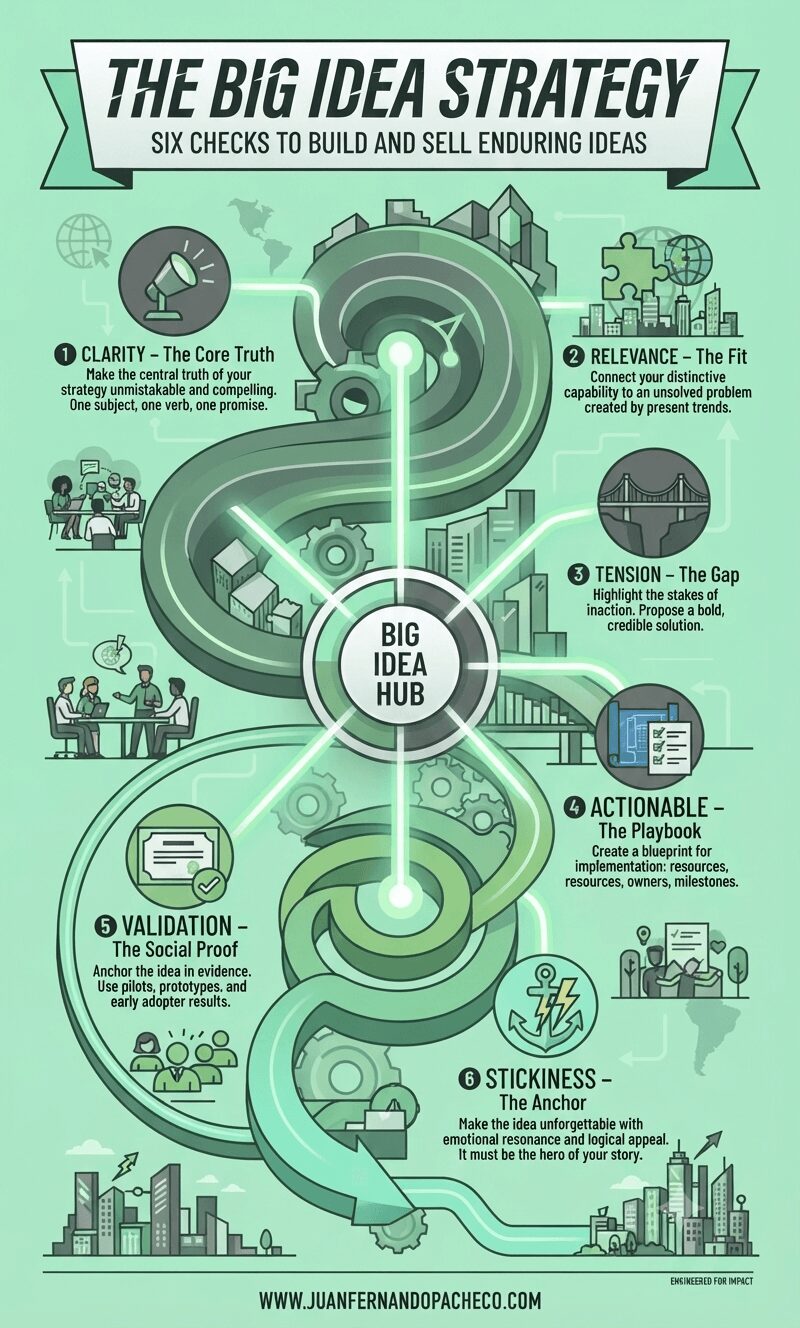
The big idea is the central, unifying concept that gives a strategy purpose, momentum and difference. This post walks through the six checks – clarity, relevance, tension, an actionable playbook, validation and stickiness – and shows how to apply them to products, plans and high-stakes enterprise deals.
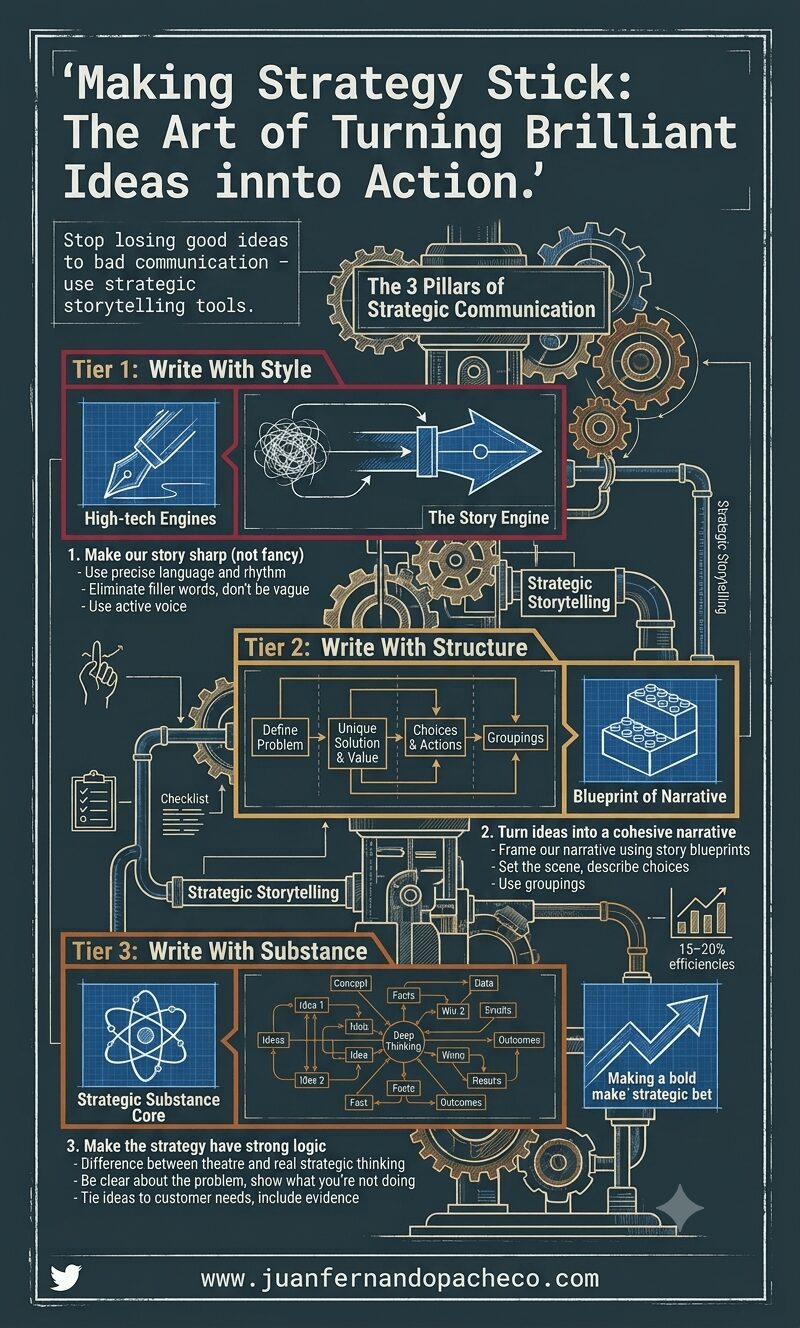
Great strategies fail when communication fails. Discover the three essential pillars—style, structure, and substance—that transform complex ideas into clear, actionable narratives that drive results in enterprise deals and organizational change.
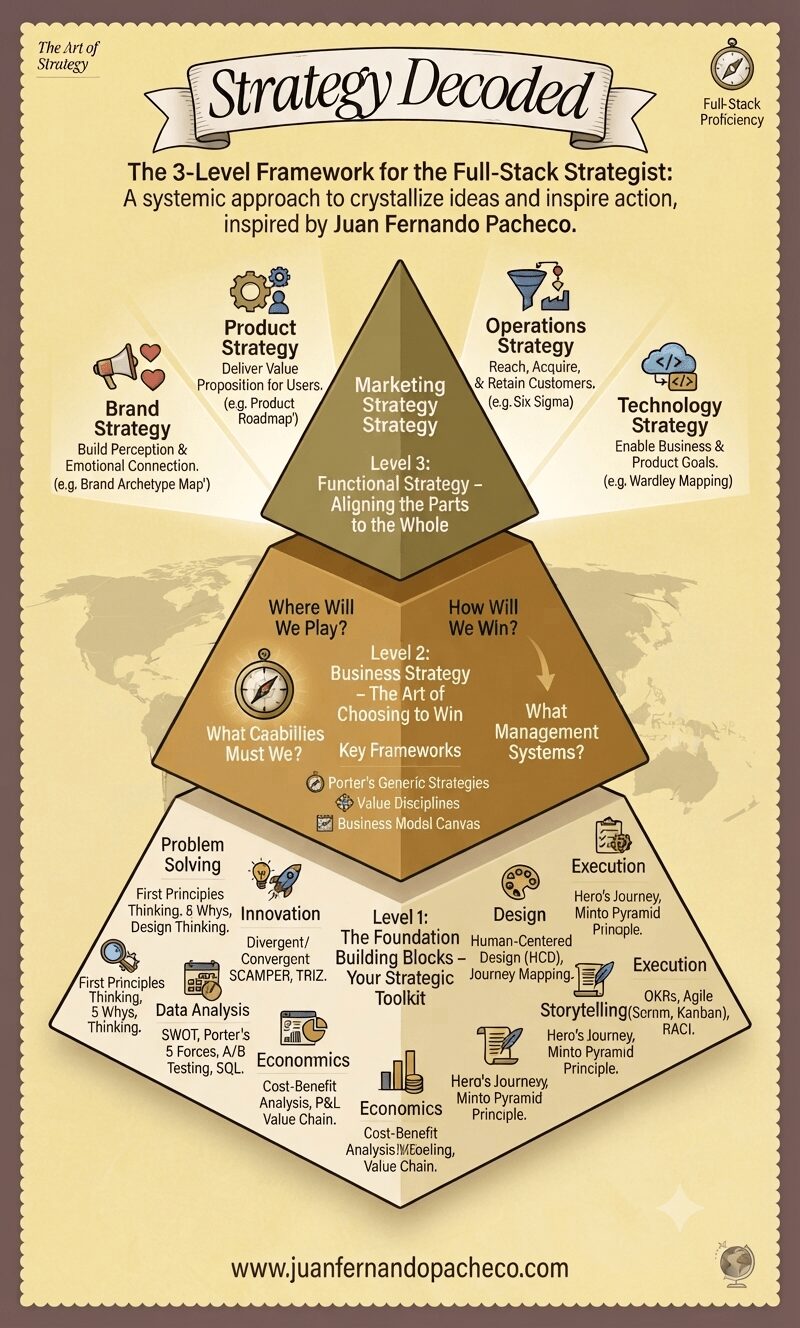
Becoming a full-stack strategist is a journey.
Start by auditing your proficiency in the seven building blocks. Where are you strong? Where do you need improvement?
Then, practice articulating the business strategy for your team or company—even if it’s not your official job.
Finally, constantly scrutinize your functional work (whether in design, tech, product, or marketing) and ask: “Does this truly ladder up to how we’ve chosen to win?”
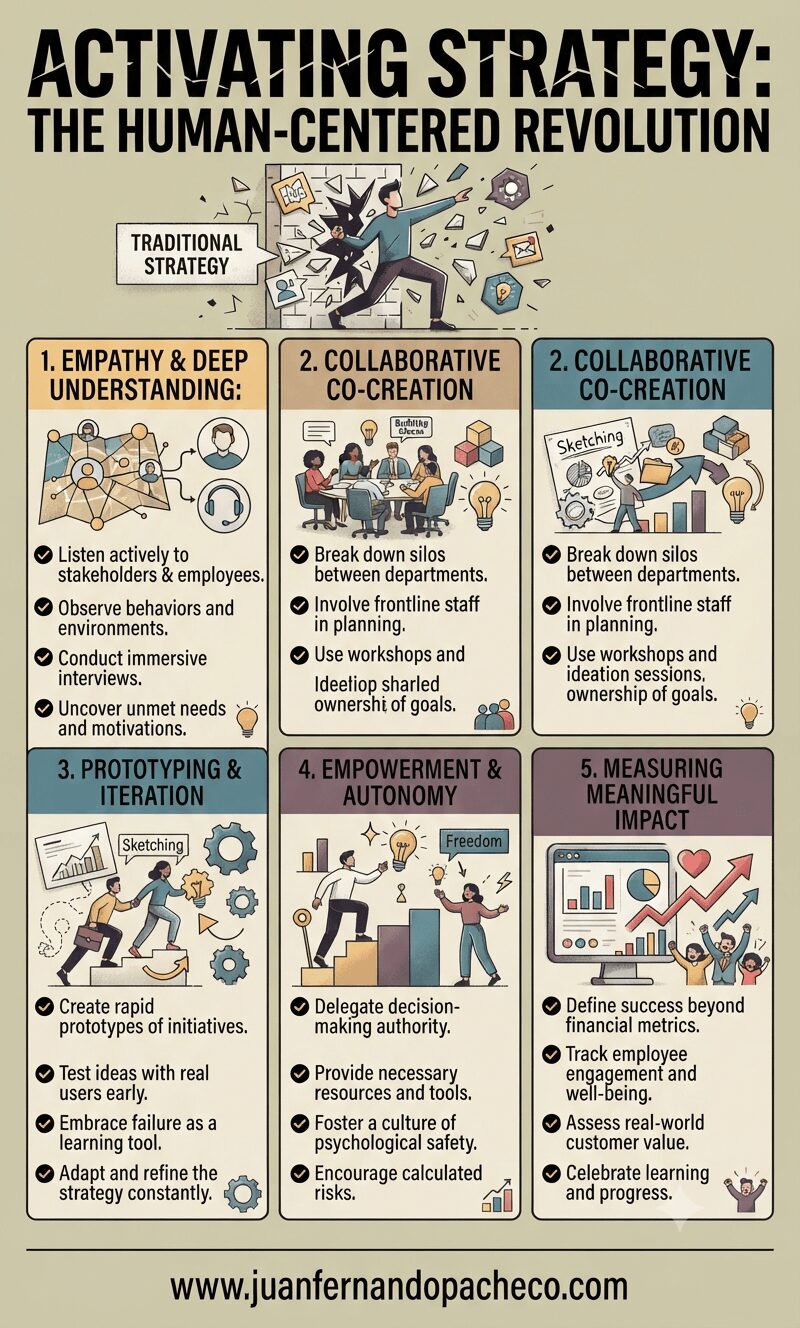
Activating strategy requires shifting from “planning” to “doing” through collaboration, experimentation, and agility. As Reed Hastings of Netflix says,
“Strategy is never done; it’s a living process”.
Start small, engage broadly, and iterate relentlessly.