
A high-stakes RFP demands more than a polished response document. It requires engineering, legal, and sales teams to operate as a single commercial unit from day one. This guide breaks down the frameworks, communication rhythms, and leadership decisions that turn fragmented departments into a unified deal-winning machine.
Tag: Designing strategy
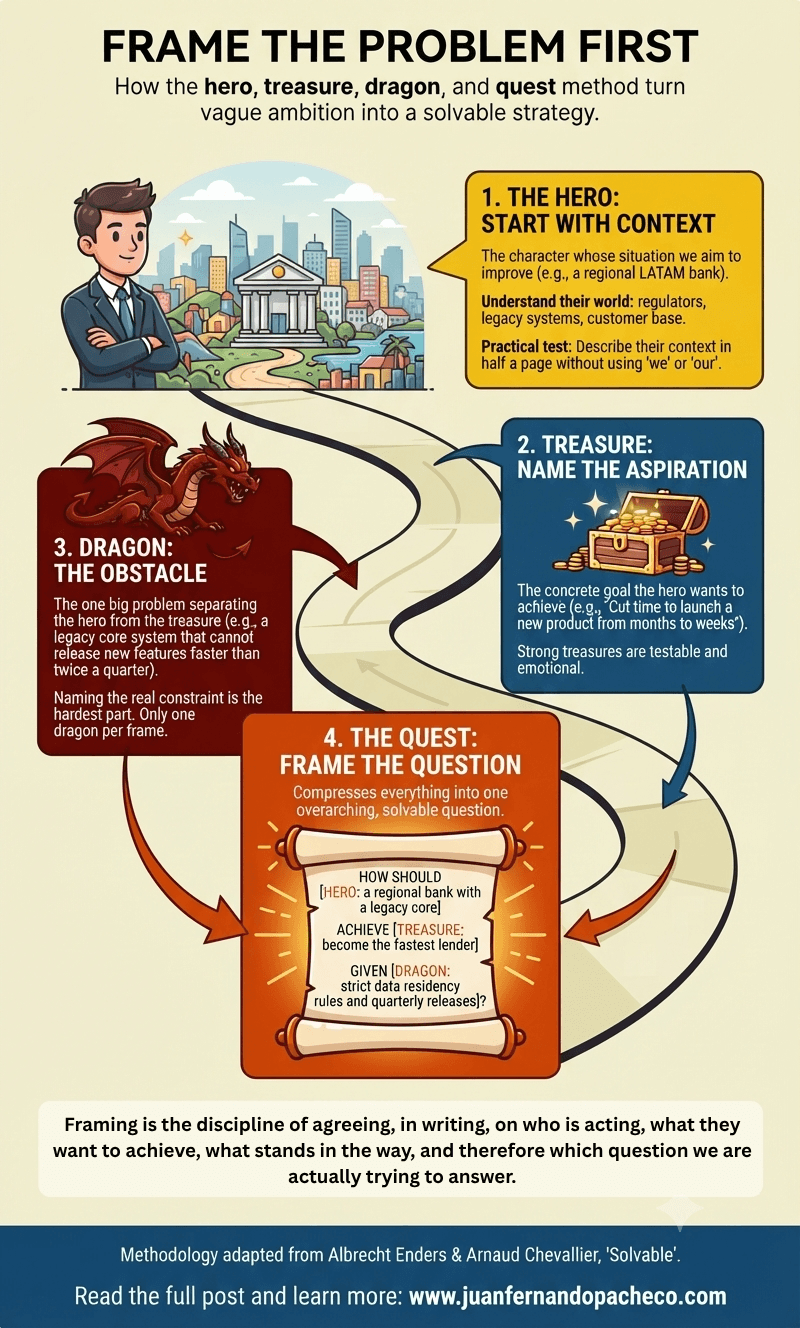
Most strategies and enterprise deals fail because teams rush to solve a problem nobody bothered to define. This post walks through a simple four part framing method (hero, treasure, dragon, quest) and shows how to apply it to products, sales deals and RFx processes so your effort always lands on the real issue.
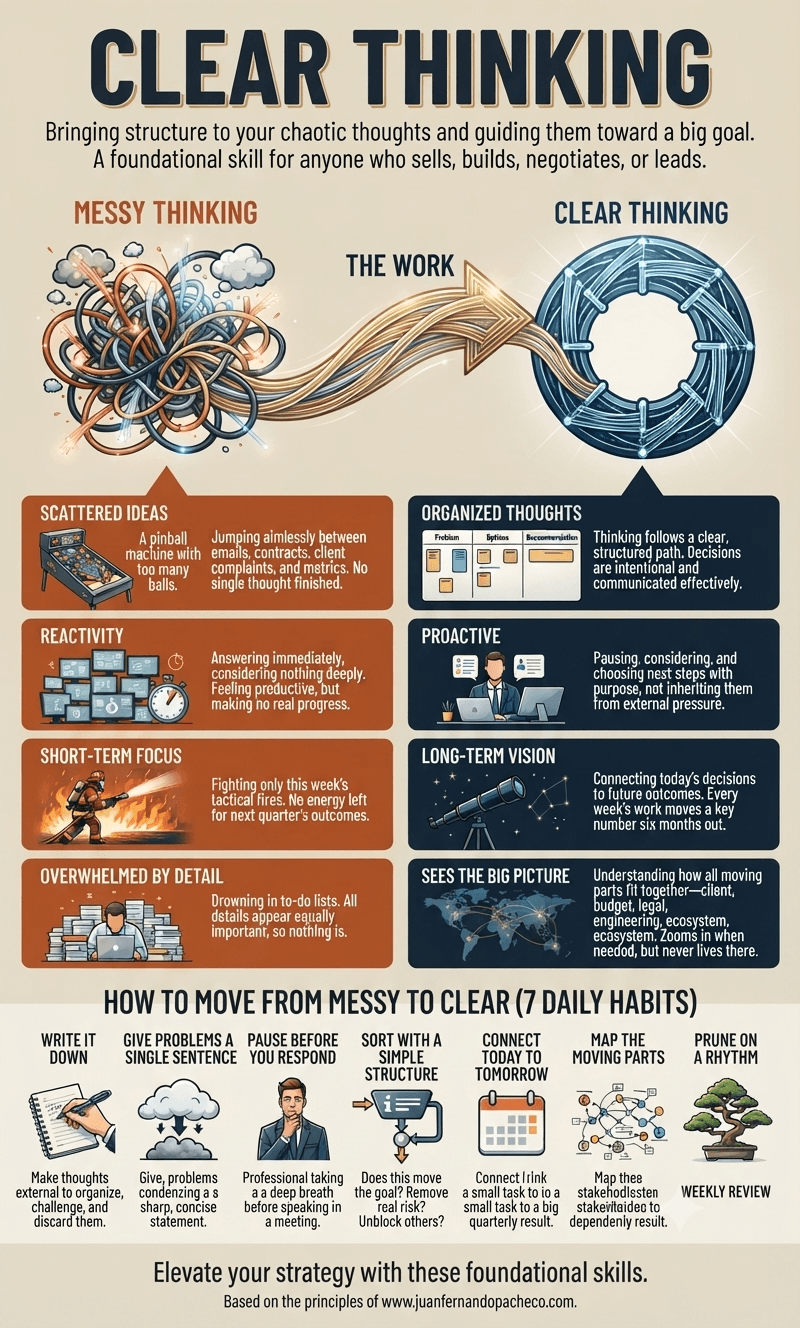
Clear thinking is the practice of bringing structure to your thoughts and guiding them toward a big goal, instead of juggling too many at once. This post looks at how messy thinking shows up in real commercial and product work, and how to build the organized, proactive, long-term habits that turn noise into judgment.
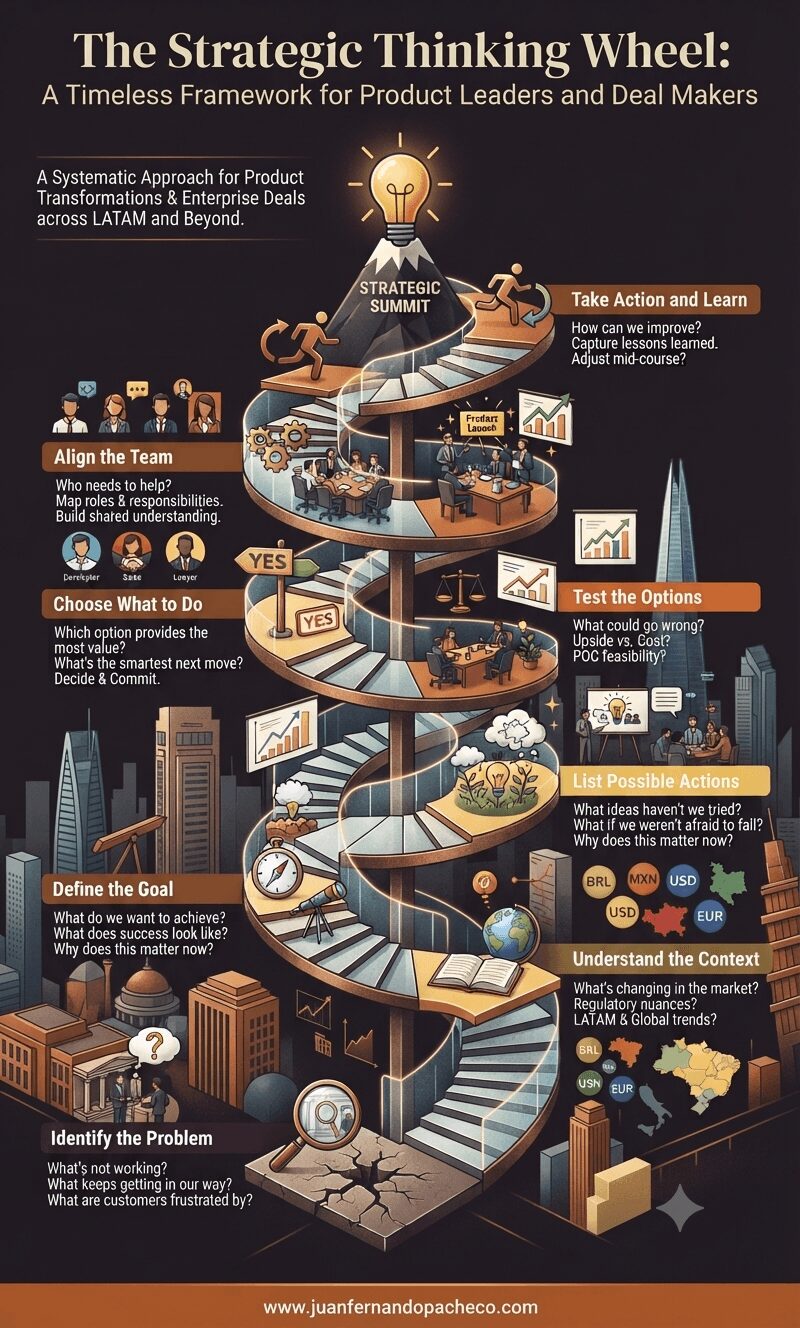
Master the eight-step strategic thinking process that top CEOs and product leaders use to solve complex problems, execute high-stakes deals, and drive sustainable growth in competitive markets.
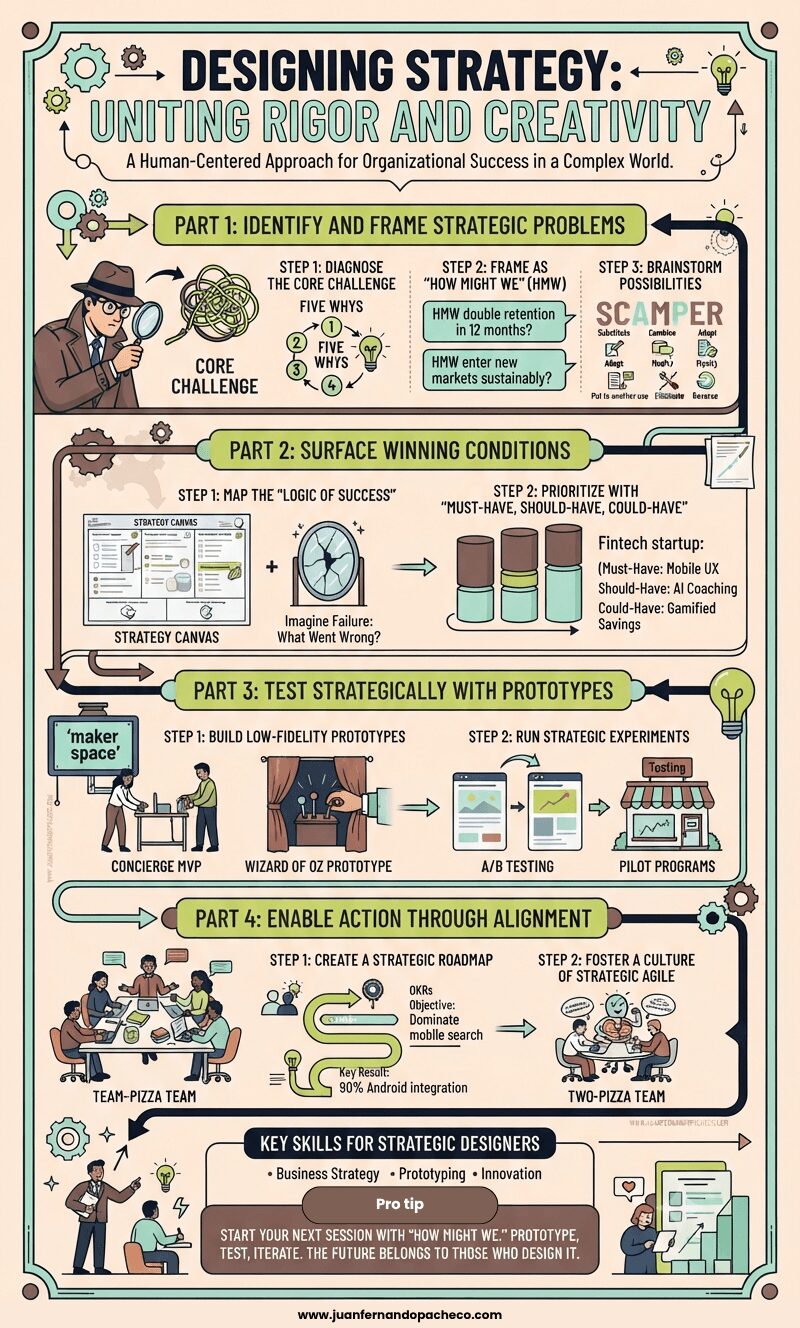
Designing strategy isn’t a one-time event—it’s a cycle of learning, adapting, and evolving. By blending analytical tools with creative methods, leaders can build strategies resilient enough for today’s volatility and visionary enough for tomorrow’s opportunities.
Start your next strategic session with a “How Might We” question. Then prototype, test, and iterate. The future belongs to those who design it.