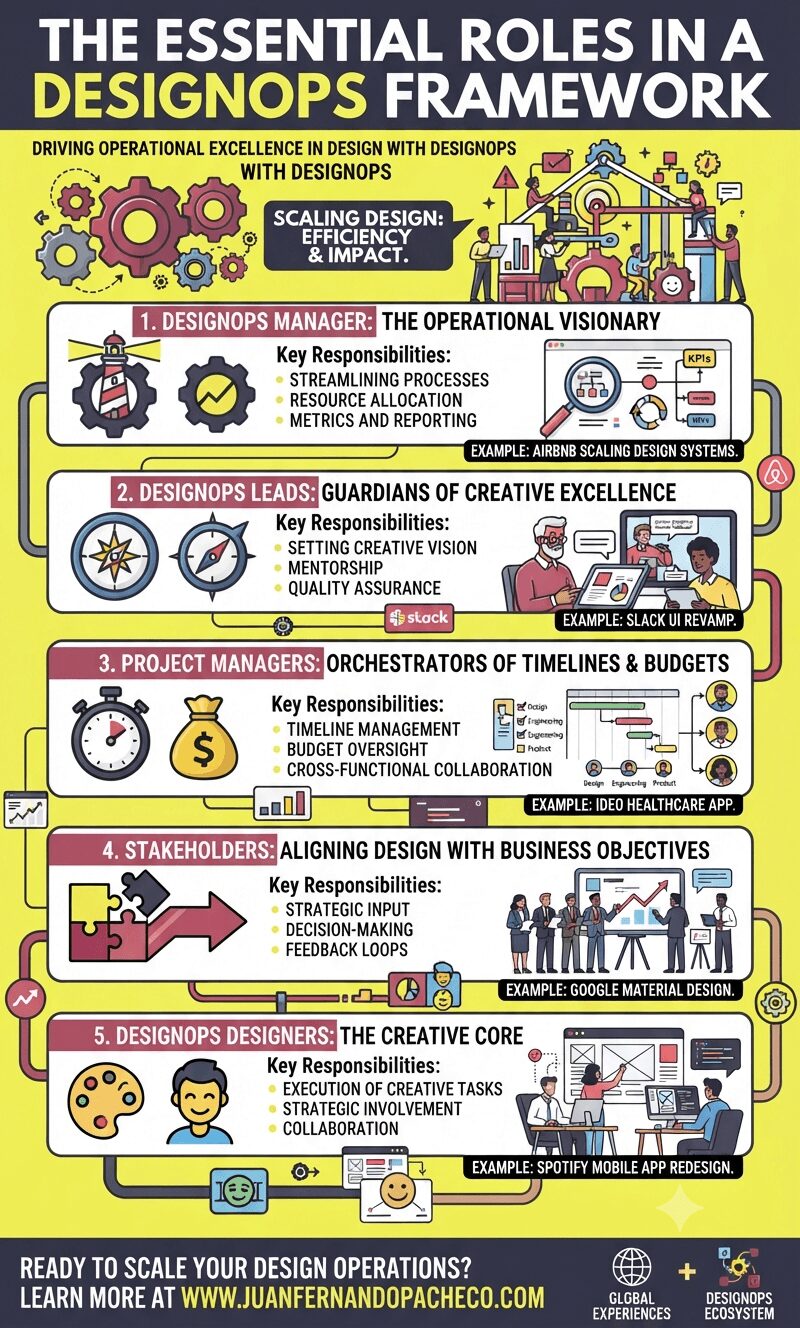
A vertical infographic titled "The Essential Roles in a DesignOps Framework" on a bright yellow background, detailing five key roles. From top to bottom: 1. DesignOps Manager (Lighthouse icon), responsible for processes, resources, metrics (with an Airbnb example). 2. DesignOps Leads (Compass icon), focused on vision, mentorship, quality assurance (with a Slack example). 3. Project Managers (Stopwatch icon), managing timelines, budgets, and collaboration (with an IDEO example). 4. Stakeholders (Puzzle piece icon), aligning design with business objectives (with a Google example). 5. DesignOps Designers (Palette icon), the creative core executing tasks and collaborating (with a Spotify example). The bottom features a call to action for www.juanfernandopacheco.com.

The rapid pace of digital transformation has propelled organizations to place greater emphasis on design as a strategic lever for innovation and customer satisfaction.

Yet, scaling design efforts across teams, tools, and workflows remains a formidable challenge. This is where DesignOps (Design Operations) emerges as a critical discipline, providing the scaffolding for designers to focus on what they do best: creating impactful experiences.