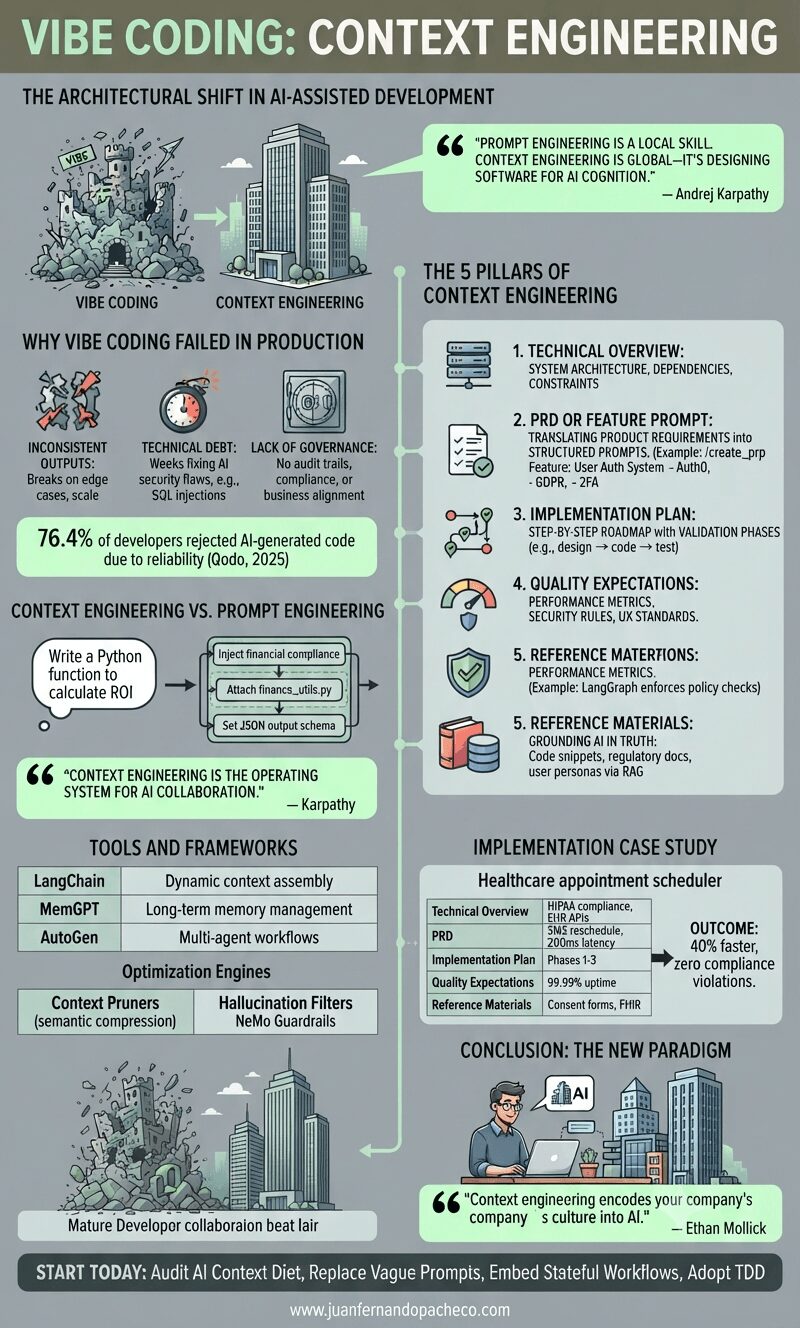
An infographic titled "Vibe Coding: Context Engineering," illustrating the shift from unstructured AI coding to a structured, engineering-based approach. It details the failings of "vibe coding," outlines the "5 Pillars of Context Engineering," compares context versus prompt engineering, lists relevant tools, and presents a healthcare case study before concluding with best practices and a website URL.

Vibe coding was the prototype; context engineering is the production system. It demands upfront investment—defining rules, curating knowledge, designing workflows—but slashes technical debt and unlocks reliable, scalable, and ethical AI collaboration. As Karpathy notes:

“Calling this a ‘ChatGPT wrapper’ is wrong. It’s a new software paradigm.”
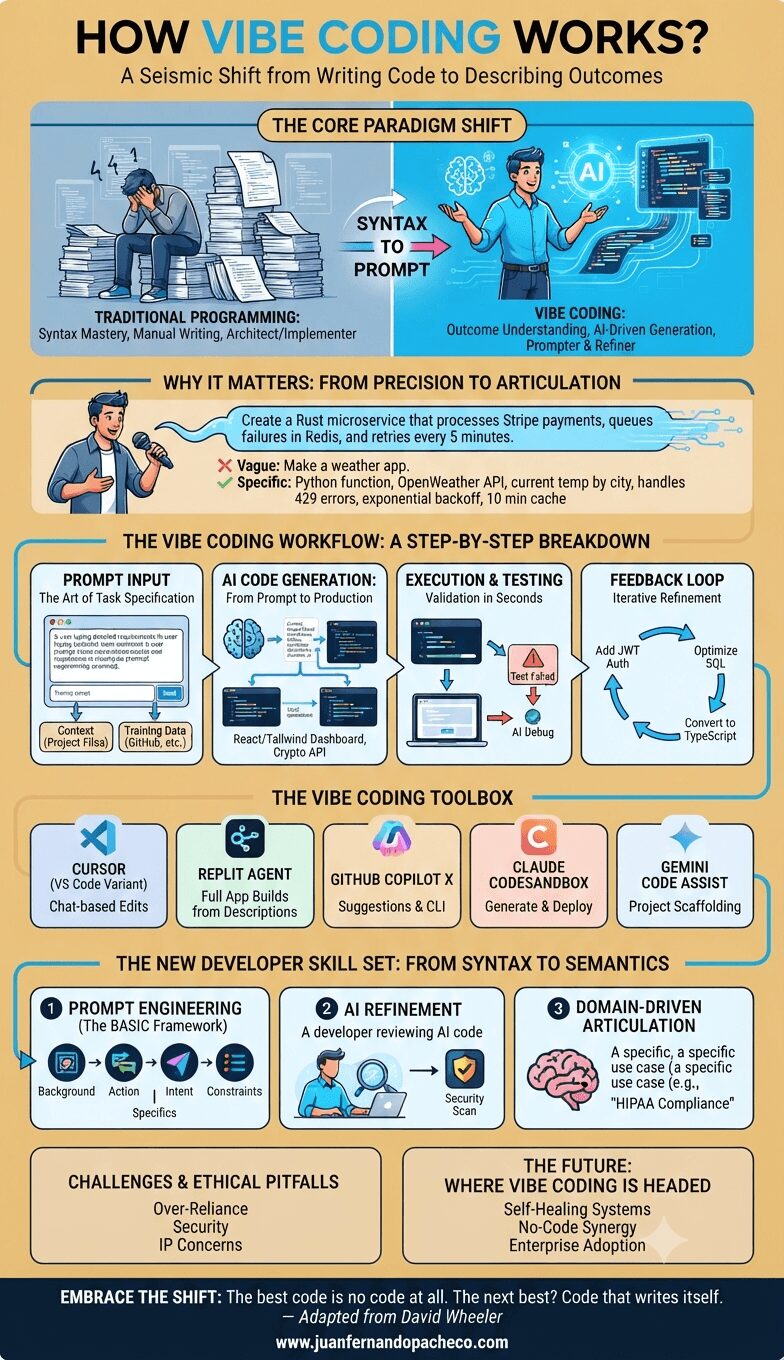
An infographic titled "HOW VIBE CODING WORKS?" with the subtitle "A Seismic Shift from Writing Code to Describing Outcomes." The image is divided into distinct sections detailing the transition from traditional programming to prompt-driven development using AI. Key sections include "The Core Paradigm Shift," "Why It Matters: From Precision to Articulation," "The Vibe Coding Workflow: A Step-by-Step Breakdown," "The Vibe Coding Toolbox" (featuring tools like Cursor, Replit, Copilot, Claude, Gemini), "The New Developer Skill Set," and "The Future." The infographic uses a blue and beige color scheme and concludes with a quote by David Wheeler and the URL www.juanfernandopacheco.com.

Vibe Coding isn’t replacing developers—it’s elevating us. By offloading syntax to AI, we focus on creative problem-solving, architecture, and innovation.

Start small: use GitHub Copilot for boilerplate code, then graduate to building full features with Claude CodeSandbox. The future belongs to those who describe outcomes, not just write instructions.