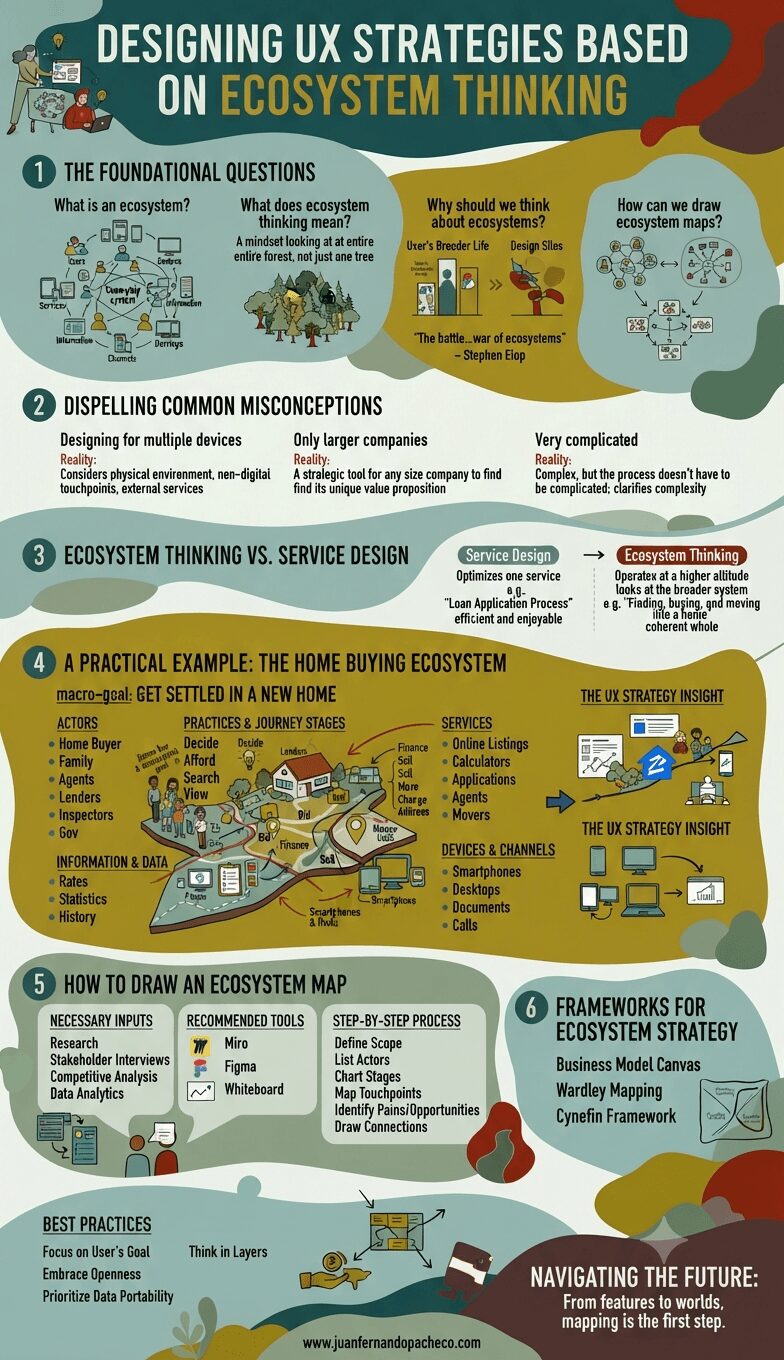
An educational infographic with a modern, illustrated aesthetic, structured into six sections with a teal and earth-tone color palette. It defines ecosystem thinking in UX design, dispels misconceptions, compares it to service design, provides a detailed home-buying example, outlines how to draw maps, lists strategic frameworks, and includes best practices and the website www.juanfernandopacheco.com.

The future of UX design is not in crafting perfect, isolated interactions. It is in designing intelligent, adaptive, and respectful nodes within a vast and complex human ecosystem. It requires us to be not just designers, but strategists, systems thinkers, and diplomats who can navigate the relationships between services, businesses, and most importantly, people.

By adopting ecosystem thinking, we move from creating products that people use to crafting environments that people live in. We stop building features and start building worlds. The map is the first step. It’s time to start charting.
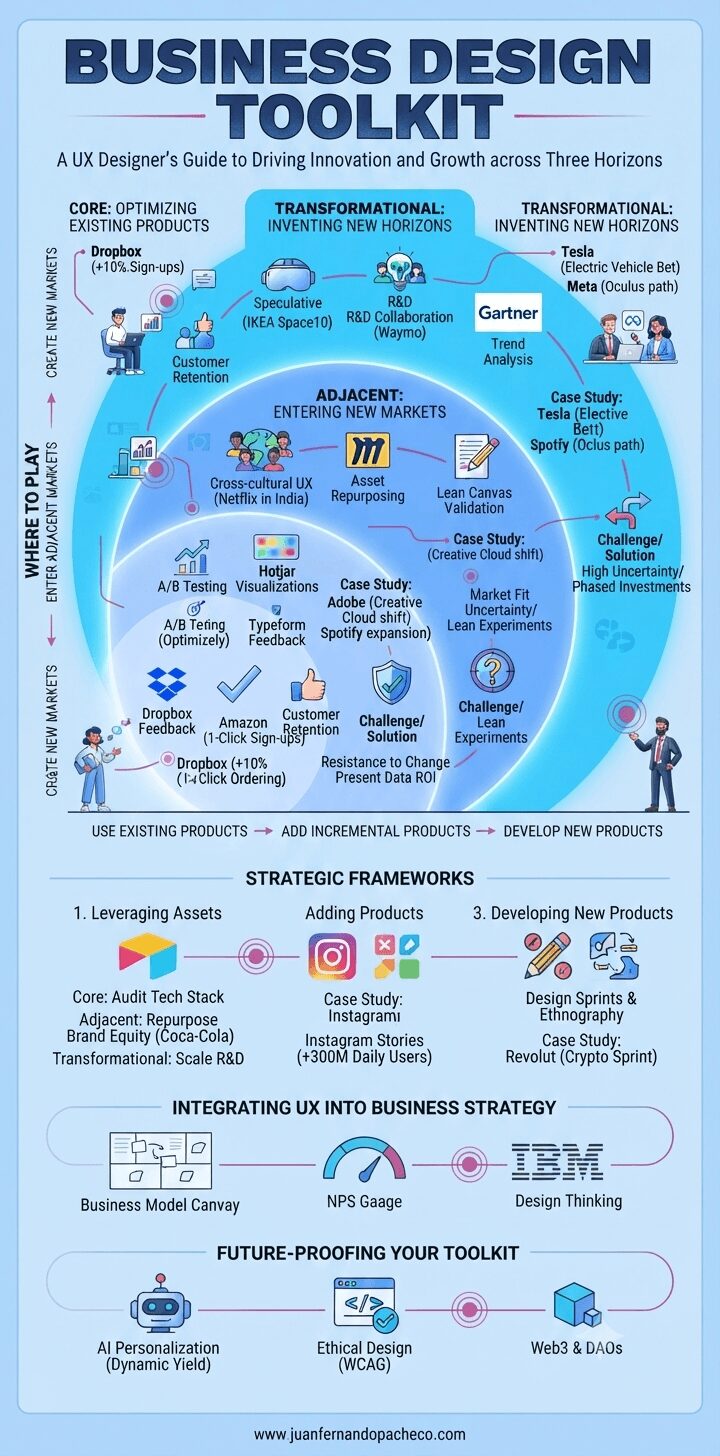
An infographic titled "Business Design Toolkit" on a light blue background, illustrating the Three Horizons framework for innovation (Core, Adjacent, Transformational), strategic frameworks, and tactics for integrating UX into business strategy. The design includes icons, flowcharts, and labels connecting UX design methods to business growth outcomes, with a footer reference to www.juanfernandopacheco.com.

A business design toolkit is not static—it evolves with market shifts and technological advancements. By mastering Core optimization, Adjacent expansion, and Transformational disruption, UX designers can become strategic partners in driving sustainable growth.