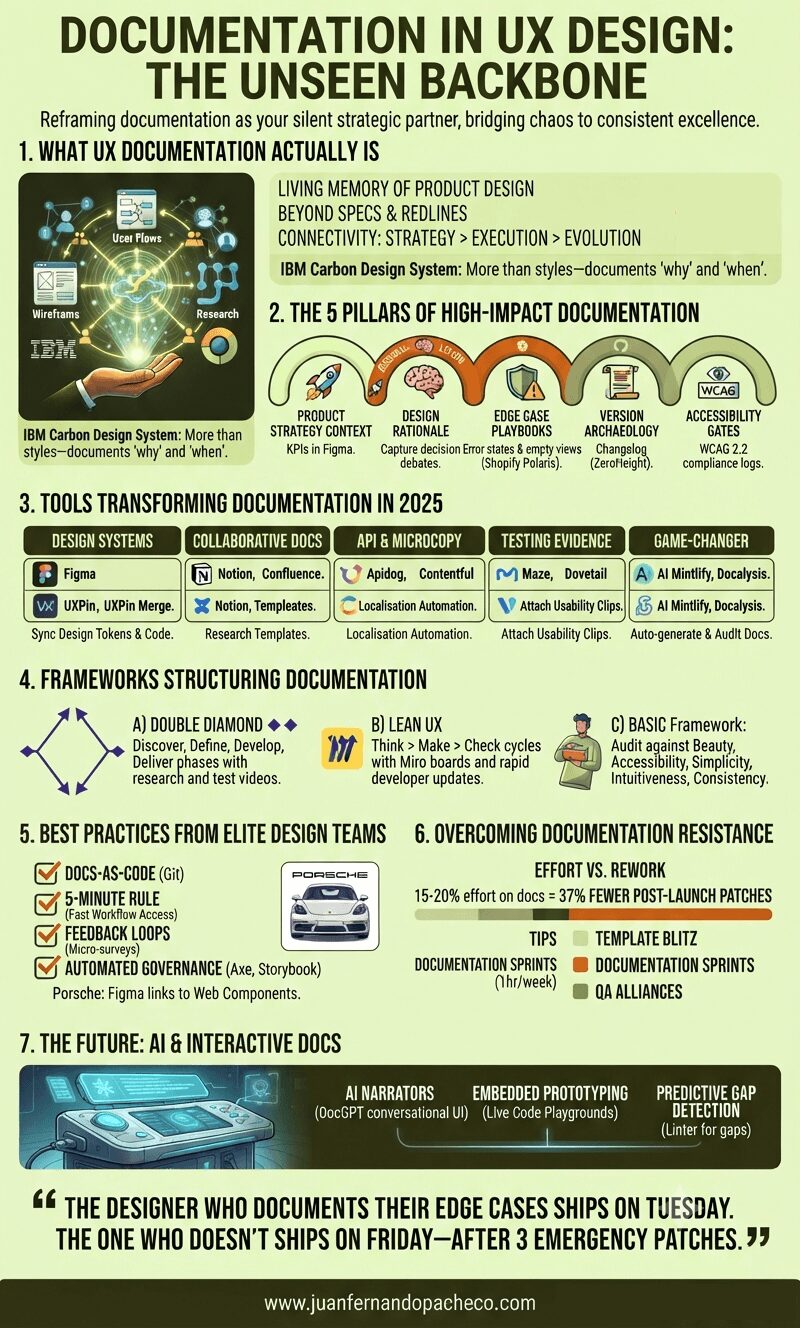
An infographic titled "Documentation in UX Design: The Unseen Backbone" is presented in a vertical format against a light-yellow background. It is structured into seven numbered sections that detail the components, pillars, tools, frameworks, best practices, overcoming resistance, and future of UX documentation, using a color palette of greens, orange, and white.

Treating documentation as a “task” misses its power. It’s the continuous act of design reasoning made visible. As Apple’s Human Interface Guidelines reveal, legendary products emerge when principles are documented, not memorized.

“The designer who documents their edge cases ships on Tuesday. The one who doesn’t ships on Friday—after 3 emergency patches.”

Start small: Document one decision today. Link a research insight to a button component. Your future self—and team—will thank you.
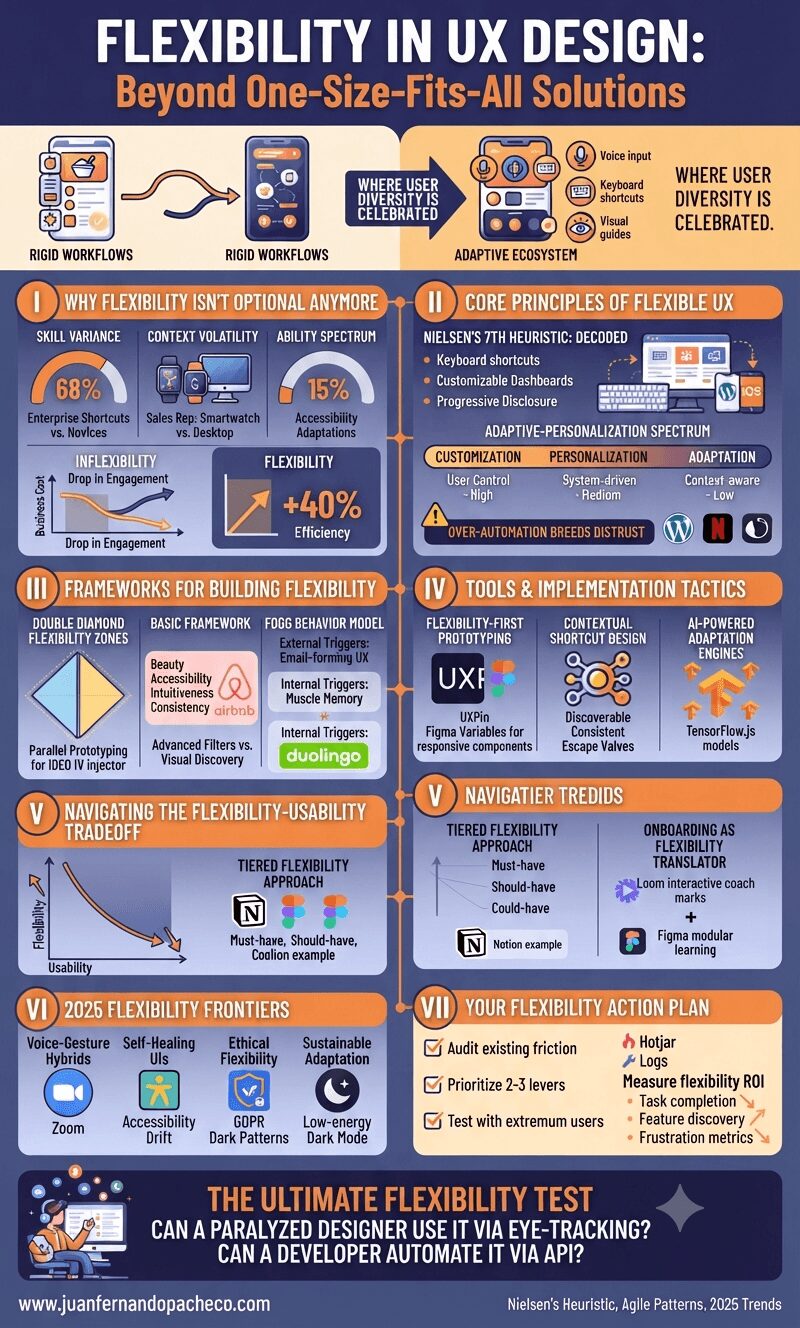
An infographic titled "FLEXIBILITY IN UX DESIGN: Beyond One-Size-Fits-All Solutions" structured into seven sections detailing the necessity, principles, frameworks, tools, and frontiers of adaptive user experience design.

Imagine two culinary apps: one forces rigid workflows with fixed ingredient entry paths; the other adapts—voice input for hurried cooks, keyboard shortcuts for pros, and visual guides for novices.

The latter exemplifies strategic flexibility, where user diversity isn’t accommodated—it’s celebrated. As interfaces evolve beyond screens into voice, gesture, and AI-driven ecosystems, flexibility transitions from “nice-to-have” to core resilience strategy.