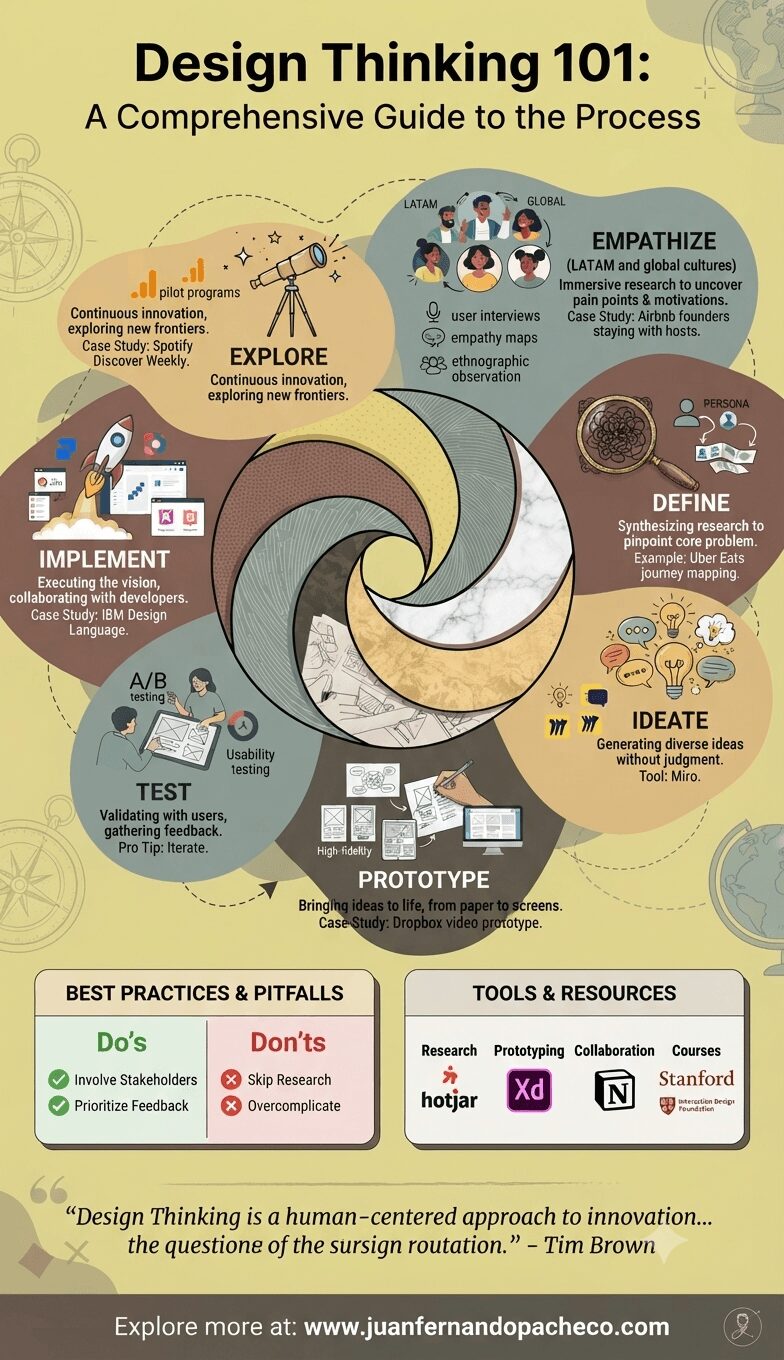
An infographic titled "Design Thinking 101" displaying the seven-phase design thinking process (Empathize, Define, Ideate, Prototype, Test, Implement, Explore) in a circular, flowing design on a beige background, featuring icons, key case study references, best practices, and links to professional tools.

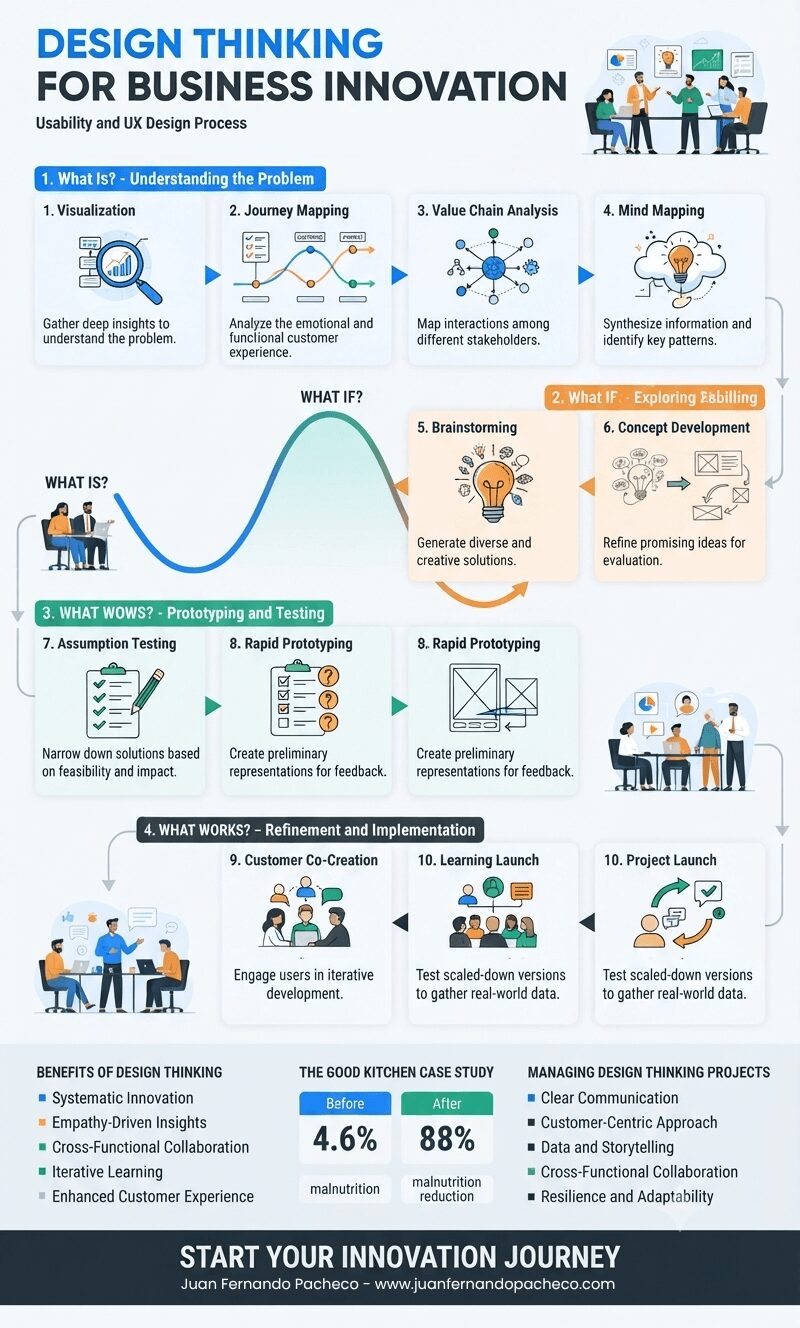
Design Thinking is a human-centered methodology that empowers teams to solve complex problems through creativity, empathy, and iterative learning.

Rooted in disciplines like UX design and systems thinking, it bridges the gap between user needs and business goals. According to the Stanford d.school, Design Thinking is “a methodology for innovation that combines creative and analytical approaches.”
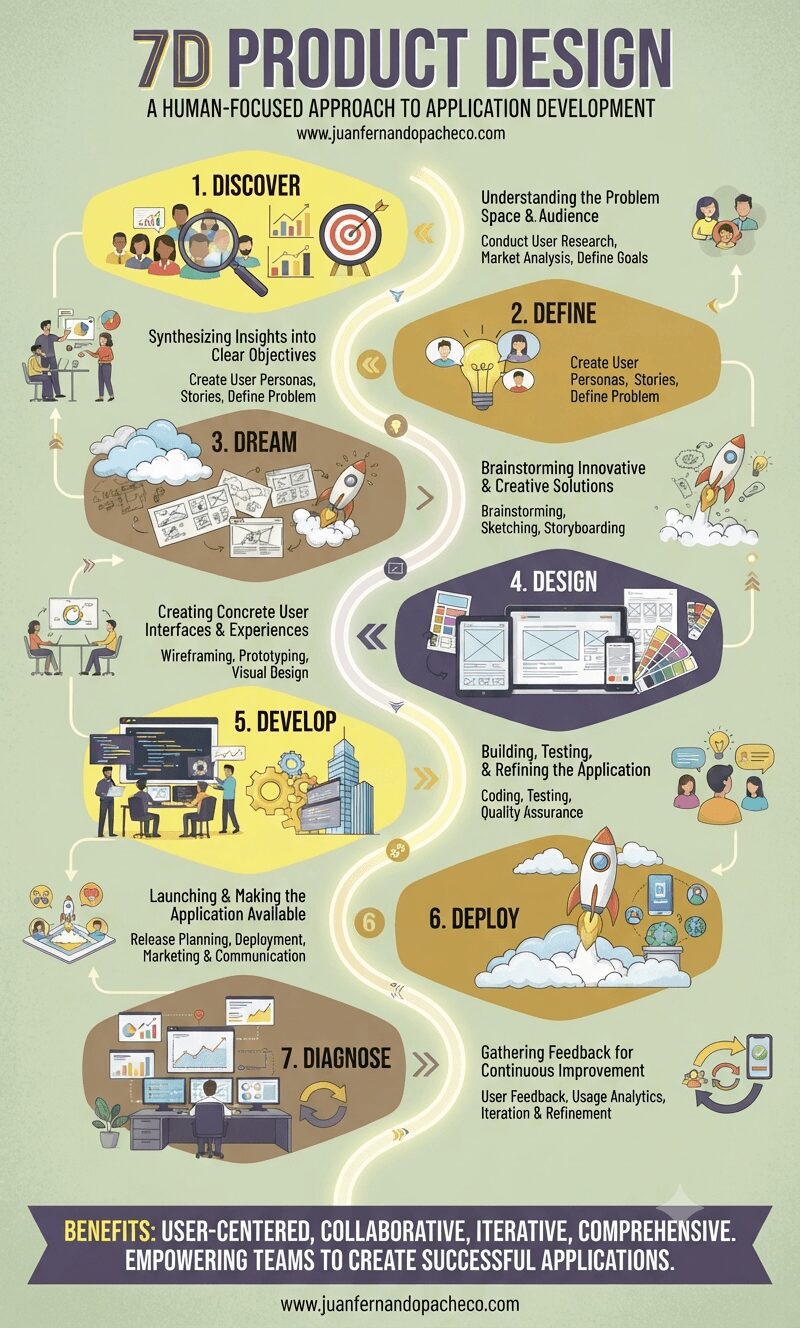
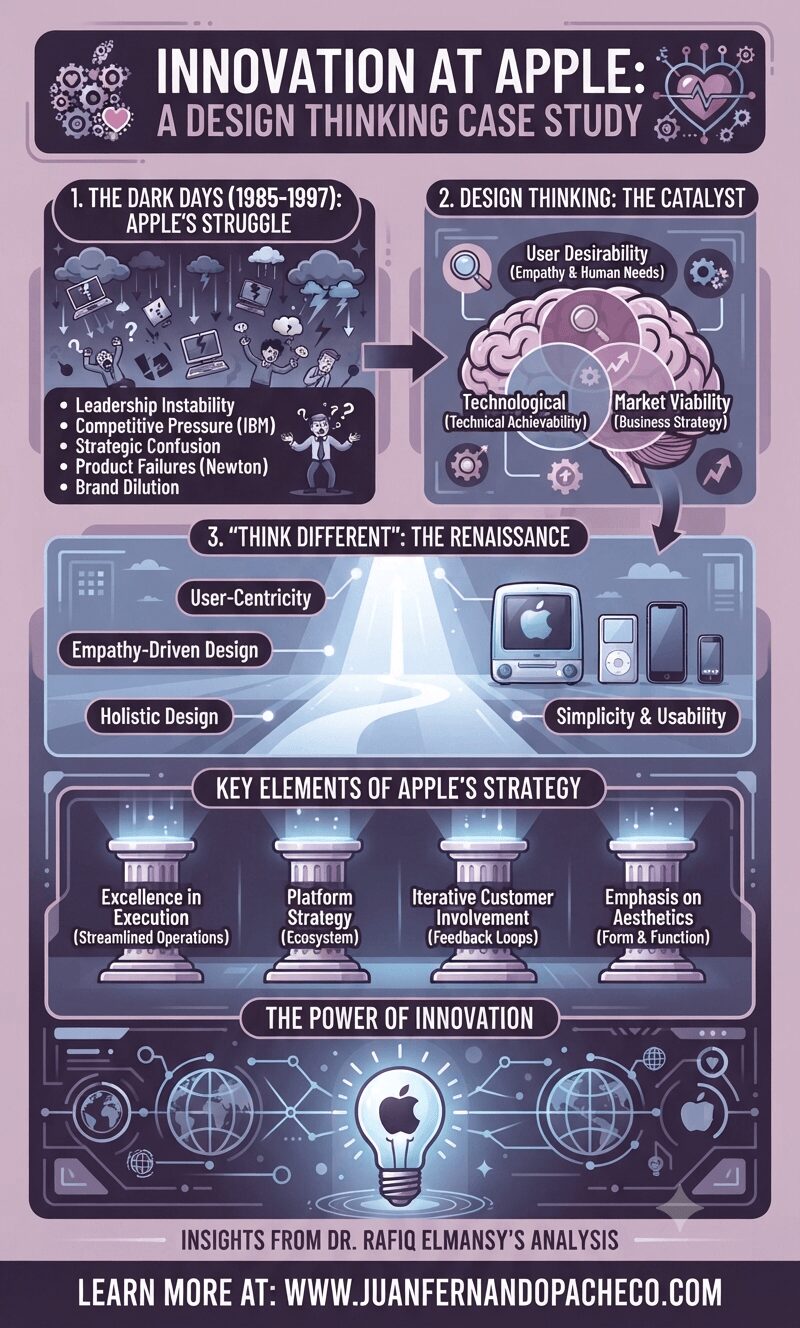
Infographic titled "7D Product Design: A Human-Focused Approach to Application Development" laid out vertically in seven numbered stages: Discover, Define, Dream, Design, Develop, Deploy, and Diagnose. Each section features icons and text summarizing the key activities and objectives of that phase. The overall framework emphasizes an iterative and collaborative process for creating user-centered applications.

7D Product Design offers a holistic and human-focused approach to application development. By emphasizing user needs, collaboration, and iterative development, it empowers teams to create successful applications that delight users and achieve business goals.

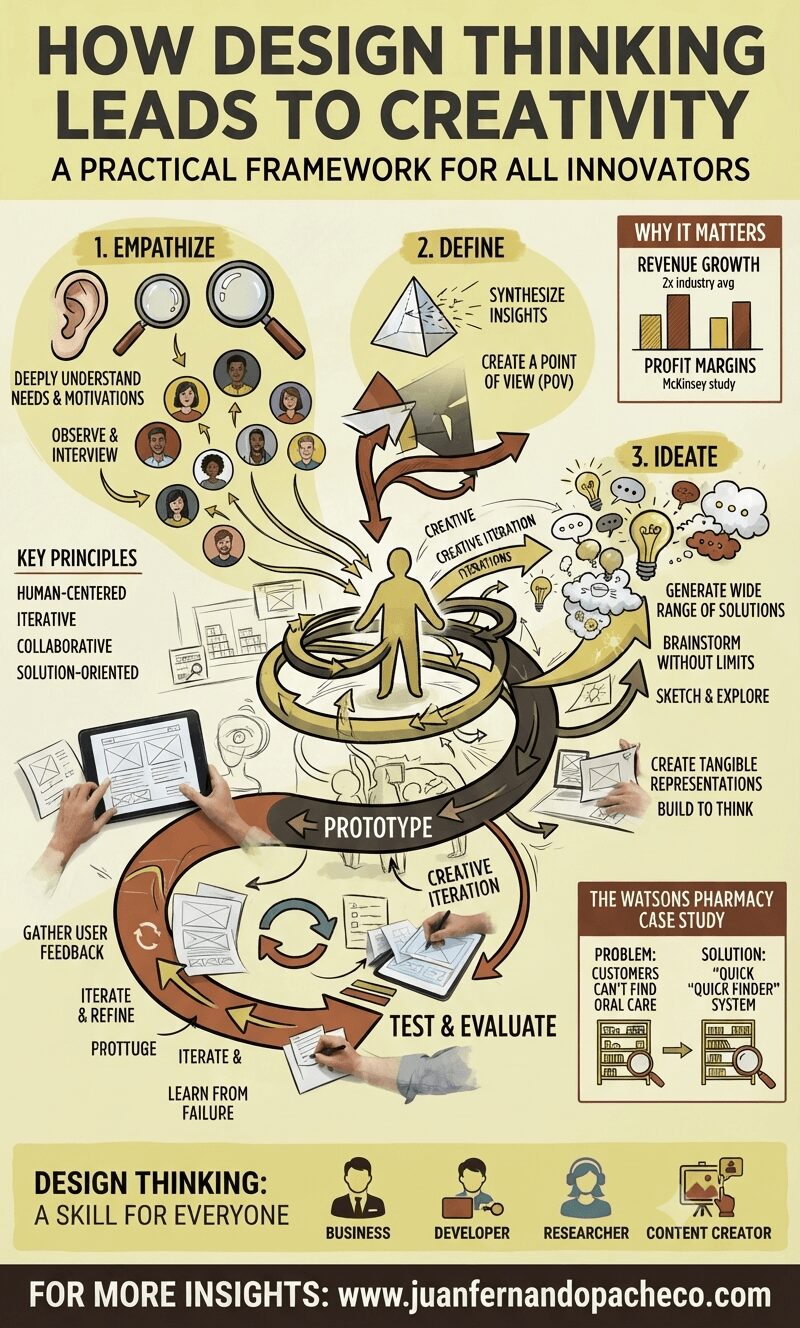
An intricate vertical infographic titled "How Design Thinking Leads to Creativity" (1,200px x 2,000+px). The design is structured around a central spiraling pathway connecting five distinct stages visualized with illustrations, icons, and text: 1. Empathize (ear, magnifying glasses, user portraits), 2. Define (pyramid, insights), 3. Ideate (lightbulbs, brain), 4. Prototype (hands with tablet and paper), 5. Test & Evaluate (feedback loops). The background is a pale yellow, using a color palette of mustards, browns, and charcoal. Sidebars detail "Why It Matters" (McKinsey study stats), "Key Principles," and a "Watsons Pharmacy Case Study." The bottom features a banner: "Design Thinking: A Skill for Everyone" with four persona icons and the URL "www.juanfernandopacheco.com".

Design Thinking isn’t limited to professional designers. It’s a valuable skill for anyone who wants to solve problems creatively and drive innovation. By adopting a human-centered approach and embracing the iterative nature of design thinking, individuals and organizations can unlock their creative potential and achieve remarkable results.

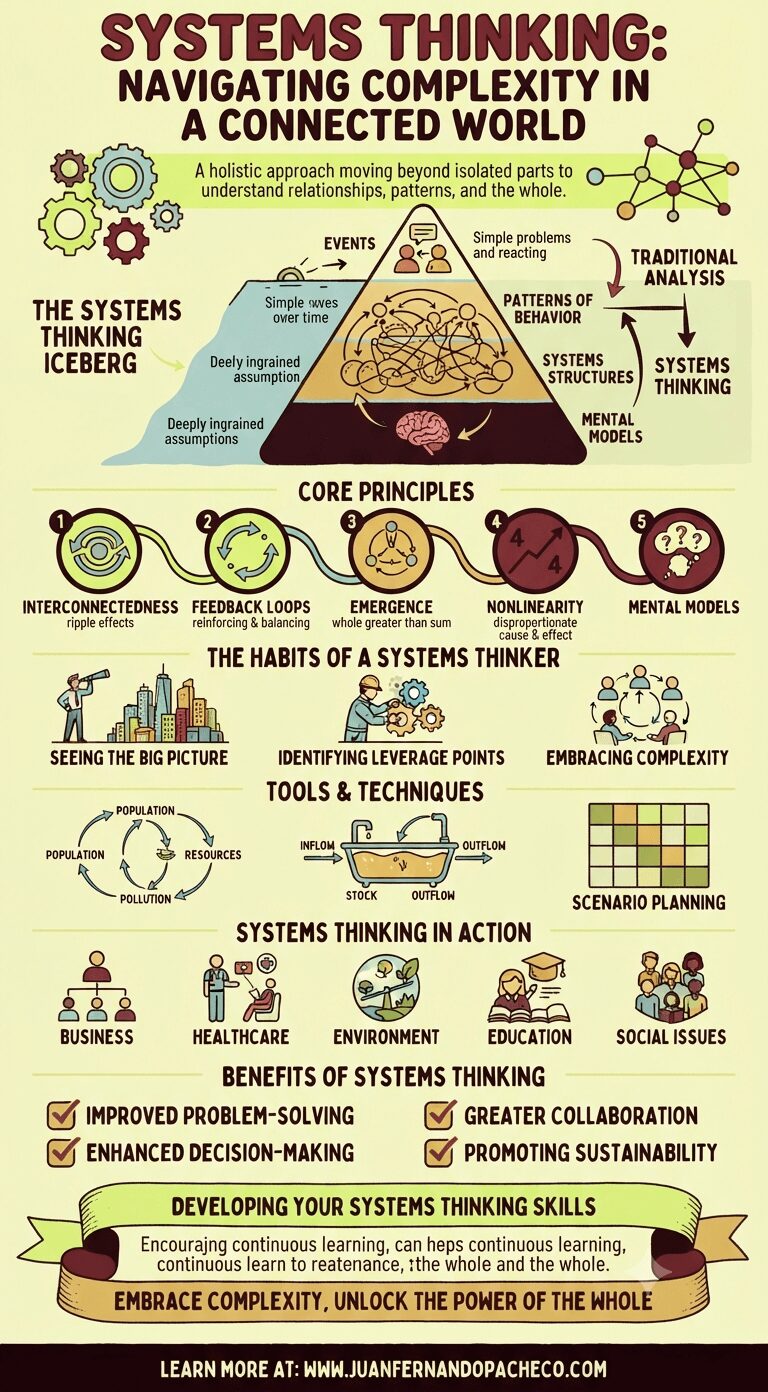
An infographic titled "Systems Thinking: Navigating Complexity in a Connected World," featuring a "Systems Thinking Iceberg" diagram that contrasts traditional analysis with systems thinking, followed by sections on core principles, habits, tools, applications, and benefits, all presented in an illustrative, illustrative style with a light cream and maroon color palette.

In a world characterized by complexity and rapid change, systems thinking is no longer a luxury, but a necessity.

By understanding the interconnectedness of systems and developing the skills to think holistically, we can unlock the power of the whole and create a more sustainable and prosperous future.

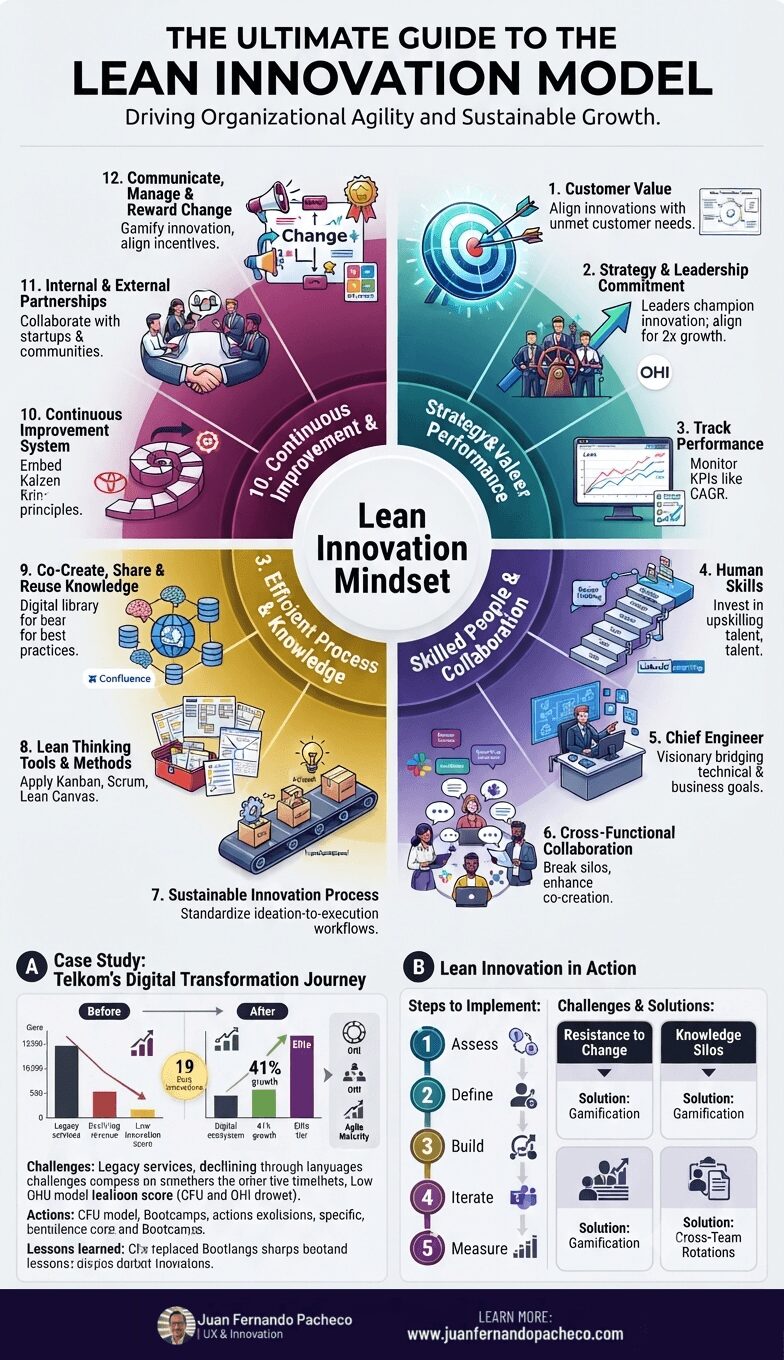
Infographic titled "THE ULTIMATE GUIDE TO THE LEAN INNOVATION MODEL," featuring a circular diagram divided into four colored quadrants representing 12 enablers (strategy, skills, process, continuous improvement). Below the main diagram are two sections: (A) a case study of Telkom's digital transformation with before/after charts, and (B) an implementation guide detailing steps, challenges, and solutions. The overall aesthetic is professional and data-driven.

The Lean Innovation Model isn’t just a framework—it’s a mindset. By integrating customer value, agile structures, and continuous learning, organizations like Telkom can thrive in disruption.

Start your journey by auditing organizational health and embedding lean principles into every process.

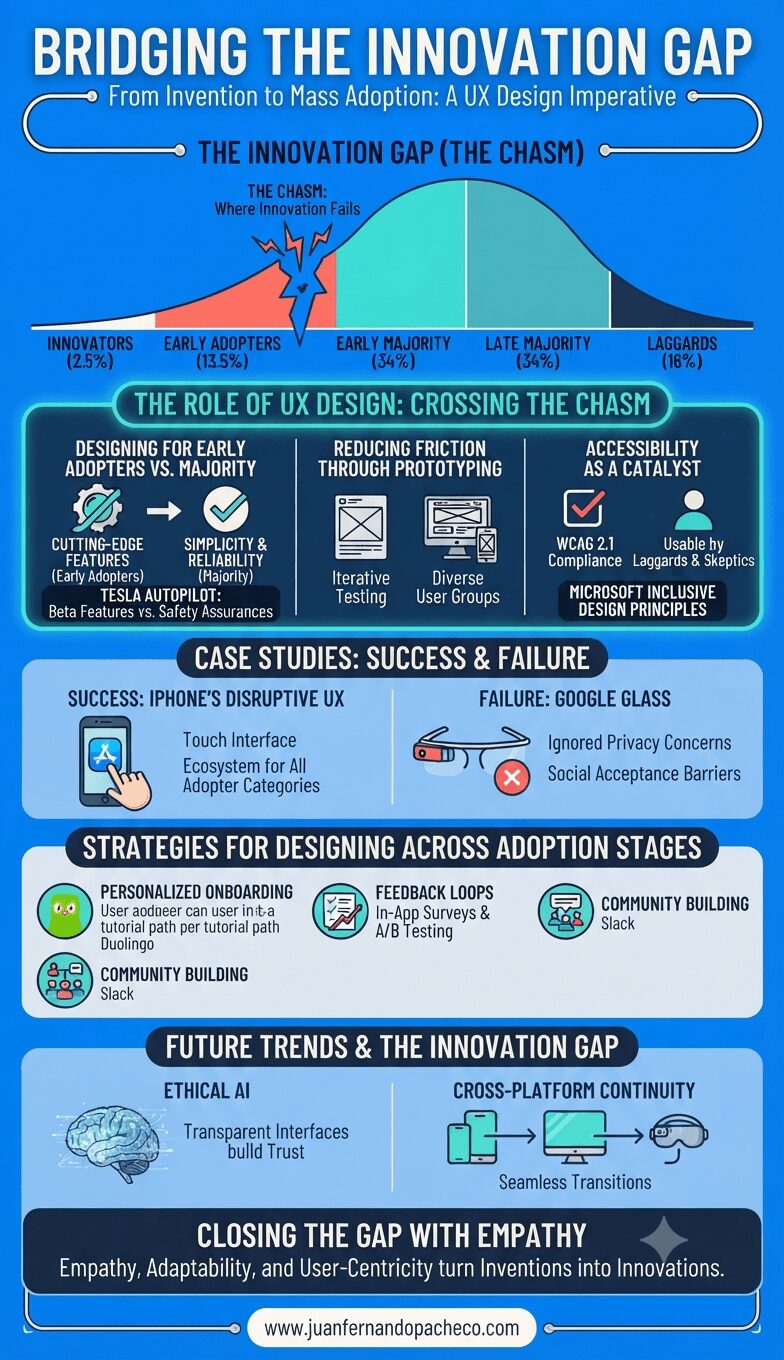
An infographic titled "Bridging the Innovation Gap: From Invention to Mass Adoption" with a central bell curve graph showing adopter categories and a "Chasm" between Early Adopters and Early Majority. Below, sections detail "The Role of UX Design," "Case Studies: Success & Failure" (iPhone vs. Google Glass), "Strategies," "Future Trends," and "Conclusion." The design uses blue, navy, coral, and teal colors.

Bridging the innovation gap requires more than technical prowess—it demands empathy, adaptability, and relentless user-centricity. By leveraging UX research, inclusive design, and iterative testing, designers can turn groundbreaking inventions into indispensable innovations.

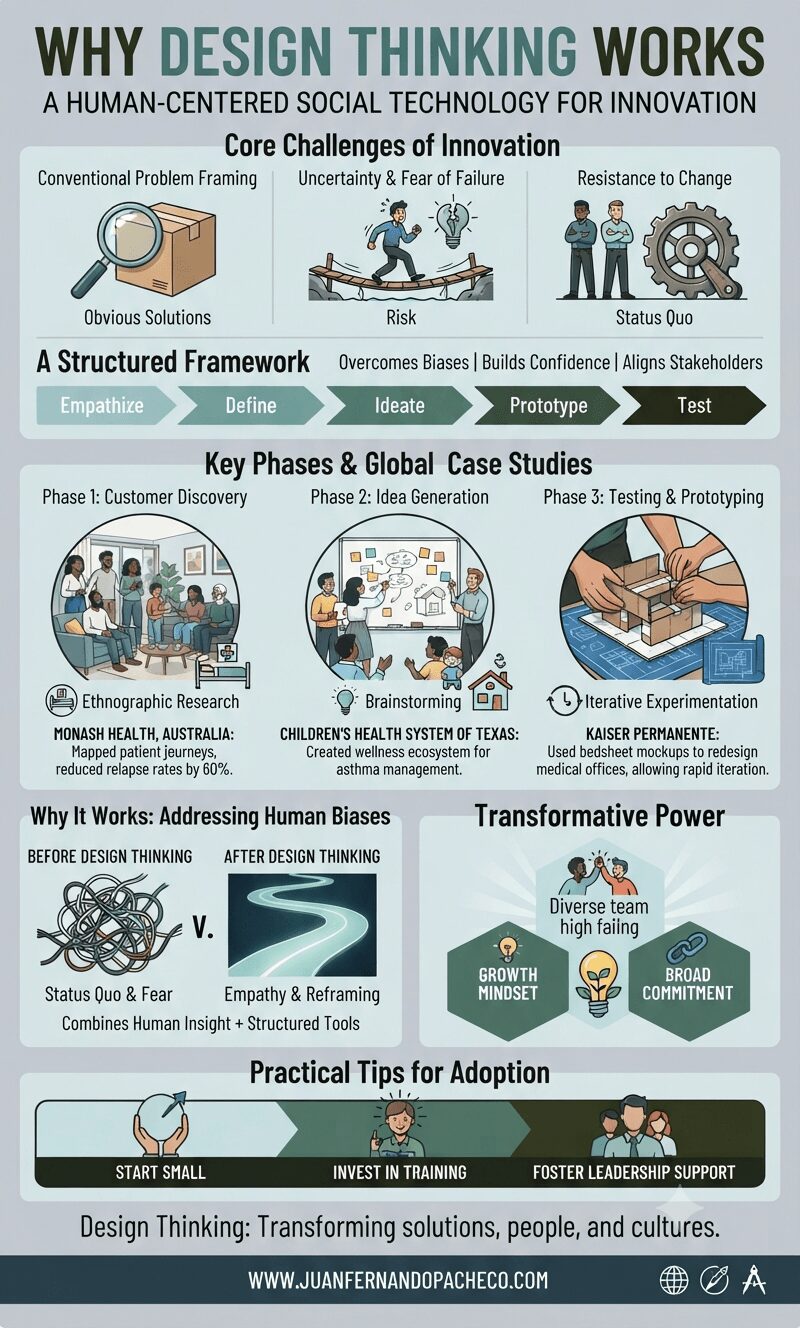
An infographic titled "Why Design Thinking Works" detailing the methodology's core principles, phases, and impact through text blocks and illustrations, including global case studies from Monash Health, Children's Health System of Texas, and Kaiser Permanente. The footer includes the URL WWW.JUANFERNANDOPACHECO.COM.

Design Thinking works because it combines the best of human insight with structured tools to drive innovation.

By addressing biases, fostering collaboration, and emphasizing empathy, it transforms not only the solutions organizations create but also the people and cultures behind them. As a social technology, its potential to reshape industries is unparalleled, making it a cornerstone of modern innovation strategies.