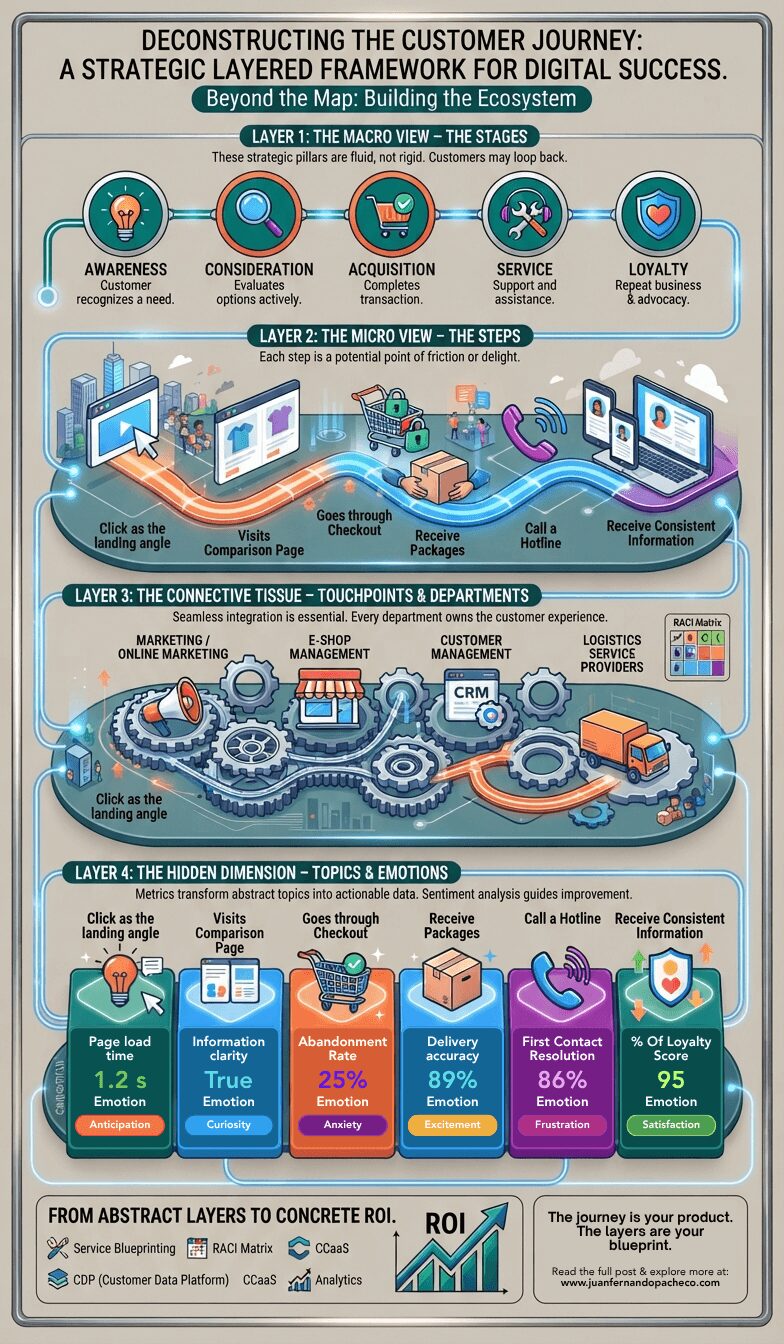
An infographic titled "Deconstructing the Customer Journey: A Strategic Layered Framework for Digital Success." It presents a four-layer model showing how different departments (Marketing, E-Shop, Customer Management, Logistics) and their respective touchpoints (Ads, Website, Hotline, Delivery) interact across the five customer journey stages (Awareness, Consideration, Acquisition, Service, Loyalty). The bottom section details how these interactions generate specific topics, KPIs (like Cart Abandonment Rate and First Contact Resolution), and emotions, leading to concrete ROI. References to "www.juanfernandopacheco.com" and "Bright Vessel" are visible at the bottom.

Customer Journey Layers is more than a diagram; it’s a philosophical shift from a customer-centric mindset to a customer-centric operating model. It acknowledges that every digital experience is a manifestation of your internal architecture—your technology, your processes, and your organizational alignment.

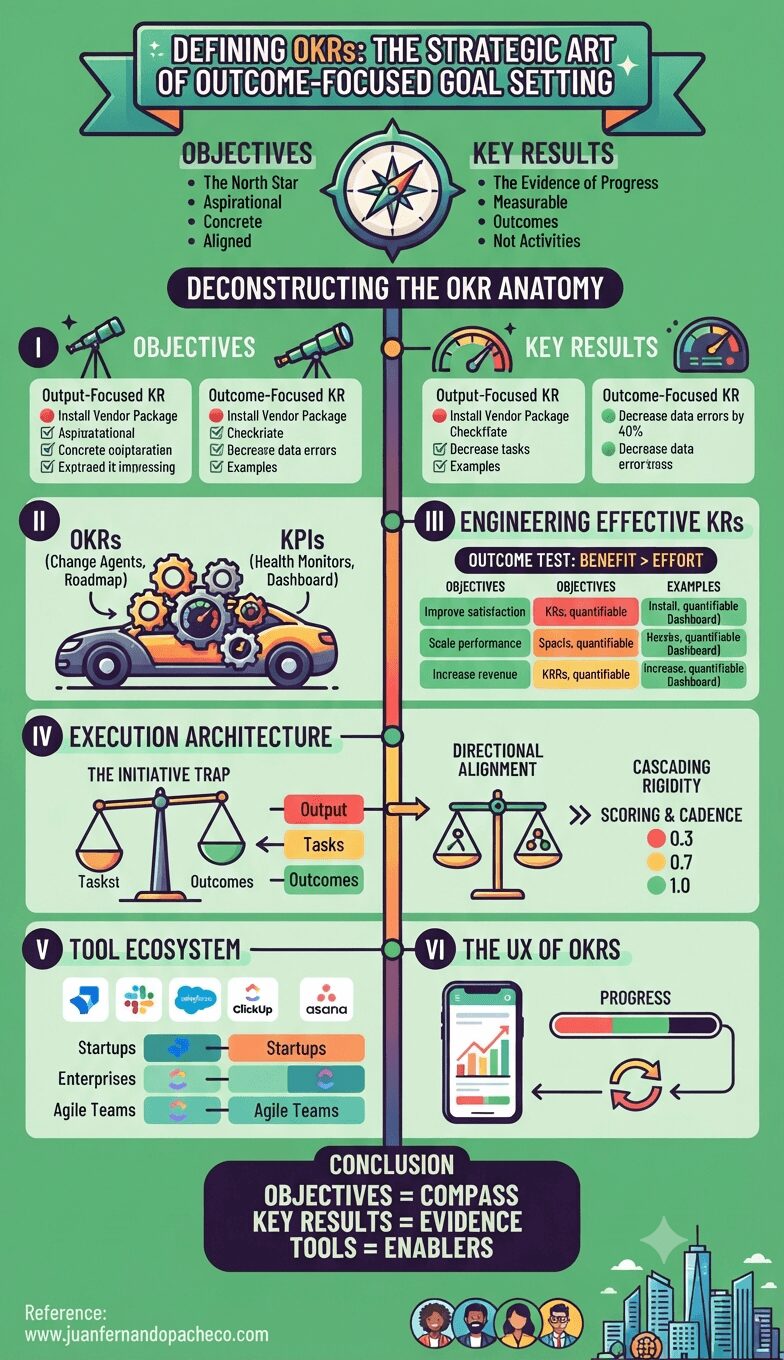
A comprehensive vertical infographic on a green background titled "Defining OKRs: The Strategic Art of Outcome-Focused Goal Setting." The image is structured as a central timeline breaking down OKRs into six sections: Anatomy, KPIs vs. OKRs, Engineering Effective KRs, Execution Architecture, Tool Ecosystem, and UX, concluding with a summary and reference.

Defining OKRs is less about filling templates and more about cultivating an outcome mindset.

When Syracuse, New York, implemented OKRs like “Achieve fiscal sustainability” with KRs such as “Reduce budget variance from 11% to 5%”, they didn’t just set goals—they installed a new operating system for decision-making.