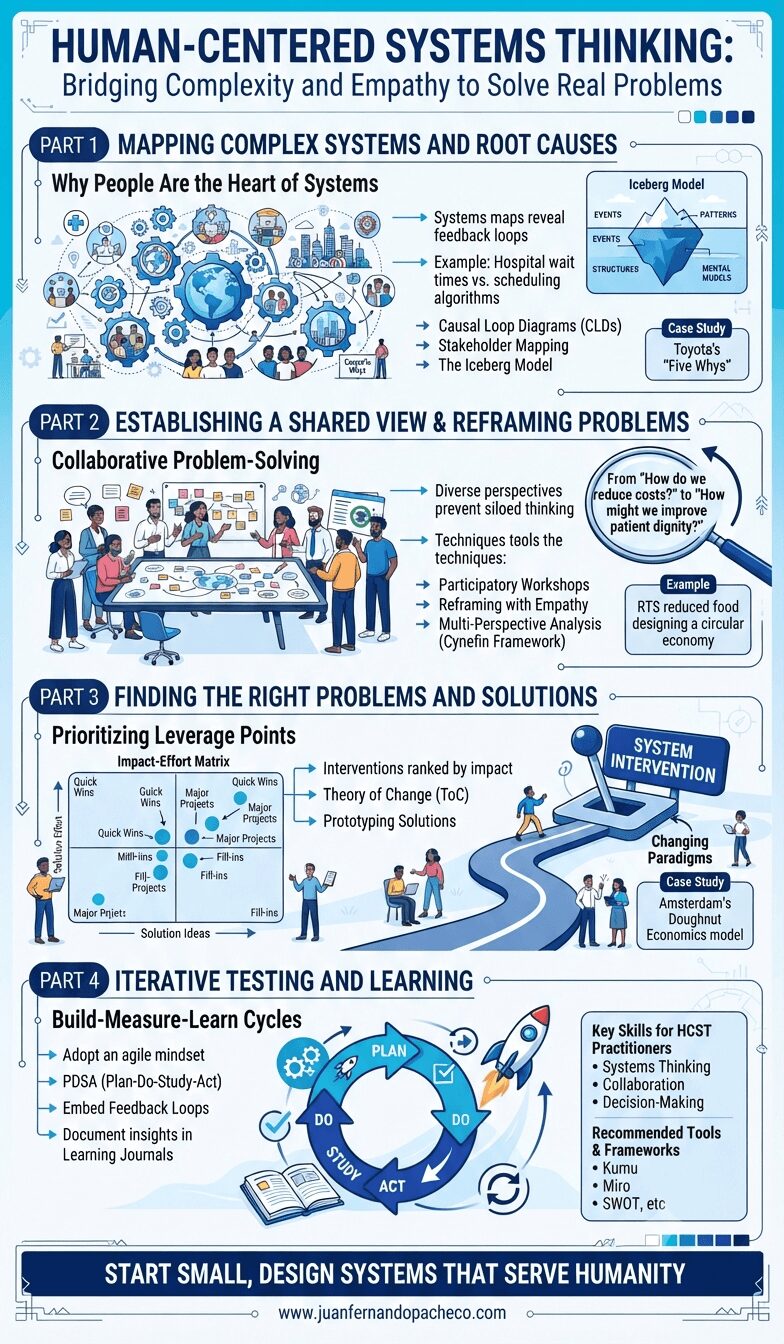
A comprehensive vertical infographic illustrating the four stages of Human-Centered Systems Thinking, using complex diagrams, charts, and illustrations to explain mapping, reframing, prioritizing interventions, and iterative testing.

Human-Centered Systems Thinking isn’t a checklist—it’s a mindset. By grounding systemic analysis in empathy and experimentation, we can redesign education, healthcare, and organizations to prioritize human dignity and resilience.

Start small: map a personal challenge, host a reframing workshop, or prototype a solution. The systems of tomorrow depend on the choices we make today.
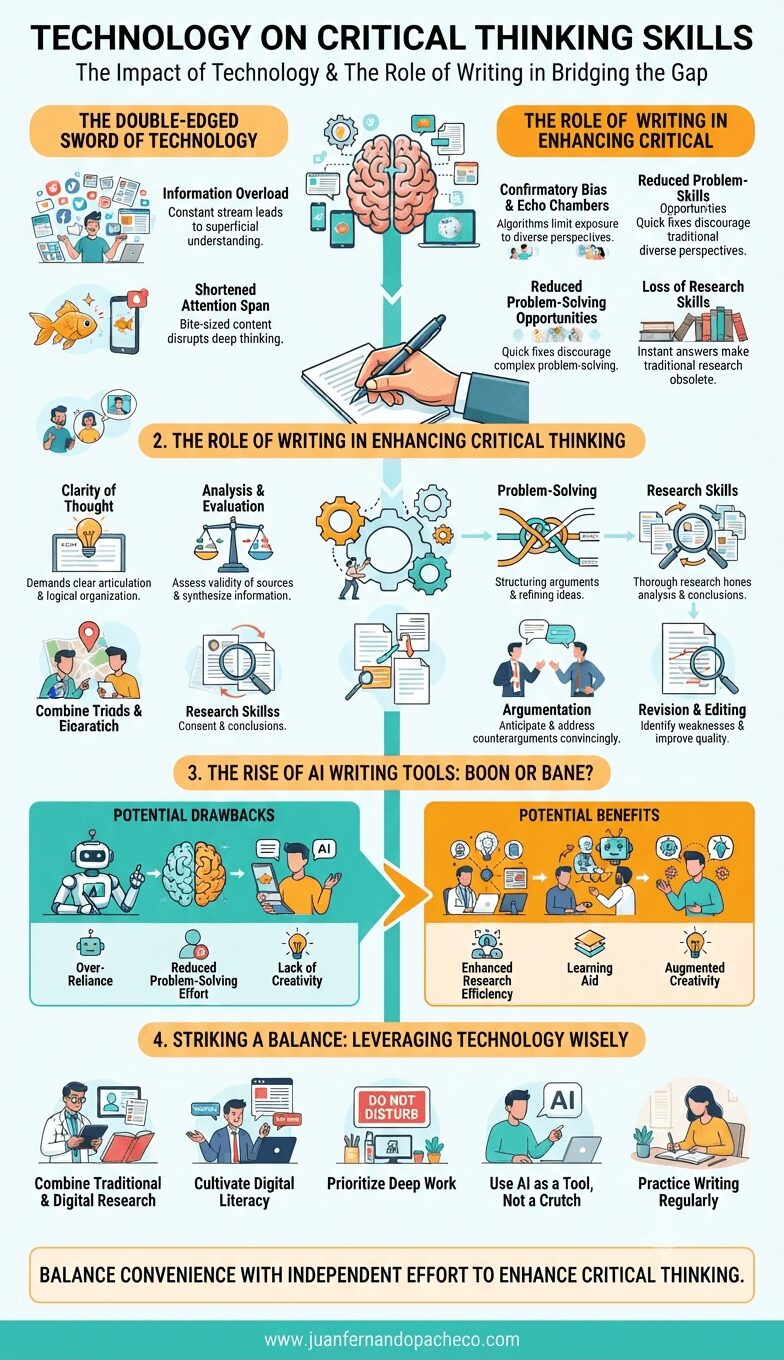
A vertical infographic titled "Technology on Critical Thinking Skills" illustrating the impact of technology, the role of writing, AI tools, and strategies for balance, based on content from juanfernandopacheco.com.

While technology presents challenges to critical thinking, it also offers unprecedented opportunities for learning and skill development.

Writing, as a traditional yet powerful tool, can bridge the gap, fostering clarity, analysis, and creativity.

By balancing the convenience of technological tools with deliberate, independent effort, we can preserve and enhance our critical thinking abilities in the digital age.