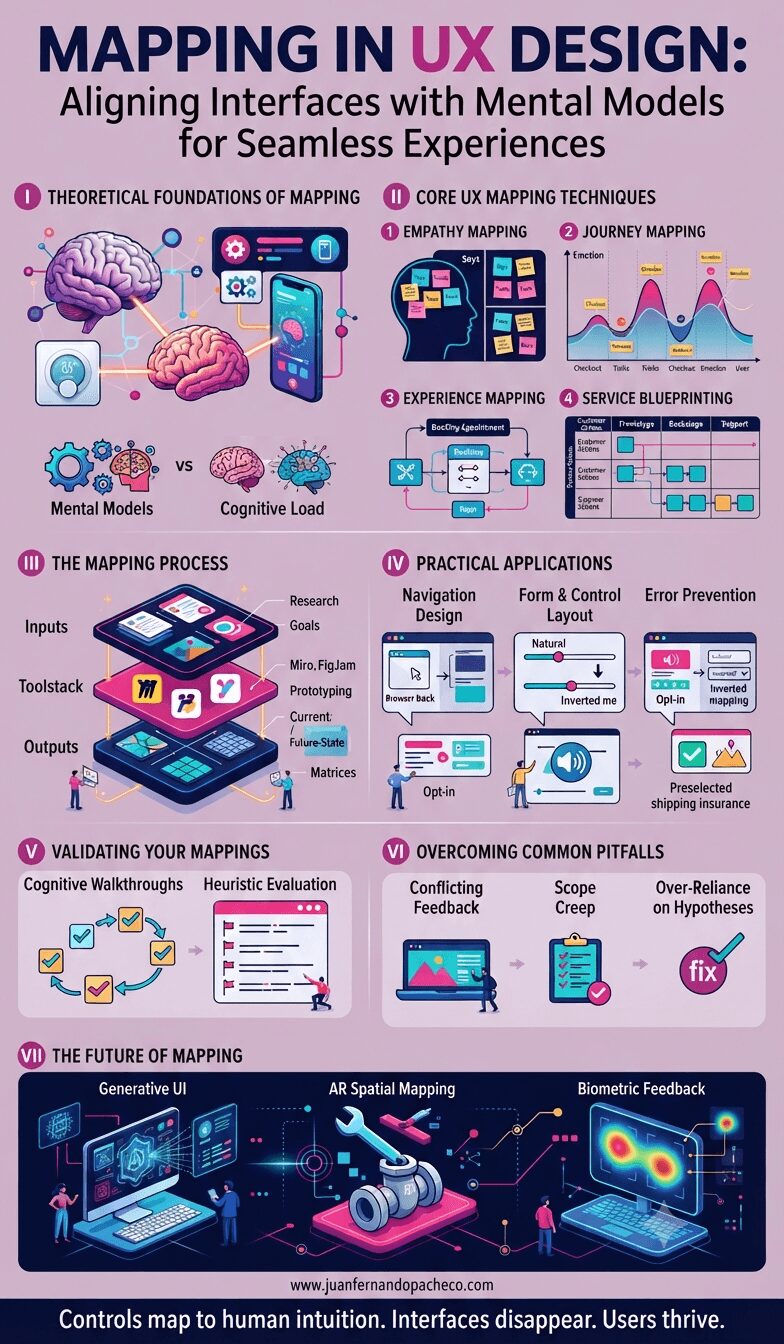
A comprehensive infographic titled 'Mapping in UX Design: Aligning Interfaces with Mental Models for Seamless Experiences' is divided into seven sections. Section I covers Theoretical Foundations (Mental Models, Cognitive Load). Section II details Core Techniques (Empathy, Journey, Experience Mapping, Service Blueprinting). Section III outlines the Process (Inputs, Toolstack, Outputs). Section IV shows Practical Applications (Navigation, Forms, Error Prevention). Section V explains Validation (Walkthroughs, Heuristics). Section VI addresses Pitfalls, and Section VII explores the Future (Generative UI, AR, Biometrics). The footer includes www.juanfernandopacheco.com and the tagline 'Controls map to human intuition. Interfaces disappear. Users thrive.'

Mapping transcends diagramming—it’s the art of translating cognition into interface.

By anchoring designs in mental models, we reduce cognitive friction, build trust, and accelerate task completion.

Start small: pick one critical user journey, blueprint its current state, then redesign one touchpoint using empathy-driven insights.