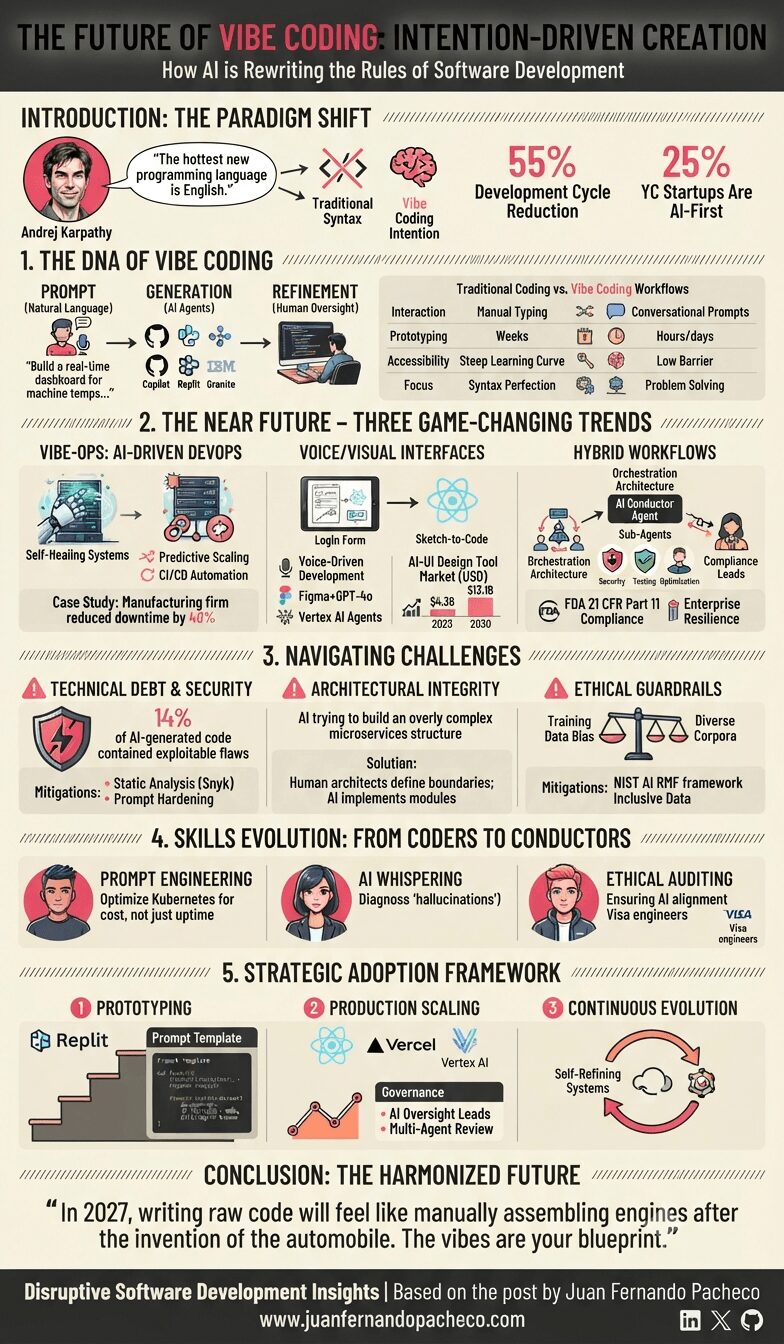
A detailed infographic titled "The Future of Vibe Coding: Intention-Driven Creation," exploring the shift from traditional syntax-based software development to AI-driven, natural-language programming. The graphic covers the paradigm shift led by Andrej Karpathy’s vision, the DNA of vibe coding workflows, three future trends (VibeOps, Voice/Visual Interfaces, Hybrid Workflows), key challenges and skills evolution, a strategic adoption framework, and a concluding quote predicting a future where raw manual coding is obsolete. It includes data, tool logos, and illustrations across five structured sections on a light beige background, referencing www.juanfernandopacheco.com.

Vibe coding isn’t about replacing developers—it’s about elevating creativity. As Karpathy noted, we’re moving from “character-by-character typing” to “seeing stuff, saying stuff, running stuff”.

The future belongs to teams that wield AI as a co-pilot: voice interfaces accelerating ideation, VibeOps hardening infrastructure, and hybrid workflows merging human ingenuity with machine efficiency.
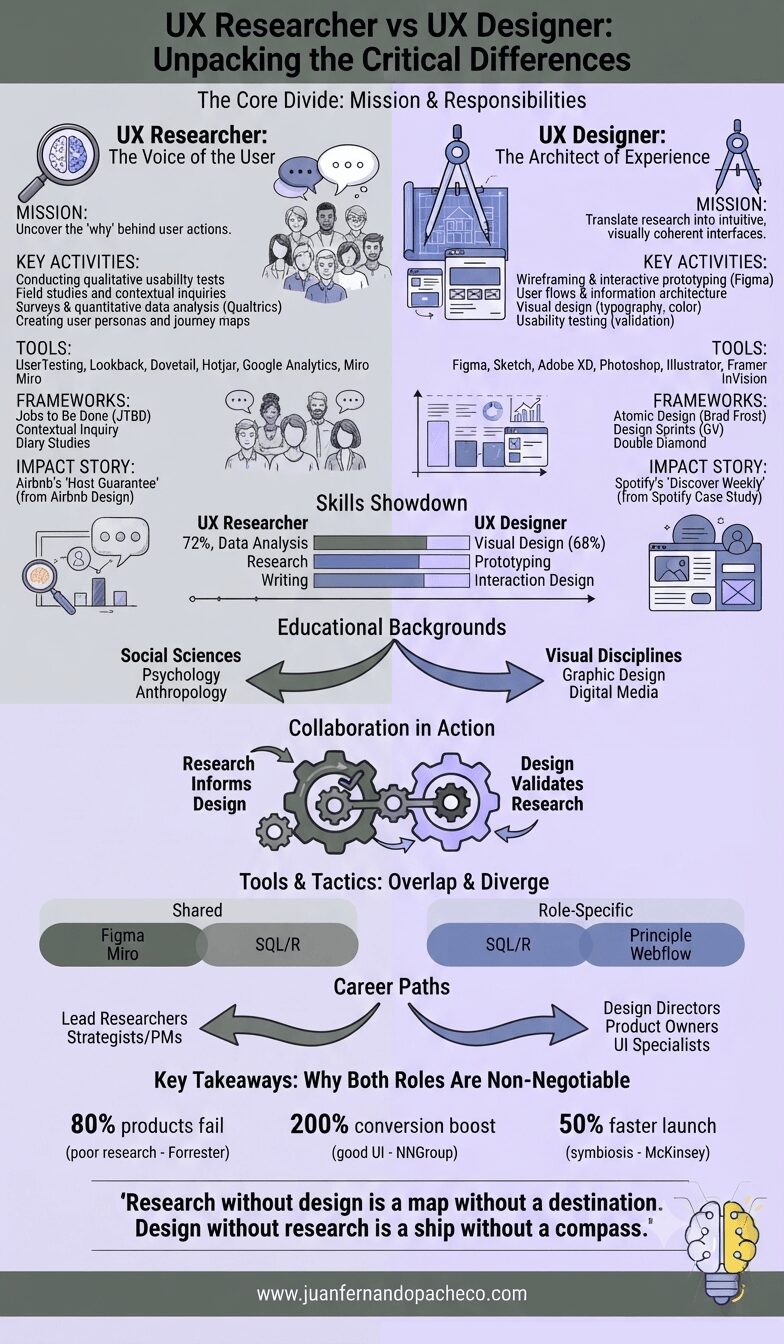
An infographic comparing UX Researchers and UX Designers, detailing their missions, key activities, tools, frameworks, skills showdown, educational backgrounds, collaboration, and career paths, styled in soft purple tones with references to www.juanfernandopacheco.com.

UX Researchers and Designers aren’t rivals—they’re co-pilots navigating the same destination: user delight. Researchers illuminate the path with data; designers pave it with ingenuity. In an era where user expectations skyrocket daily, investing in both isn’t optional—it’s existential.

“Research without design is a map without a destination. Design without research is a ship without a compass.”