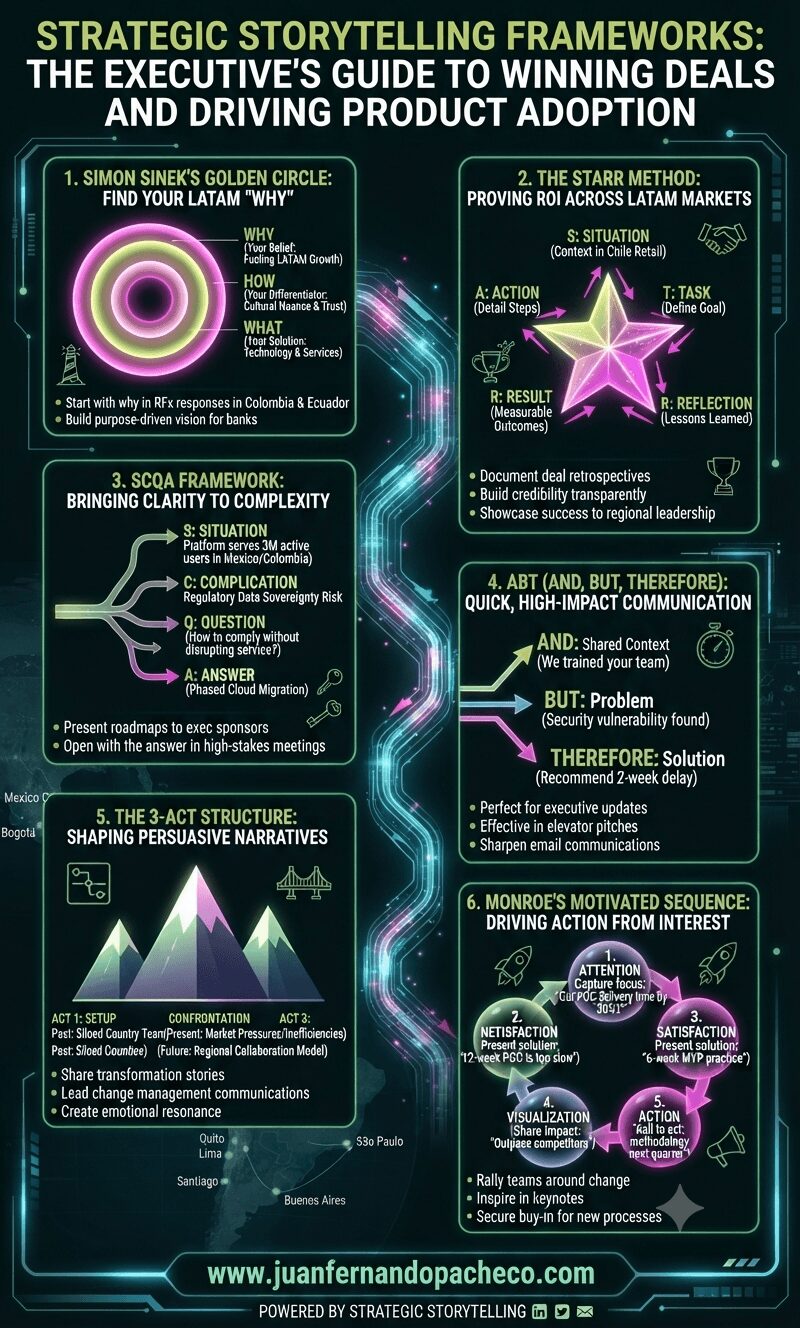
Master six proven strategic storytelling frameworks that transform complex ideas into compelling narratives. Learn how to win high-stakes deals, align stakeholders, and accelerate product adoption across LATAM markets.
Tag: Storytelling
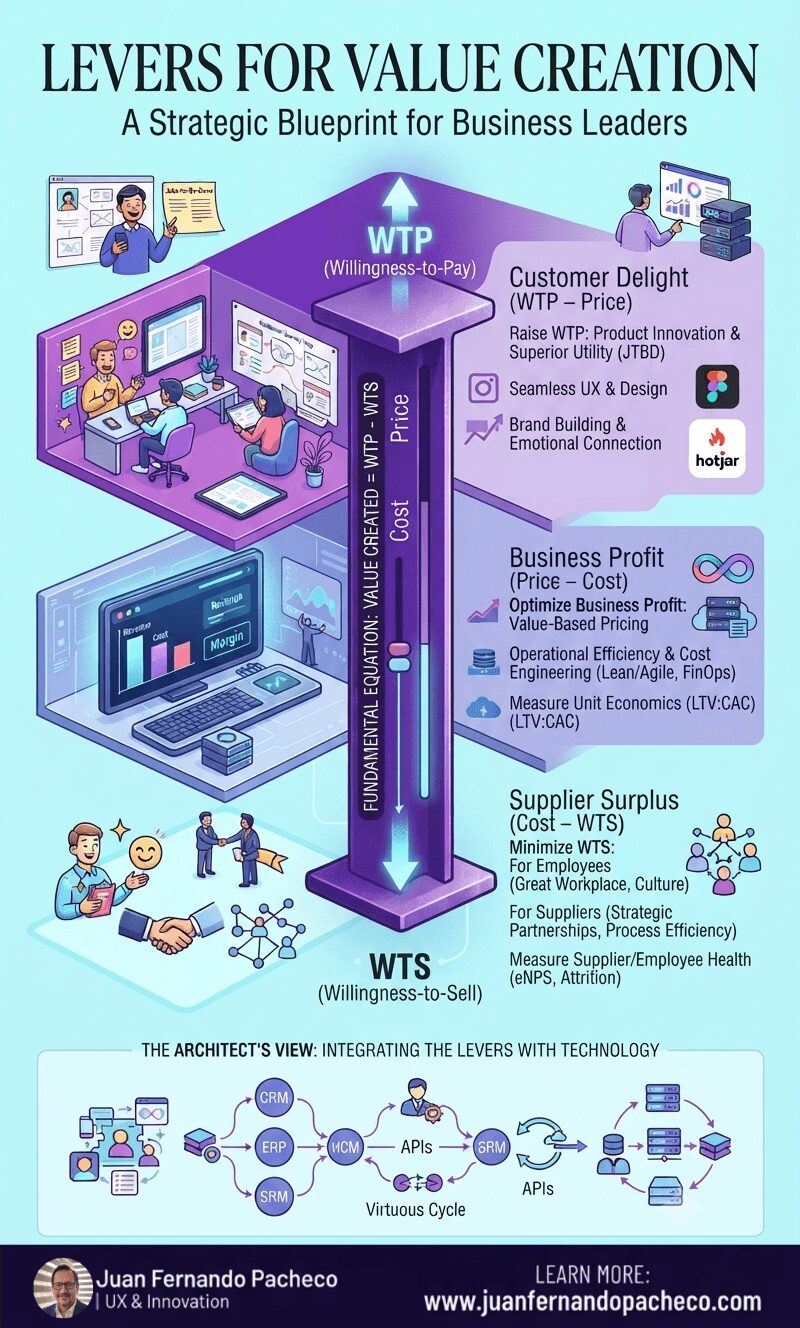
The Value Stick is more than a diagram; it is a mindset. It forces a holistic view of your business ecosystem. You cannot win by delighting customers while exploiting employees. You cannot sustain profit by cutting costs without regard for the value you destroy.
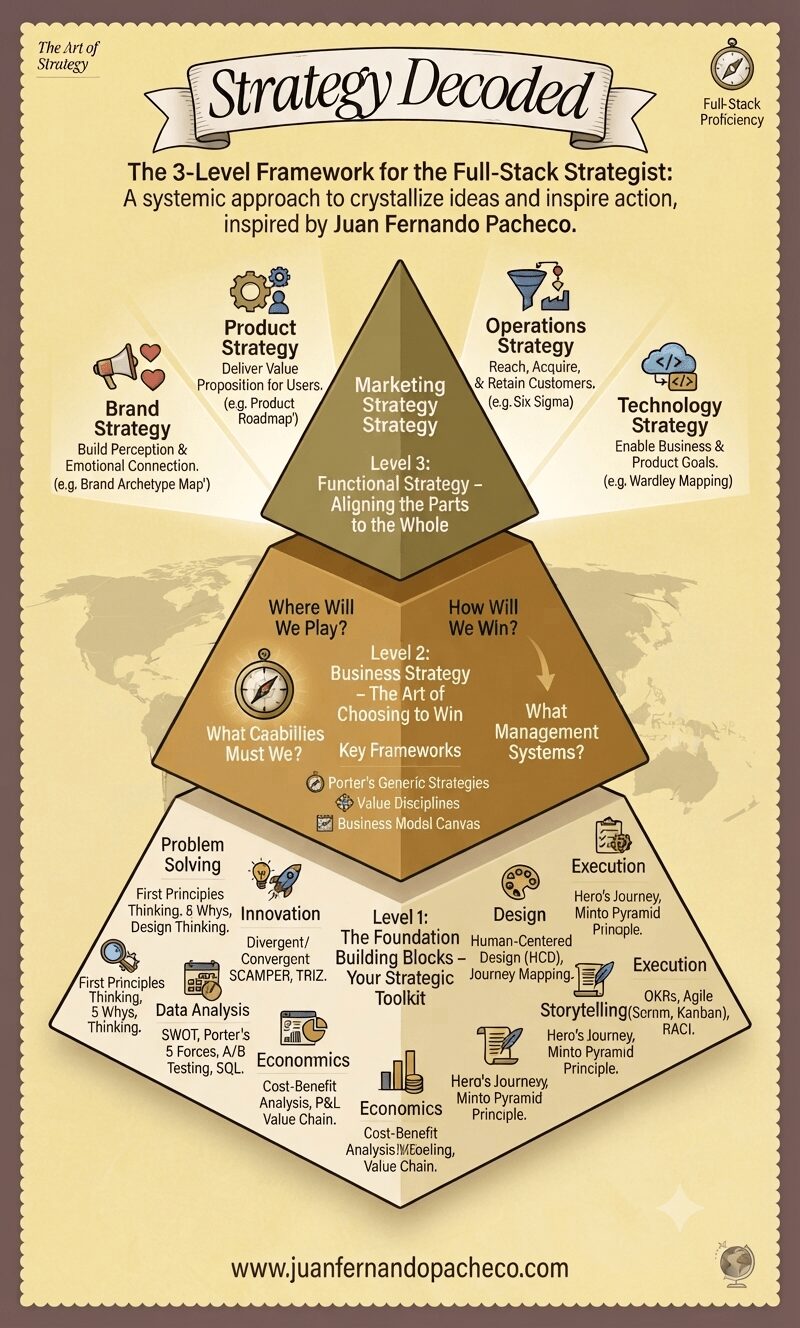
Becoming a full-stack strategist is a journey.
Start by auditing your proficiency in the seven building blocks. Where are you strong? Where do you need improvement?
Then, practice articulating the business strategy for your team or company—even if it’s not your official job.
Finally, constantly scrutinize your functional work (whether in design, tech, product, or marketing) and ask: “Does this truly ladder up to how we’ve chosen to win?”
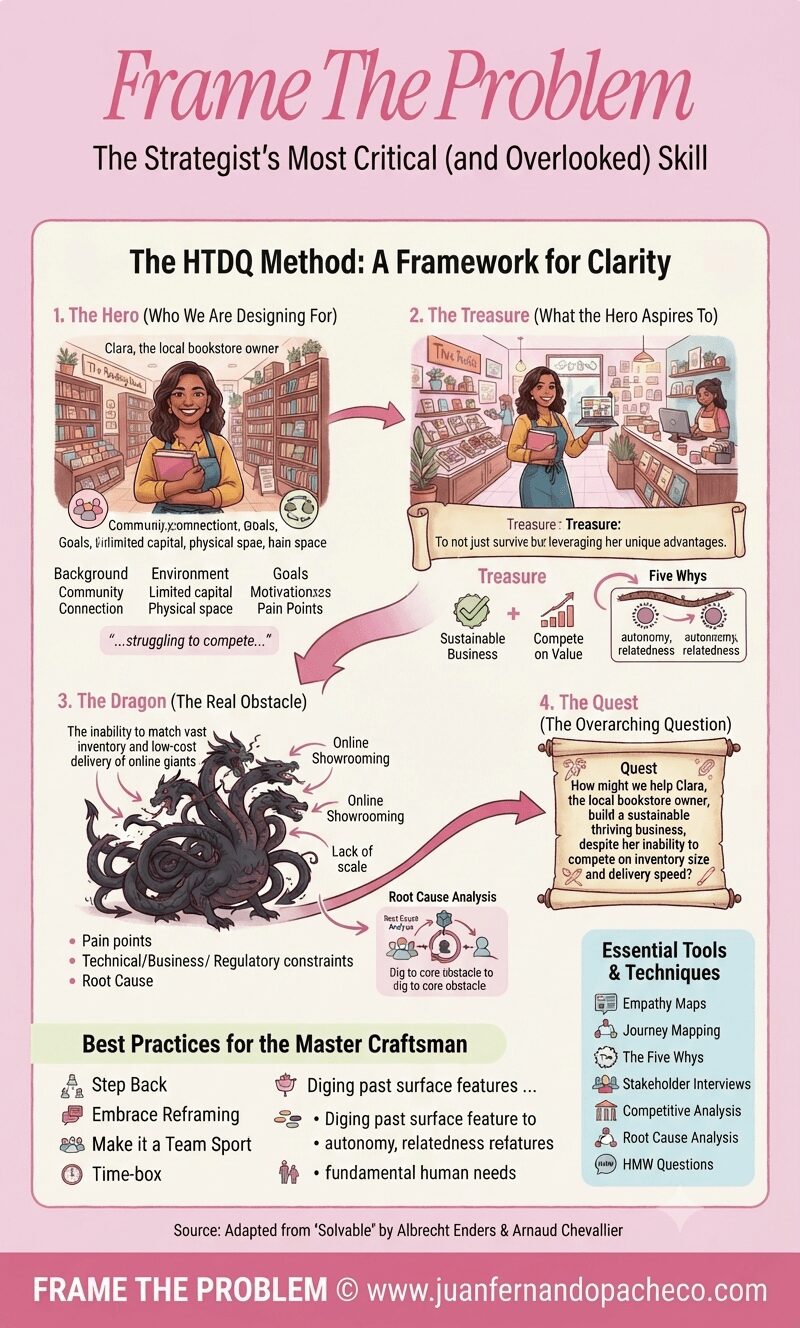
Framing the problem is the highest-leverage activity in any strategic endeavor. It is the art of asking the right question before desperately searching for answers. The HTDQ method provides a memorable, robust, and human-centered framework to master this art.
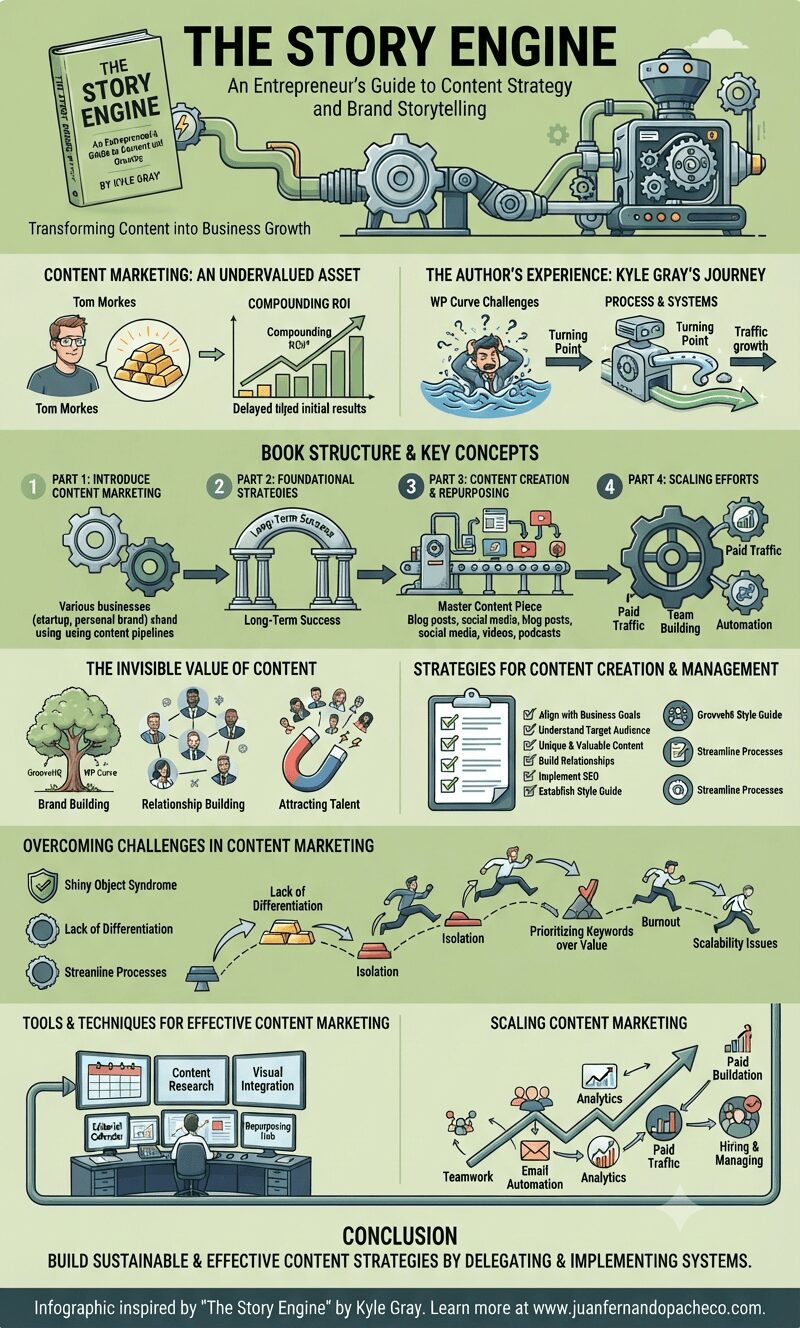
“The Story Engine” provides a comprehensive guide to content marketing, focusing on strategy, efficiency, and scalability. It combines practical advice with insights on the broader value of content marketing, aiming to help entrepreneurs build sustainable and effective content strategies.
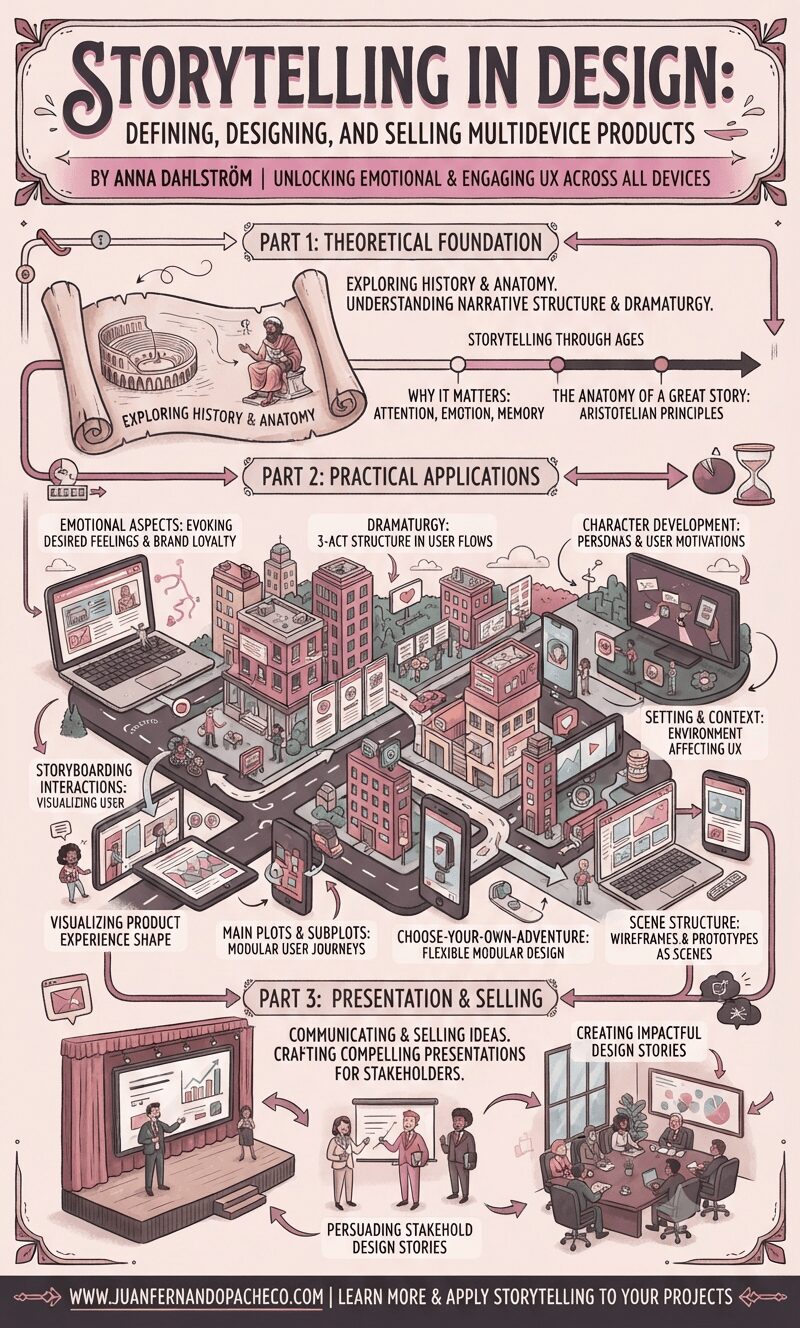
Throughout the book, Dahlström provides practical exercises and examples to help readers apply storytelling principles to their design projects.
She emphasizes that storytelling is not just about creating entertaining narratives but also about designing effective and user-centered experiences.
By drawing on the power of storytelling in design, designers can create products that are not only functional but also engaging, meaningful, and memorable.
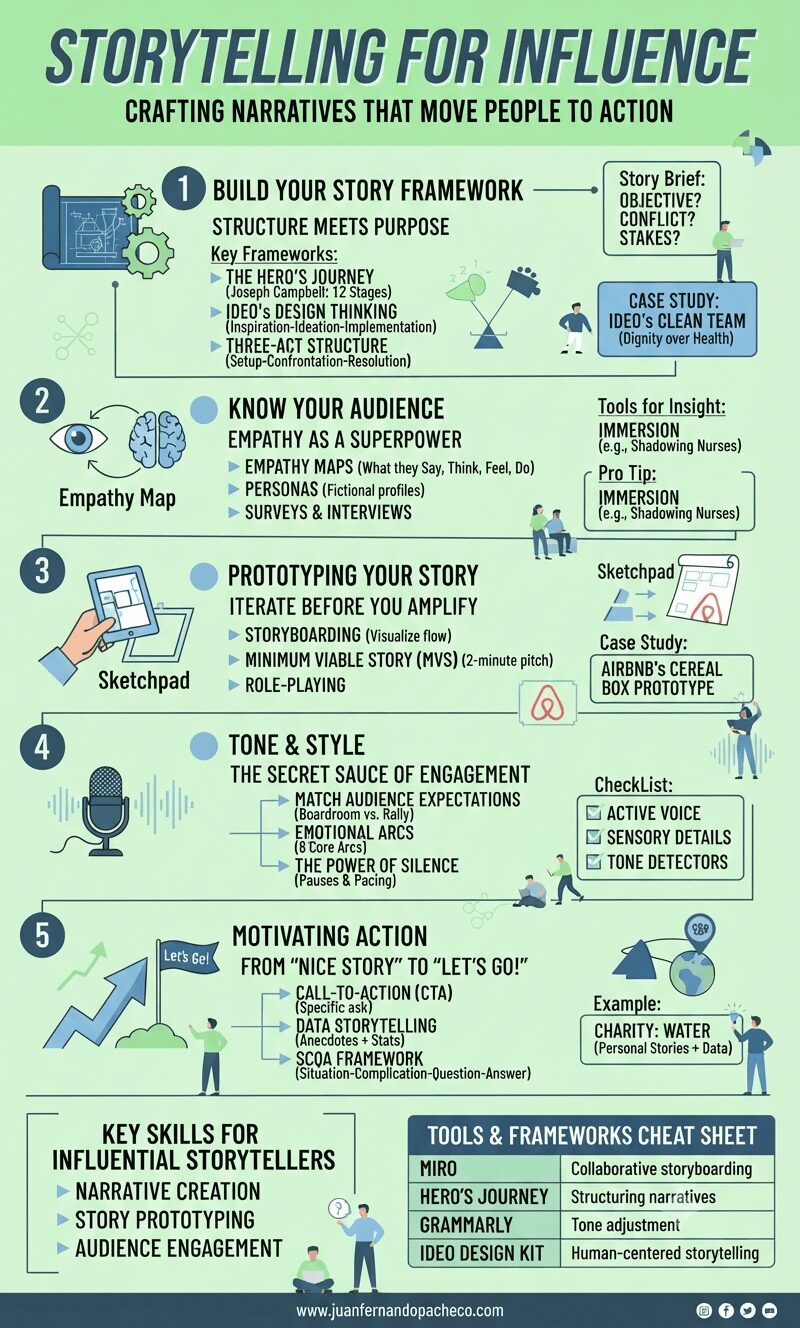
Your Story Starts Now
Influence isn’t about loud voices—it’s about stories that stick. By blending frameworks like the Hero’s Journey with IDEO’s iterative ethos, you’ll turn ideas into movements.
Remember: prototype boldly, listen deeply, and let your audience’s needs guide your narrative. Now, go craft a story that doesn’t just speak—it roars.