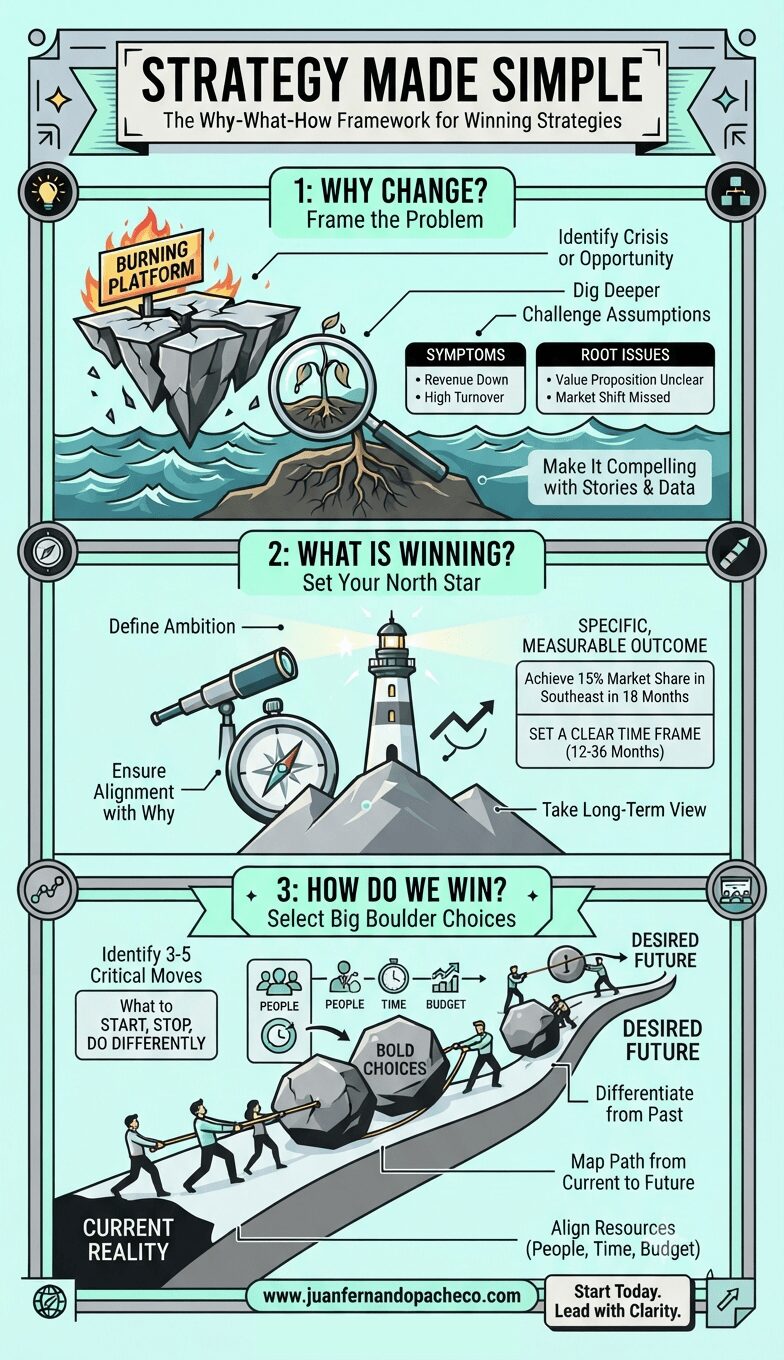
A vertical infographic titled "Strategy Made Simple" presented in three distinct, stacked sections. Section 1, "Why Change?", shows a cracked, burning platform and a plant root system under a magnifying glass to illustrate root causes. Section 2, "What Is Winning?", features a lighthouse acting as a North Star and a telescope. Section 3, "How Do We Win?", depicts people pushing large boulders along a path labeled "Bold Choices" toward a "Desired Future," with icons for aligning "People, Time, Budget."

Strategy doesn’t have to be complicated. Start with why. Define what winning looks like. Make bold choices about how you’ll get there. Communicate with clarity. Execute with discipline.

That’s it. That’s the formula.

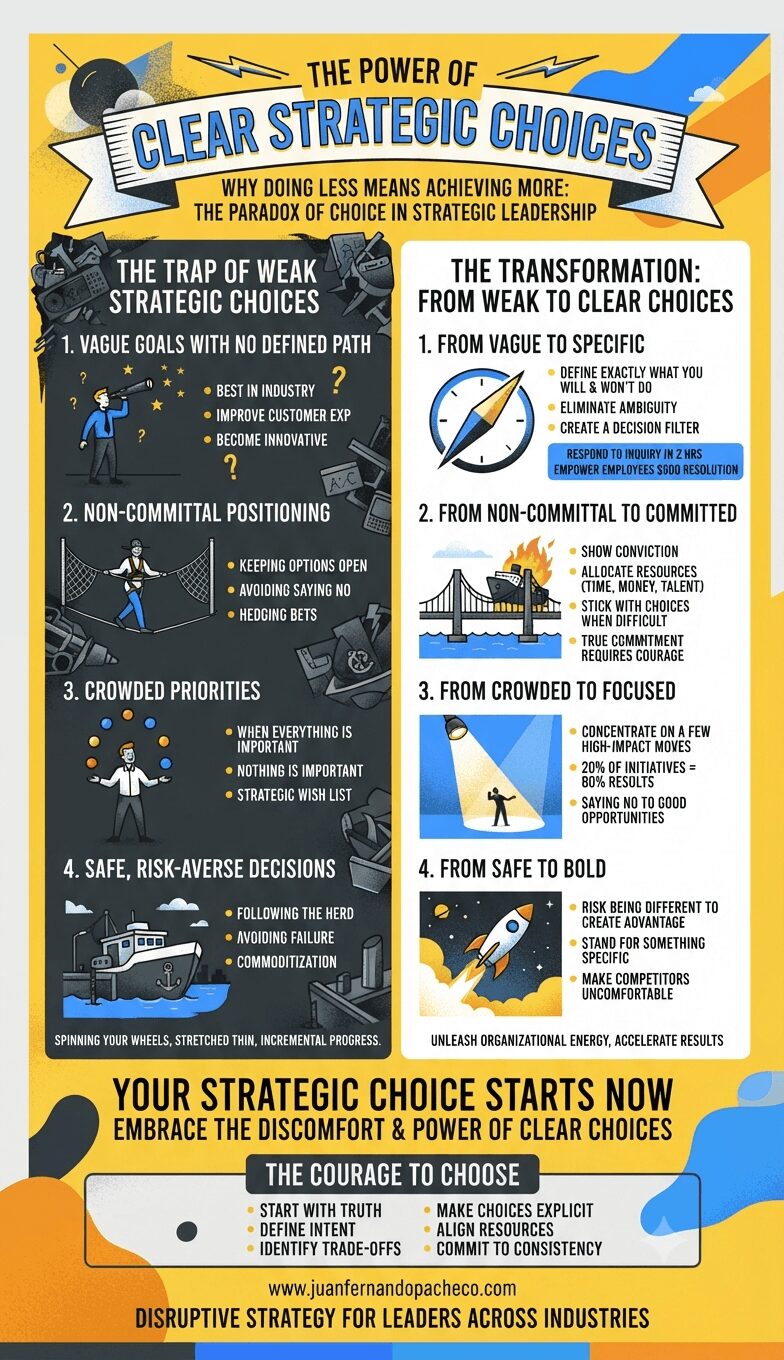
The question isn’t whether this framework works—it does. The question is whether you’ll have the courage to use it. To make the hard choices. To say no to the good so you can say yes to the great. To lead your organization from where it is to where it needs to be.
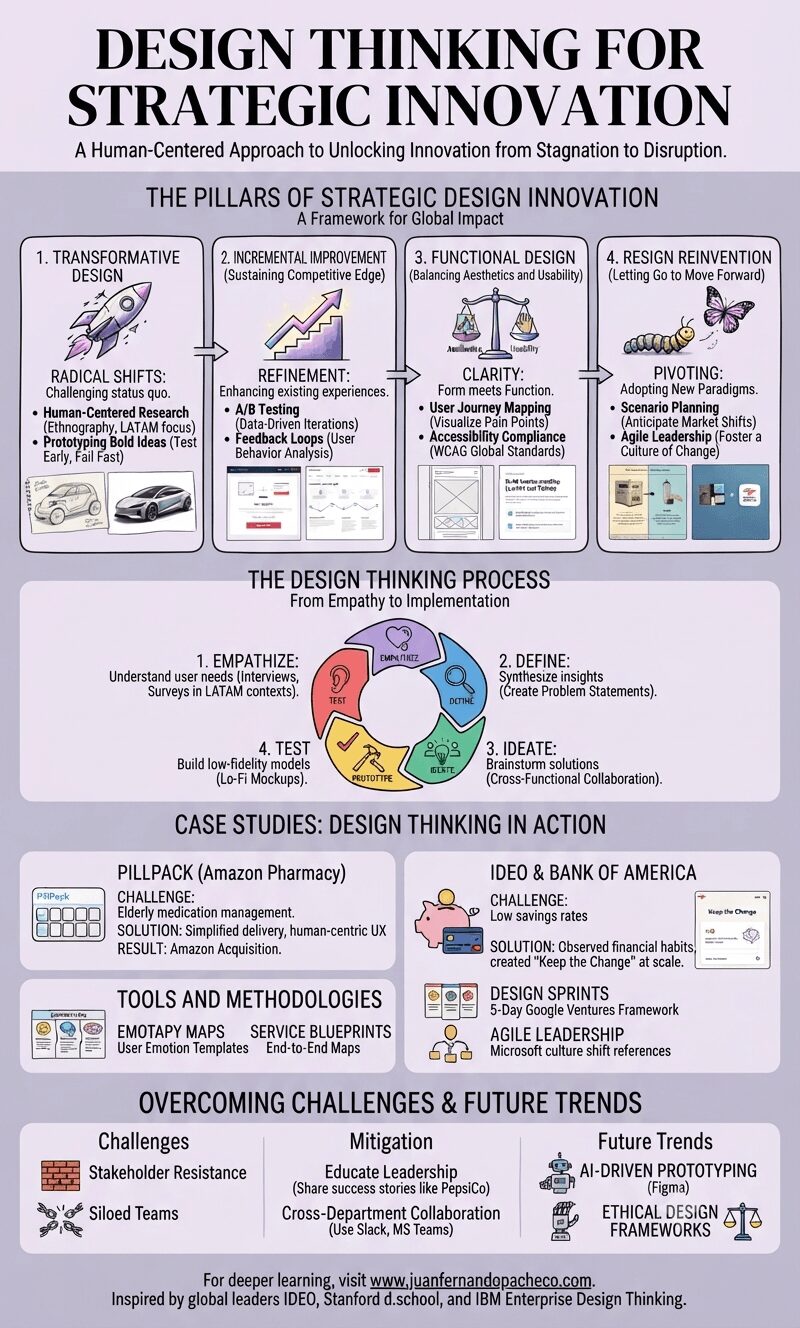
An infographic titled "DESIGN THINKING FOR STRATEGIC INNOVATION" with a human-centered approach, detailing the four pillars (Transformative Design, Incremental Improvement, Functional Design, Resign Reinvention), the five-stage process, case studies (PillPack, IDEO & Bank of America), tools, challenges, future trends, and a final call to action and website reference www.juanfernandopacheco.com.

Design Thinking is more than a buzzword—it’s a human-centered approach to solving complex problems and unlocking strategic innovation.

By blending empathy, creativity, and iterative learning, organizations can pivot from stagnation to disruption. This post unpacks how Design Thinking intersects with four pillars of innovation: Transformative Design, Incremental Improvement, Functional Design, and Resign Reinvention.