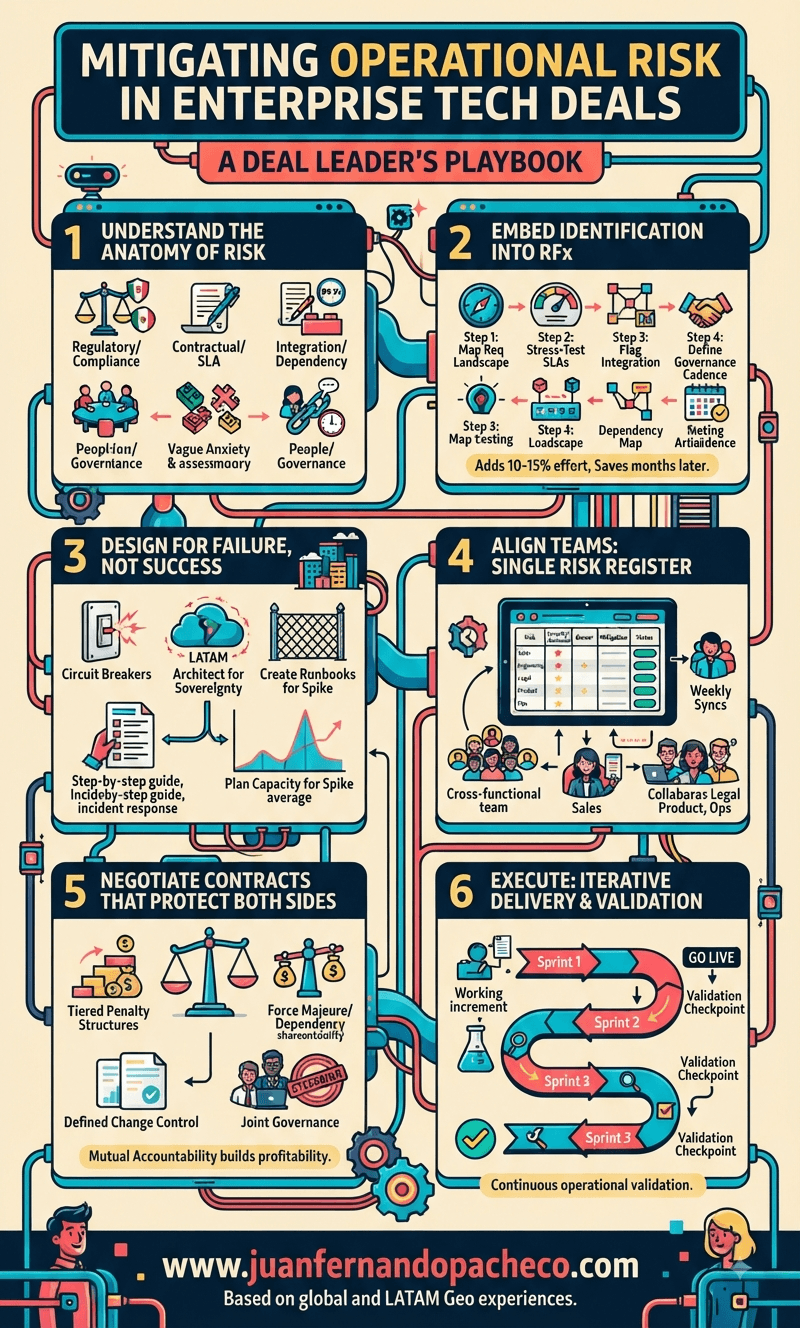
Enterprise technology deals carry layers of operational risk that can unravel even the strongest commercial agreements. This playbook draws on two decades of high-stakes RFx execution across Latin America to offer a repeatable framework for identifying, containing, and eliminating those risks before they cost you the contract.
Tag: Strategic Innovation
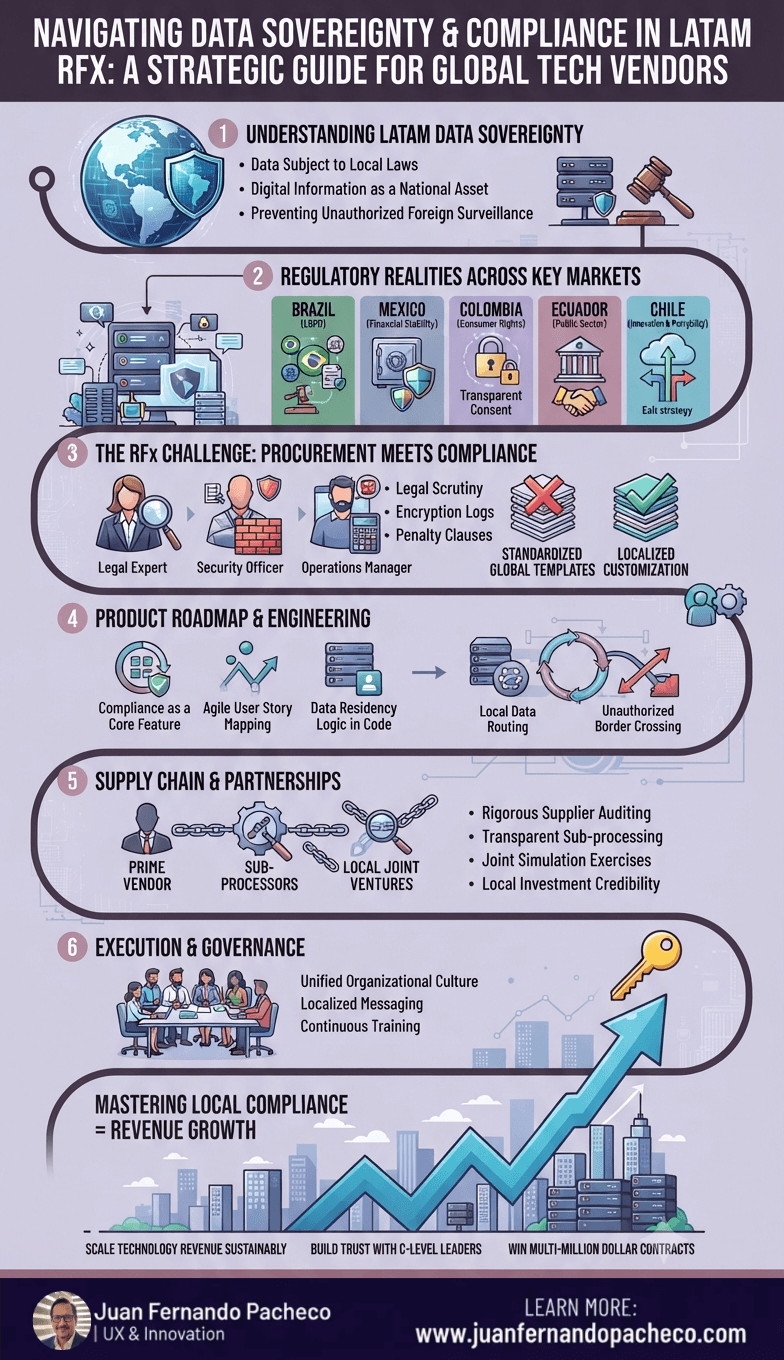
Technology leaders face complex regulatory hurdles when bidding on enterprise contracts in Latin America. This guide explores strategies to align product roadmaps with local compliance mandates and win high-stakes deals involving LATAM data sovereignty RFx.
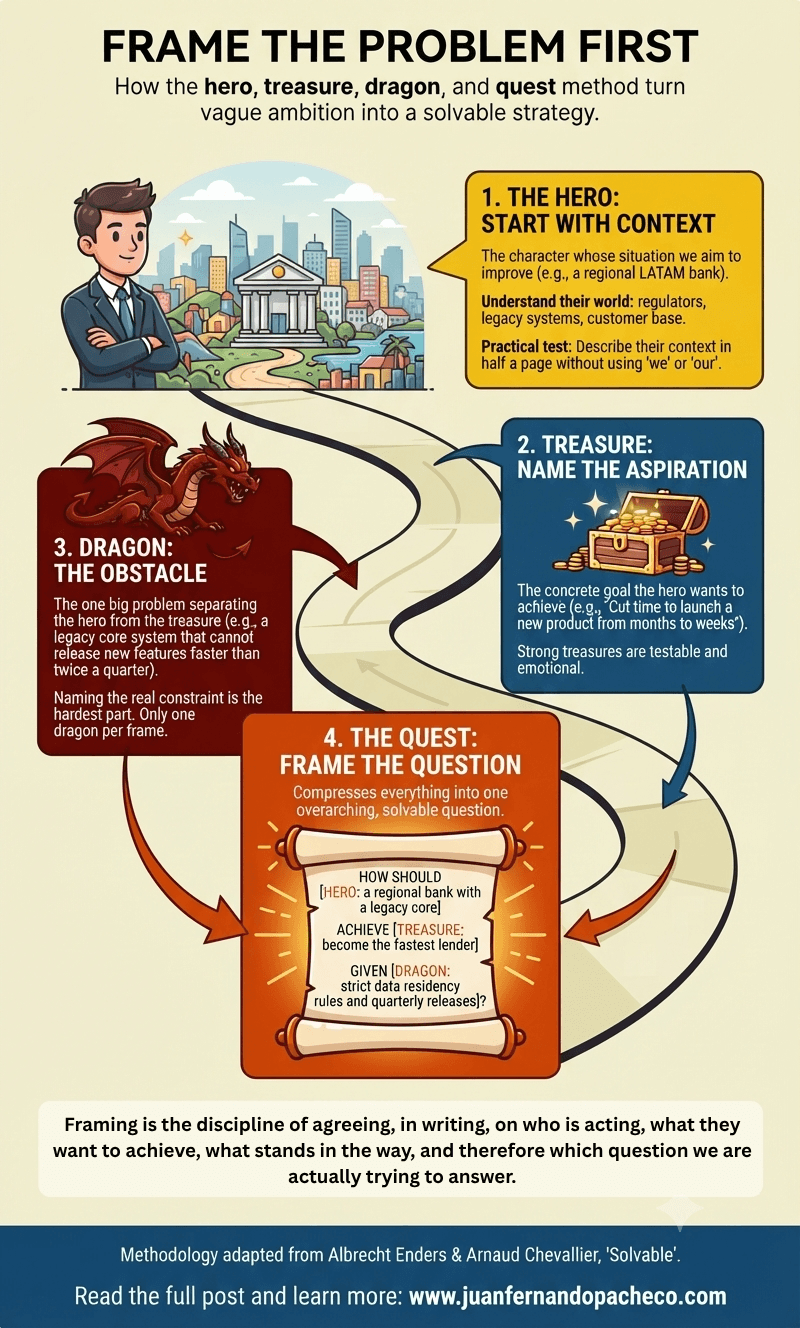
Most strategies and enterprise deals fail because teams rush to solve a problem nobody bothered to define. This post walks through a simple four part framing method (hero, treasure, dragon, quest) and shows how to apply it to products, sales deals and RFx processes so your effort always lands on the real issue.
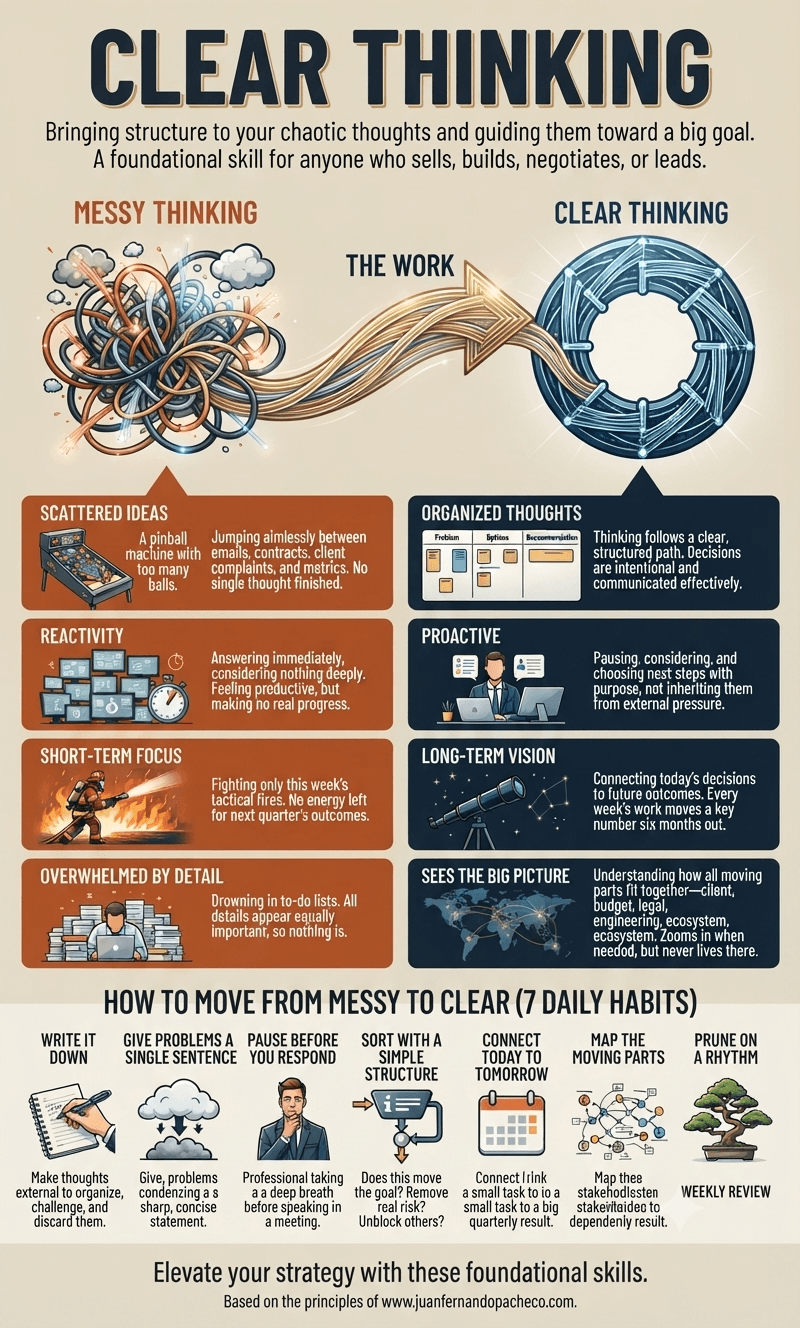
Clear thinking is the practice of bringing structure to your thoughts and guiding them toward a big goal, instead of juggling too many at once. This post looks at how messy thinking shows up in real commercial and product work, and how to build the organized, proactive, long-term habits that turn noise into judgment.
![An infographic titled "The Point of View Strategy Formula" on a light green background, illustrating a three-step process of Insight, Action, and Outcome. The Insight section shows an iceberg labeled "HUMAN TRUTH," the Action section shows a gear mechanism, and the Outcome section shows an upward-trending graph with a rocket. Below the steps, the formula reads: "This [key insight] means we should do [action] and it will create [outcome]." It includes sections on "Common Shallow Traps to Avoid" and "Case Examples" for a Designer, Business Developer, and Career Manager. The footer contains the URL "www.juanfernandopacheco.com".](https://juanfernandopacheco.com/wp-content/uploads/2026/08/The-Point-of-View-POV-Strategy-Formula-Infographic.png)
A clear point of view is the smallest usable unit of strategy. This guide breaks down the insight–action–outcome formula, shows how to pressure-test each part, and applies it to product decisions, enterprise deals, and career moves — as useful today as it will be in five years.
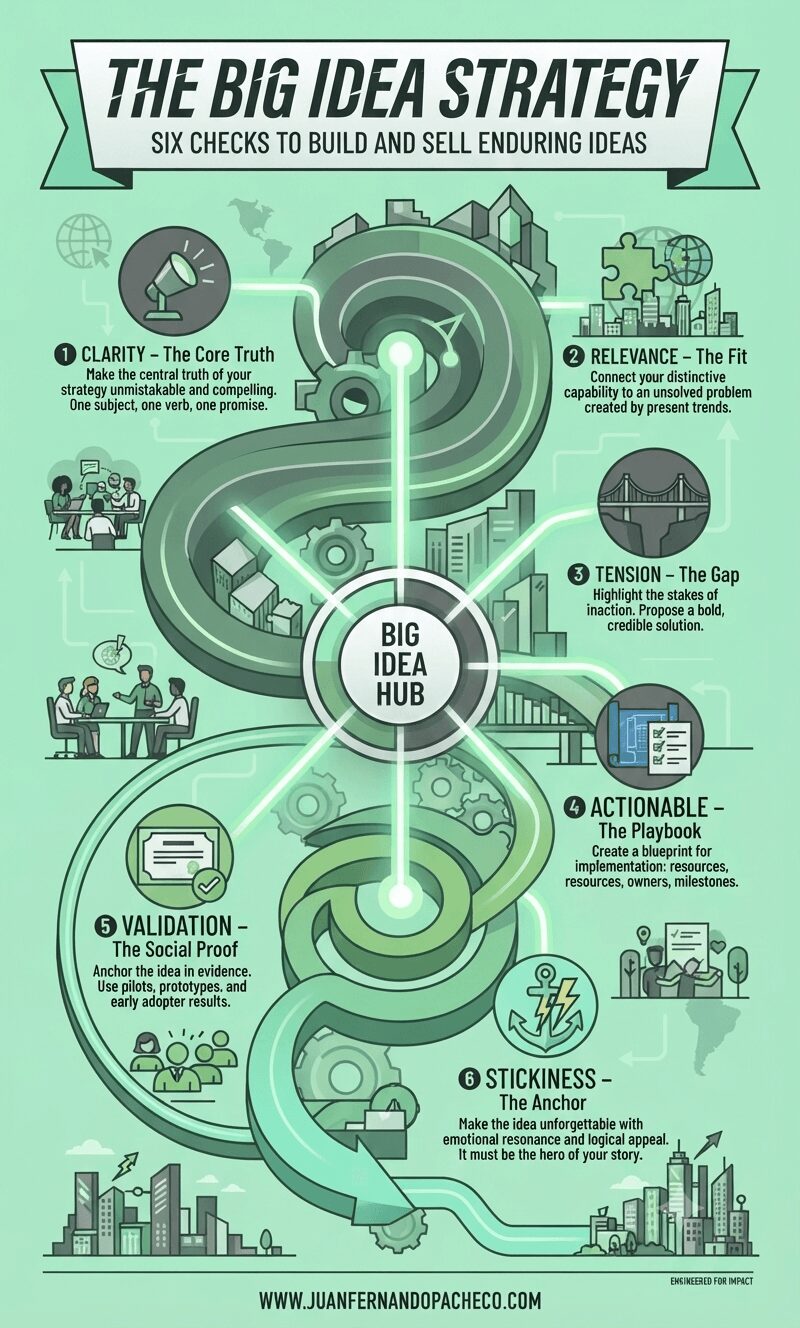
The big idea is the central, unifying concept that gives a strategy purpose, momentum and difference. This post walks through the six checks – clarity, relevance, tension, an actionable playbook, validation and stickiness – and shows how to apply them to products, plans and high-stakes enterprise deals.
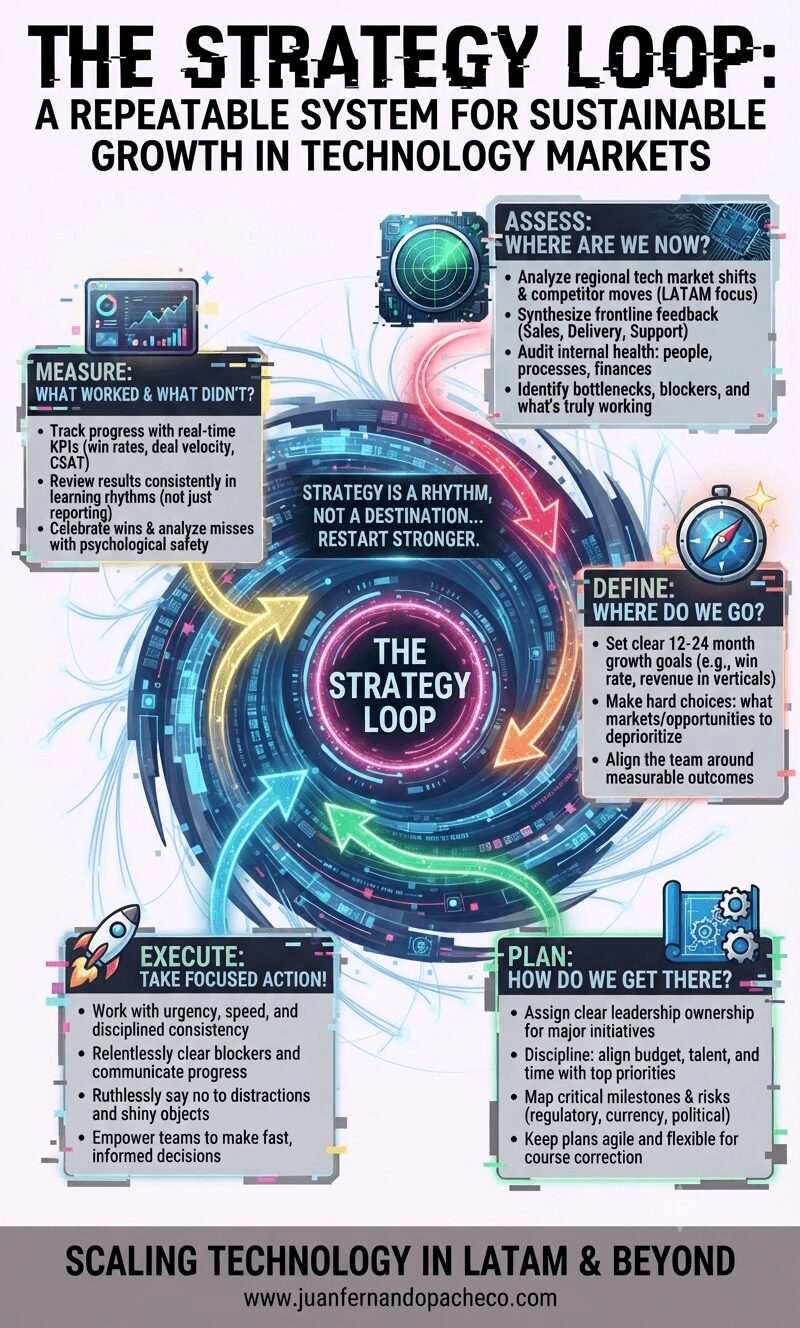
Discover the five-step strategy loop that transforms how technology leaders scale revenue across complex markets. Learn to assess, define, plan, execute, and measure in a continuous cycle that drives sustainable growth.
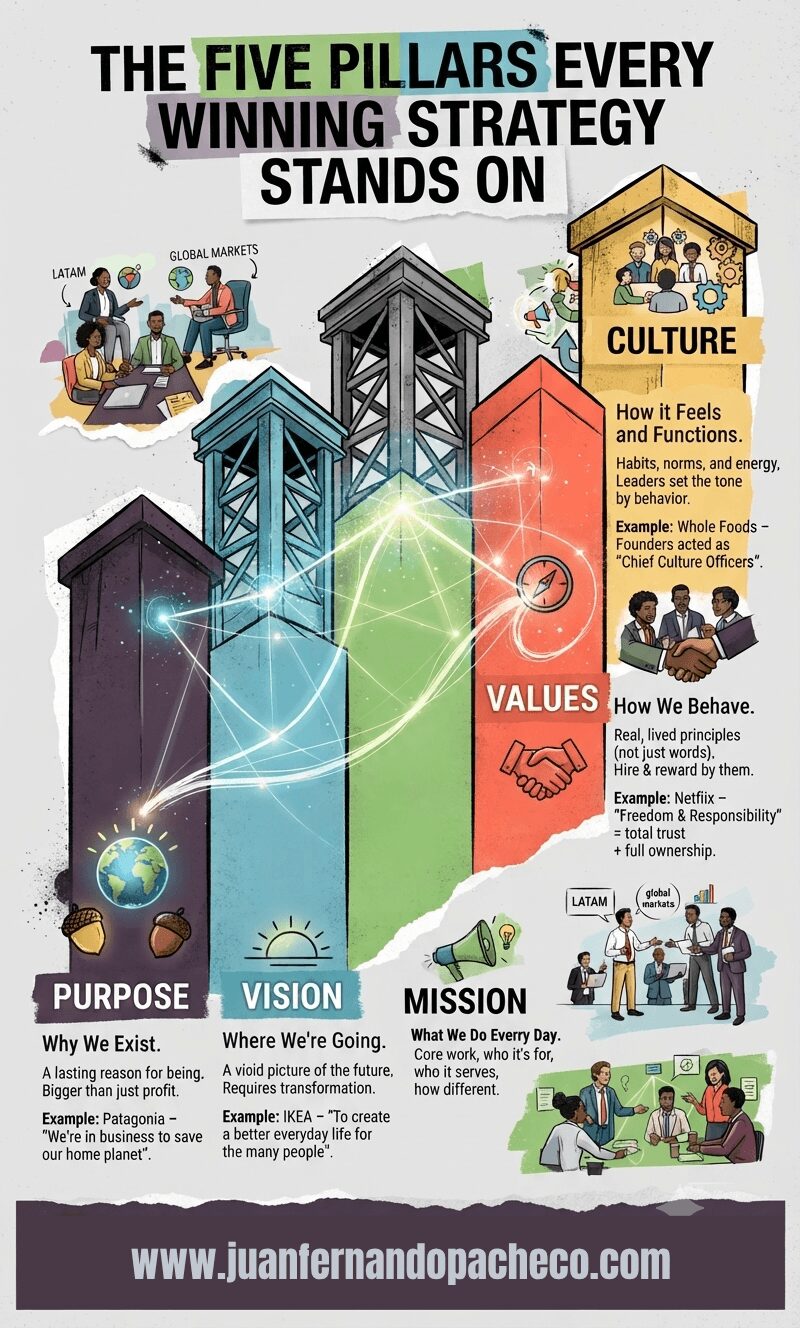
Discover the five fundamental winning strategy pillars that separate successful organizations from the rest. Learn how purpose, vision, mission, values, and culture work together to create strategies that endure market shifts and drive sustainable growth.
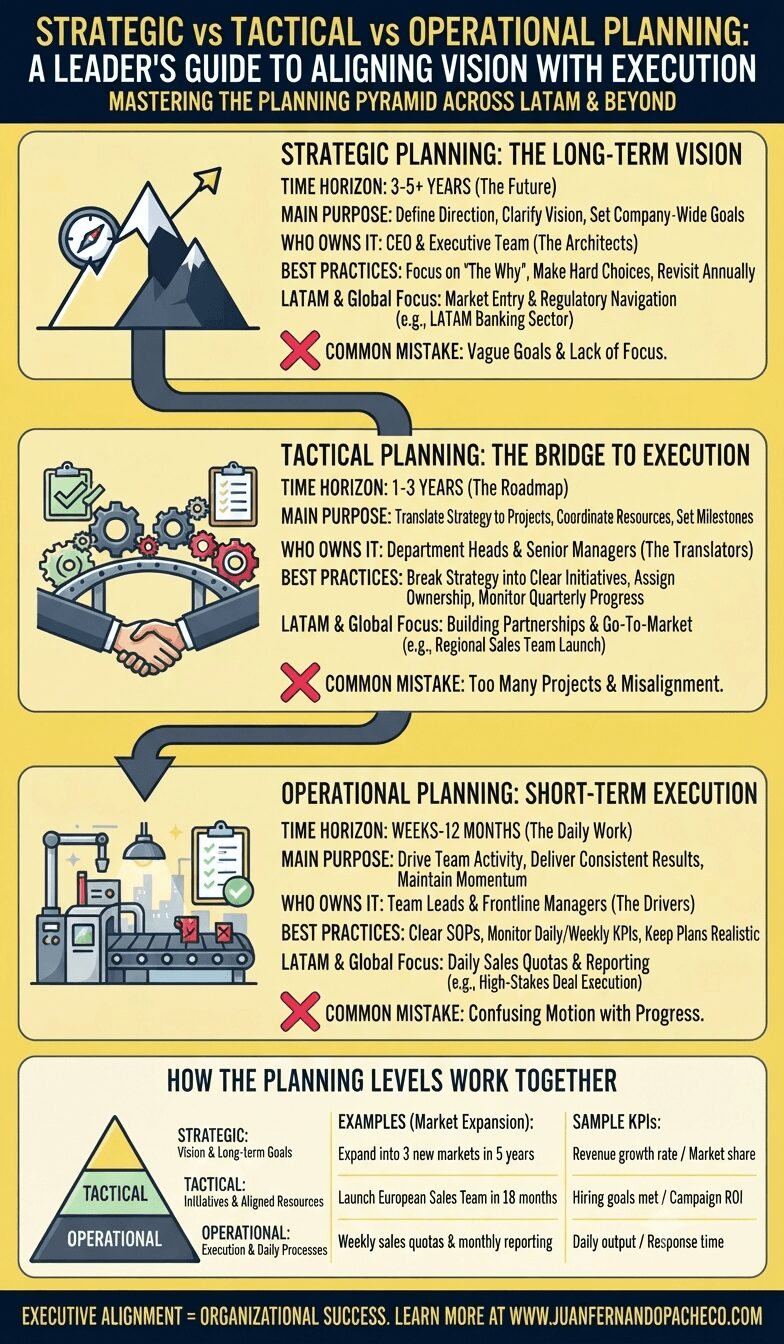
A Leader’s Guide to Aligning Vision with Execution After many years of leading complex deals
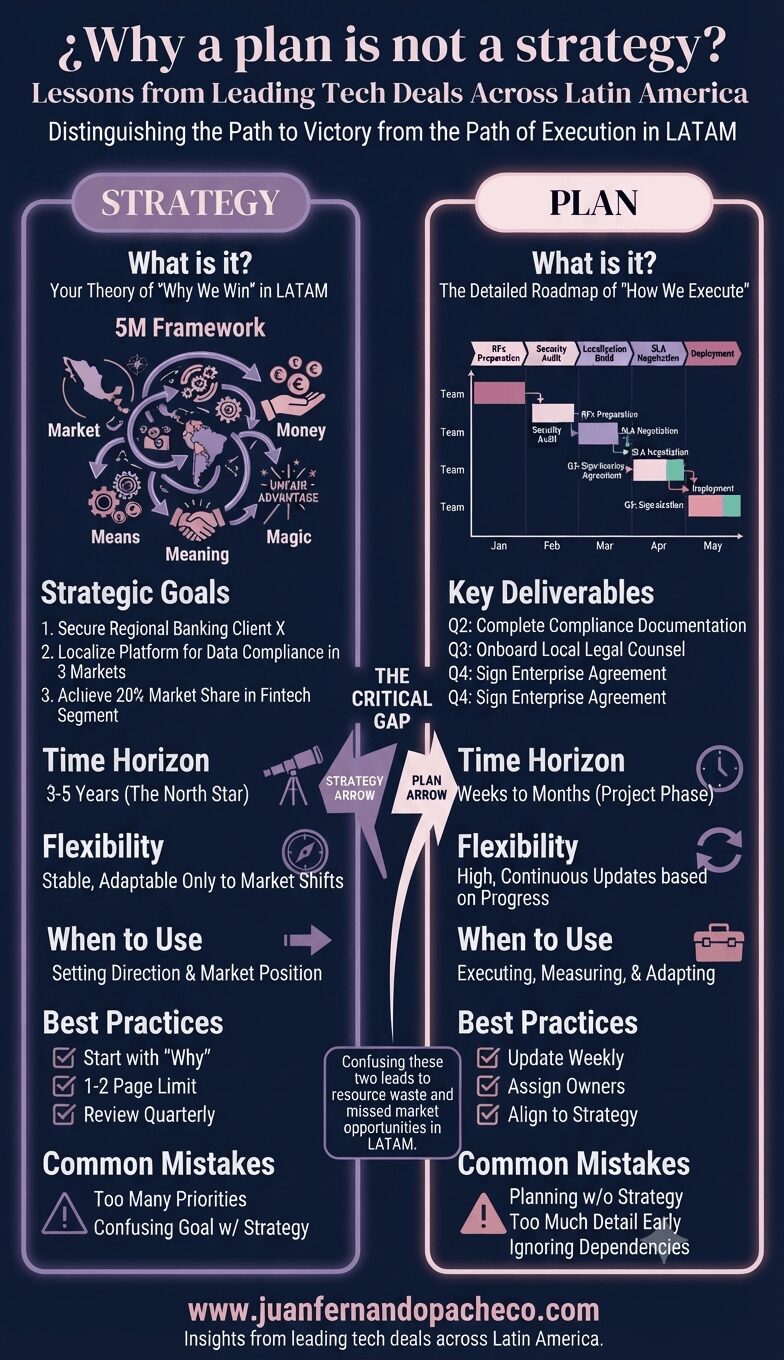
Many executives confuse detailed plans with winning strategies. Learn the critical distinction and how to build both to scale technology revenue across complex markets.