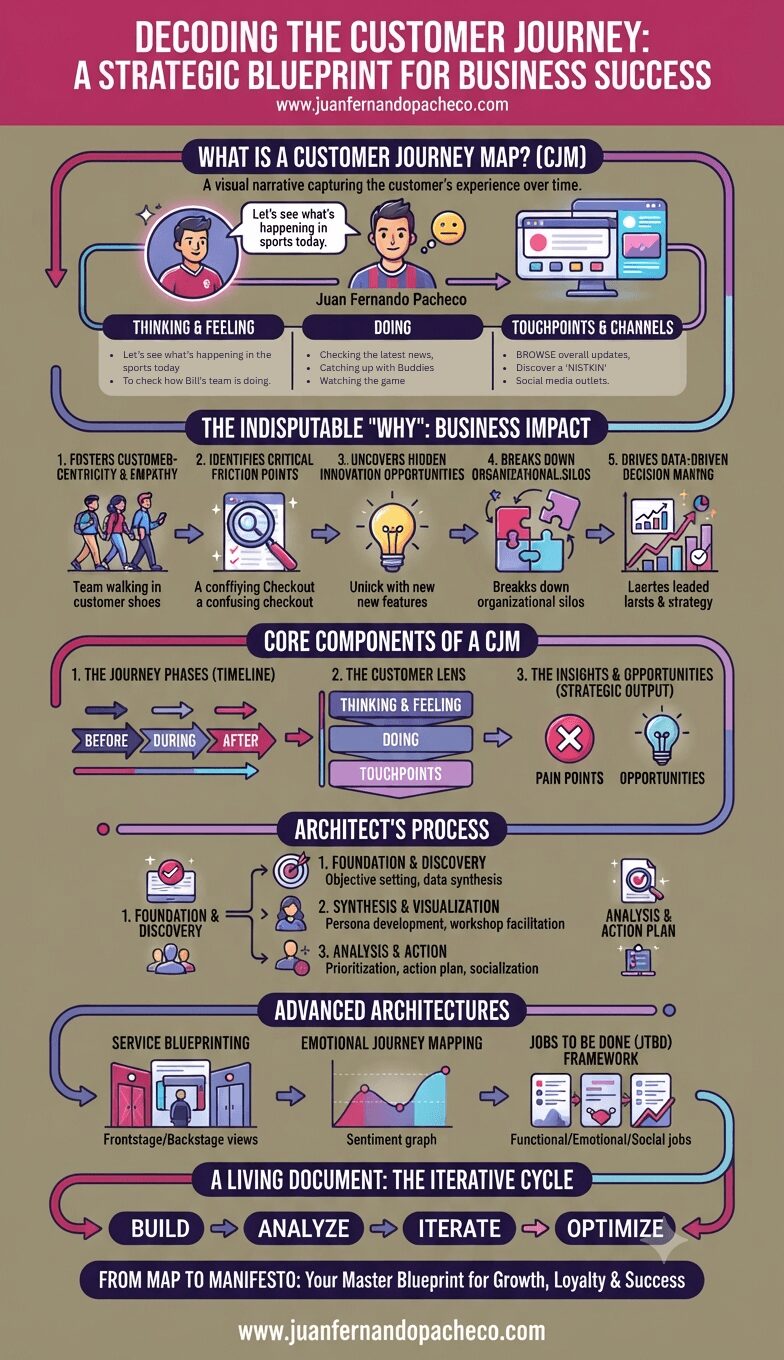
An infographic titled "Decoding the Customer Journey" that serves as a strategic blueprint for business success. The vertical graphic, set against a muted olive background, uses a color palette of pink, purple, and blue. It outlines the definition of a Customer Journey Map (CJM), its business impact, core components (phases, lens, insights), the architectural process (foundation, synthesis, action), advanced frameworks (blueprinting, emotional mapping, JTBD), and the iterative cycle of review. The URL www.juanfernandopacheco.com is included at the top and bottom.

Decoding the customer journey is the first, most critical step in building a truly customer-centric organization. The map of Juan Fernando Pacheco is more than a diagram; it’s a manifesto. It declares that the company’s success is inextricably linked to his success in achieving his goals—be they finding community, proving his knowledge to his buddies, or simply enjoying the thrill of the game.

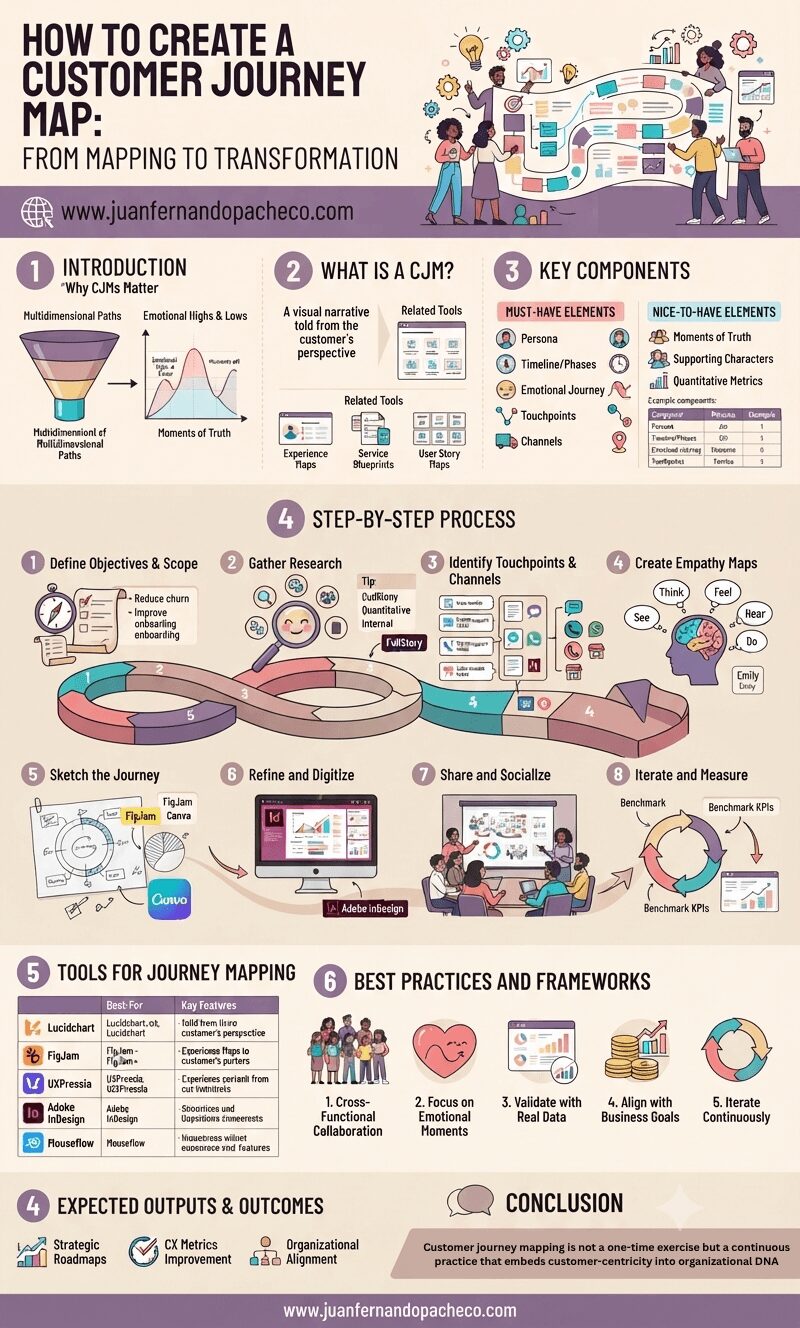
An intricate, vertically-oriented infographic detailing the eight-step process of creating a Customer Journey Map (CJM). The image includes sections on "Why CJMs Matter," "What Is a CJM," "Key Components," "Tools for Journey Mapping," and "Best Practices," using a color palette of lavenders, rose, and beige. It features illustrations of diverse CX teams, charts, a helical journey timeline, and the website www.juanfernandopacheco.com.

Customer journey mapping is not a one-time exercise but a continuous practice that embeds customer-centricity into organizational DNA.

By visualizing the intersection of human emotions and business processes, UX professionals can drive transformative change—turning fragmented interactions into cohesive, respectful experiences that build long-term loyalty.

As CX expectations escalate, the brands that thrive will be those who listen, adapt, and design journeys that resonate deeply with the people they serve.