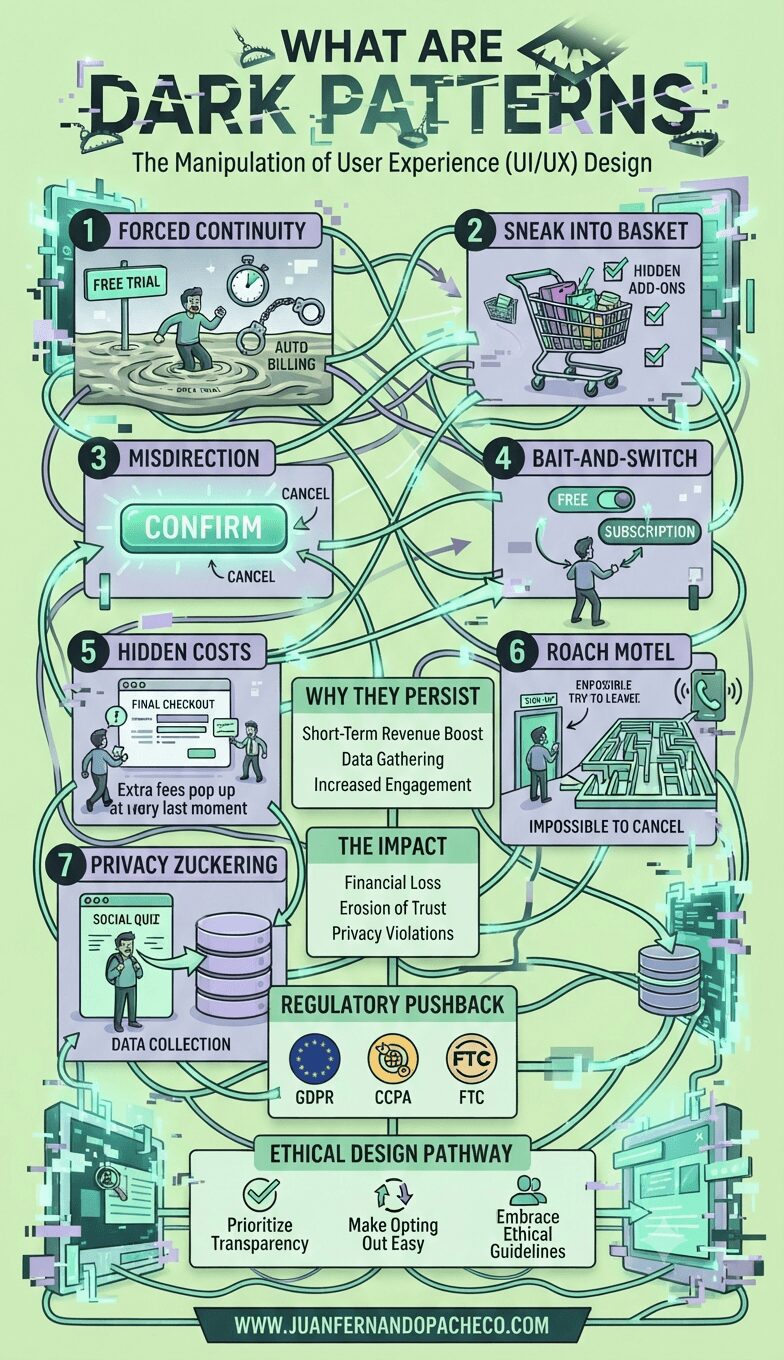
A detailed infographic titled "What are Dark Patterns" explaining manipulative UI/UX design techniques. It illustrates seven common examples: Forced Continuity, Sneak into Basket, Misdirection, Bait-and-Switch, Hidden Costs, Roach Motel, and Privacy Zuckering. Central sections outline why they persist and their impact on users, followed by regulatory pushback from GDPR, CCPA, and FTC. The footer promotes ethical design and lists the website www.juanfernandopacheco.com.

Dark patterns represent the darker side of design, exploiting user vulnerabilities for profit. While effective in the short term, they erode trust, invite regulatory scrutiny, and harm users. By embracing ethical design principles, businesses can foster loyalty, build sustainable relationships, and lead with integrity.

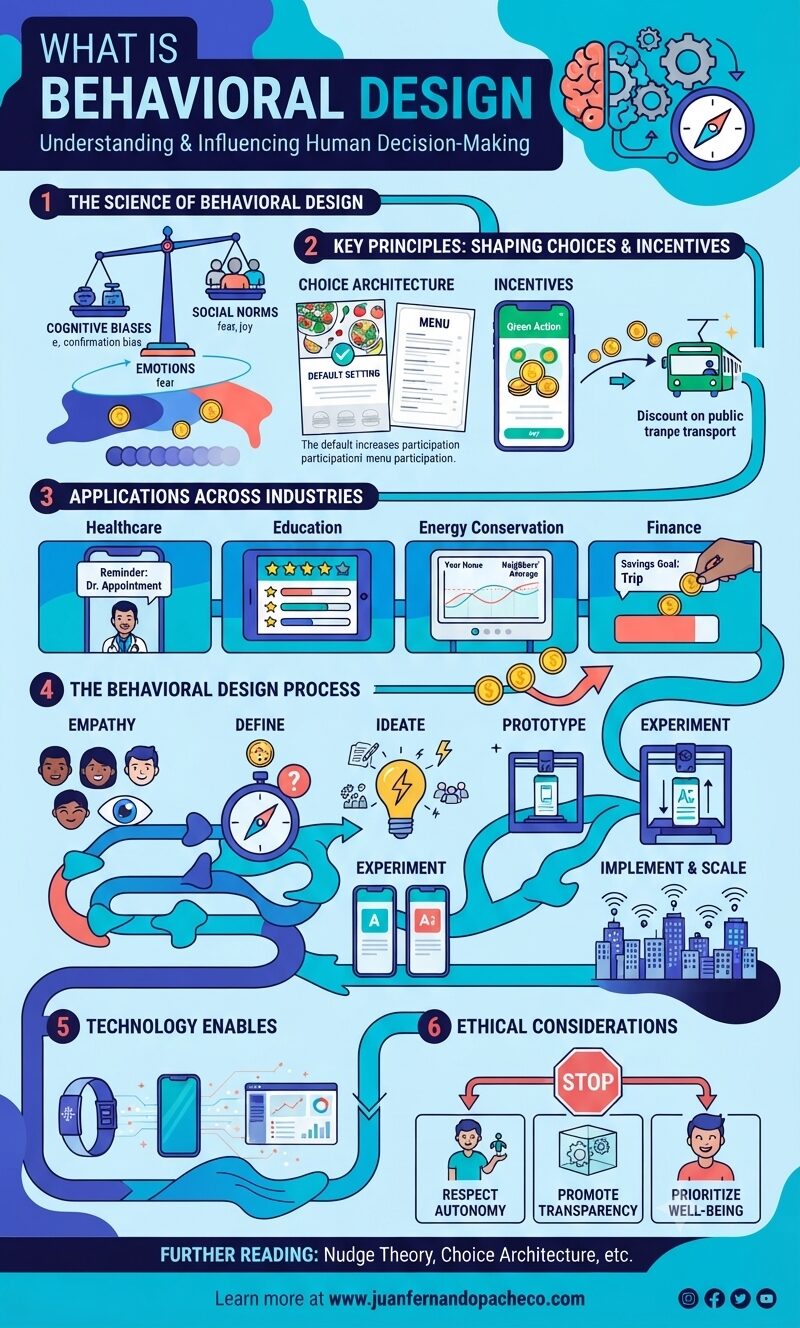
A comprehensive vertical infographic illustrating the concept of behavioral design. It covers the science behind it (biases, emotions, norms), key principles (choice architecture, incentives), applications in industries like healthcare and finance, the design process stages (empathy, define, ideate, prototype, experiment, implement), the role of technology, and ethical considerations.

Behavioral design is a powerful approach to understanding and influencing human behavior. By combining insights from psychology, design, and technology, it provides practical tools for addressing complex challenges across various industries. From improving health outcomes to promoting sustainability, behavioral design empowers individuals to make better decisions and achieve their goals.
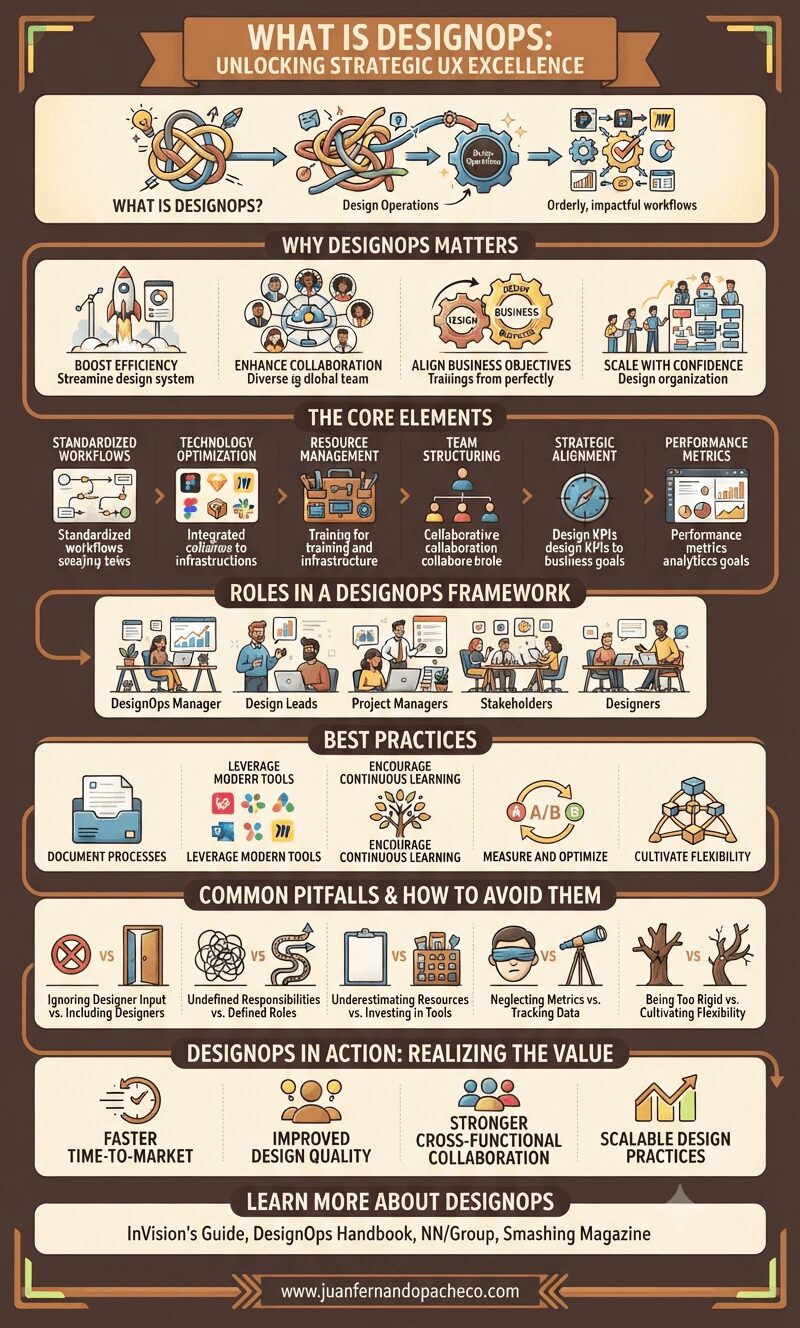
An infographic titled "WHAT IS DESIGNOPS: UNLOCKING STRATEGIC UX EXCELLENCE" with a brown background and cream-colored sections. It defines DesignOps and illustrates why it matters (efficiency, collaboration, alignment, scale), its core elements, key roles, best practices, pitfalls to avoid, the value it provides, and lists further resources, ending with the URL www.juanfernandopacheco.com.

By adopting DesignOps, organizations can harness the full potential of their design teams, driving innovation, efficiency, and alignment with strategic goals.

The result? Exceptional user experiences that propel business success.