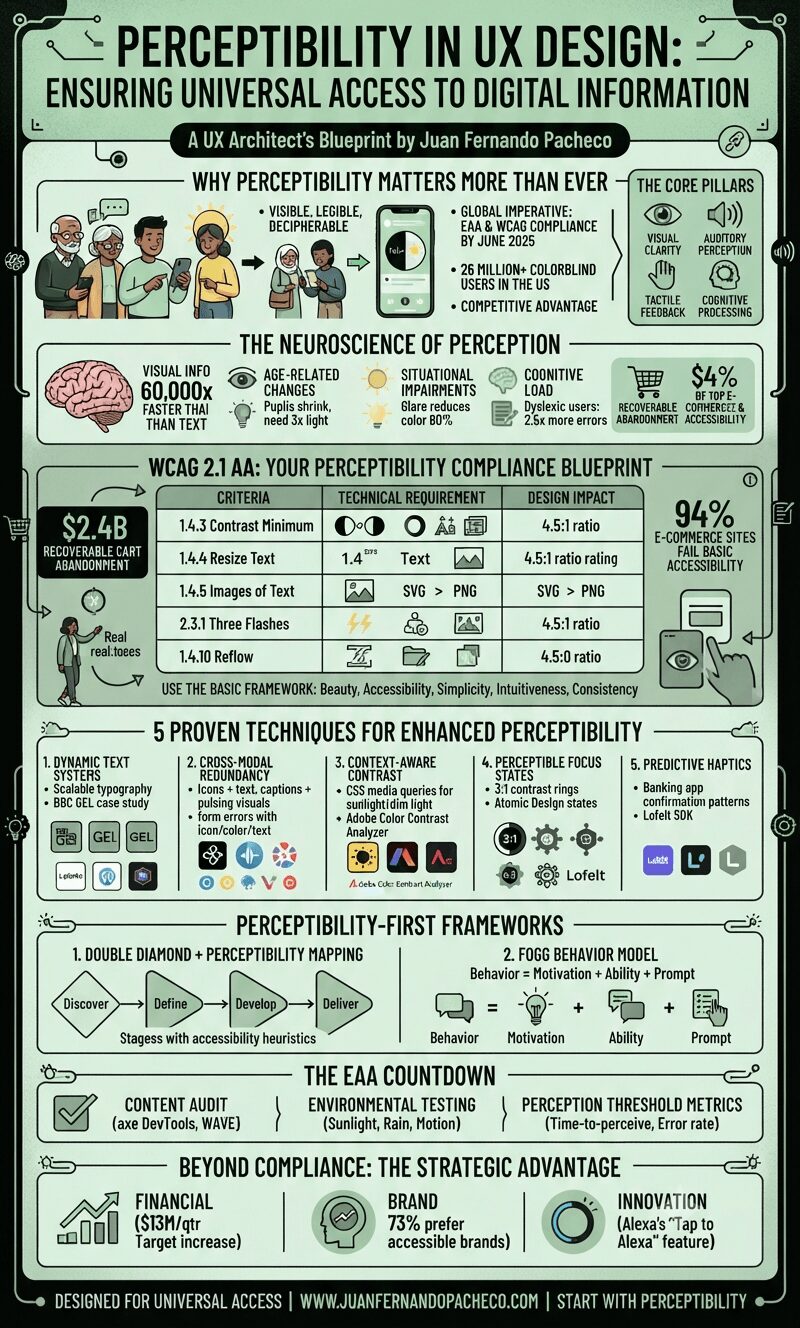
A comprehensive infographic titled "Perceptibility in UX Design: Ensuring Universal Access to Digital Information" presented in a vertical, segmented layout using a sage green and dark teal color palette. It covers sections on why perceptibility matters, neuroscience, WCAG 2.1 AA compliance, five design techniques, frameworks, the EAA countdown, and strategic advantages, ending with the URL www.juanfernandopacheco.com.

Perceptibility ensures critical information is visible, legible, and decipherable regardless of users’ sensory abilities, temporary limitations, or environmental contexts.

With the European Accessibility Act (EAA) mandating WCAG 2.1 AA compliance by June 2025, and 26 million+ colorblind Americans struggling with poorly designed interfaces, mastering perceptibility is now both a legal imperative and competitive advantage.
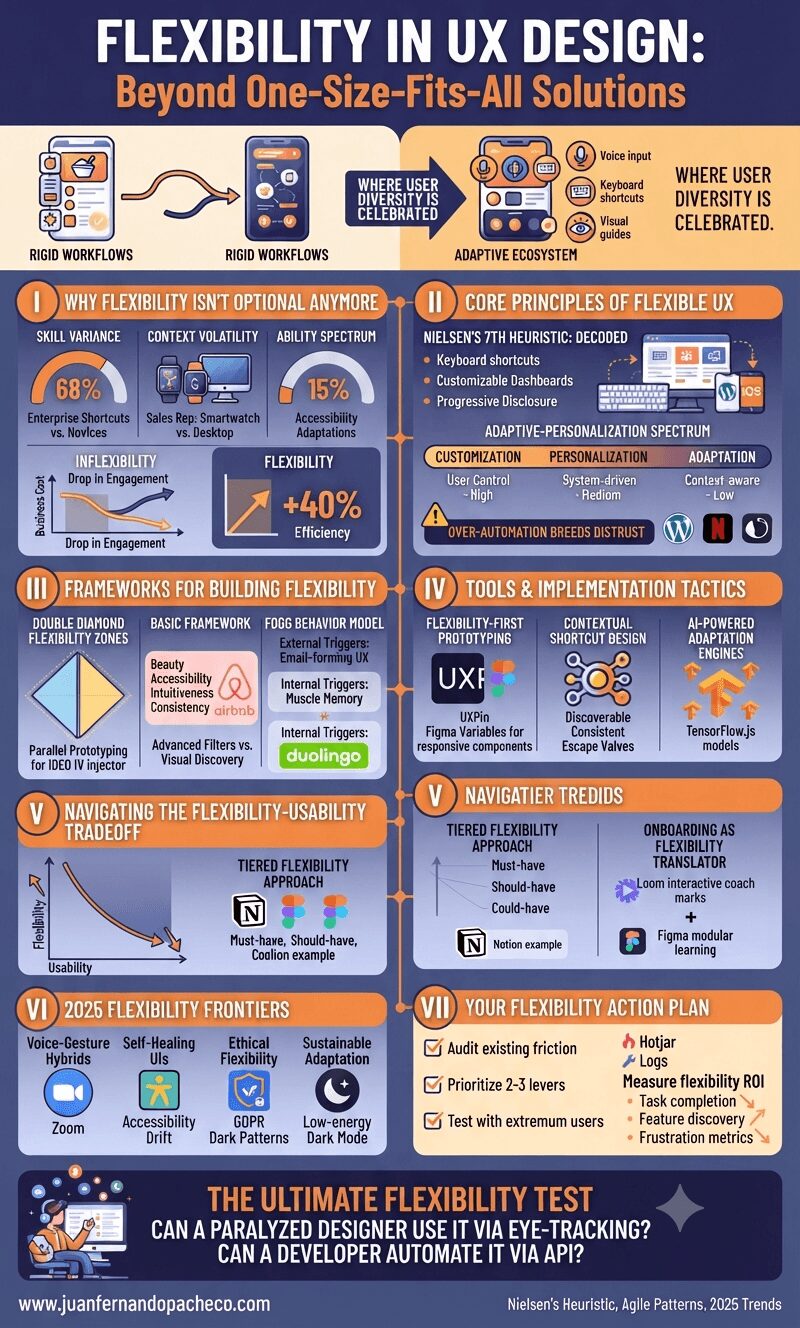
An infographic titled "FLEXIBILITY IN UX DESIGN: Beyond One-Size-Fits-All Solutions" structured into seven sections detailing the necessity, principles, frameworks, tools, and frontiers of adaptive user experience design.

Imagine two culinary apps: one forces rigid workflows with fixed ingredient entry paths; the other adapts—voice input for hurried cooks, keyboard shortcuts for pros, and visual guides for novices.

The latter exemplifies strategic flexibility, where user diversity isn’t accommodated—it’s celebrated. As interfaces evolve beyond screens into voice, gesture, and AI-driven ecosystems, flexibility transitions from “nice-to-have” to core resilience strategy.

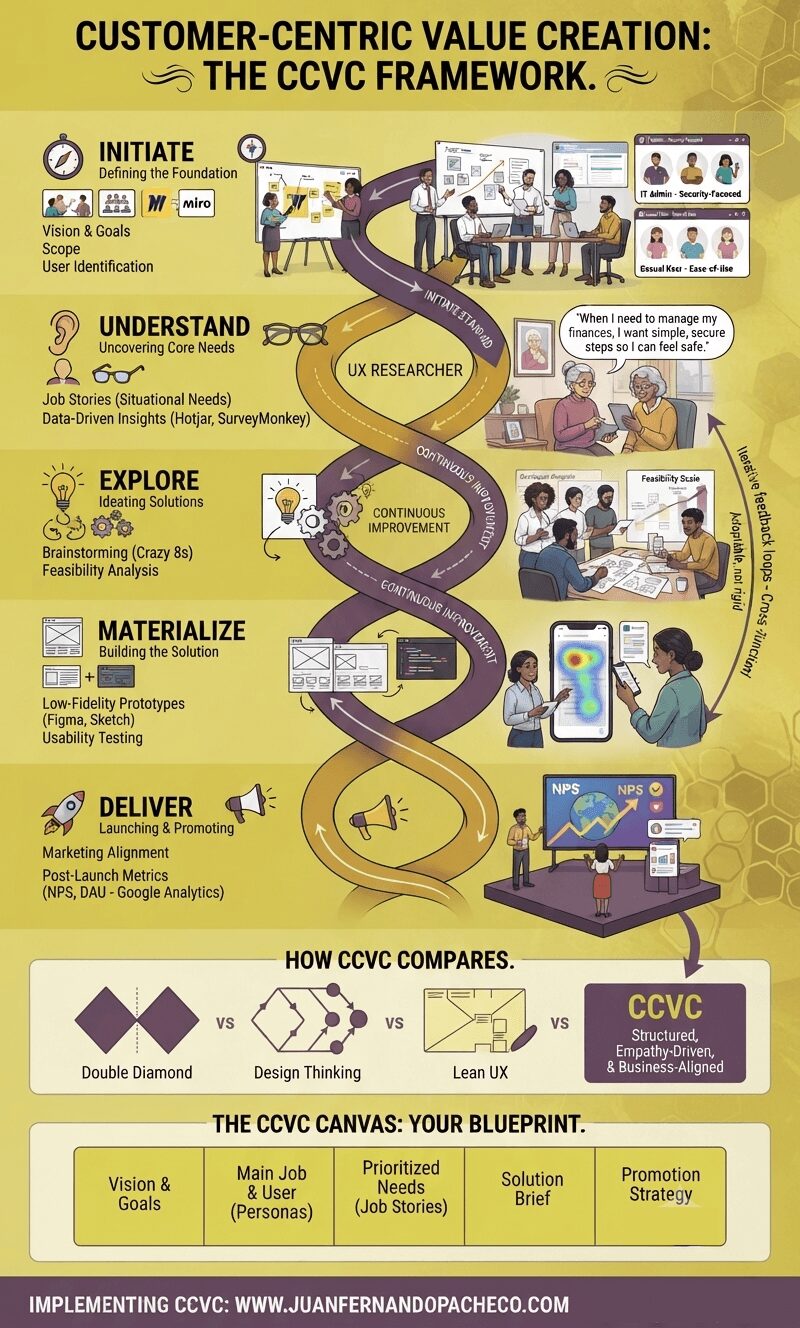
An infographic titled 'Customer-Centric Value Creation: The CCVC Framework' in a vertical format. The central visual is a DNA helix-like structure colored in the requested gold and purple palette, winding through five distinct phases: Initiate, Understand, Explore, Materialize, and Deliver. Each phase is detailed with icons, text, and illustrative scenes of diverse teams and users. The infographic also includes a comparison section with Double Diamond, Design Thinking, and Lean UX frameworks, a breakdown of 'The CCVC Canvas: Your Blueprint,' and a footer with the URL 'WWW.JUANFERNANDOPACHECO.COM'.

The CCVC Framework isn’t a silver bullet—it’s a mindset. By prioritizing empathy, agility, and measurable outcomes, UX designers can craft solutions that truly resonate. As Nagel prepares to delve deeper into the CCVC Canvas in future work, stay tuned for actionable insights.

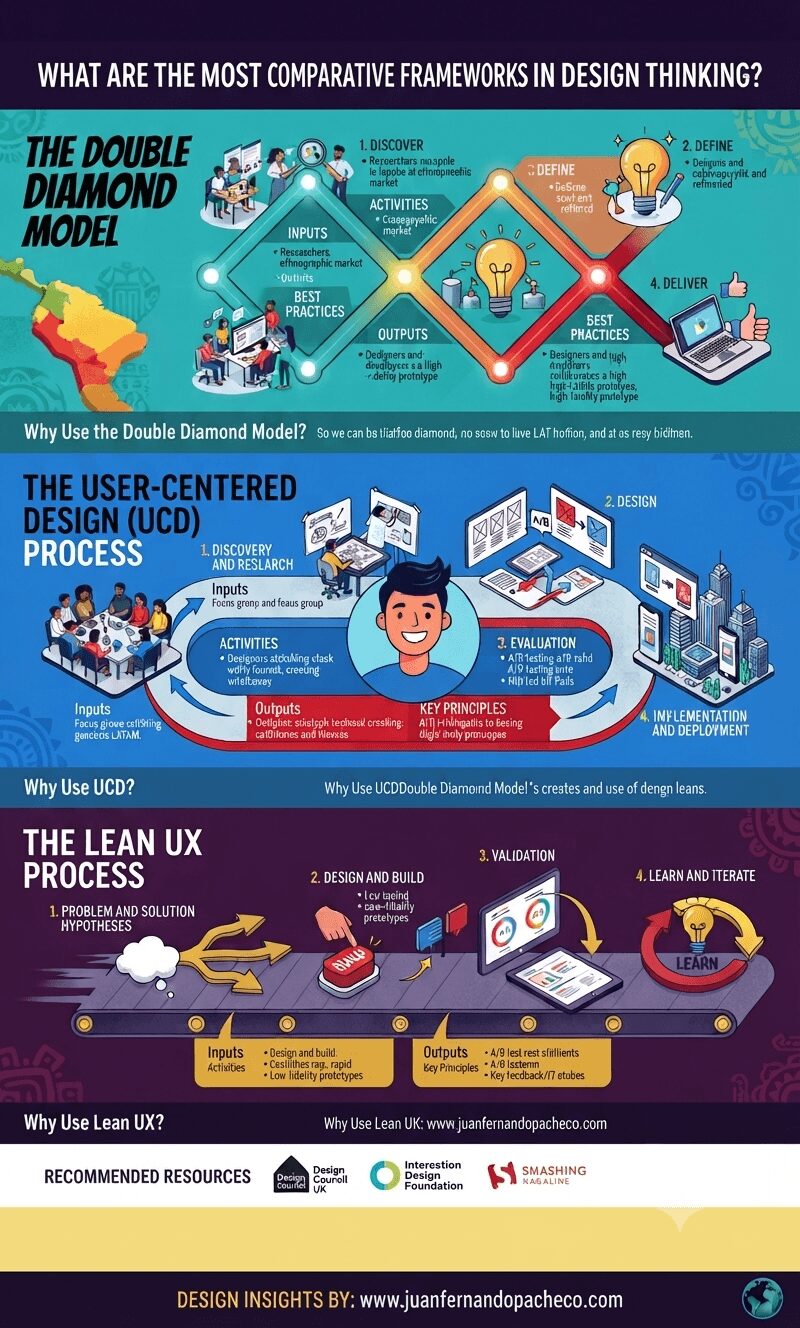
A comprehensive infographic comparing three design thinking frameworks: the Double Diamond Model, the User-Centered Design (UCD) Process, and the Lean UX Process. It details the stages, inputs, activities, outputs, and key principles for each, including illustrations of people, a map of Latin America, and a conveyor belt system for Lean UX.

Each of these frameworks—the Double Diamond model, UCD process, and Lean UX process—offers unique advantages. The Double Diamond excels in providing a structured approach to complex problems, UCD ensures user-centricity, and Lean UX fosters rapid experimentation and delivery. By understanding these methodologies, UX teams can choose the one that best aligns with their project goals and constraints.