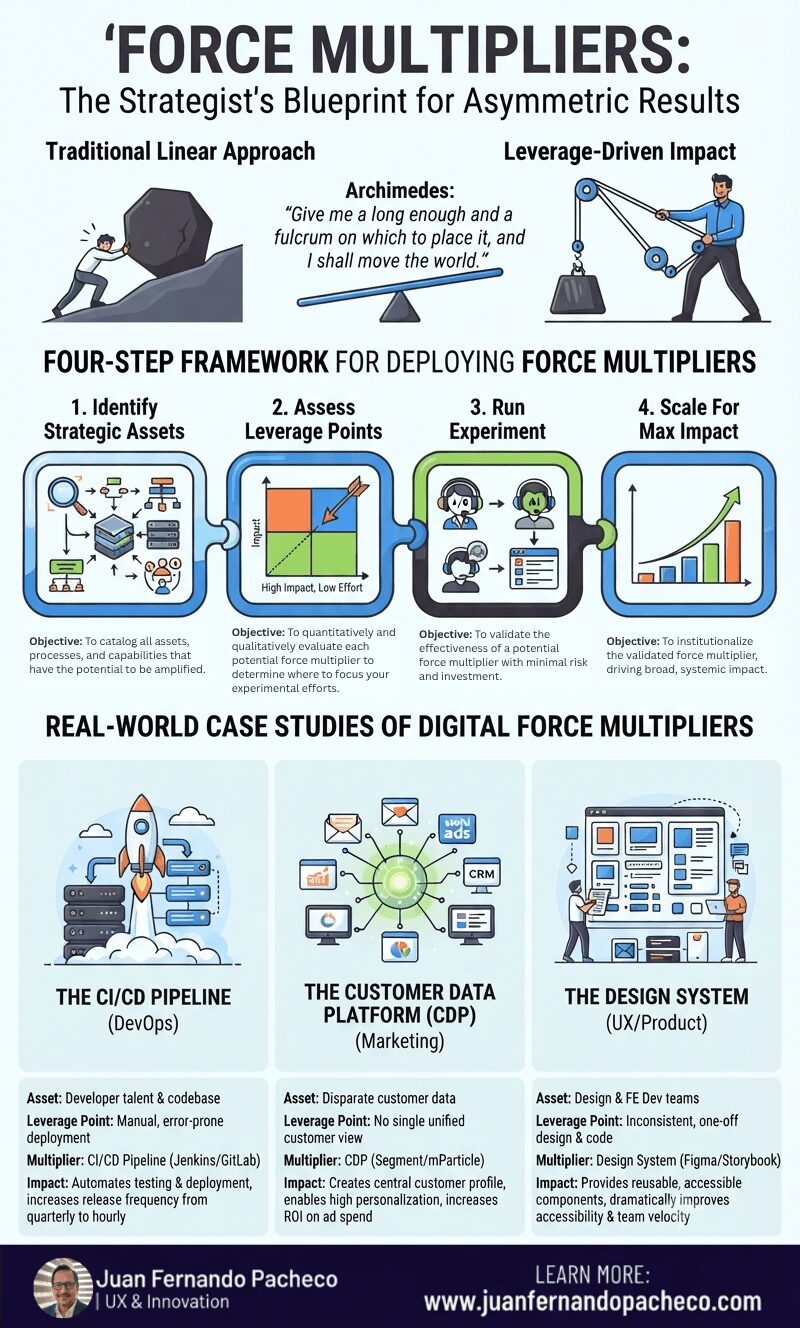
A vertical infographic titled "FORCE MULTIPLIERS: The Strategist's Blueprint for Asymmetric Results." It contrasts traditional effort with leverage-driven impact, outlines a four-step framework, and presents three real-world case studies with brand new illustrative icons.

Stop asking, “How can we do this task faster?” Start asking, “How can we make this task irrelevant?” or “How can we automate this outcome?” By systematically identifying your strategic assets, rigorously assessing their leverage points, courageously running experiments, and deliberately scaling successes, you embed a culture of amplification into your organization’s DNA.

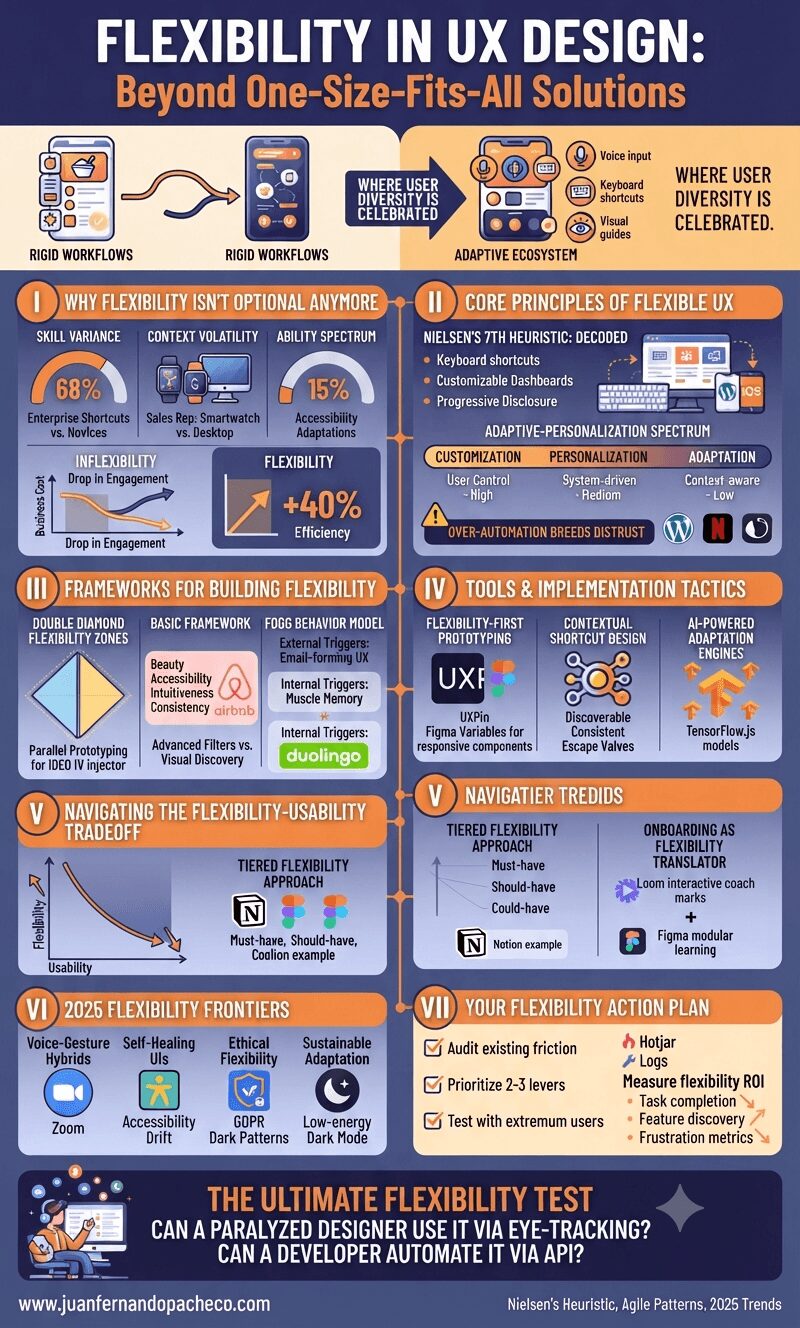
An infographic titled "FLEXIBILITY IN UX DESIGN: Beyond One-Size-Fits-All Solutions" structured into seven sections detailing the necessity, principles, frameworks, tools, and frontiers of adaptive user experience design.

Imagine two culinary apps: one forces rigid workflows with fixed ingredient entry paths; the other adapts—voice input for hurried cooks, keyboard shortcuts for pros, and visual guides for novices.

The latter exemplifies strategic flexibility, where user diversity isn’t accommodated—it’s celebrated. As interfaces evolve beyond screens into voice, gesture, and AI-driven ecosystems, flexibility transitions from “nice-to-have” to core resilience strategy.
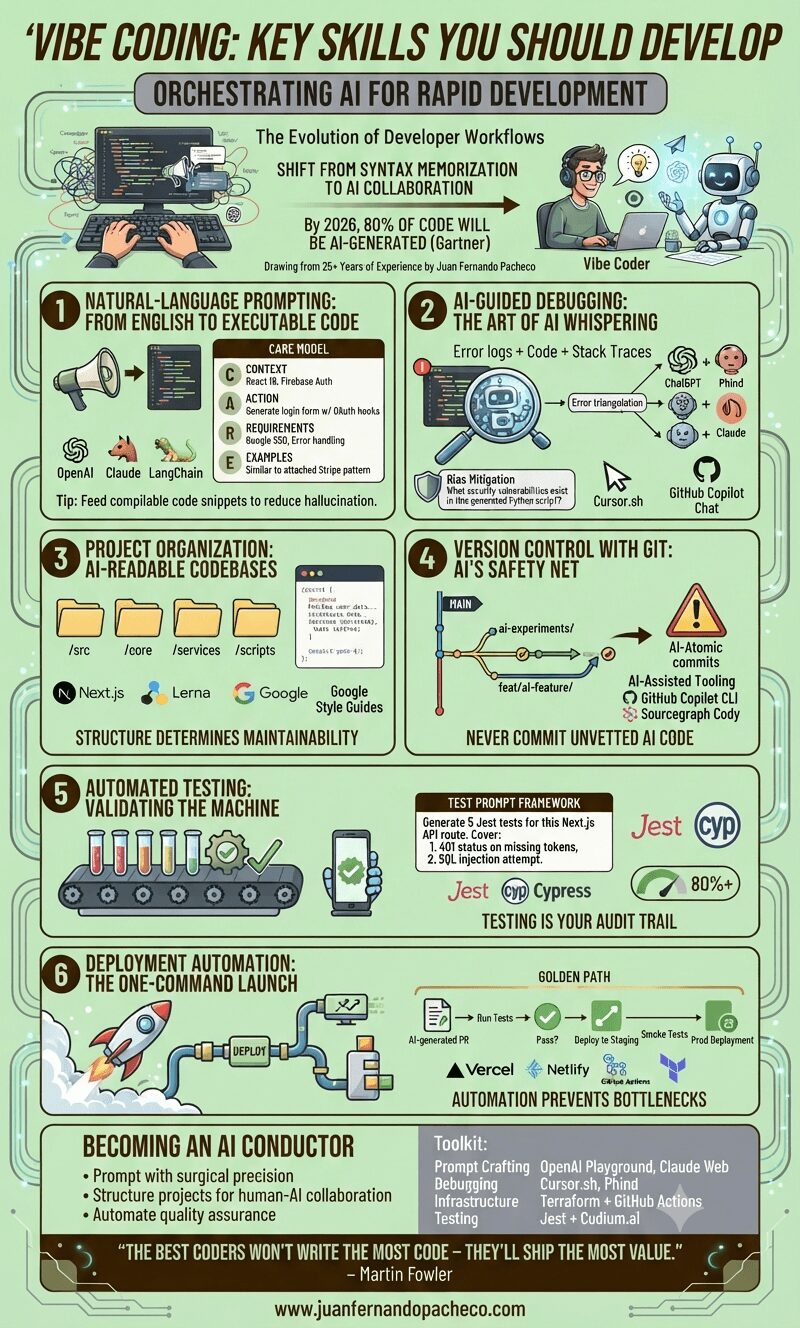
An infographic titled 'Vibe Coding: Key Skills You Should Develop' illustrating a six-step methodology for modern AI-assisted software development against a light green background. It depicts the shift from manual syntax to AI collaboration, featuring sections on Natural-Language Prompting (CARE model), AI-Guided Debugging, Project Organization, Version Control with Git, Automated Testing, and Deployment Automation, concluding with a toolkit and a quote by Martin Fowler.

The rise of AI coding assistants like GitHub Copilot, ChatGPT, and Claude has birthed “Vibe Coding” – a paradigm where developers collaborate with AI to accelerate ideation, prototyping, and deployment.

Unlike traditional coding, Vibe Coding prioritizes prompt engineering, AI-augmented debugging, and infrastructure automation over manual syntax memorization.
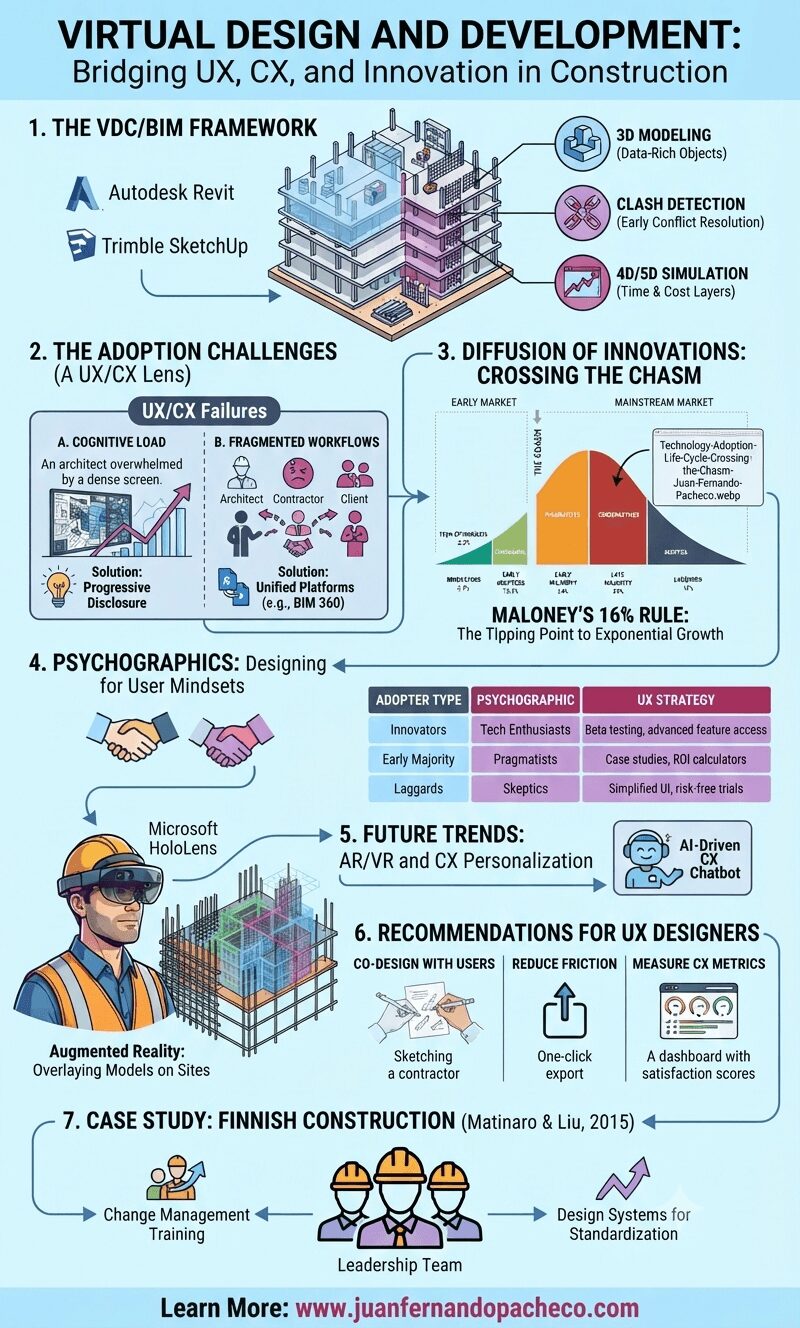
A comprehensive infographic titled 'VIRTUAL DESIGN AND DEVELOPMENT: Bridging UX, CX, and Innovation in Construction' that uses charts, diagrams, and illustrations to explain the role of User Experience (UX) and Customer Experience (CX) in the adoption of Virtual Design and Construction (VDC) and Building Information Modeling (BIM). The vertical graphic is structured in seven numbered sections: 1. The VDC/BIM Framework, 2. The Adoption Challenges (A UX/CX Lens), 3. Diffusion of Innovations: Crossing the Chasm, 4. Psychographics: Designing for User Mindsets, 5. Future Trends: AR/VR and CX Personalization, 6. Recommendations for UX Designers, and 7. Case Study: Finnish Construction (Matinaro & Liu, 2015). The infographic includes specific data from image_0.png, logos for software like Autodesk Revit and BIM 360, and concludes with a call to action to learn more at www.juanfernandopacheco.com.

VDC/BIM’s potential is undeniable, but its success hinges on human-centered design. By applying UX/CX principles—from progressive disclosure to psychographic segmentation—we can accelerate innovation diffusion and transform the construction industry.