An infographic titled "CHANGE BY DESIGN: How Design Thinking Transforms Organizations and Inspires Innovation." The image is structured as a winding, colorful path with illustrated icons and text blocks representing the ten chapters and introduction of Tim Brown's book. The light green background (#c3e991) is overlaid with a vibrant palette of teals, maroons, oranges, and yellows, featuring small illustrations of diverse people collaborating, brainstorming, and prototyping.

In essence, “Change by Design” is a powerful testament to the transformative potential of design thinking. Tim Brown meticulously dismantles traditional notions of design, repositioning it as a versatile and potent tool for innovation that extends far beyond aesthetics.

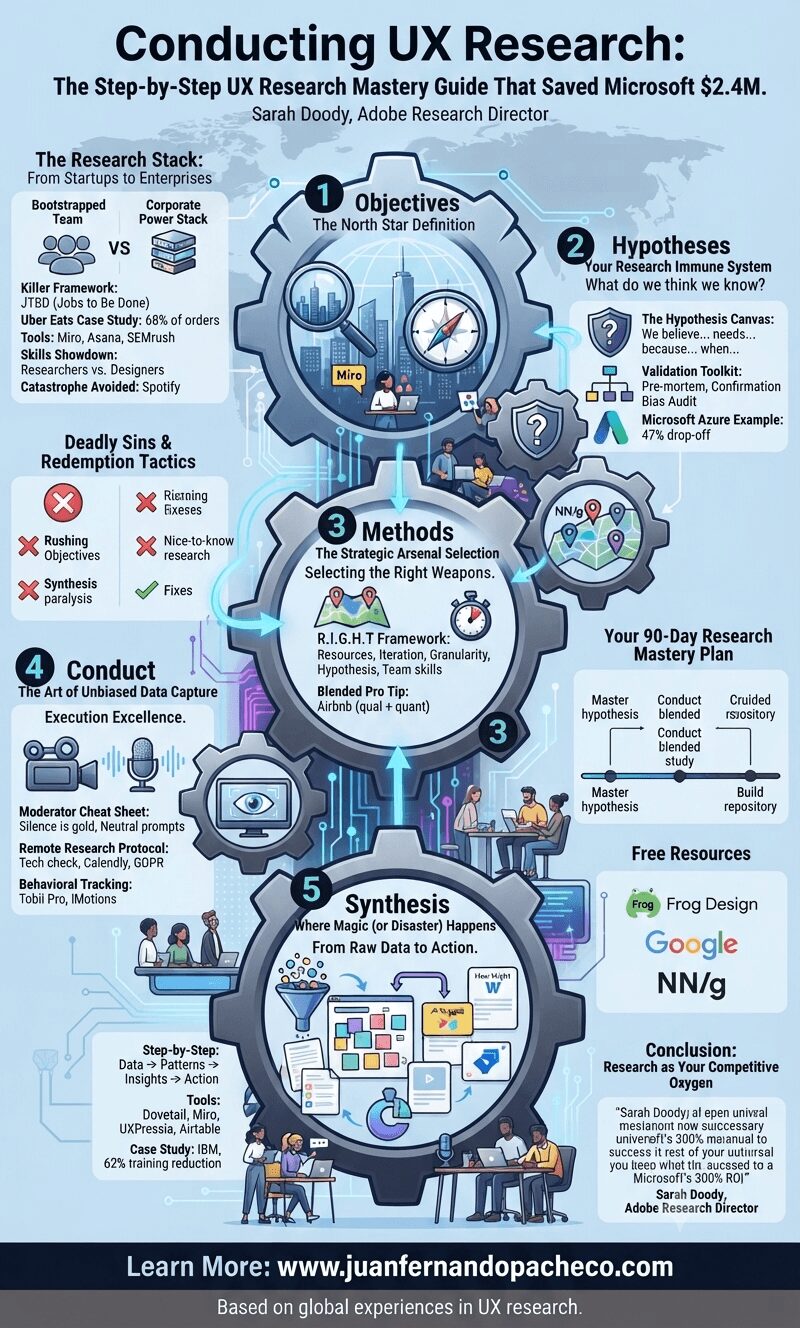
An infographic comparing UX Researchers and UX Designers, detailing their missions, key activities, tools, frameworks, skills showdown, educational backgrounds, collaboration, and career paths, styled in soft purple tones with references to www.juanfernandopacheco.com.

UX Researchers and Designers aren’t rivals—they’re co-pilots navigating the same destination: user delight. Researchers illuminate the path with data; designers pave it with ingenuity. In an era where user expectations skyrocket daily, investing in both isn’t optional—it’s existential.

“Research without design is a map without a destination. Design without research is a ship without a compass.”

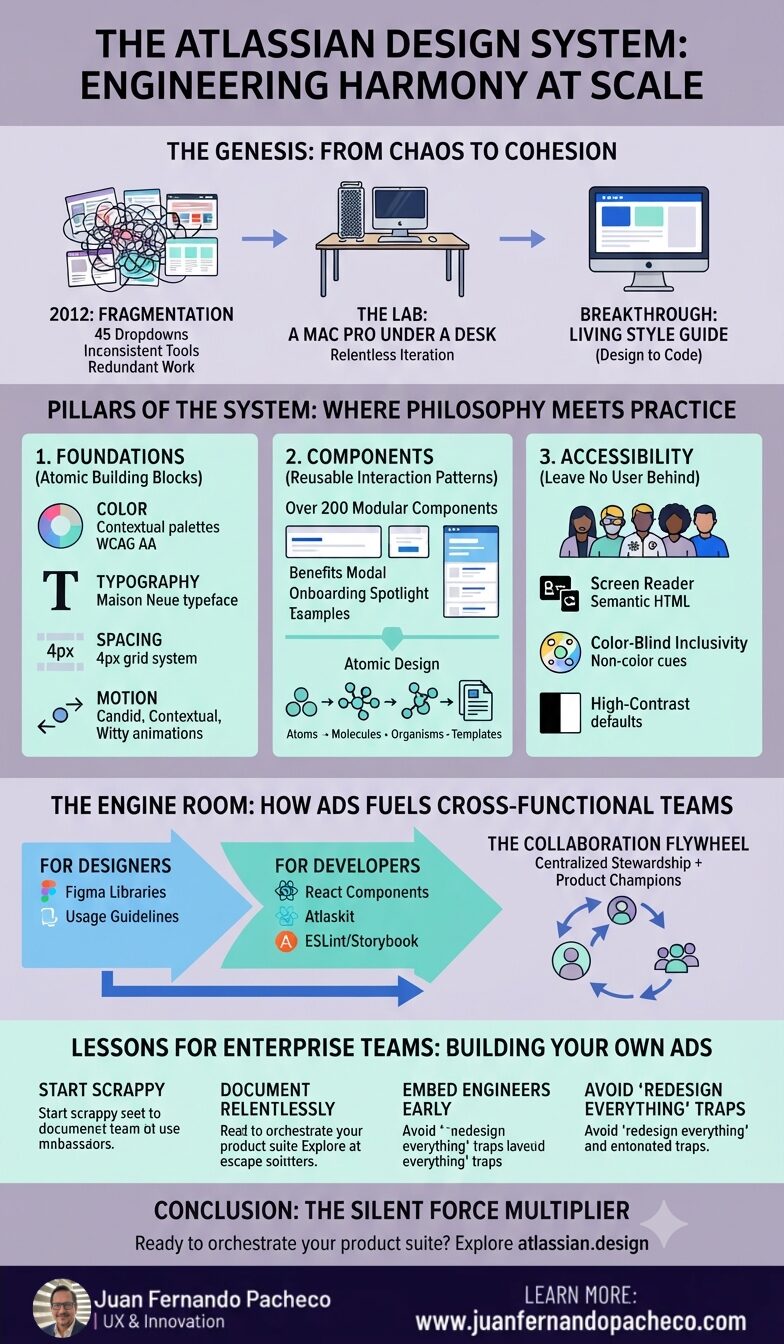
An infographic illustrating the Ant Design system, detailing its origins in the "enterprise crucible" of complexity, its four core values (Natural, Certain, Meaningful, Growing), the anatomy of its toolkit (React library, Ant Design Pro, design resources), tangible impacts like accelerated development and consistency, and its global future. The infographic includes references to www.juanfernandopacheco.com.

Ant Design is far more than a collection of React components. It represents a mature, battle-tested approach to taming the inherent complexity of enterprise software development.

By anchoring itself in strong design values – Natural, Certain, Meaningful, and Growing – it provides a holistic solution that boosts efficiency, enforces consistency, and elevates the user experience.

An intricate infographic titled "BECOMING A UX DESIGNER: YOUR GLOBAL JOURNEY" with a peach background. It outlines key UX concepts including definitions, the designer's function as a bridge between users and business, core methodologies (research, personas, flows, prototyping, testing), essential skills, comparisons to UI and web design, career paths (education, portfolio, networking), and features three inspiring leaders. Arrows connect the sections, and a footer directs to www.juanfernandopacheco.com.

Becoming a UX Designer: Learn User Experience Design by William N. Aldrich serves as a foundational guide for anyone looking to enter or better understand the field of User Experience (UX) design. The book aims to demystify UX design, clarifying its purpose, the responsibilities of a UX designer, and the essential skills required to succeed in this dynamic profession.

A comprehensive infographic titled "ORACLE ALTA UI: REDEFINING ENTERPRISE UX," set against a light mint green background, visually represents the design system. The central vertical flow connects sections detailing: "WHAT IS ORACLE ALTA UI?" with illustrations of desktop, tablet, and mobile screens; "CORE DESIGN PRINCIPLES" covering Mobile-First, Simple Layouts, Visual Content Emphasis, and Adaptability; and "KEY FEATURES & BENEFITS" including Responsive Design, Clean Visual Design, Component Library, Browser & Mobile Patterns, Enhanced Data Visualization, and Scalability. The infographic concludes with examples of "REAL-WORLD APPLICATIONS" (Oracle Cloud, Fusion Apps, Mobile Apps) and glimpses into "THE FUTURE OF ALTA UI" (AR/VR, AI, Accessibility). It features the URL WWW.JUANFERNANDOPACHECO.COM and the tagline "DISRUPTIVE ENTERPRISE APPLICATION DESIGN POWERED BY ORACLE ALTA UI."

Oracle Alta UI exemplifies how thoughtful design can transform enterprise software into intuitive tools that enhance productivity and user satisfaction. By prioritizing simplicity, responsiveness, and adaptability, it empowers developers to create applications that meet modern demands without sacrificing quality or efficiency.

A comprehensive infographic illustrating Eric Ries's "The Lean Startup" methodology, divided into three sections: Vision, Steer, and Accelerate. The graphic features illustrations of business concepts like the Build-Measure-Learn loop, MVPs, pivoting, and intrapreneurship, using a color palette of blues, beiges, and warm oranges on a muted background.

“The Lean Startup” offers a comprehensive framework for entrepreneurs and innovators to navigate the uncertainties of creating new ventures. By advocating for validated learning, iterative development, and a scientific approach to experimentation, Ries provides a pathway to build sustainable businesses and drive continuous innovation.

A vertical infographic titled ".PULSE | THE HEARTBEAT OF COLLABORATION AT HEARTBEAT AGENCY," using a color palette of purple, pink, peach, and terracotta on a light sage background. The infographic illustrates the design system's features, principles, and benefits across distinct sections, from a central "source of truth" to team workflows and real-world applications for healthcare brands.

.pulse exemplifies how a well-crafted design system can transform an organization’s workflows while fostering collaboration and innovation. For Heartbeat Agency—a pioneer in healthcare marketing—this centralized source of truth has become a cornerstone of its success.