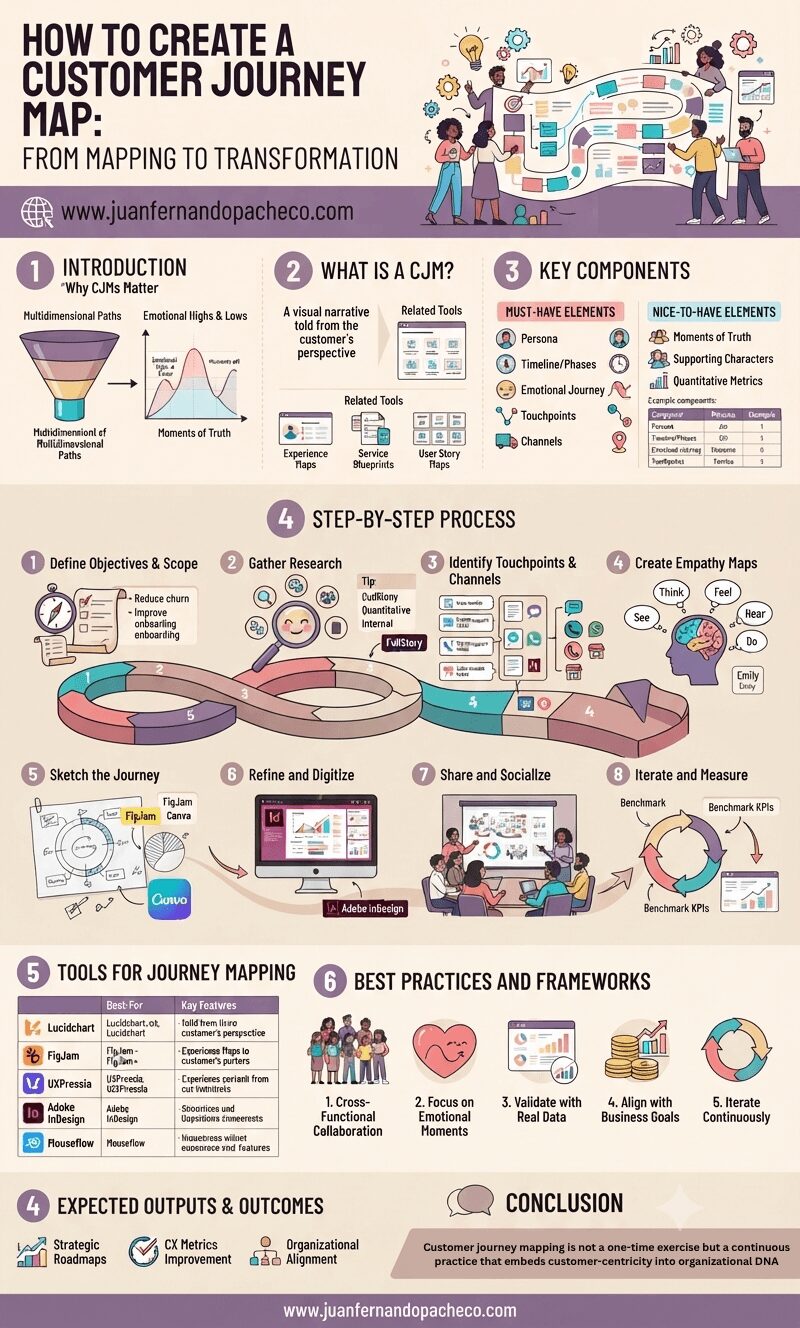
An intricate, vertically-oriented infographic detailing the eight-step process of creating a Customer Journey Map (CJM). The image includes sections on "Why CJMs Matter," "What Is a CJM," "Key Components," "Tools for Journey Mapping," and "Best Practices," using a color palette of lavenders, rose, and beige. It features illustrations of diverse CX teams, charts, a helical journey timeline, and the website www.juanfernandopacheco.com.

Customer journey mapping is not a one-time exercise but a continuous practice that embeds customer-centricity into organizational DNA.

By visualizing the intersection of human emotions and business processes, UX professionals can drive transformative change—turning fragmented interactions into cohesive, respectful experiences that build long-term loyalty.

As CX expectations escalate, the brands that thrive will be those who listen, adapt, and design journeys that resonate deeply with the people they serve.
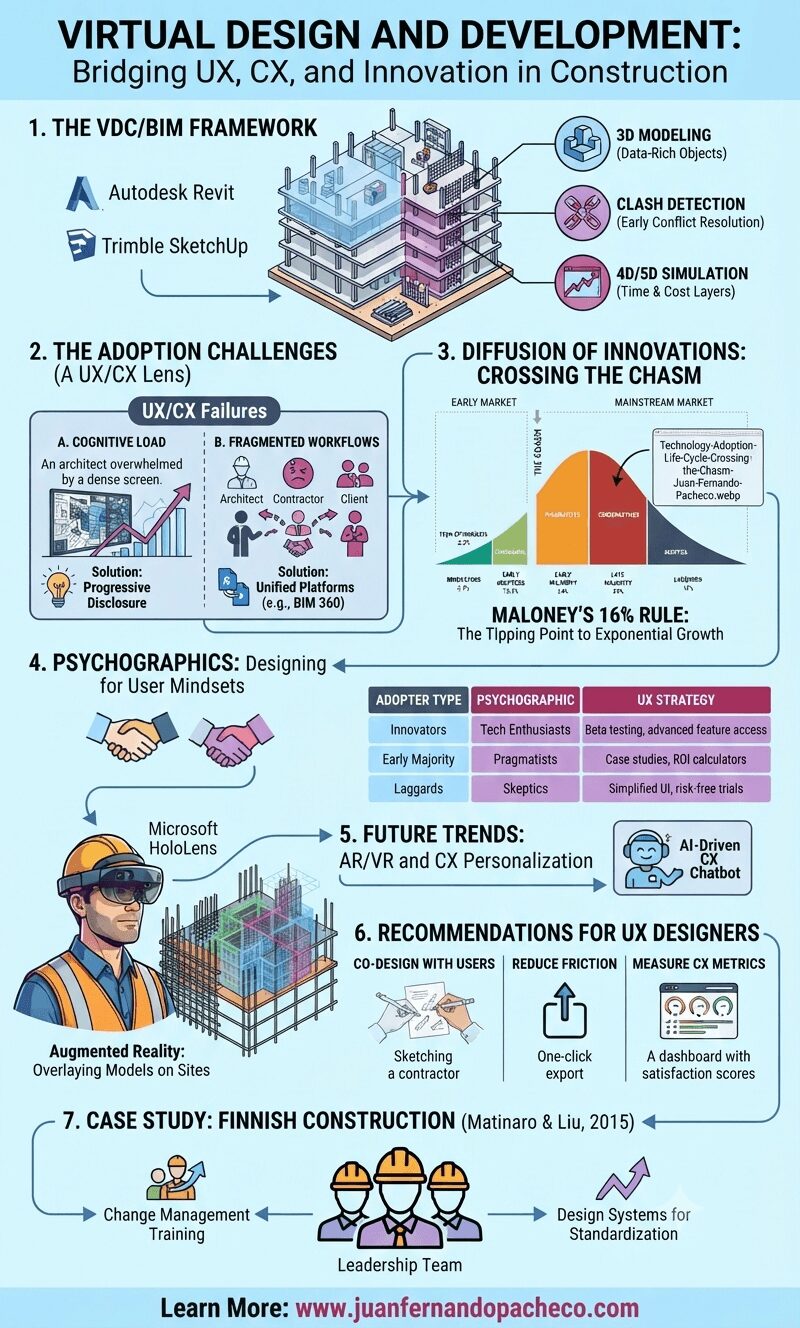
A comprehensive infographic titled 'VIRTUAL DESIGN AND DEVELOPMENT: Bridging UX, CX, and Innovation in Construction' that uses charts, diagrams, and illustrations to explain the role of User Experience (UX) and Customer Experience (CX) in the adoption of Virtual Design and Construction (VDC) and Building Information Modeling (BIM). The vertical graphic is structured in seven numbered sections: 1. The VDC/BIM Framework, 2. The Adoption Challenges (A UX/CX Lens), 3. Diffusion of Innovations: Crossing the Chasm, 4. Psychographics: Designing for User Mindsets, 5. Future Trends: AR/VR and CX Personalization, 6. Recommendations for UX Designers, and 7. Case Study: Finnish Construction (Matinaro & Liu, 2015). The infographic includes specific data from image_0.png, logos for software like Autodesk Revit and BIM 360, and concludes with a call to action to learn more at www.juanfernandopacheco.com.

VDC/BIM’s potential is undeniable, but its success hinges on human-centered design. By applying UX/CX principles—from progressive disclosure to psychographic segmentation—we can accelerate innovation diffusion and transform the construction industry.

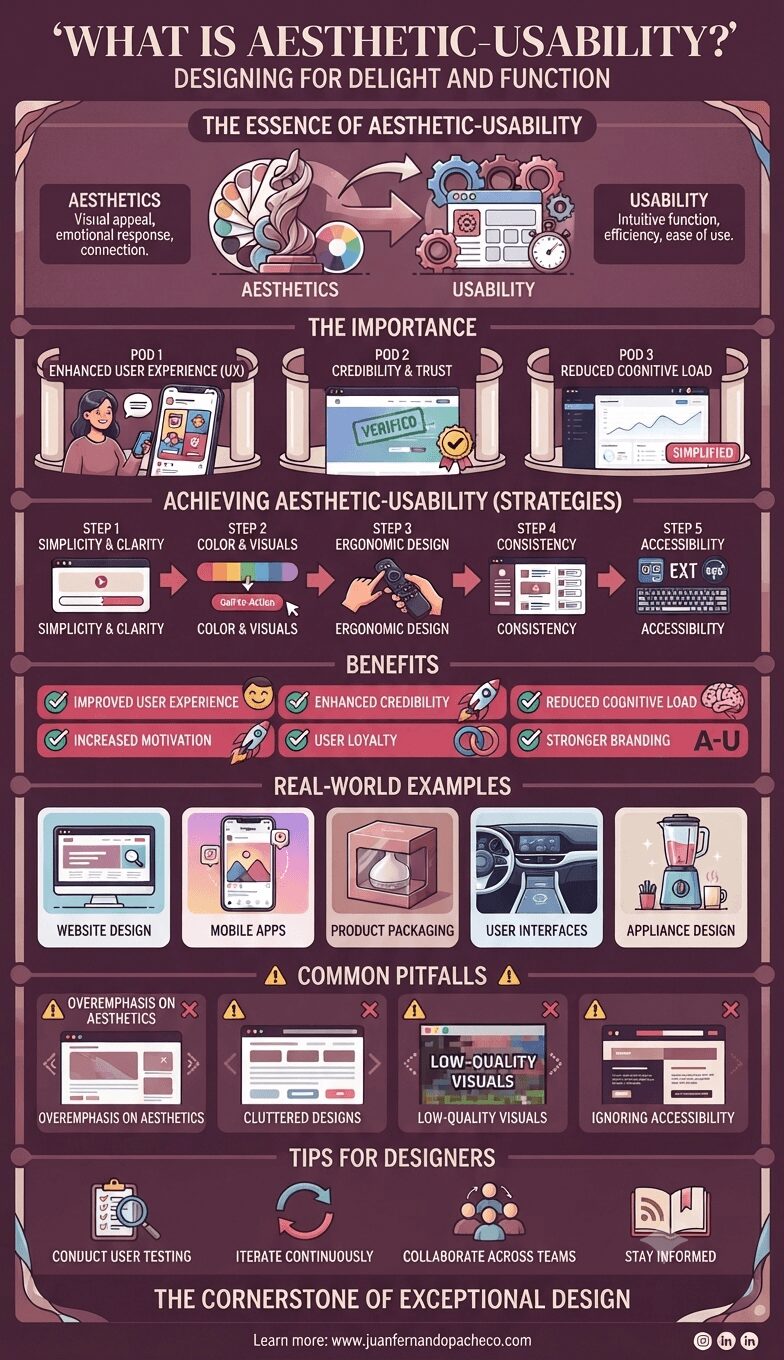
An infographic titled "WHAT IS AESTHETIC-USABILITY? DESIGNING FOR DELIGHT AND FUNCTION" on a deep plum background. It visually explains the concept through six main sections: The Essence, Importance, Achieving Strategies, Benefits, Real-World Examples, Common Pitfalls, and Tips. Illustrations include a balance scale for aesthetics and usability, user interface examples, step-by-step icons, and a footer referencing juanfernandopacheco.com.

Aesthetic-Usability is a fundamental concept in user experience (UX) design, emphasizing that a product should be both visually appealing and easy to use.
Rooted in the idea that beauty can enhance functionality, aesthetic-usability plays a pivotal role in shaping how users interact with and perceive a product.

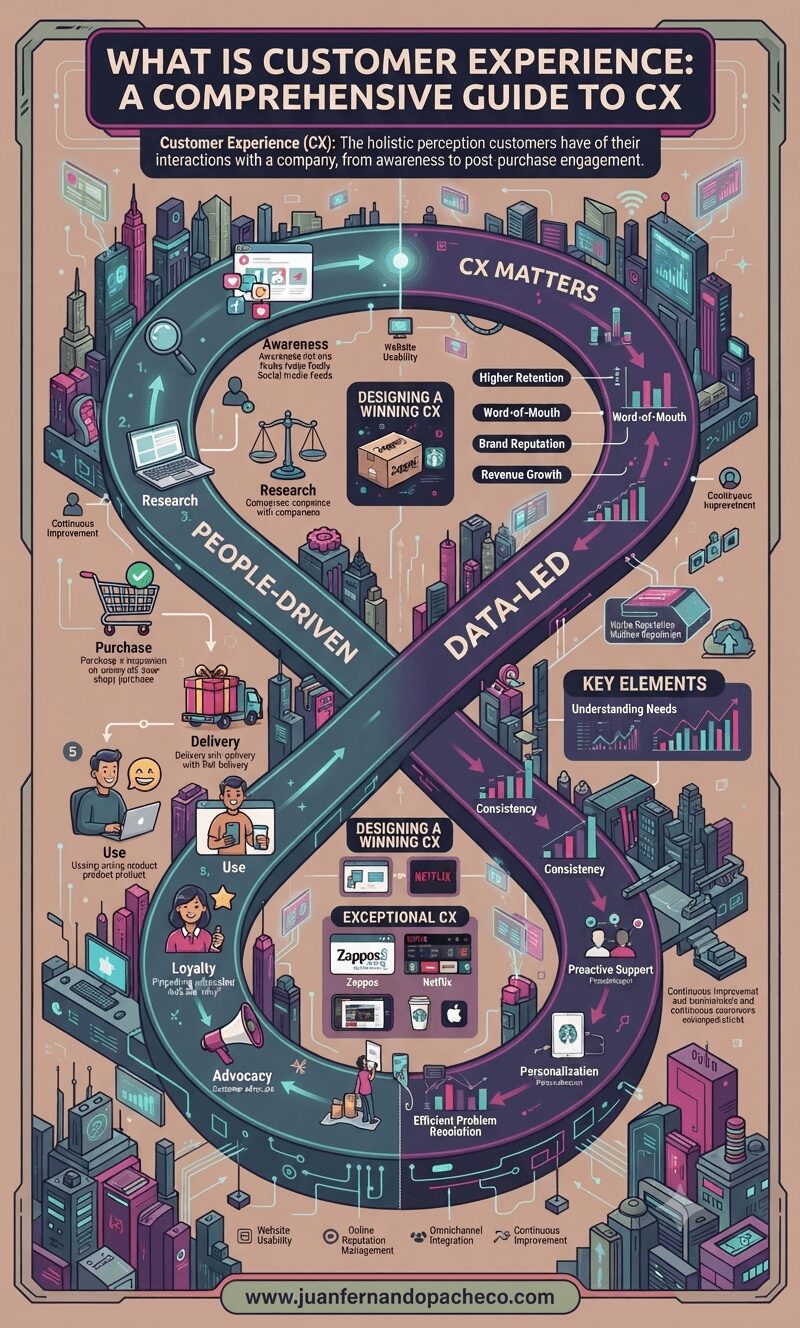
A detailed infographic illustrating the Customer Experience (CX) lifecycle, designed as a futuristic circuit board and cityscape. An infinity loop pathway guides the viewer through stages from "People-Driven" to "Data-Led." The image incorporates the text: "WHAT IS CUSTOMER EXPERIENCE: A COMPREHENSIVE GUIDE TO CX," definitions of CX, the stages of the customer journey, key elements, examples of exceptional CX (Zappos, Netflix), and branding for "www.juanfernandopacheco.com." The dominant color palette includes teal, purple, pink, and olive green against a peach-colored background.

Customer experience is the cornerstone of modern business success. By understanding customer needs, delivering consistent and personalized interactions, and continually optimizing the journey, companies can foster long-term loyalty and differentiate themselves in the marketplace.Investing in customer experience isn’t just a trend; it’s a strategic imperative that drives growth, retention, and brand advocacy. Start focusing on CX today, and your business will reap the rewards for years to come.