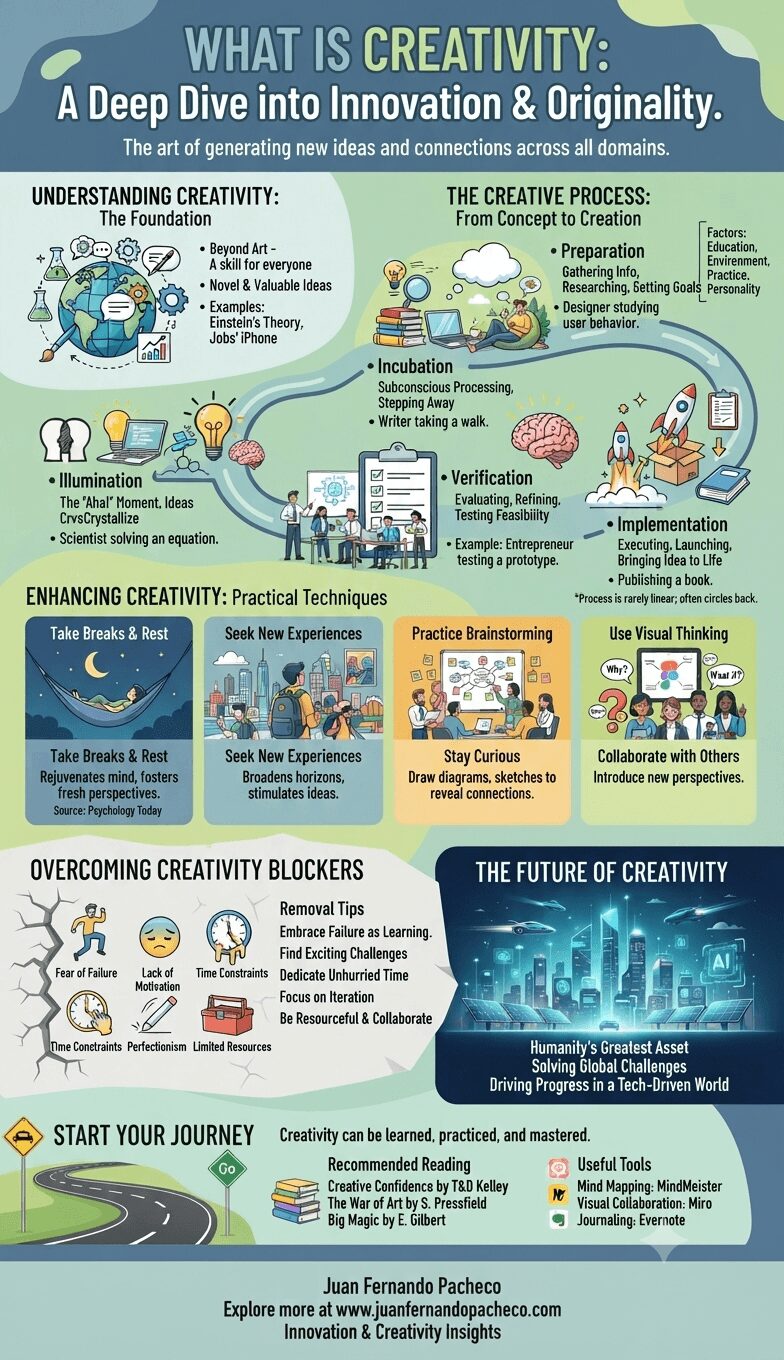
An infographic titled "WHAT IS CREATIVITY: A Deep Dive into Innovation & Originality." The image uses a teal and yellow-green palette to illustrate the foundation, the non-linear process (including icons from image_0.png: Preparation, Incubation, Illumination, Verification), six enhancement techniques, five blockers with tips, and the future of creativity. It includes branding for Juan Fernando Pacheco.

Creativity is one of humanity’s most cherished and enigmatic qualities. At its core, creativity is the ability to generate new and original ideas, thoughts, or connections between existing concepts.

While often associated with artistic pursuits like painting, writing, or music, creativity extends far beyond the arts and is a crucial element in fields as diverse as science, business, technology, and everyday life.

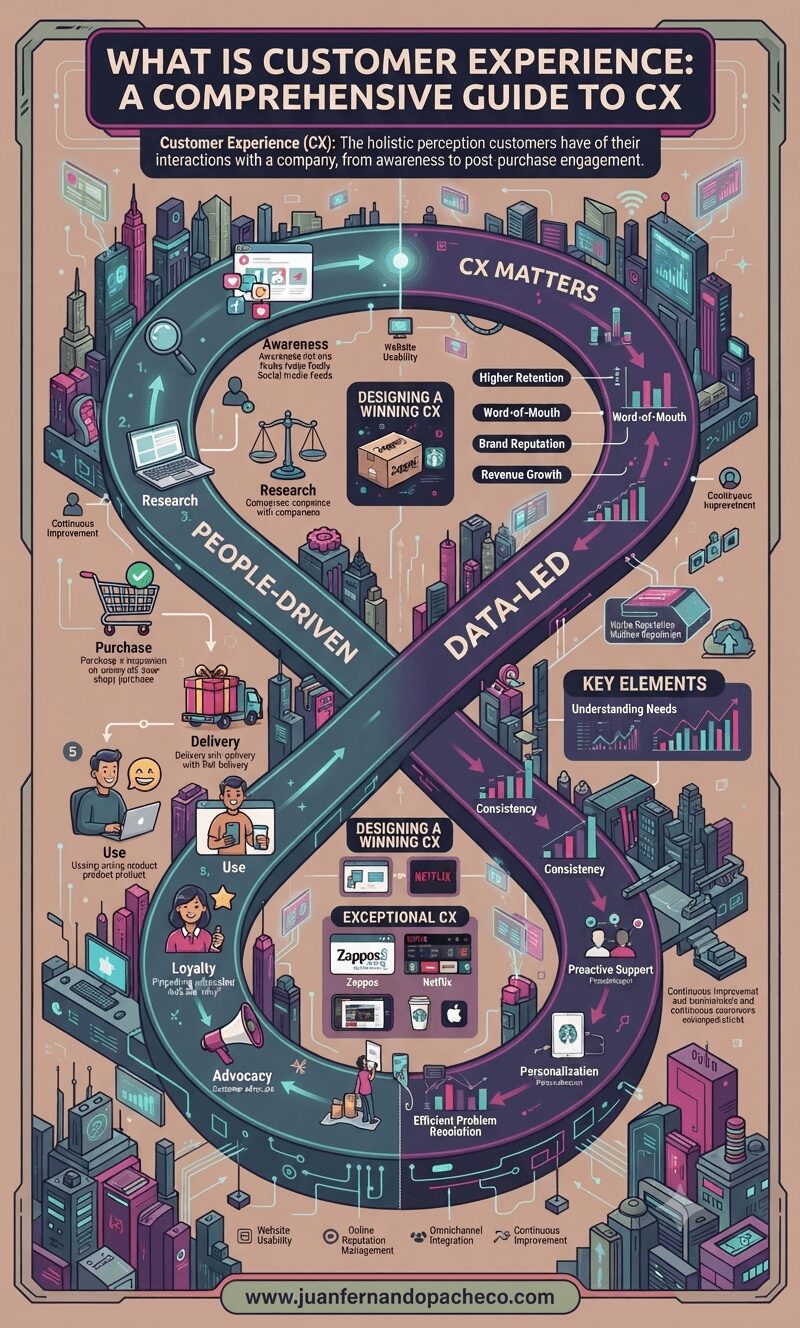
A detailed infographic illustrating the Customer Experience (CX) lifecycle, designed as a futuristic circuit board and cityscape. An infinity loop pathway guides the viewer through stages from "People-Driven" to "Data-Led." The image incorporates the text: "WHAT IS CUSTOMER EXPERIENCE: A COMPREHENSIVE GUIDE TO CX," definitions of CX, the stages of the customer journey, key elements, examples of exceptional CX (Zappos, Netflix), and branding for "www.juanfernandopacheco.com." The dominant color palette includes teal, purple, pink, and olive green against a peach-colored background.

Customer experience is the cornerstone of modern business success. By understanding customer needs, delivering consistent and personalized interactions, and continually optimizing the journey, companies can foster long-term loyalty and differentiate themselves in the marketplace.Investing in customer experience isn’t just a trend; it’s a strategic imperative that drives growth, retention, and brand advocacy. Start focusing on CX today, and your business will reap the rewards for years to come.

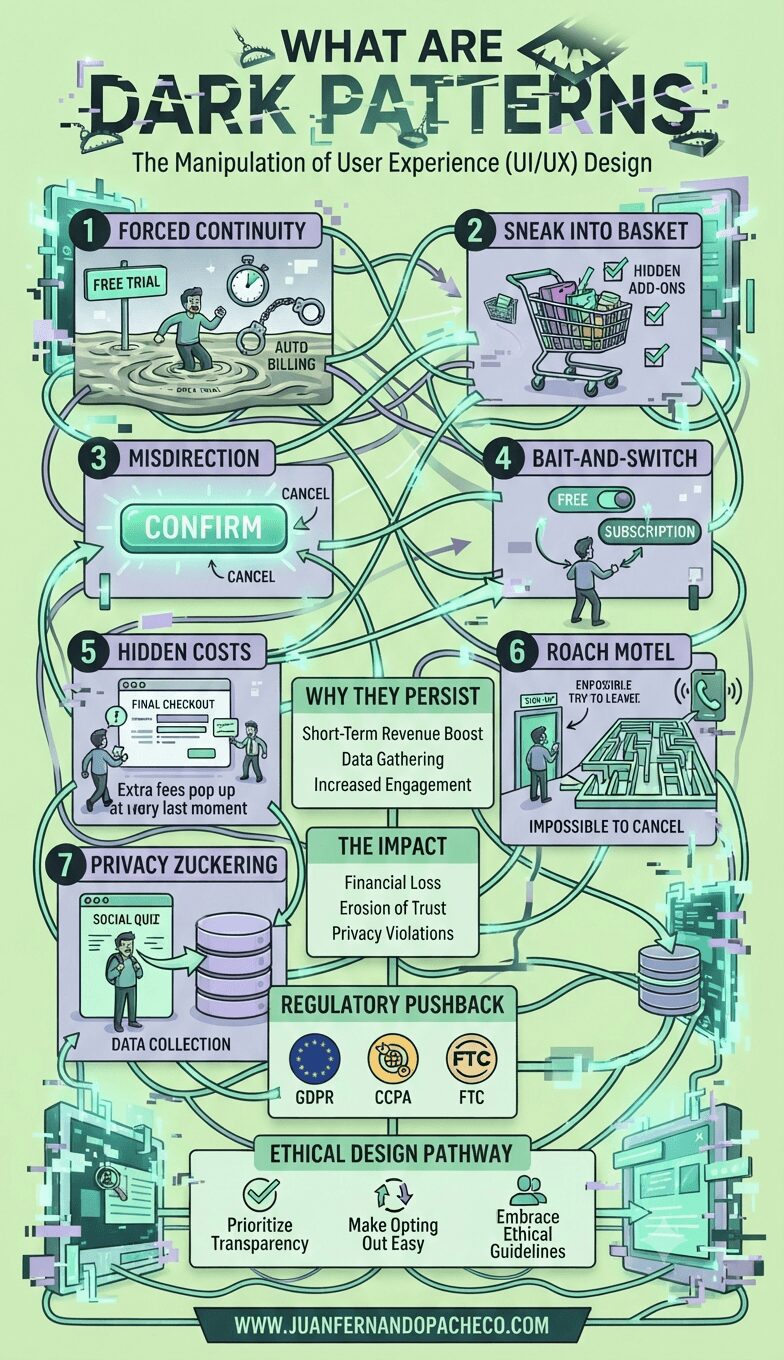
A detailed infographic titled "What are Dark Patterns" explaining manipulative UI/UX design techniques. It illustrates seven common examples: Forced Continuity, Sneak into Basket, Misdirection, Bait-and-Switch, Hidden Costs, Roach Motel, and Privacy Zuckering. Central sections outline why they persist and their impact on users, followed by regulatory pushback from GDPR, CCPA, and FTC. The footer promotes ethical design and lists the website www.juanfernandopacheco.com.

Dark patterns represent the darker side of design, exploiting user vulnerabilities for profit. While effective in the short term, they erode trust, invite regulatory scrutiny, and harm users. By embracing ethical design principles, businesses can foster loyalty, build sustainable relationships, and lead with integrity.

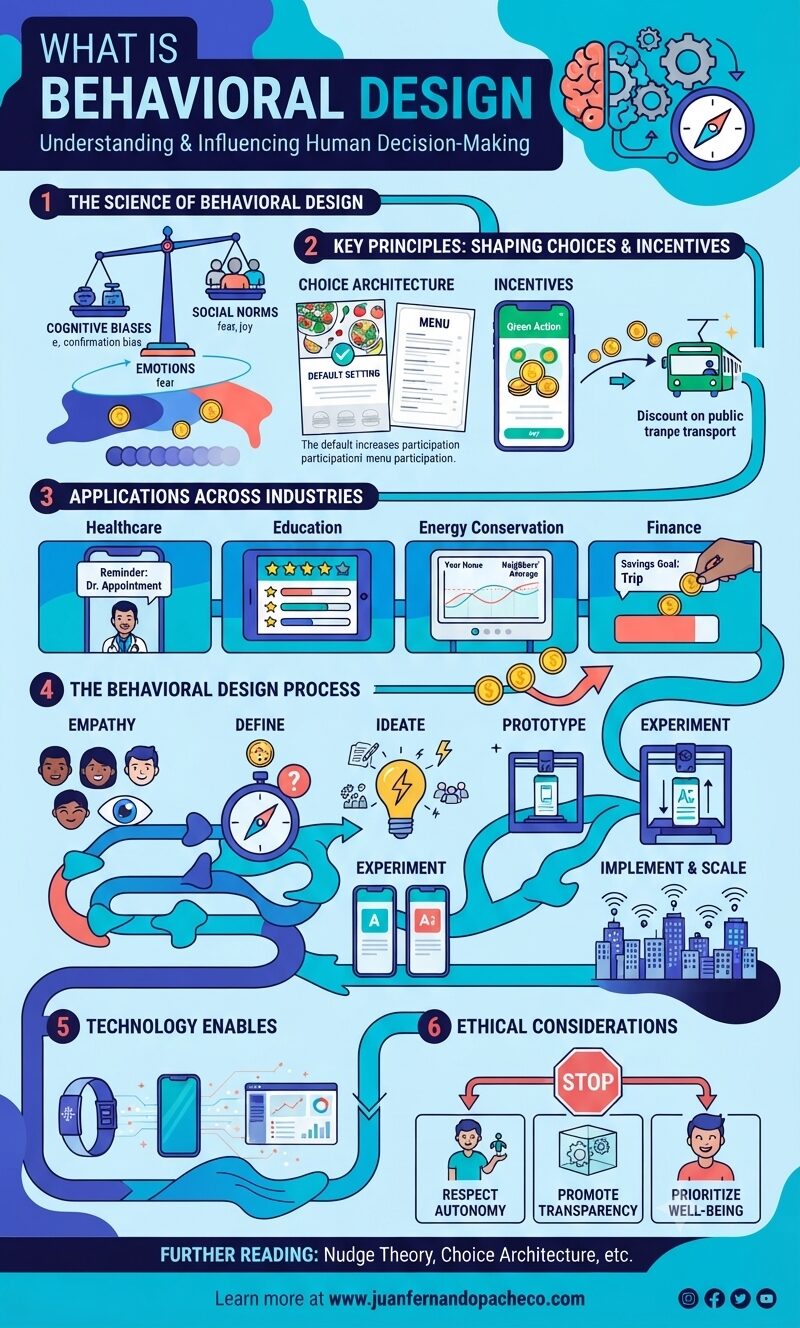
A comprehensive vertical infographic illustrating the concept of behavioral design. It covers the science behind it (biases, emotions, norms), key principles (choice architecture, incentives), applications in industries like healthcare and finance, the design process stages (empathy, define, ideate, prototype, experiment, implement), the role of technology, and ethical considerations.

Behavioral design is a powerful approach to understanding and influencing human behavior. By combining insights from psychology, design, and technology, it provides practical tools for addressing complex challenges across various industries. From improving health outcomes to promoting sustainability, behavioral design empowers individuals to make better decisions and achieve their goals.

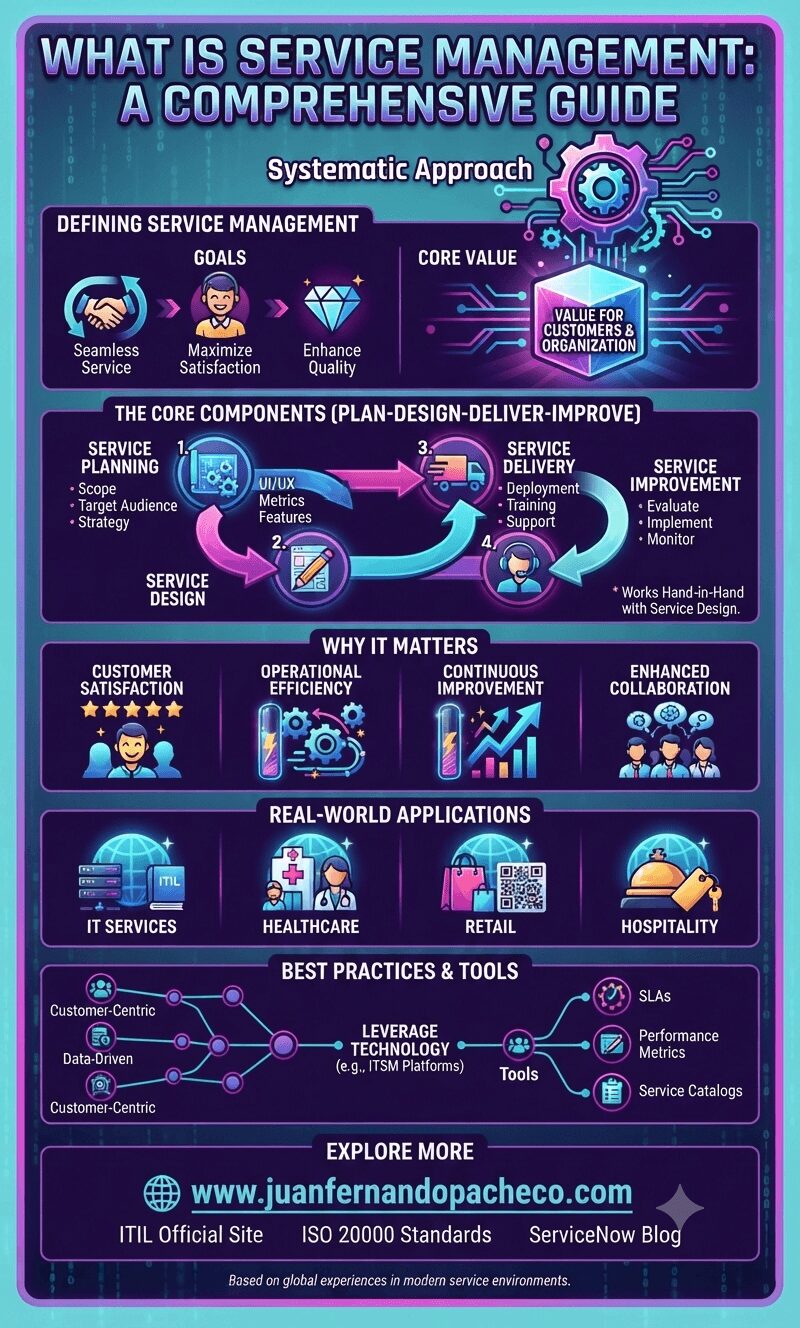
An intricate, vertical infographic titled "WHAT IS SERVICE MANAGEMENT: A COMPREHENSIVE GUIDE" with a systematic approach, organized into distinct modules: Defining Service Management (Goals, Core Value), The Core Components (Plan, Design, Deliver, Improve), Why It Matters, Real-World Applications, Best Practices & Tools, and an "Explore More" section with the URL "www.juanfernandopacheco.com". The design uses a vibrant, neon-tech aesthetic with a color palette of purples, blues, and magentas against a teal background.

Service management is a cornerstone of modern business operations. By systematically planning, designing, delivering, and improving services, organizations can drive customer satisfaction, operational efficiency, and long-term success.

Whether you’re a small business or a global enterprise, adopting robust service management practices is essential for thriving in today’s dynamic marketplace.