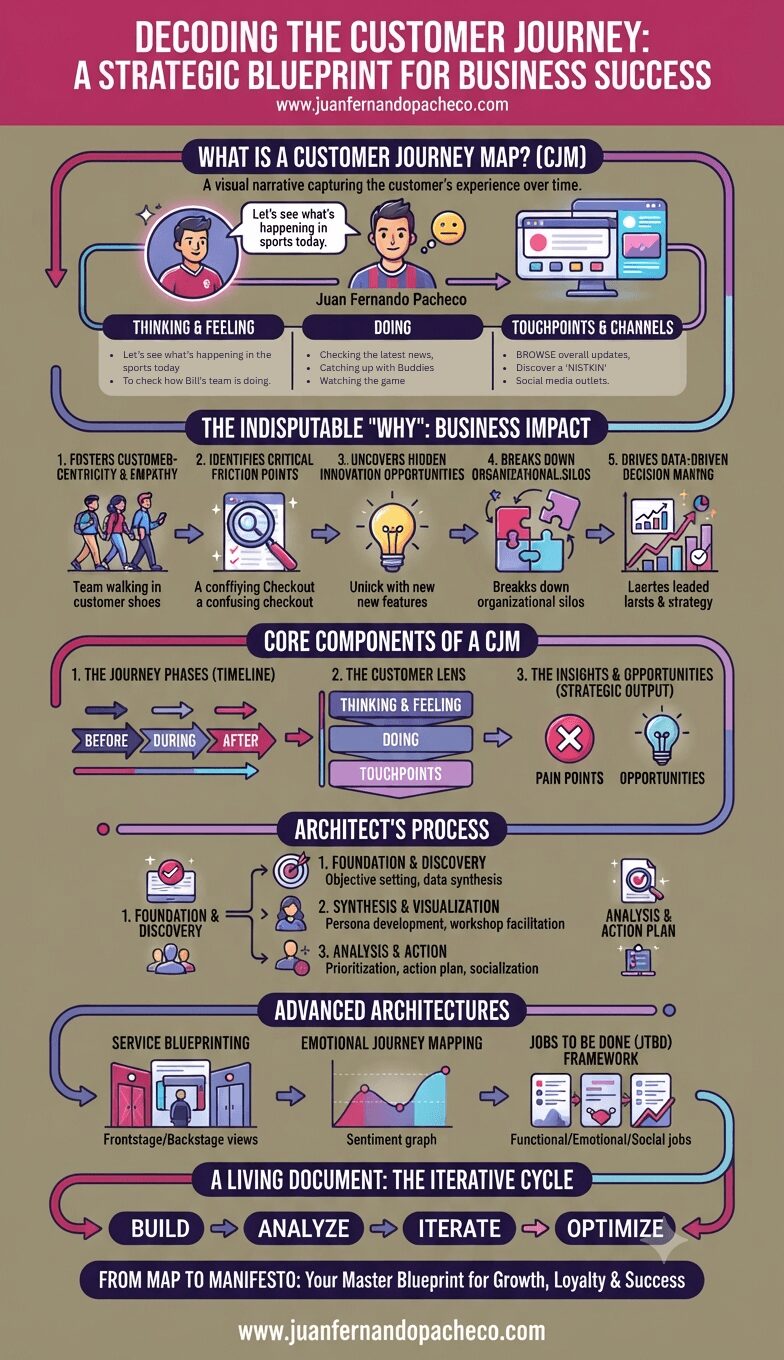
Decoding the customer journey is the first, most critical step in building a truly customer-centric organization. The map of Juan Fernando Pacheco is more than a diagram; it’s a manifesto. It declares that the company’s success is inextricably linked to his success in achieving his goals—be they finding community, proving his knowledge to his buddies, or simply enjoying the thrill of the game.
Month: October 2025
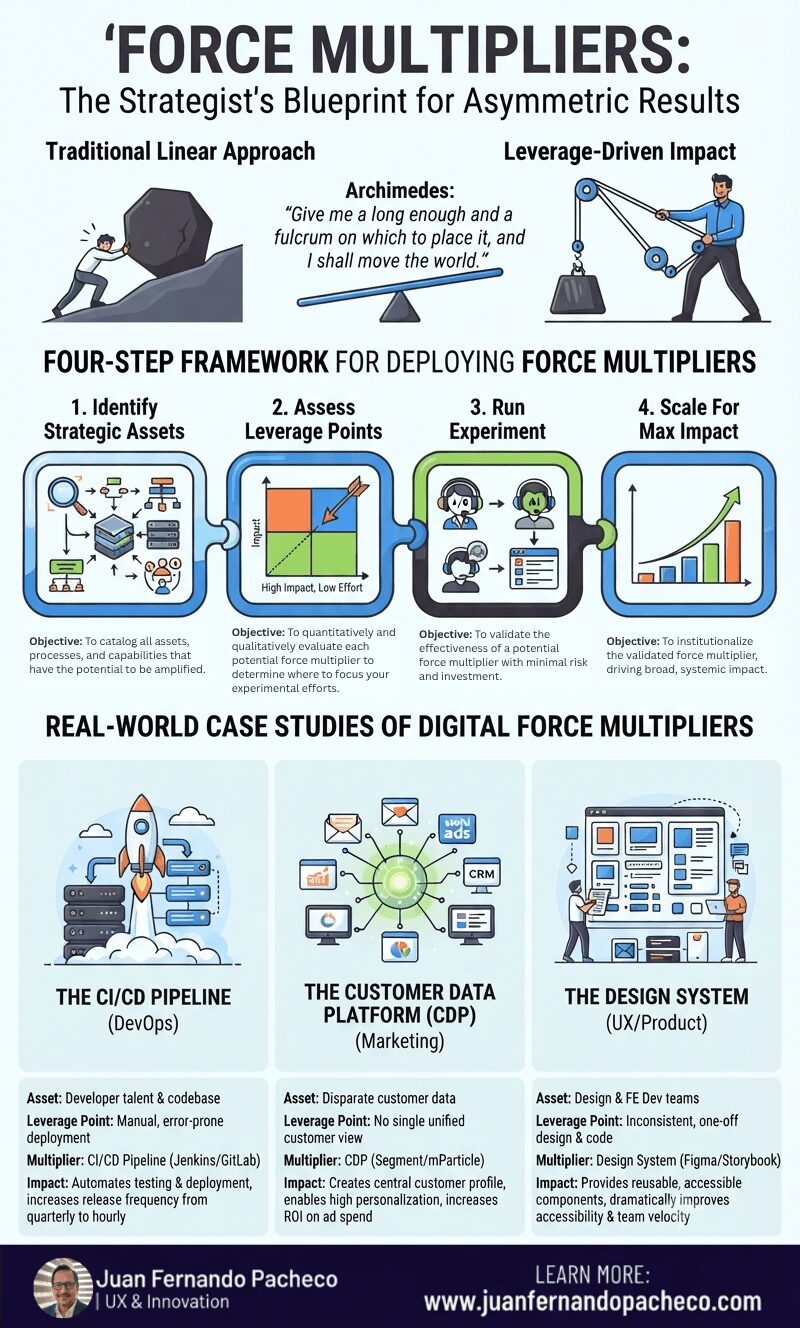
Stop asking, “How can we do this task faster?” Start asking, “How can we make this task irrelevant?” or “How can we automate this outcome?” By systematically identifying your strategic assets, rigorously assessing their leverage points, courageously running experiments, and deliberately scaling successes, you embed a culture of amplification into your organization’s DNA.
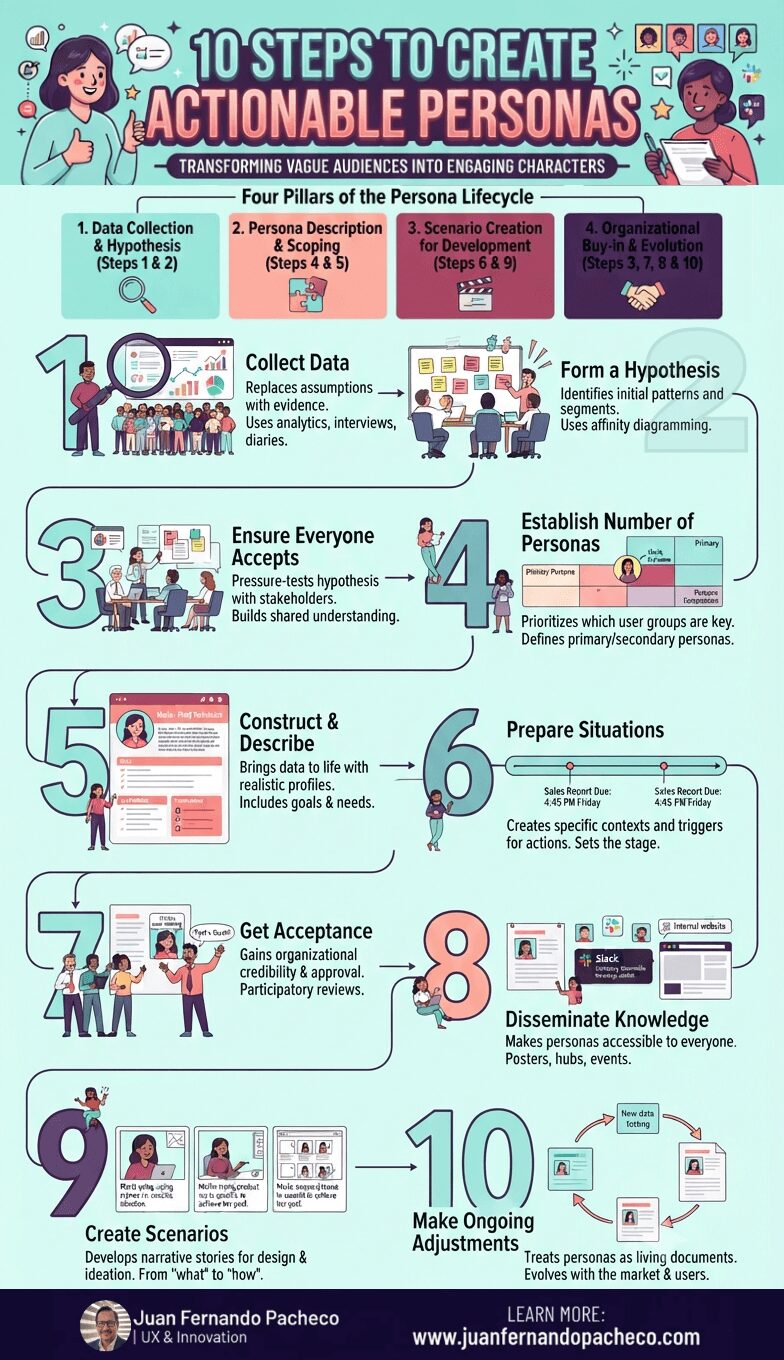
Creating engaging personas is not a one-week exercise to be filed away and forgotten. It is a strategic commitment to human-centered design. This 10-step process provides a robust framework, but its success hinges on a cultural shift within your organization—a shift from building for “the user” to designing for “Maria,” “John,” and “Akira.”
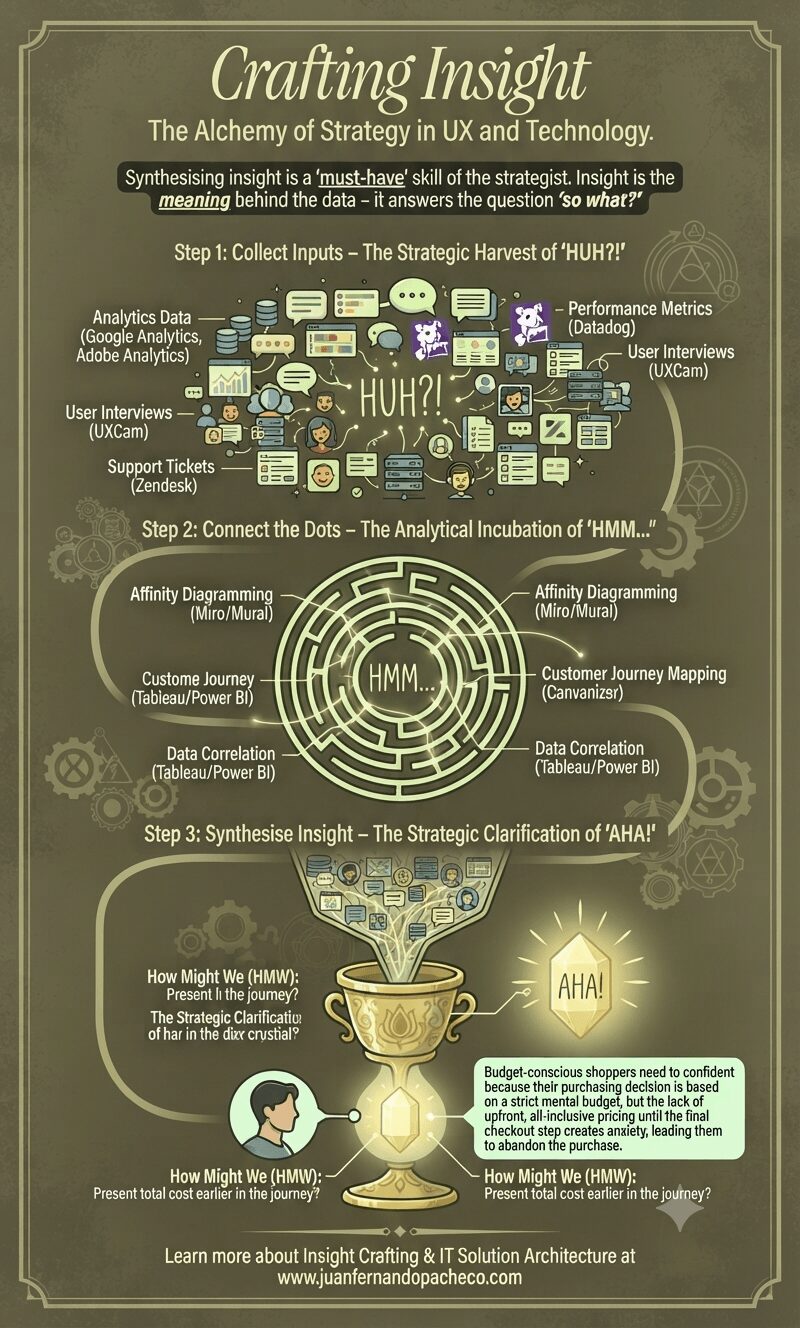
Crafting insight is not a linear, one-time event. It’s a continuous, iterative cycle. As you build and test solutions based on your insights, you generate new data, leading to new “HUH?!” moments, and the cycle begins anew.
Remember: quality insights will lead to quality strategy.
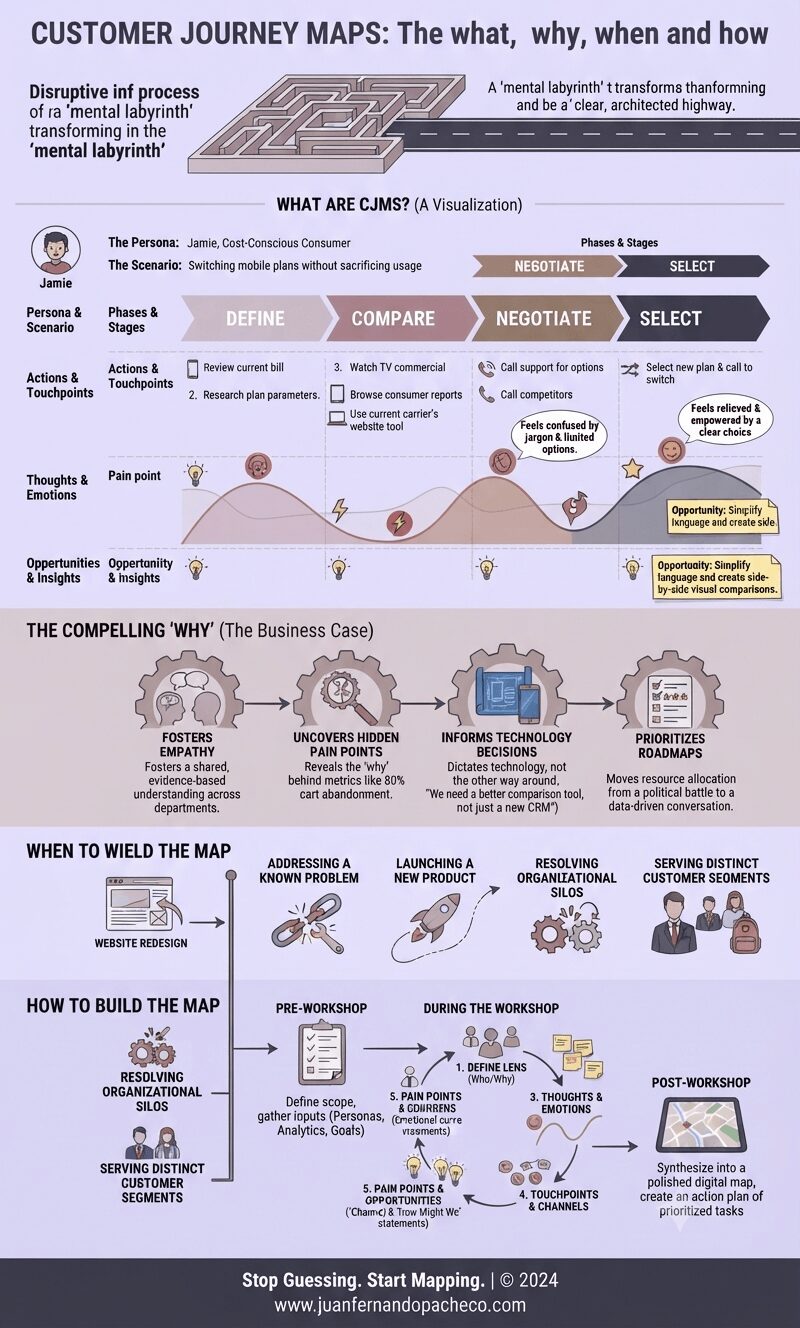
A Customer Journey Map is more than a diagram; it’s a strategic compass. It aligns your organization’s internal machinery with the external reality of your customer’s experience. It transforms abstract data into human stories, and those stories into a clear, actionable blueprint for improvement.
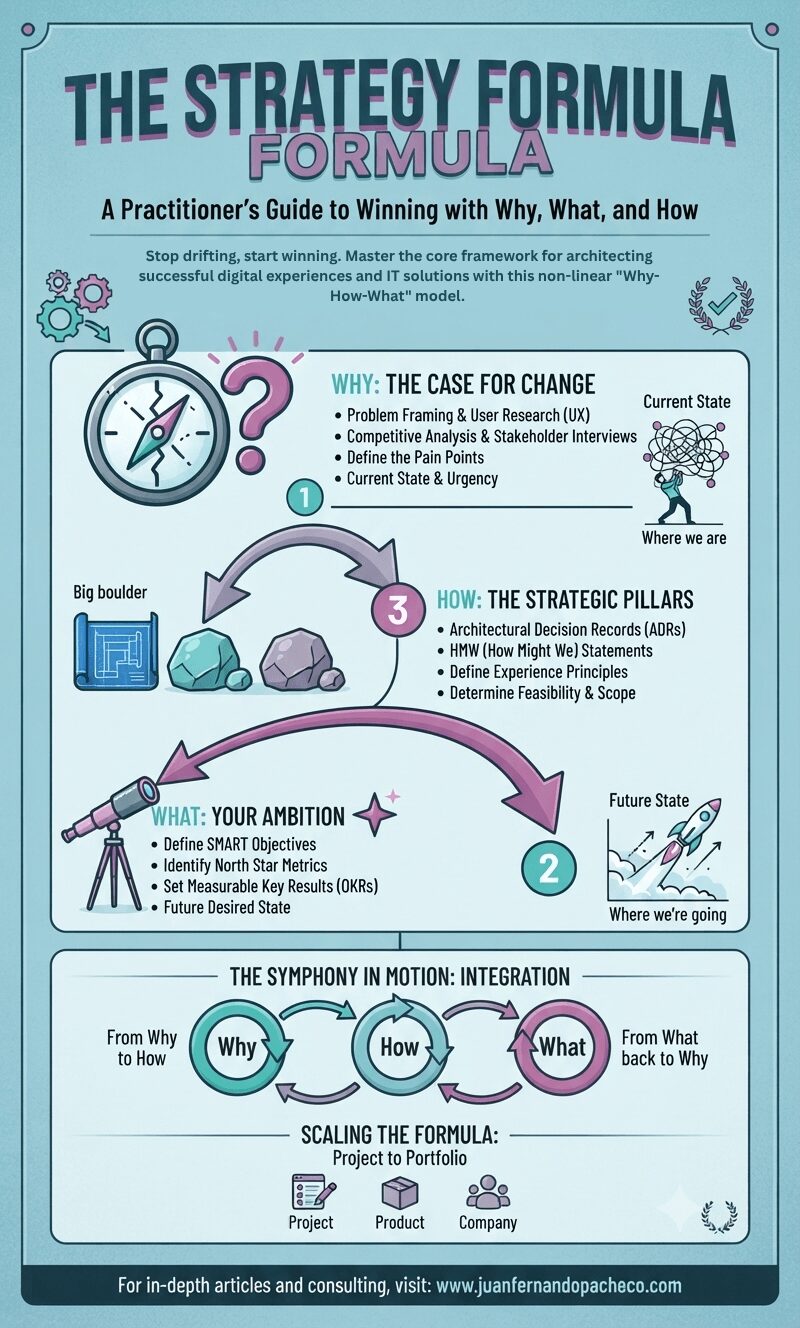
In a world of infinite distractions and limited resources, clarity is your most significant competitive advantage. The Strategy Formula—Why, How, What—is the ultimate tool for achieving that clarity. It forces rigor, fosters alignment, and grounds your ambition in reality.
It prevents the all-too-common pitfalls: the solution in search of a problem, the activity mistaken for progress, and the vague goal that inspires no one.
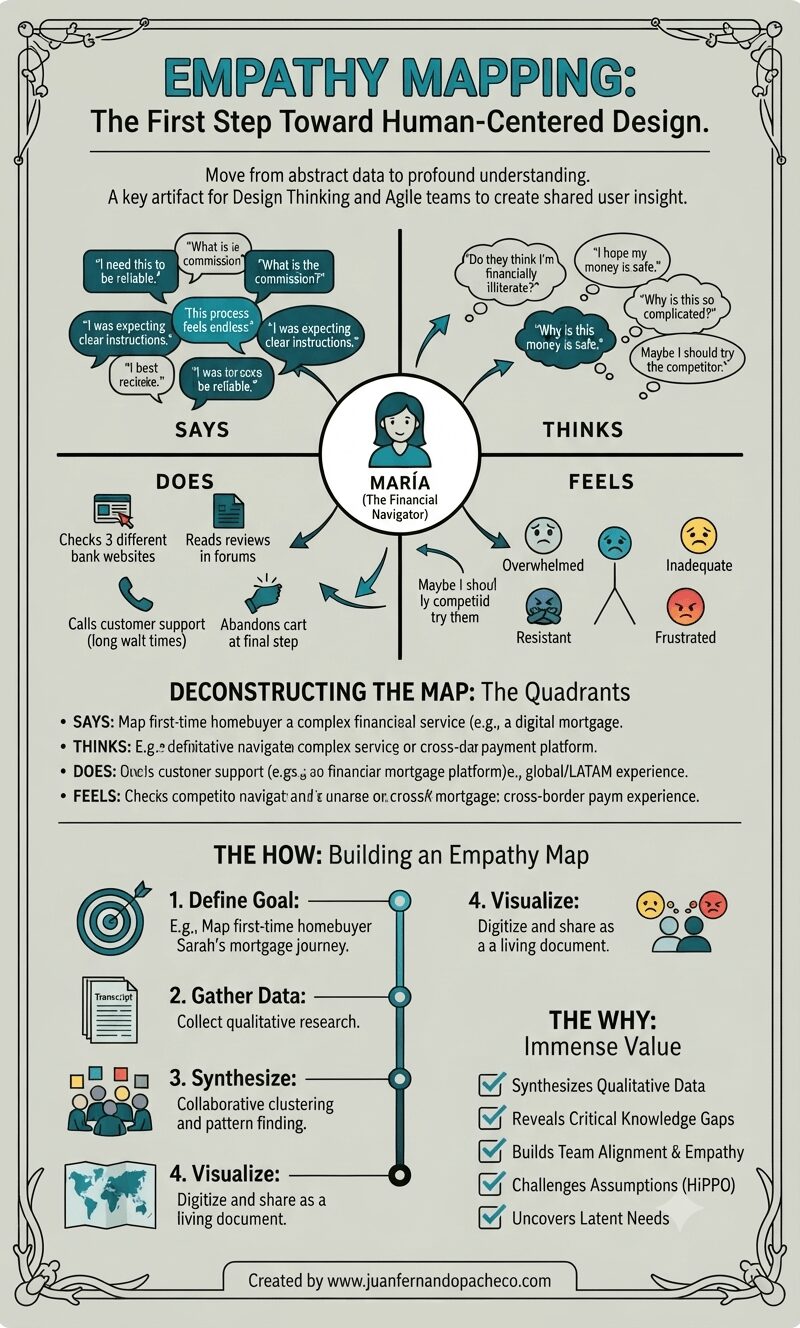
An empathy map is more than just a diagram on a wall. It is a practice, a mindset, and a commitment to seeing the world through someone else’s eyes. It transforms the abstract “user” into a human with hopes, frustrations, and a complex inner world.
By systematically capturing what our users Say, Think, Do, and Feel, we move beyond building mere features.
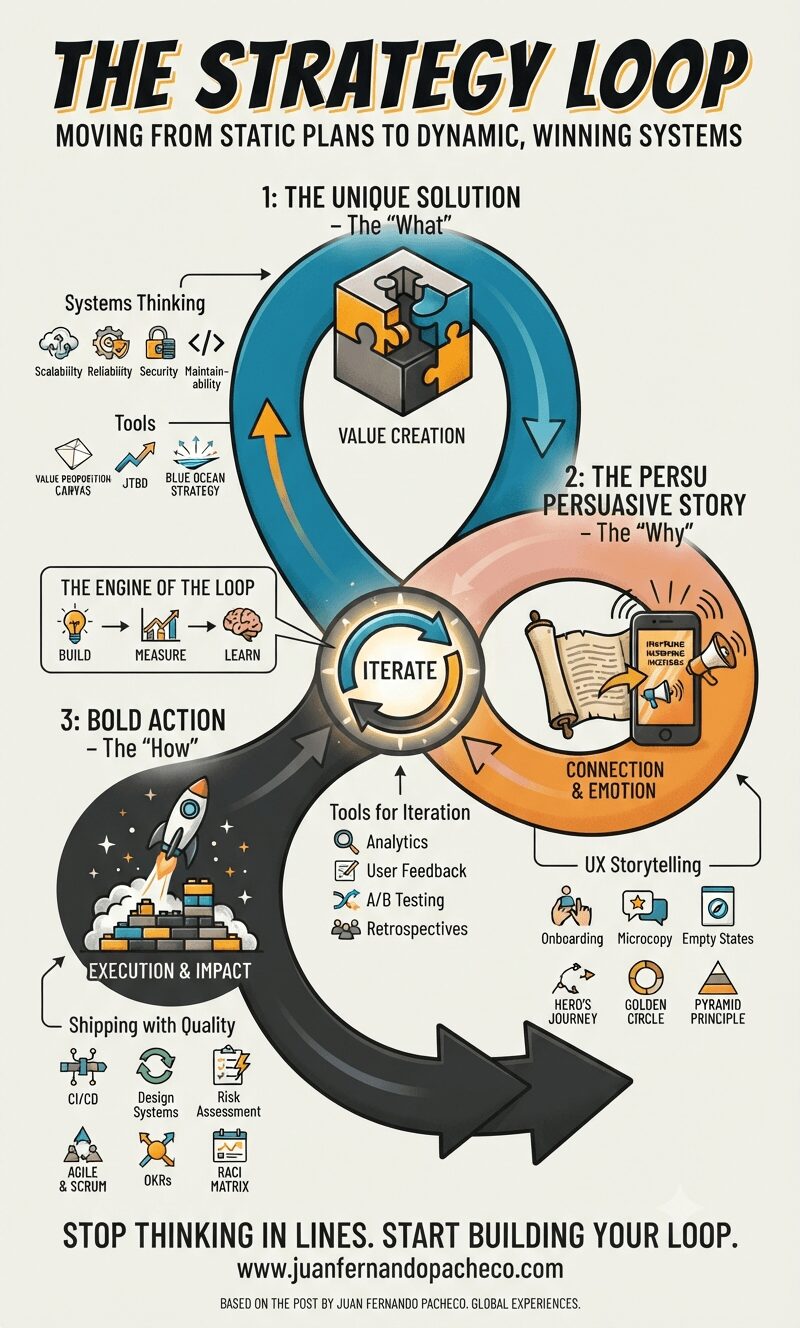
The Strategy Loop transforms strategy from a static document owned by a few executives into a dynamic, living system that empowers the entire organization. It aligns the logical rigor of the solutions architect with the empathetic, human-centered focus of the UX designer.