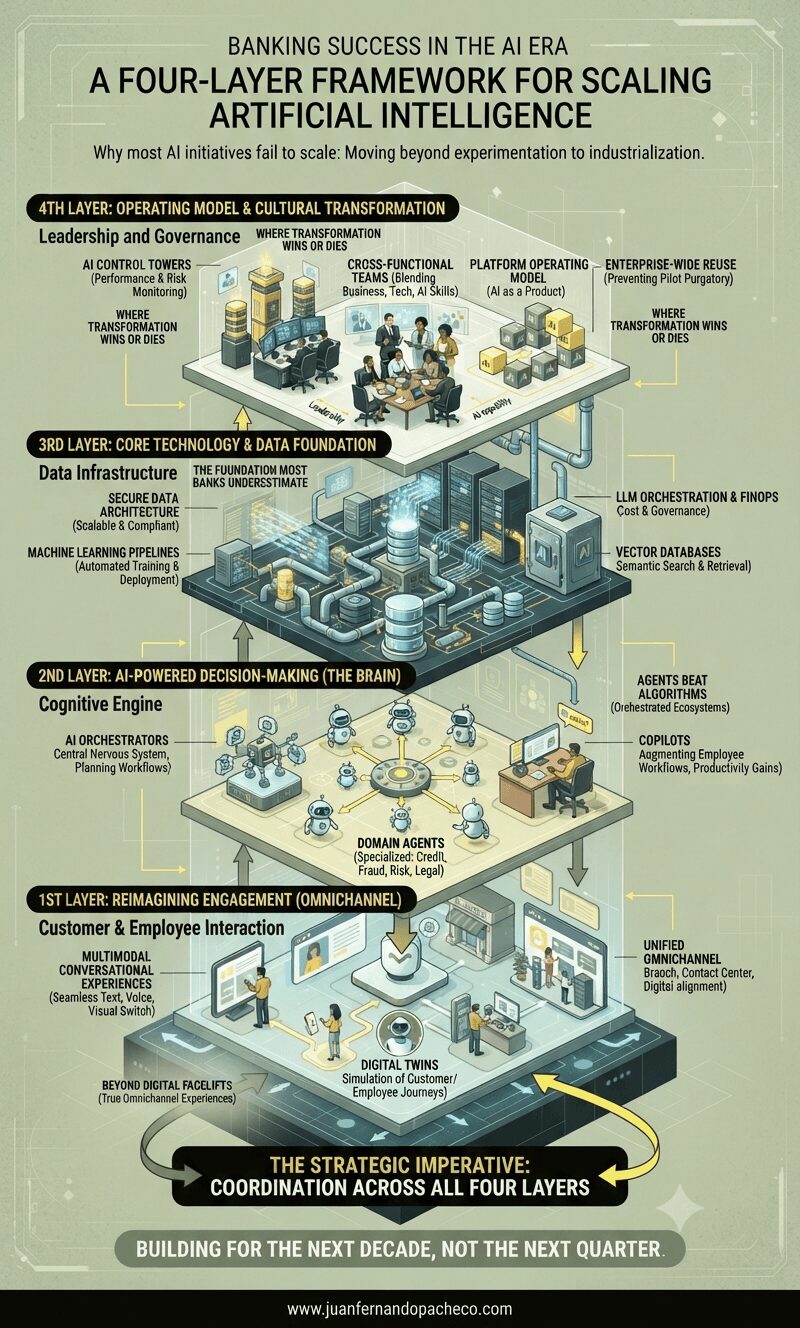
An illustrative, detailed infographic titled "Banking Success in the AI Era" presenting a four-layer framework for scaling artificial intelligence in financial institutions. The layers are stacked vertically as an architectural blueprint, with pipes and data streams flowing between them. From top to bottom: the 4th Layer: Operating Model & Cultural Transformation; 3rd Layer: Core Technology & Data Foundation; 2nd Layer: AI-Powered Decision-Making (The Brain); and 1st Layer: Reimagining Engagement (Omnichannel). Detailed components like AI control towers, cross-functional teams, vector databases, LLM orchestration, and AI agents are visualized within each layer. The overall tone is professional and high-tech, using a palette of muted greens, yellows, and charcoal, with a concluding imperative for "full-stack coordination" and a footer for "www.juanfernandopacheco.com."

As you evaluate your institution’s AI transformation journey, I encourage you to use this four-layer framework as a diagnostic tool. Where are you strong? Where are you weak? Are you investing proportionally across all layers, or over-indexing on visible engagement features while neglecting foundational infrastructure?

The banks that win won’t be those with the most impressive demos or the longest feature lists. They’ll be those that build coherent, integrated architectures capable of continuous evolution as technology and customer expectations change.
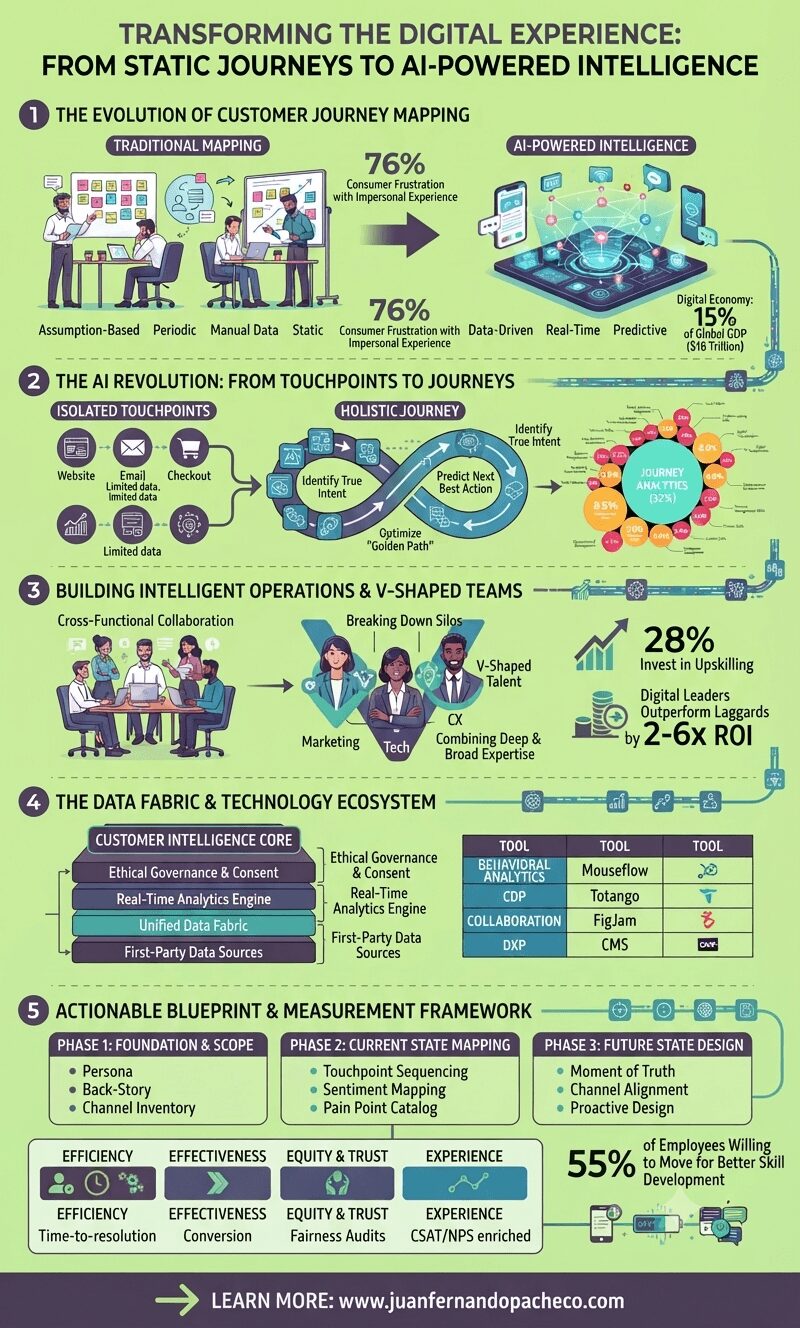
A vertical infographic featuring a light green background, styled with dark purple and teal accents, illustrating the evolution of customer journey mapping from traditional sticky notes to AI-driven predictive intelligence. It highlights V-shaped cross-functional teams, a data fabric architecture, and an actionable three-phase implementation blueprint, complete with a reference to www.juanfernandopacheco.com.

The future of customer journey mapping lies in creating dynamic, self-updating systems that not only reflect current customer behaviors but also predict future needs and preferences. This requires investment in both technology and talent—particularly in developing V-shaped employees who can bridge functional silos and translate data insights into human-centered experiences.

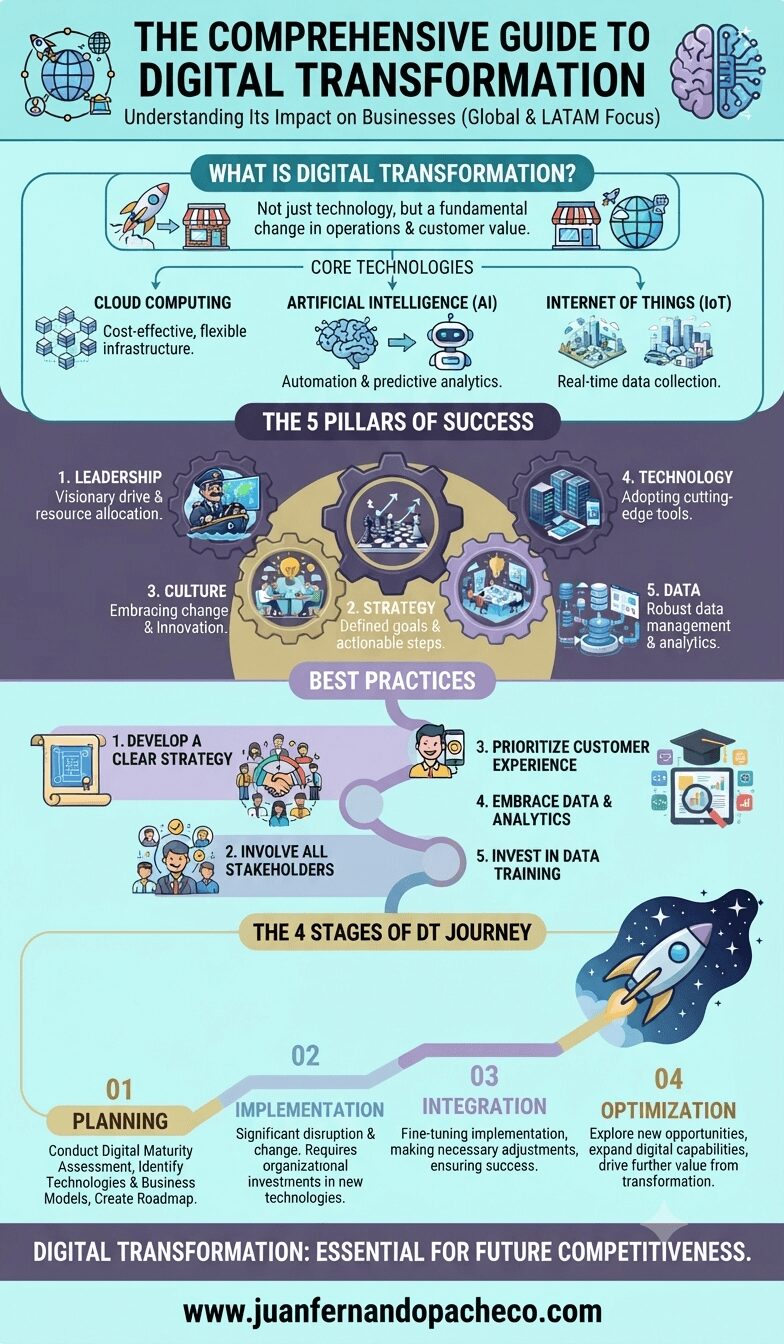
A detailed infographic illustrating the journey of digital transformation across a vertical, flowing timeline, featuring sections on core technologies, foundational pillars, best practices, and the four key stages, with illustrative icons and the URL www.juanfernandopacheco.com at the base.

Digital transformation is no longer optional but essential for organizations that wish to stay competitive in today’s fast-paced, technology-driven market. By understanding the core pillars, best practices, stages, and common mistakes, organizations can navigate the complexities of digital transformation and drive long-term success. As companies embrace these changes, they will enhance their customer experiences, optimize operations, and create new growth opportunities that will propel them forward in the digital age.