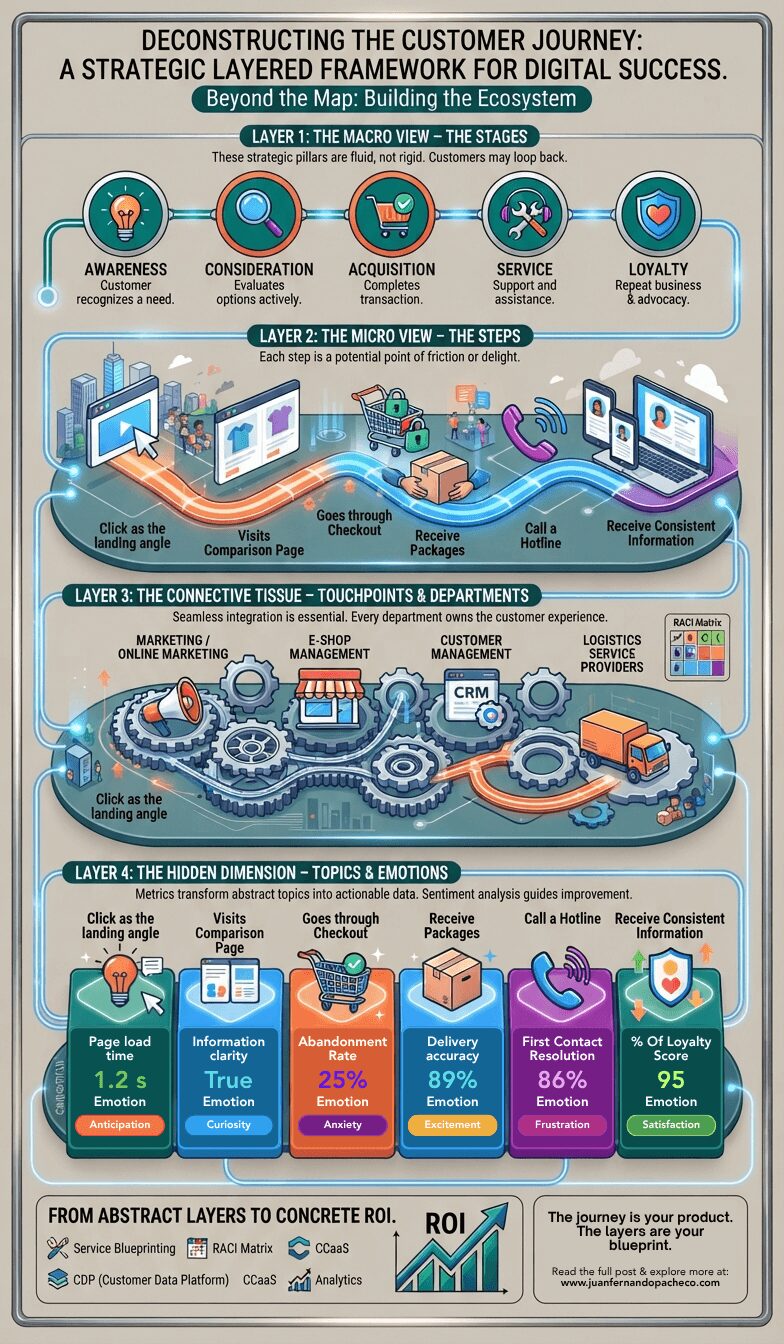
Customer Journey Layers is more than a diagram; it’s a philosophical shift from a customer-centric mindset to a customer-centric operating model. It acknowledges that every digital experience is a manifestation of your internal architecture—your technology, your processes, and your organizational alignment.
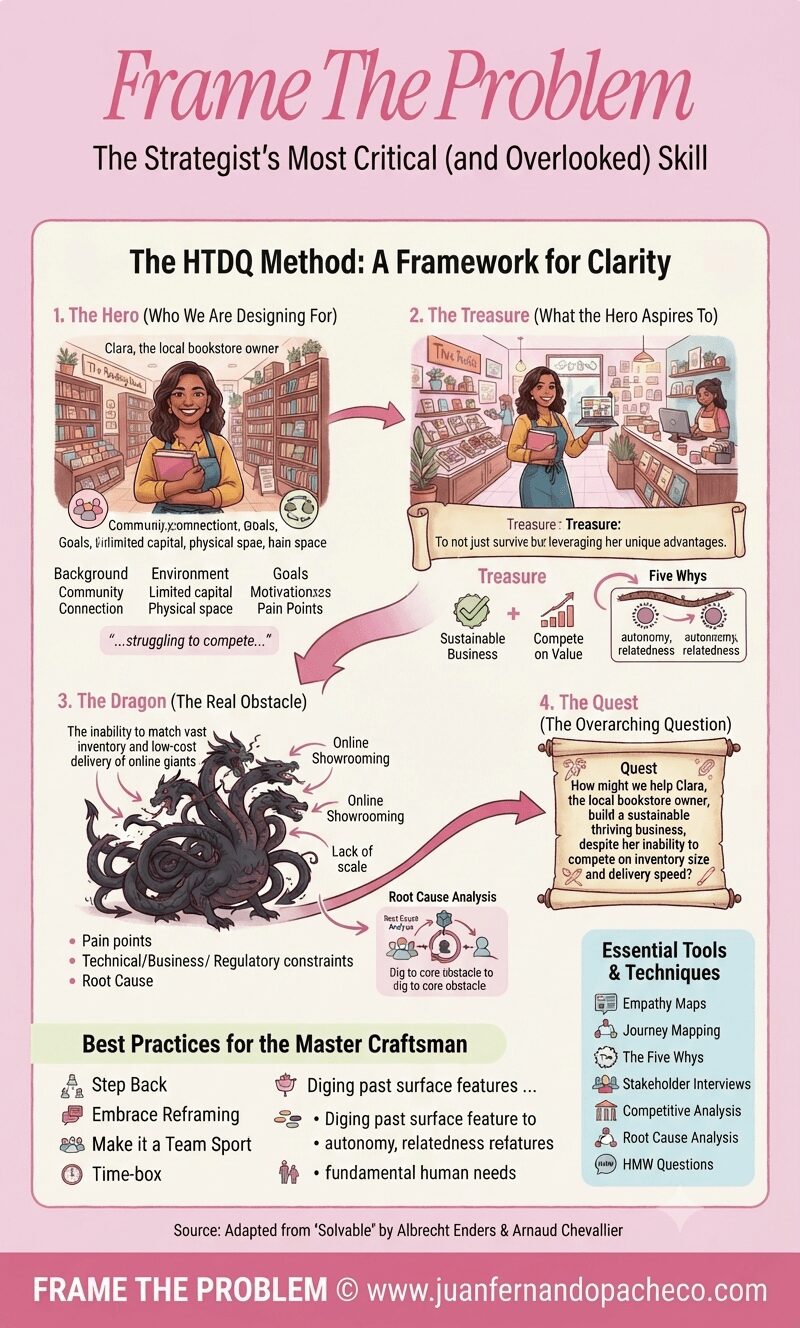
Framing the problem is the highest-leverage activity in any strategic endeavor. It is the art of asking the right question before desperately searching for answers. The HTDQ method provides a memorable, robust, and human-centered framework to master this art.
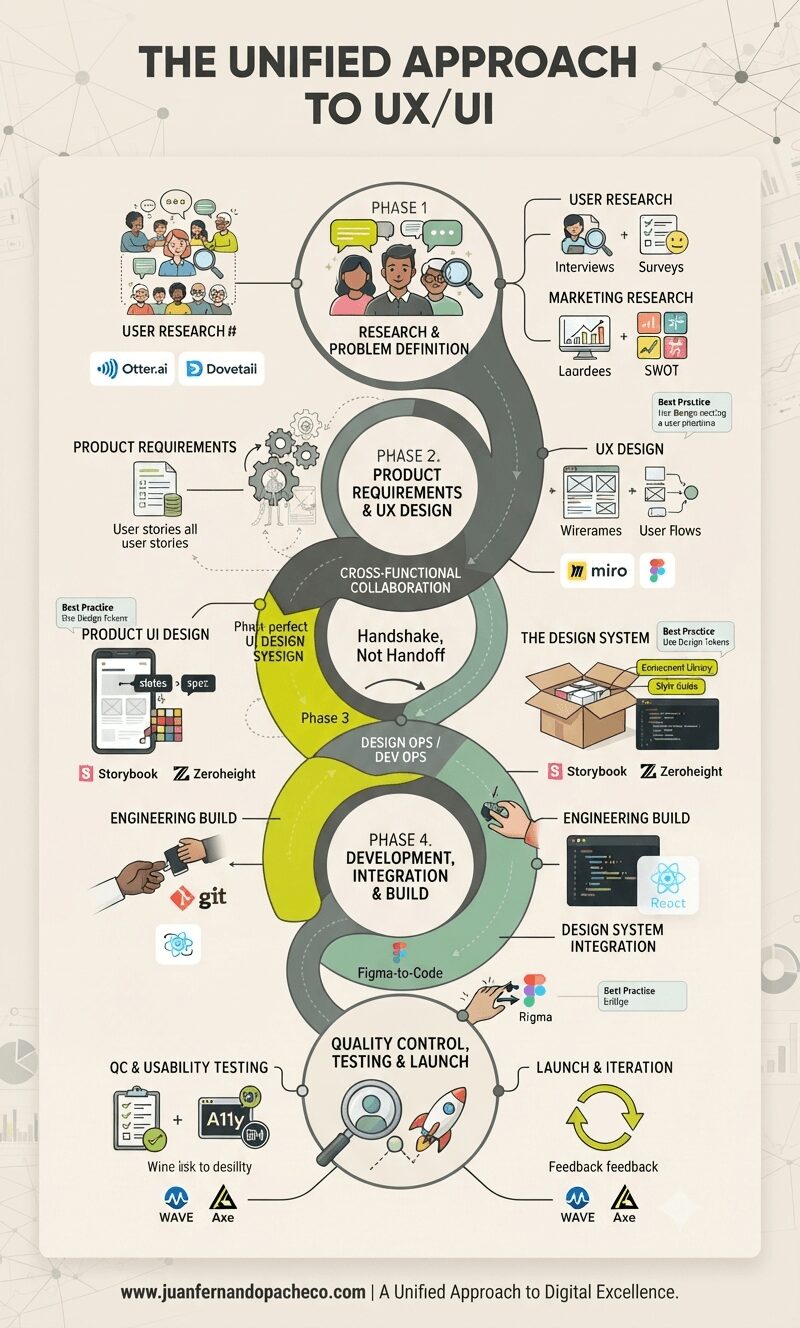
The “Experience Design Framework” illustrates that consistency is not a superficial concern.
It is the tangible result of a deeply integrated, user-centric, and collaborative process. It is the quality that allows users to build a confident mental model of your product, leading to reduced cognitive load, increased efficiency, and greater trust.
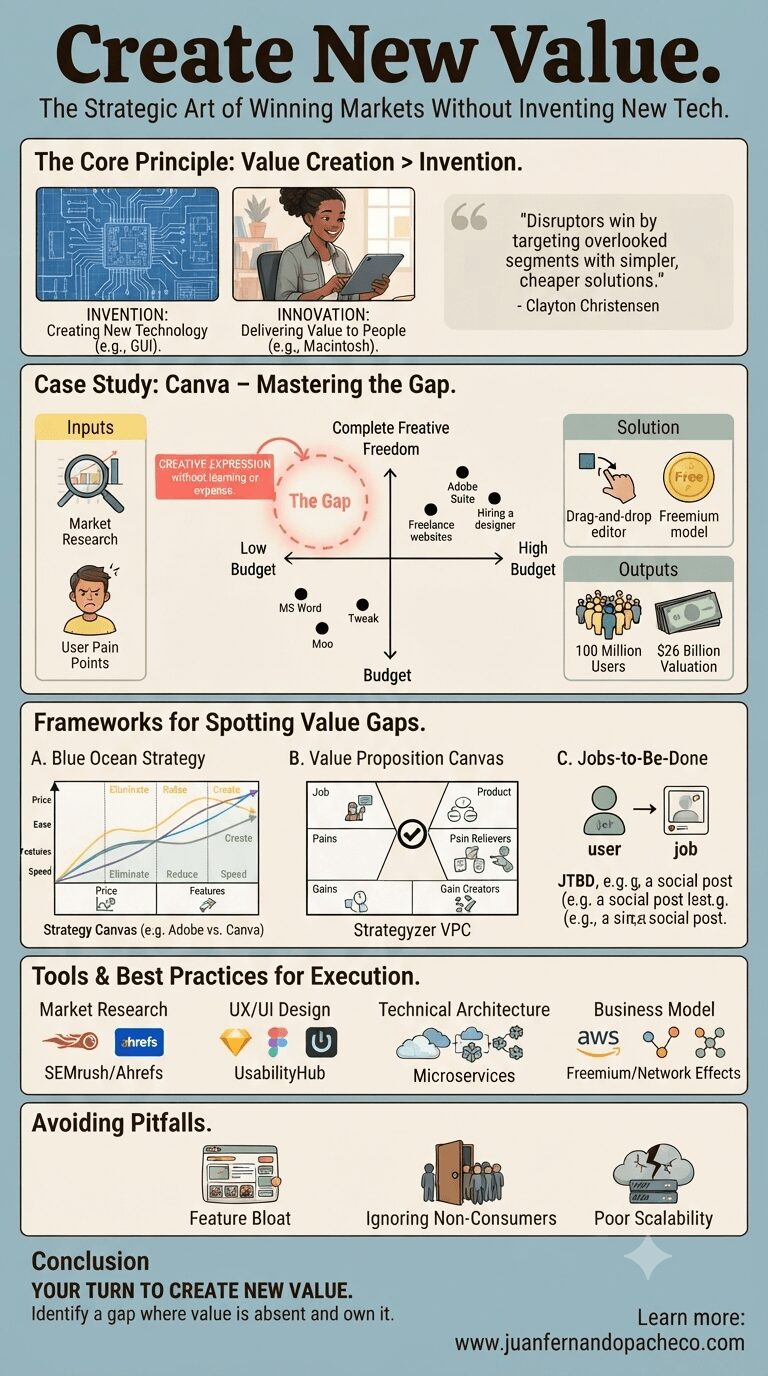
Visionaries spot gaps in the market—unmet needs others overlook—and craft solutions so elegantly aligned with those gaps that they carve out entirely new categories.
Let’s dissect this with surgical precision, using real-world examples, battle-tested frameworks, and actionable tools. By the end, you’ll see how to identify and own your “white space” in any market.
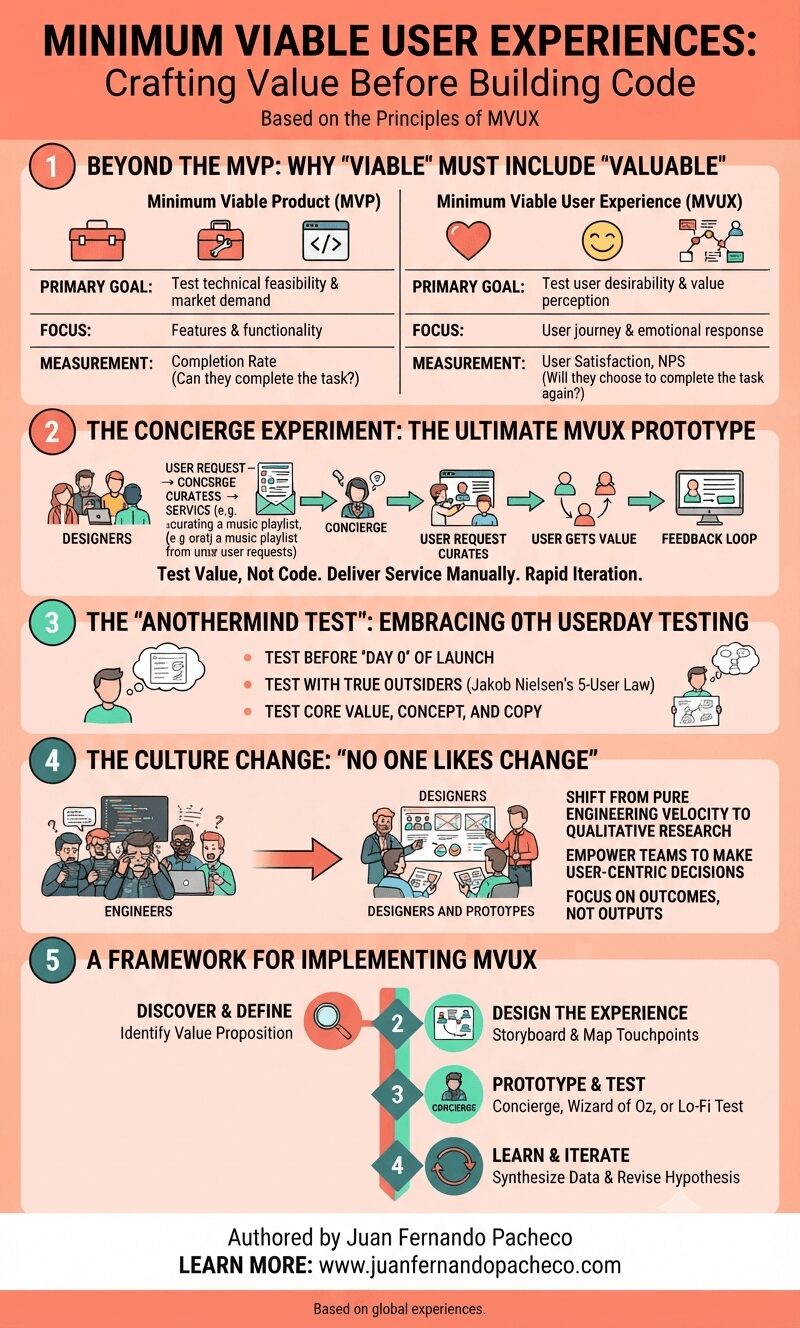
After 20 years in this field, all you need to know is this:
The winning product is rarely the one with the most features.
It is almost always the one with the most thoughtful, frictionless, and valuable experience. The MVUX is your strategy to find that experience efficiently and effectively.
It’s a commitment to being human-centered from the very first sketch. It’s about being a concierge for your users, understanding their needs so deeply that the product you eventually build feels like it was made for them, and them alone. Because it was.
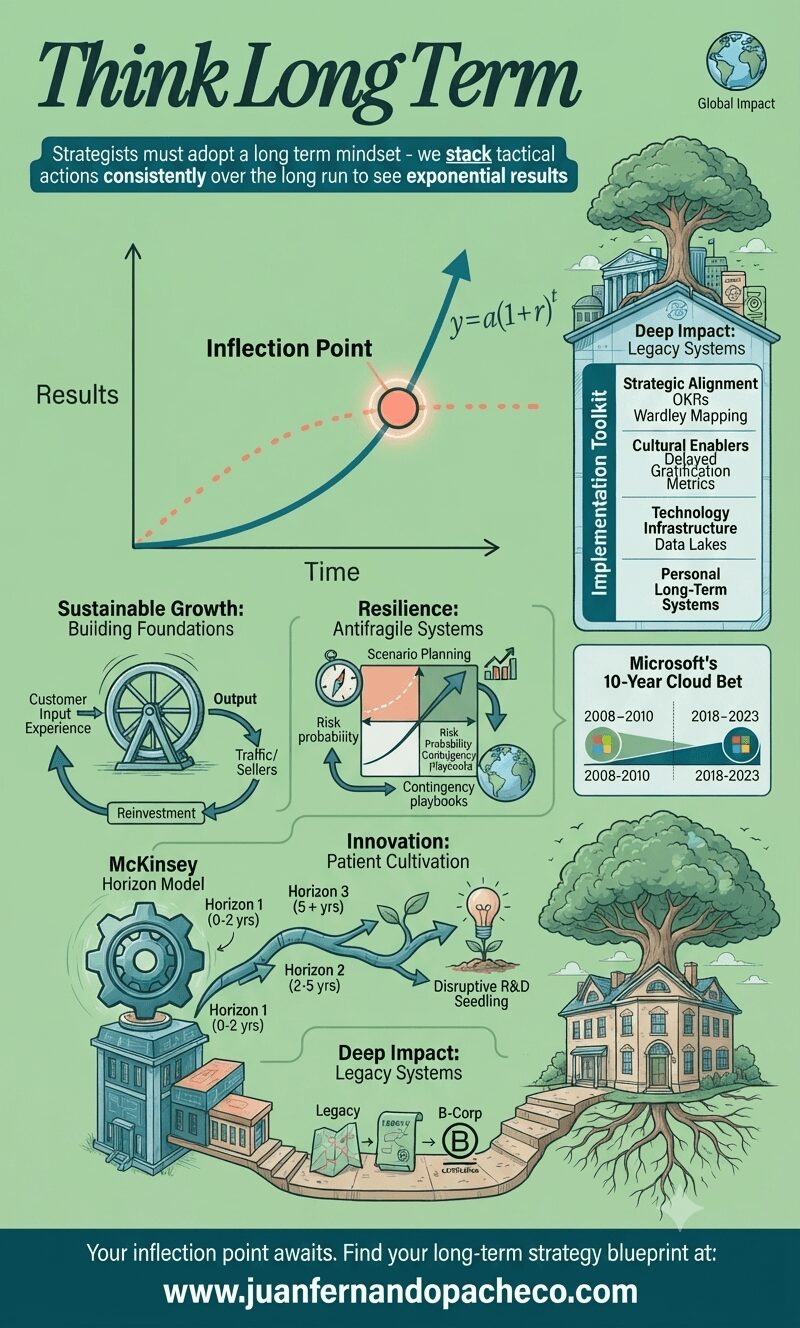
In the 1980s, IBM dominated mainframe computers while Microsoft focused on the embryonic PC market—a classic long-term gamble. Bill Gates famously said,
“We always overestimate the change that will occur in two years and underestimate the change that will occur in ten.”
This encapsulates the power of long-term thinking: the deliberate prioritization of future exponential gains over immediate rewards.
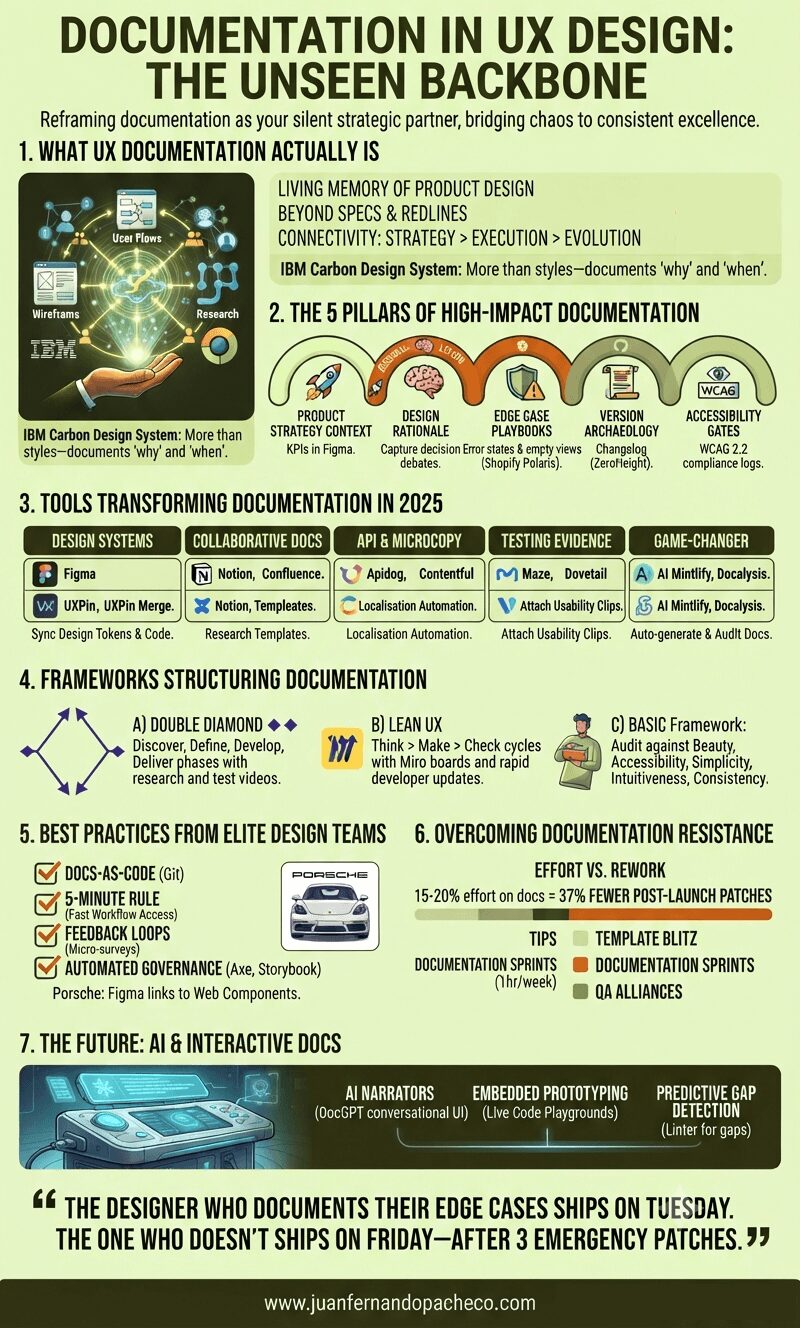
Treating documentation as a “task” misses its power. It’s the continuous act of design reasoning made visible. As Apple’s Human Interface Guidelines reveal, legendary products emerge when principles are documented, not memorized.
“The designer who documents their edge cases ships on Tuesday. The one who doesn’t ships on Friday—after 3 emergency patches.”
Start small: Document one decision today. Link a research insight to a button component. Your future self—and team—will thank you.
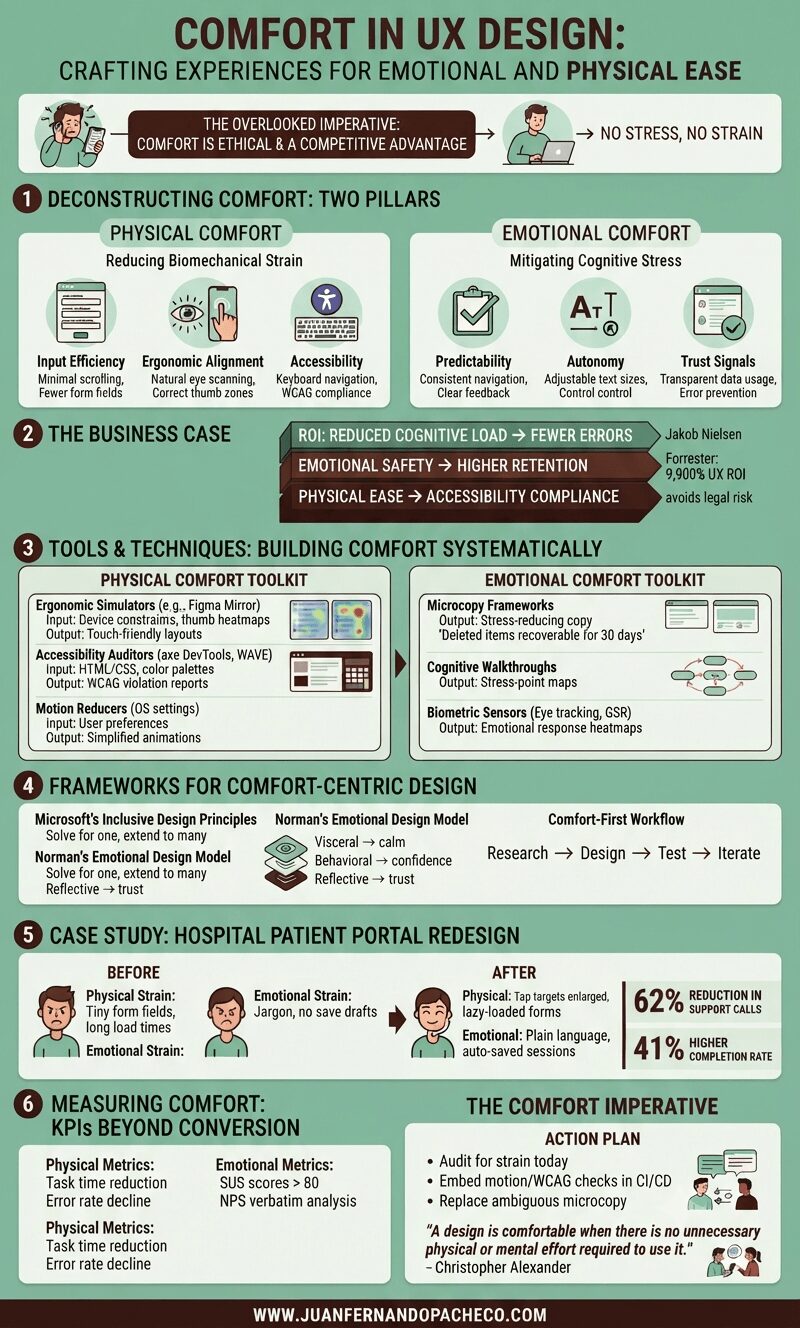
Comfort in UX design—defined as creating experiences with no stress, no strain—isn’t a luxury; it’s an ethical imperative and competitive advantage. Yet, it remains chronically undervalued.
As both a UX designer and solutions architect, I’ve seen how discomfort manifests: from RSI-inducing enterprise tools to anxiety-triggering checkout flows.
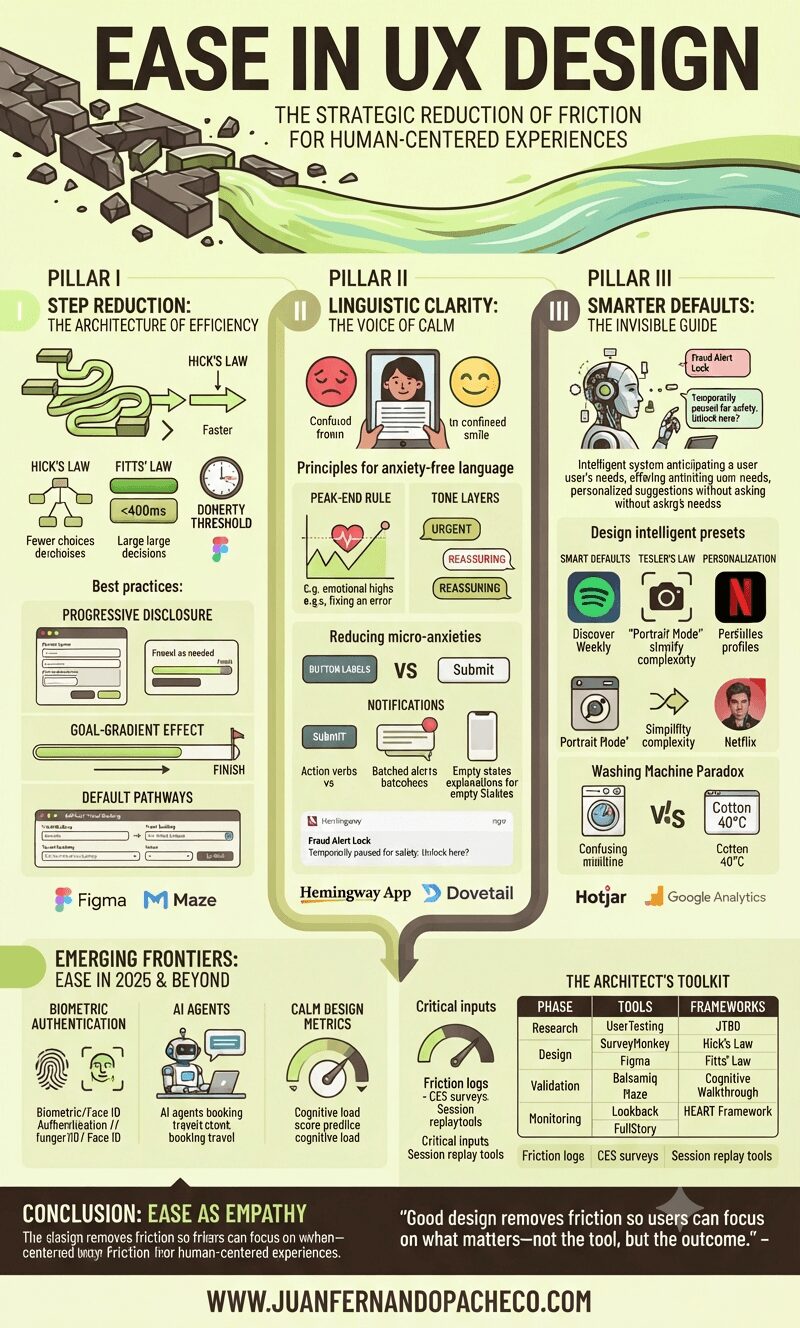
Ease isn’t about oversimplification—it’s about precision.
It’s the art of removing cognitive weight, interaction barriers, and emotional friction so users achieve goals with clarity and confidence. As Jakob Nielsen aptly noted,
“Users spend most of their time on other sites”
Meaning they bring expectations shaped by seamless experiences elsewhere. Fail to match that fluency, and abandonment follows.
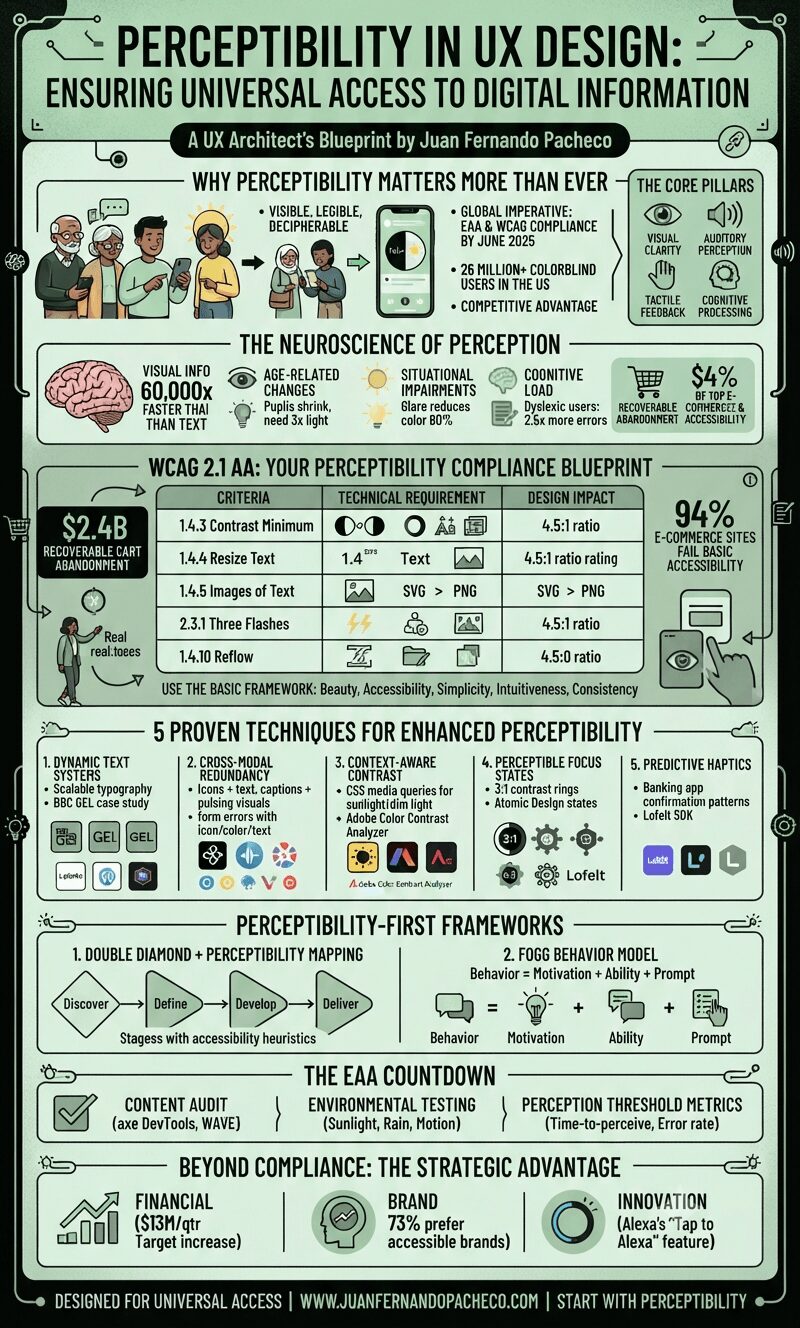
Perceptibility ensures critical information is visible, legible, and decipherable regardless of users’ sensory abilities, temporary limitations, or environmental contexts.
With the European Accessibility Act (EAA) mandating WCAG 2.1 AA compliance by June 2025, and 26 million+ colorblind Americans struggling with poorly designed interfaces, mastering perceptibility is now both a legal imperative and competitive advantage.