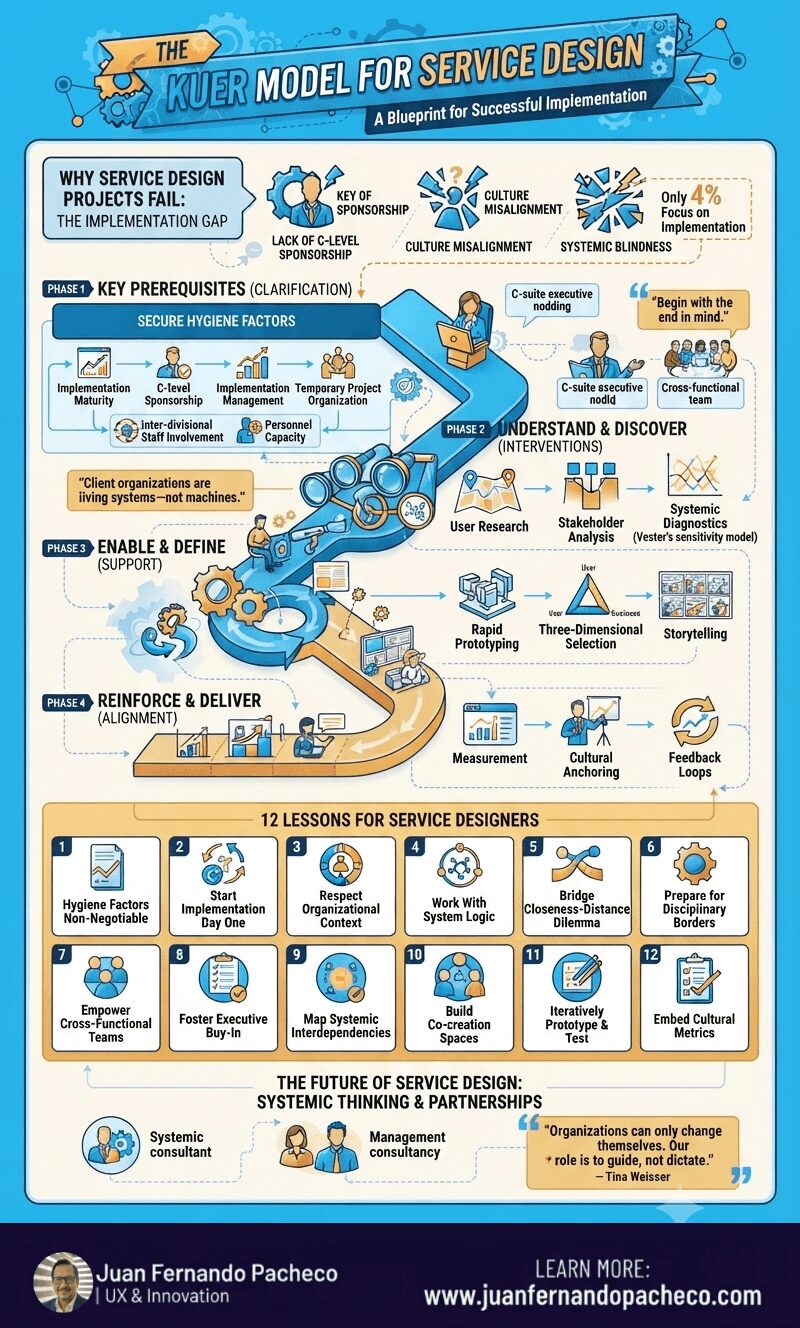
The KUER model underscores that service designers must evolve beyond UX expertise. Skills in systemic organizational consulting and partnerships with management consultancies (e.g., Capgemini, Etventure) are critical. As Tina Weisser notes:
Month: March 2025
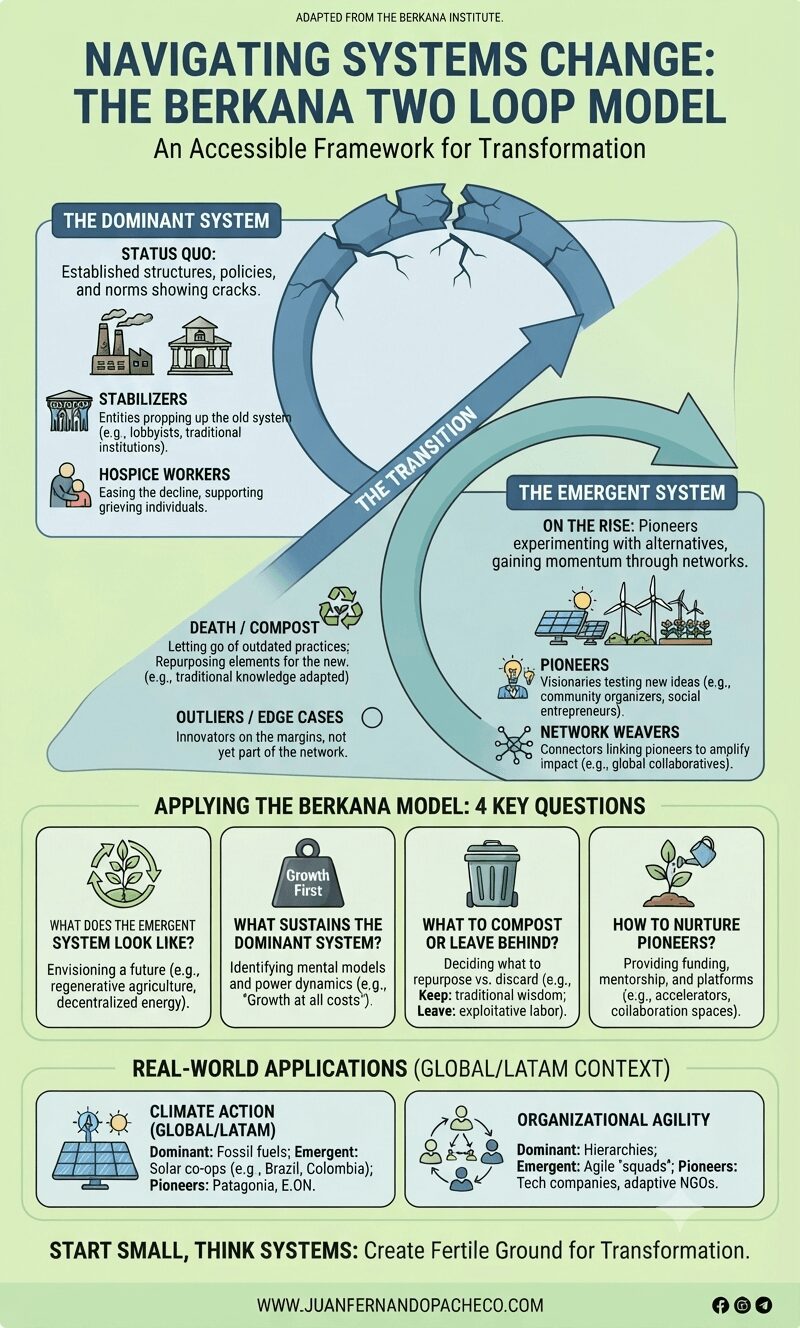
The Berkana Two Loop Model demystifies systems change. By naming pioneers, building networks, and composting the old, we create fertile ground for transformation.
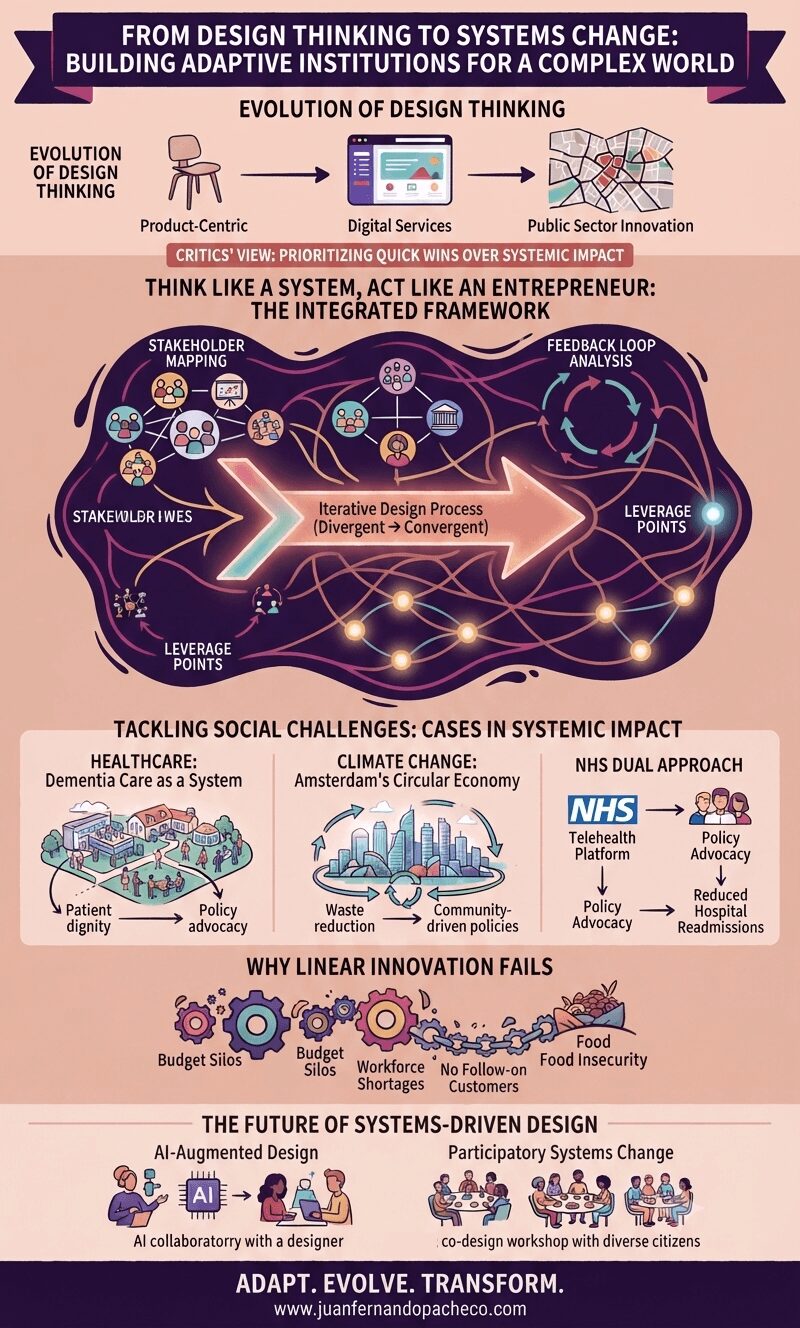
Design thinking’s fusion with systems change marks its coming of age. By embracing complexity, nurturing cross-sector partnerships, and prioritizing adaptive learning, institutions can tackle 21st-century challenges with resilience.
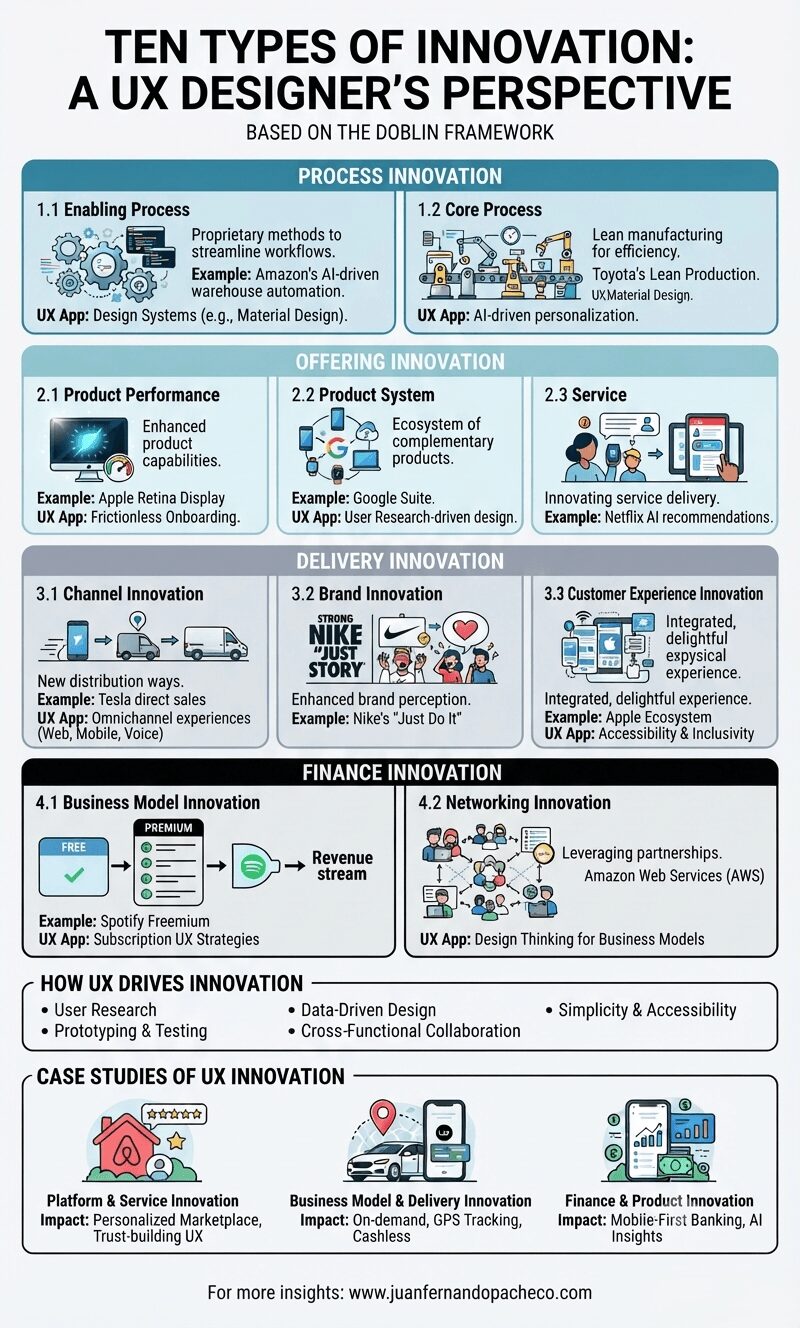
Innovation is not limited to technology or products; it extends to every facet of a business. As UX designers, embracing the “Ten Types of Innovation” helps create more meaningful, inclusive, and impactful experiences for users.
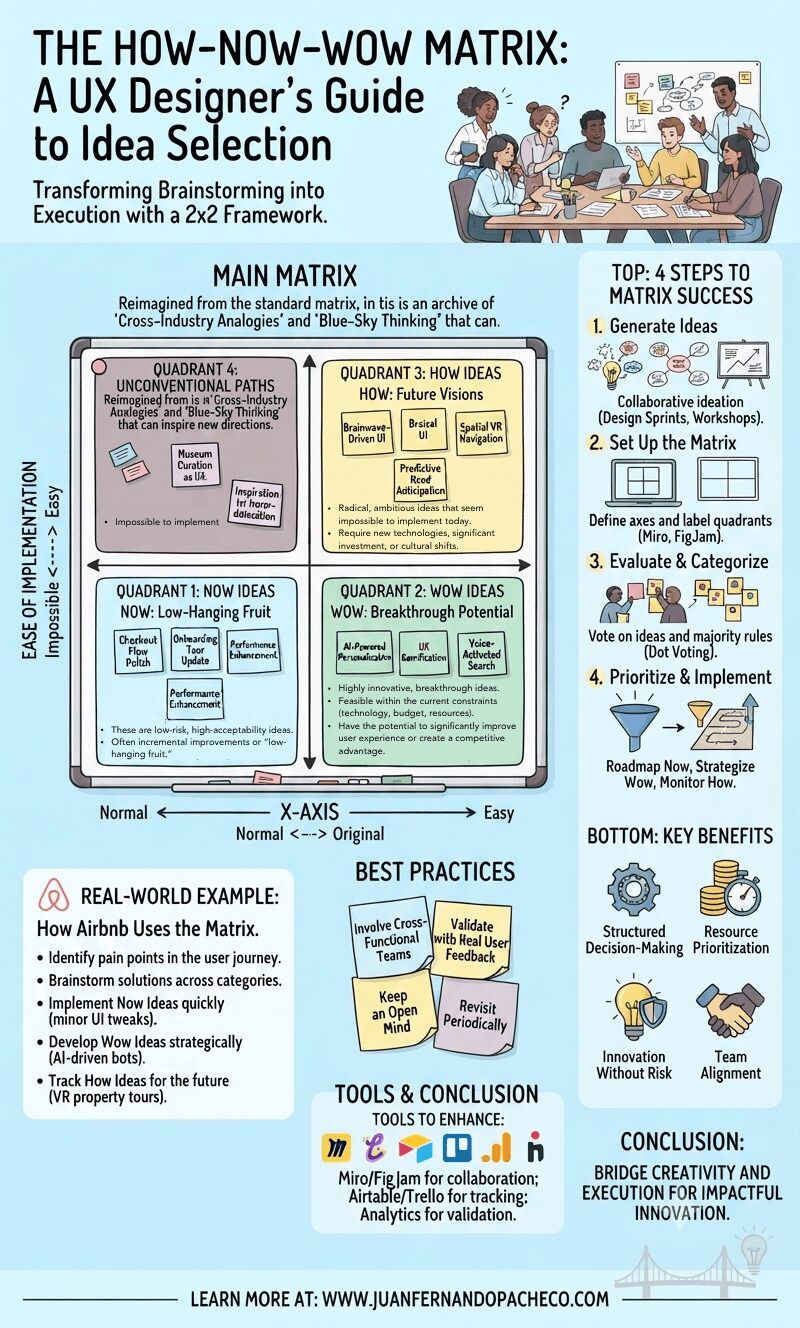
The How-Now-Wow Matrix is an invaluable tool in the UX designer’s toolkit. It bridges the gap between creativity and execution, ensuring that the best ideas move forward in a structured, strategic manner. Whether you’re optimizing an existing product or envisioning the future of user experience, integrating this framework will enhance your decision-making process and lead to impactful innovation.
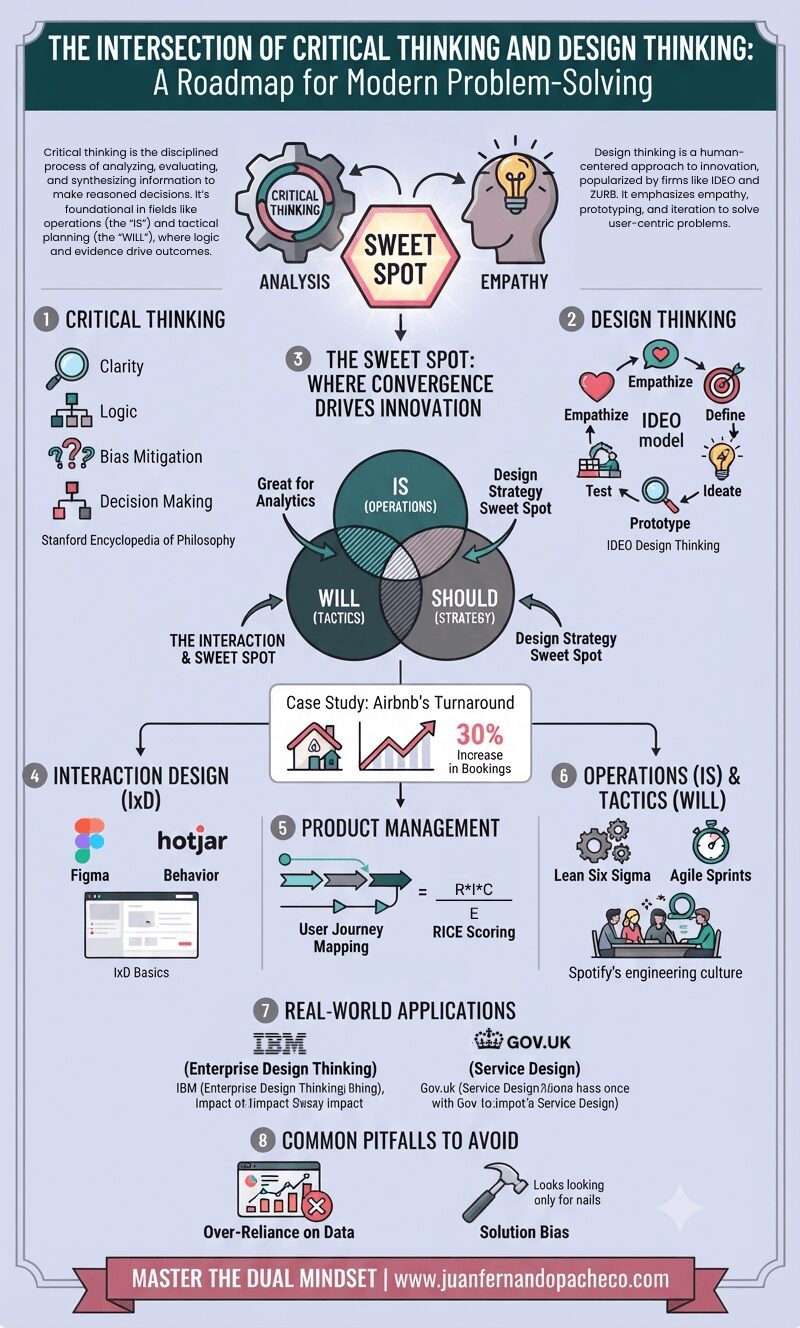
Critical and design thinking are not opposing forces—they’re complementary. By mastering their intersection, teams can craft solutions that are both innovative and actionable.
Whether you’re a UX designer, product manager, or operations lead, this dual mindset is your key to staying ahead.
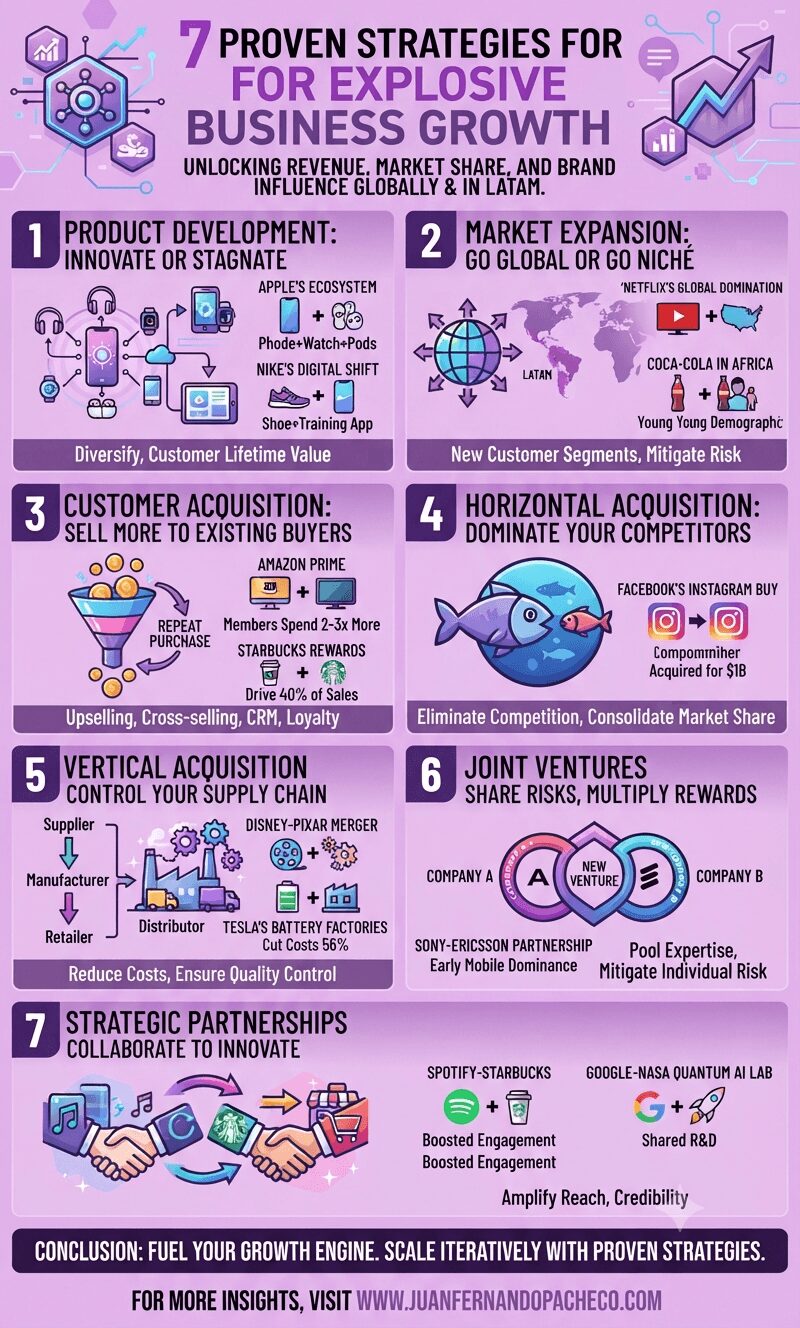
Explosive growth isn’t accidental—it’s engineered through strategic choices. Whether through acquisitions, partnerships, or product innovation, each strategy offers unique advantages.
Start with one tactic, measure results using KPIs, and scale iteratively. For tailored guidance, explore tools like SEMrush for SEO optimization or McKinsey’s Growth Framework for strategic planning.
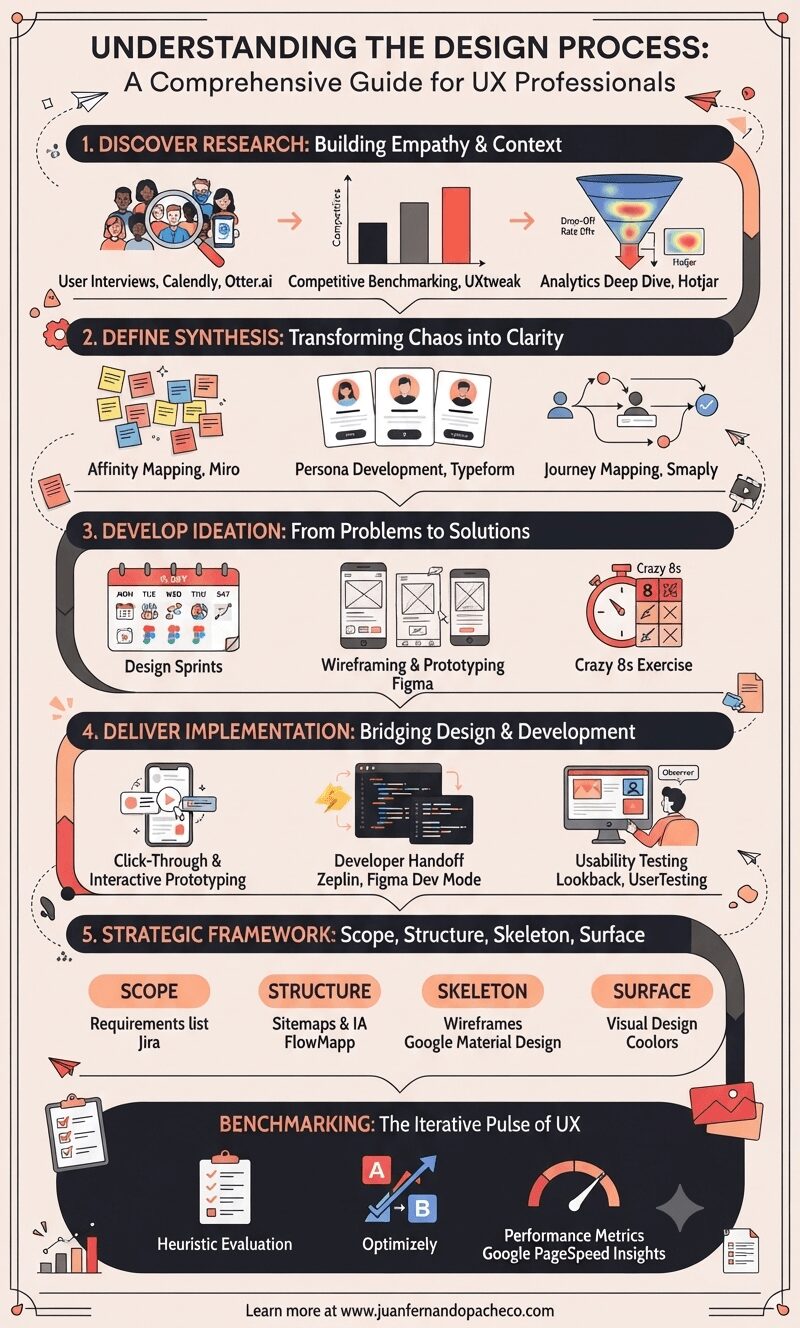
Mastering the design process requires balancing creativity with rigor.
By integrating tools like Figma for prototyping, Miro for synthesis, and Optimizely for testing, teams can deliver exceptional user experiences.
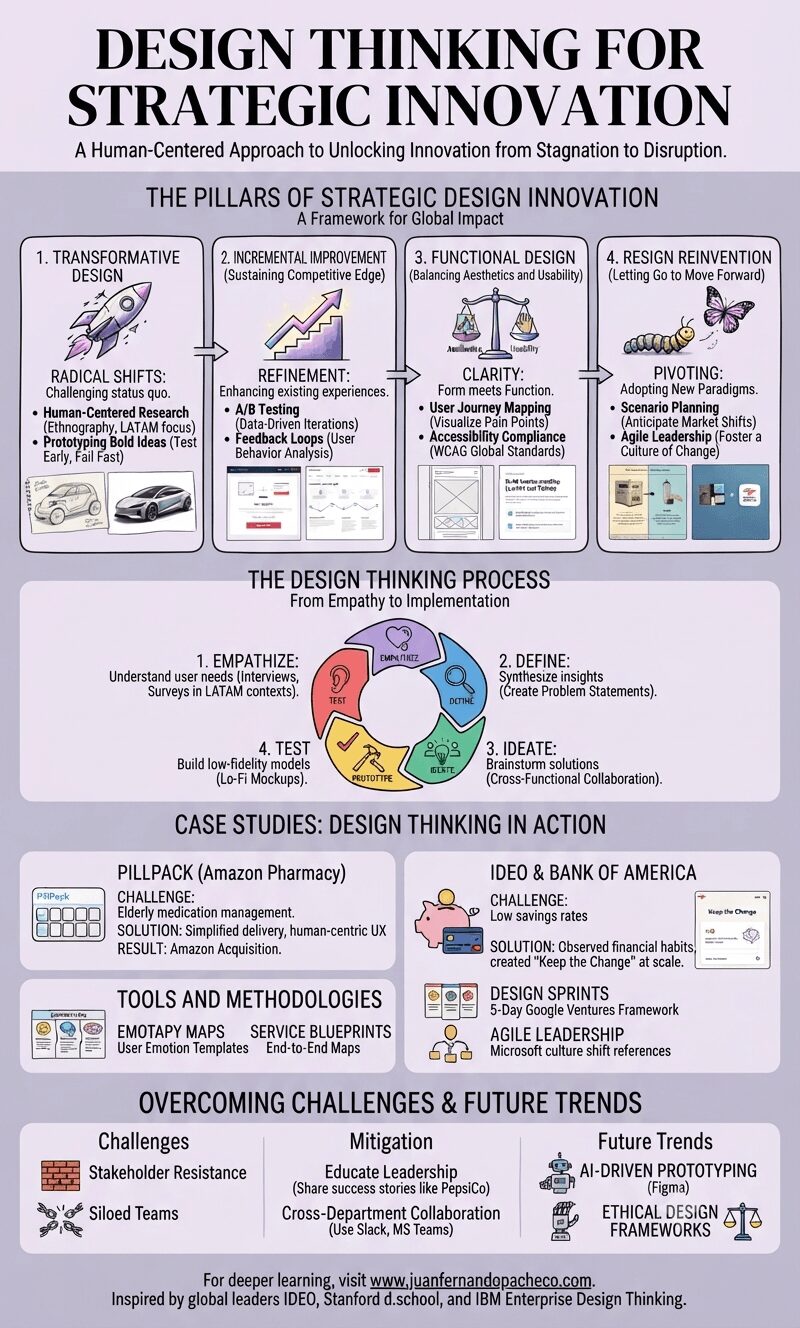
Design Thinking is more than a buzzword—it’s a human-centered approach to solving complex problems and unlocking strategic innovation.
By blending empathy, creativity, and iterative learning, organizations can pivot from stagnation to disruption. This post unpacks how Design Thinking intersects with four pillars of innovation: Transformative Design, Incremental Improvement, Functional Design, and Resign Reinvention.
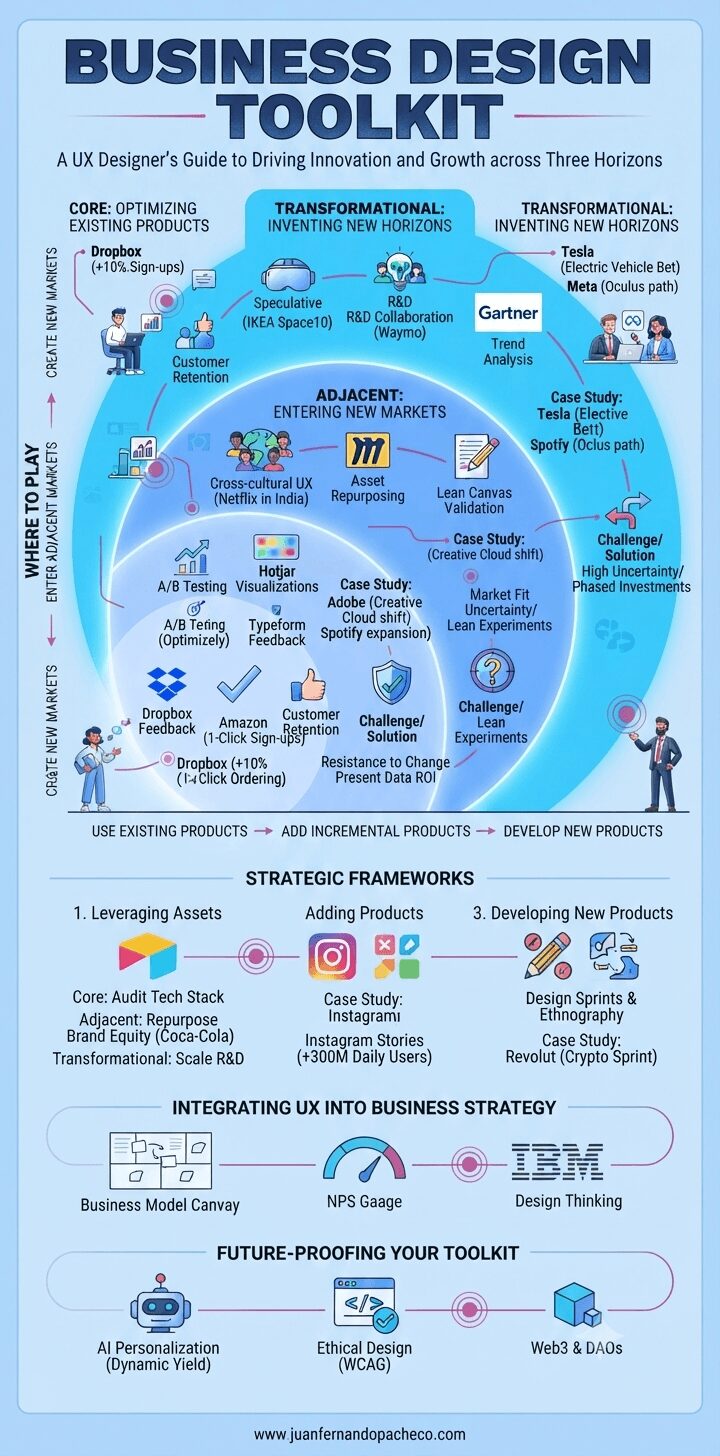
A business design toolkit is not static—it evolves with market shifts and technological advancements. By mastering Core optimization, Adjacent expansion, and Transformational disruption, UX designers can become strategic partners in driving sustainable growth.