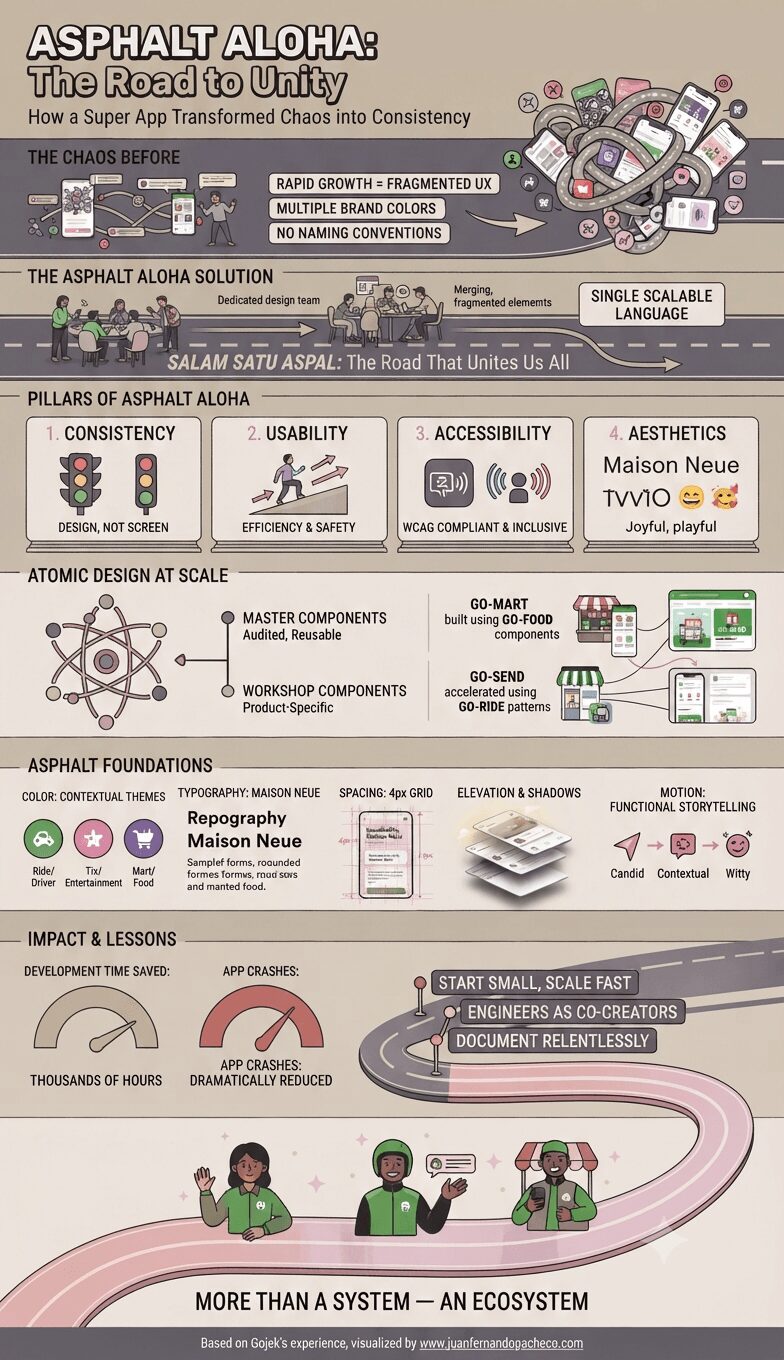
An infographic illustrating the transformation of Gojek's design system, "Asphalt Aloha," which unified fragmented app experiences into a single, scalable ecosystem across Southeast Asia. The graphic follows a "road" metaphor, starting with a tangle of screens labeled "The Chaos Before" and progressing to "The Asphalt Aloha Solution," detailing the system's pillars, atomic design methodology, and impact.

Asphalt Aloha is a love letter to Gojek’s users—a bridge between drivers in Jakarta and merchants in Singapore. It proves that design systems aren’t constraints; they’re enablers of creativity and accelerators of innovation.

As Gojek expands across Southeast Asia, Asphalt ensures that every pixel whispers the same promise: “We’re with you on this road.”

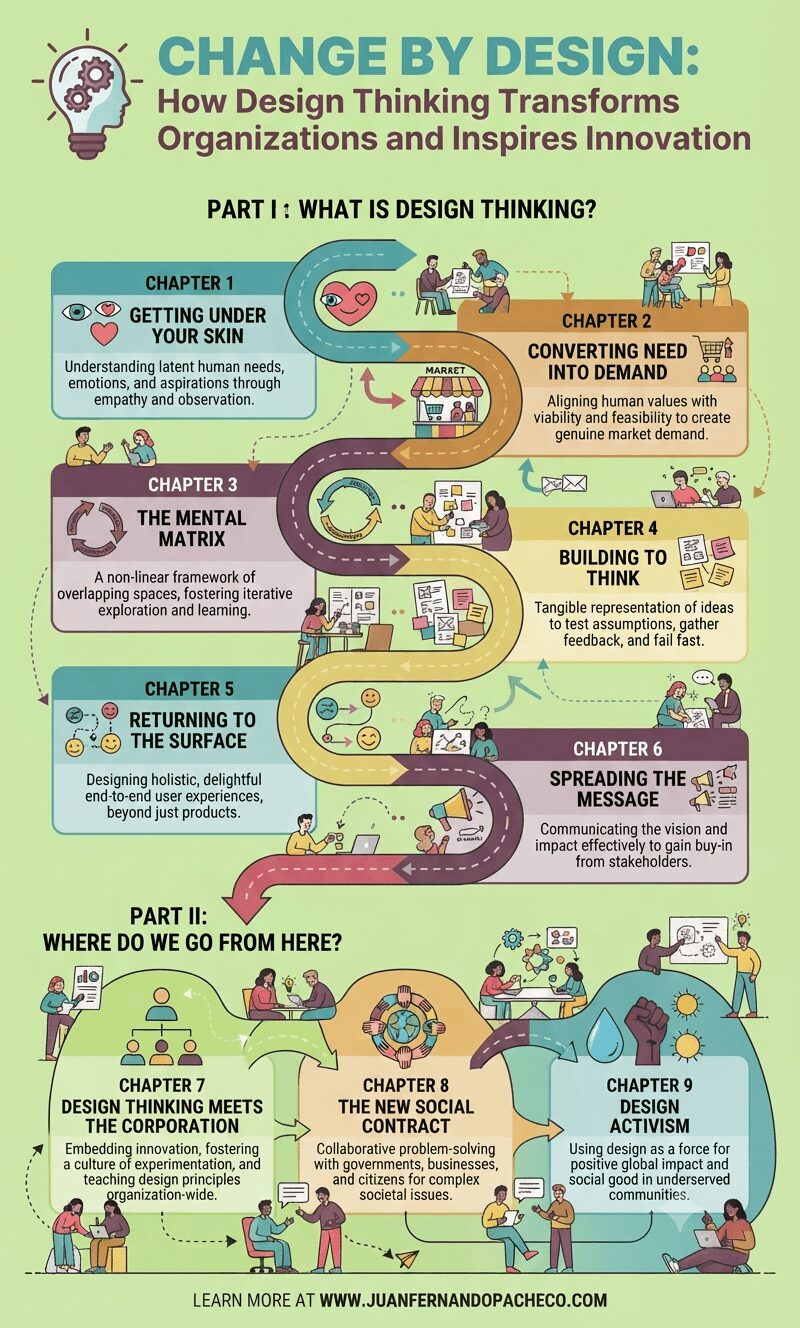
An infographic titled "CHANGE BY DESIGN: How Design Thinking Transforms Organizations and Inspires Innovation." The image is structured as a winding, colorful path with illustrated icons and text blocks representing the ten chapters and introduction of Tim Brown's book. The light green background (#c3e991) is overlaid with a vibrant palette of teals, maroons, oranges, and yellows, featuring small illustrations of diverse people collaborating, brainstorming, and prototyping.

In essence, “Change by Design” is a powerful testament to the transformative potential of design thinking. Tim Brown meticulously dismantles traditional notions of design, repositioning it as a versatile and potent tool for innovation that extends far beyond aesthetics.

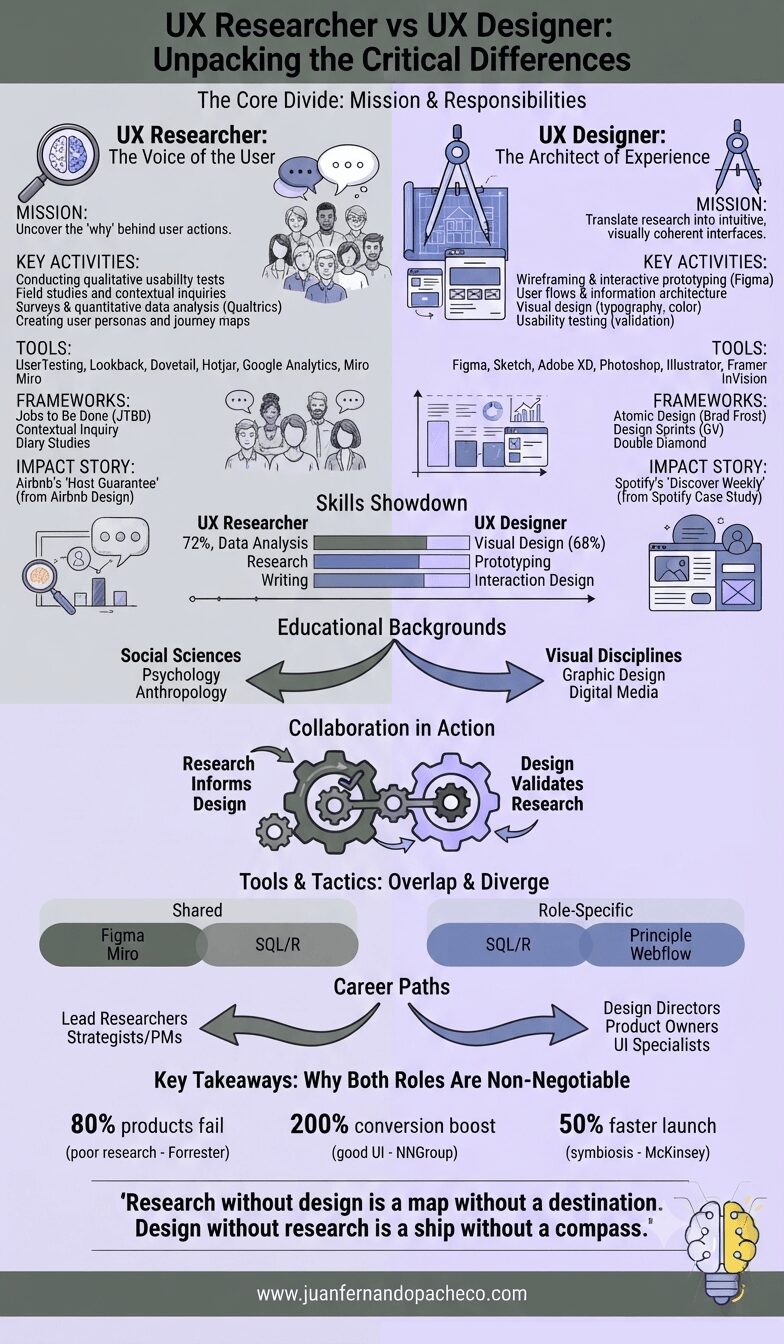
An infographic comparing UX Researchers and UX Designers, detailing their missions, key activities, tools, frameworks, skills showdown, educational backgrounds, collaboration, and career paths, styled in soft purple tones with references to www.juanfernandopacheco.com.

UX Researchers and Designers aren’t rivals—they’re co-pilots navigating the same destination: user delight. Researchers illuminate the path with data; designers pave it with ingenuity. In an era where user expectations skyrocket daily, investing in both isn’t optional—it’s existential.

“Research without design is a map without a destination. Design without research is a ship without a compass.”

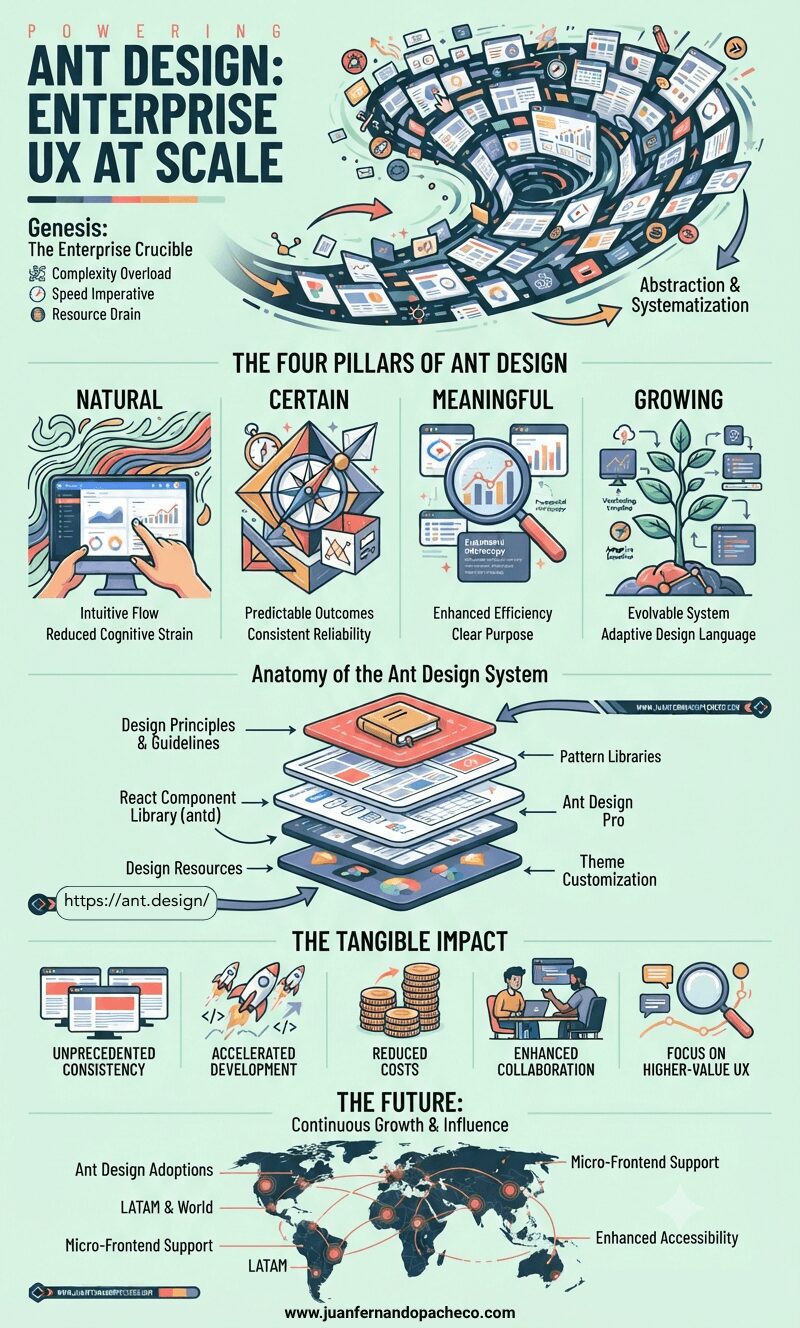
An infographic illustrating the Ant Design system, detailing its origins in the "enterprise crucible" of complexity, its four core values (Natural, Certain, Meaningful, Growing), the anatomy of its toolkit (React library, Ant Design Pro, design resources), tangible impacts like accelerated development and consistency, and its global future. The infographic includes references to www.juanfernandopacheco.com.

Ant Design is far more than a collection of React components. It represents a mature, battle-tested approach to taming the inherent complexity of enterprise software development.

By anchoring itself in strong design values – Natural, Certain, Meaningful, and Growing – it provides a holistic solution that boosts efficiency, enforces consistency, and elevates the user experience.

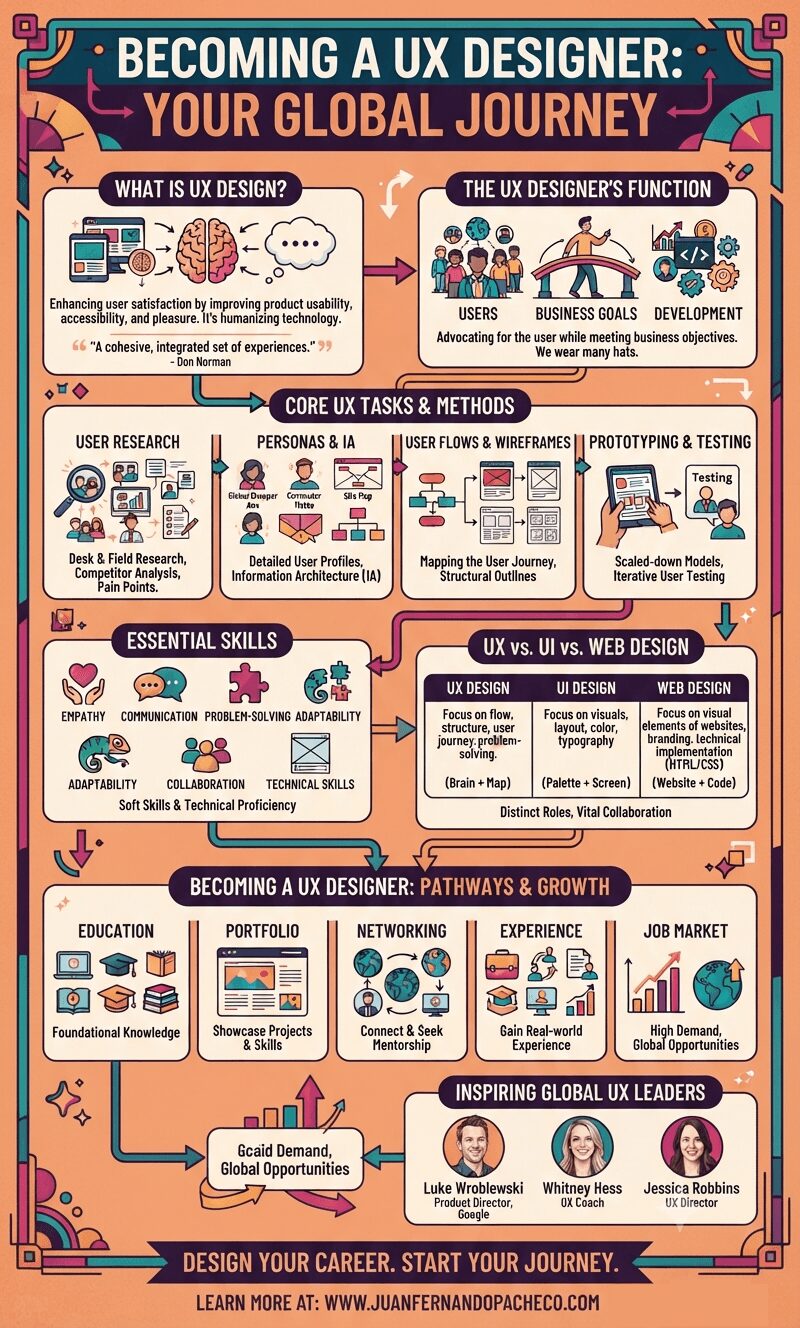
An intricate infographic titled "BECOMING A UX DESIGNER: YOUR GLOBAL JOURNEY" with a peach background. It outlines key UX concepts including definitions, the designer's function as a bridge between users and business, core methodologies (research, personas, flows, prototyping, testing), essential skills, comparisons to UI and web design, career paths (education, portfolio, networking), and features three inspiring leaders. Arrows connect the sections, and a footer directs to www.juanfernandopacheco.com.

Becoming a UX Designer: Learn User Experience Design by William N. Aldrich serves as a foundational guide for anyone looking to enter or better understand the field of User Experience (UX) design. The book aims to demystify UX design, clarifying its purpose, the responsibilities of a UX designer, and the essential skills required to succeed in this dynamic profession.