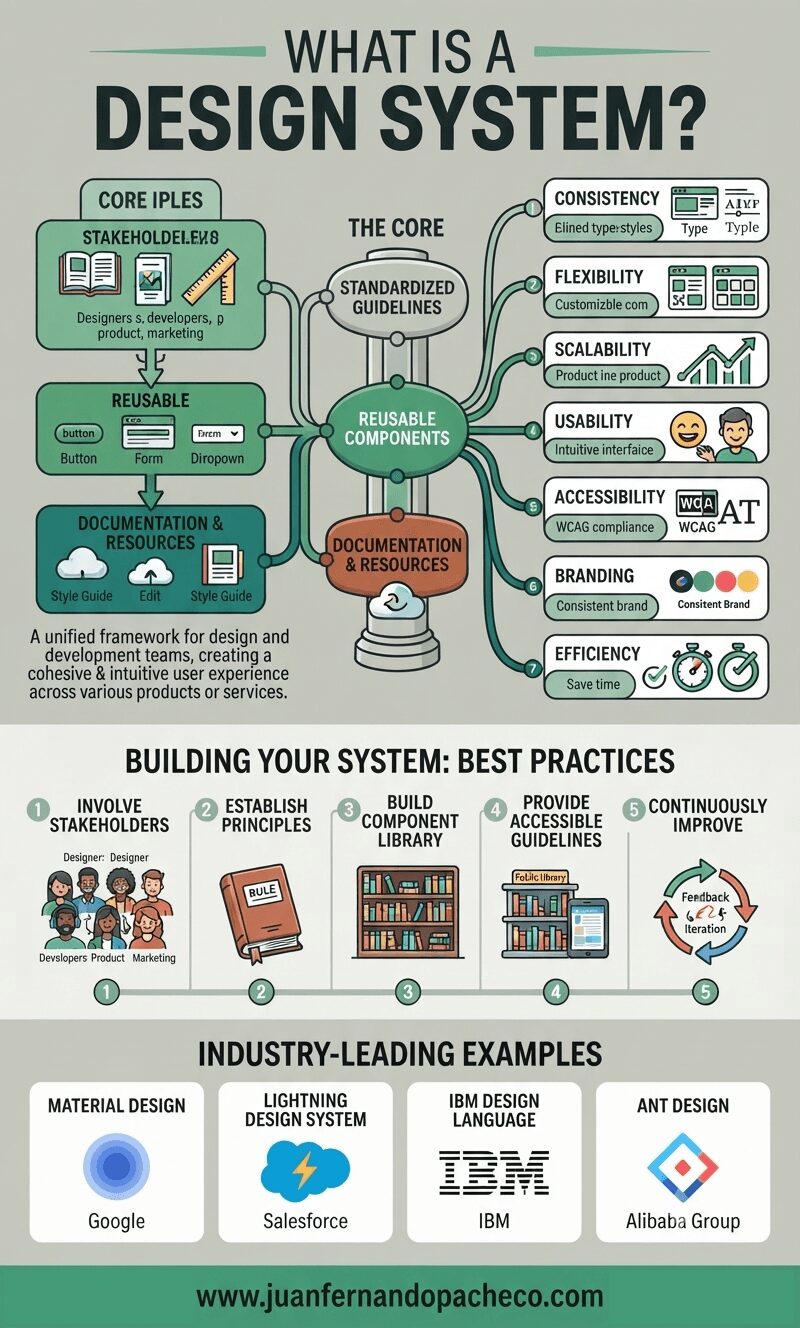
A detailed vertical infographic titled "WHAT IS A DESIGN SYSTEM?" presented on a sage-green background with a custom color palette. The image is organized into three main sections: "THE CORE," "BUILDING YOUR SYSTEM: BEST PRACTICES," and "INDUSTRY-LEADING EXAMPLES."

A design system is a powerful tool that drives consistency, efficiency, and innovation in product design. By adopting a design system, organizations can deliver cohesive and intuitive user experiences while streamlining their workflows.

Whether you’re developing your first system or refining an existing one, following the principles and best practices outlined in this guide will set you on the path to success.
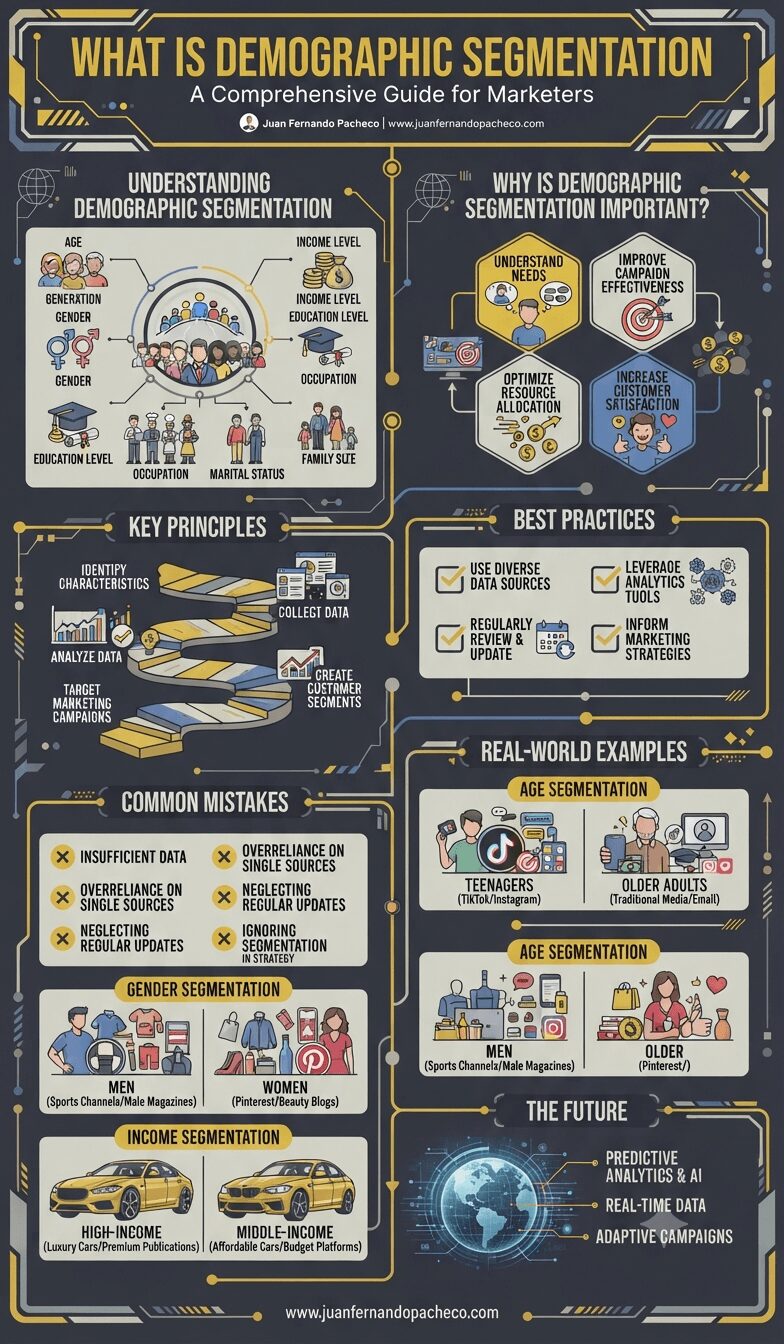
An infographic titled "What is Demographic Segmentation," designed with a dark background and yellow/blue accents. The chart visually explains the concept of dividing an audience based on shared characteristics like age, gender, and income. It covers key principles, importance, best practices, common mistakes, real-world examples (such as luxury vs. affordable cars and TikTok vs. traditional media), and future trends like AI analytics. The footer includes the URL www.juanfernandopacheco.com.

Demographic segmentation is a powerful tool for marketers aiming to understand their audience and craft effective campaigns. By following best practices and avoiding common pitfalls, businesses can achieve better results, foster customer loyalty, and gain a competitive edge. Start implementing demographic segmentation today and watch your marketing efforts soar!

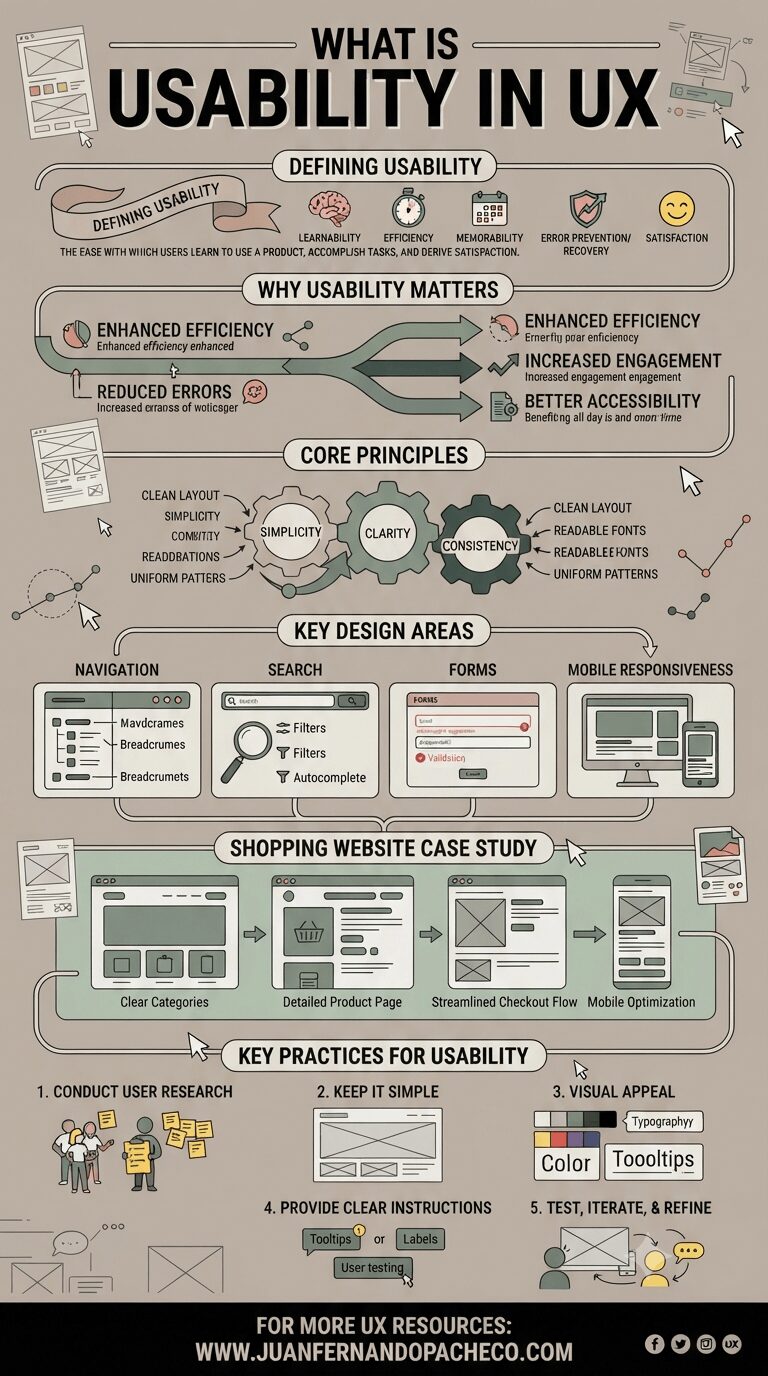
A detailed vertical infographic titled "WHAT IS USABILITY IN UX" illustrating the definition, importance, principles, key areas, and best practices of usability. It uses a muted color palette of beige, green, and dark gray against a light background, featuring icons, wireframes, and a shopping website case study.

Usability is the backbone of exceptional UX design, ensuring products are intuitive, efficient, and satisfying to use.

By focusing on simplicity, clarity, and consistency, and addressing critical areas like navigation, forms, and mobile responsiveness, designers can craft experiences that delight users.

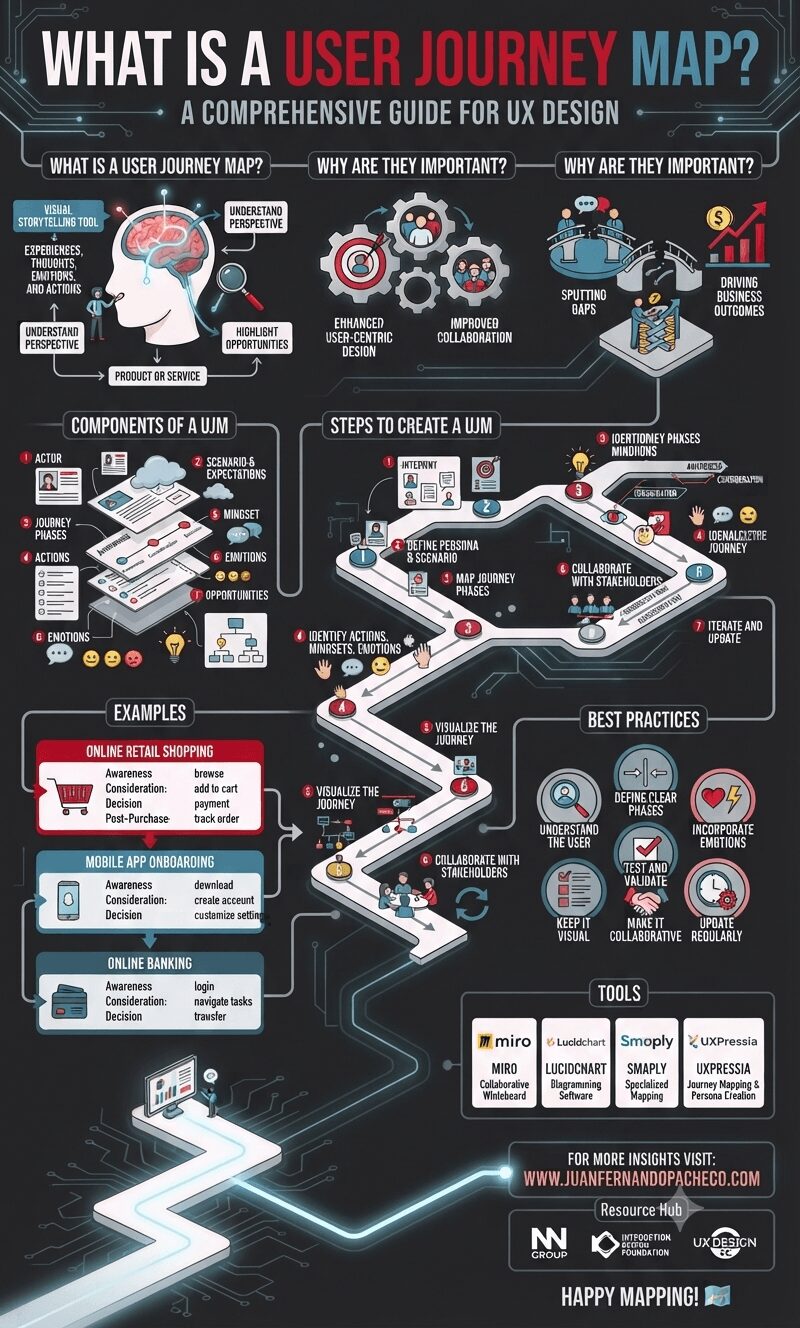
A detailed infographic titled "What is a User Journey Map?" set against a dark background with a glowing, circuit-like path. The infographic is structured in vertical sections, starting with the definition and importance of User Journey Maps. It then details the core components (Actor, Scenario, Phases, Actions, Mindset, Emotions, Opportunities, Visualization) and outlines a 7-step creation process. Following this, it provides three distinct examples (Online Retail Shopping, Mobile App Onboarding, Online Banking) and lists best practices and popular tools (Miro, Lucidchart, Smaply, UXPressia). The bottom section includes the URL "WWW.JUANFERNANDOPACHECO.COM" and resource logos.

A User Journey Map is an indispensable tool in UX design, enabling teams to create user-centric products and services. By capturing the user’s actions, emotions, and pain points, it provides valuable insights that drive innovation and improve overall user satisfaction.

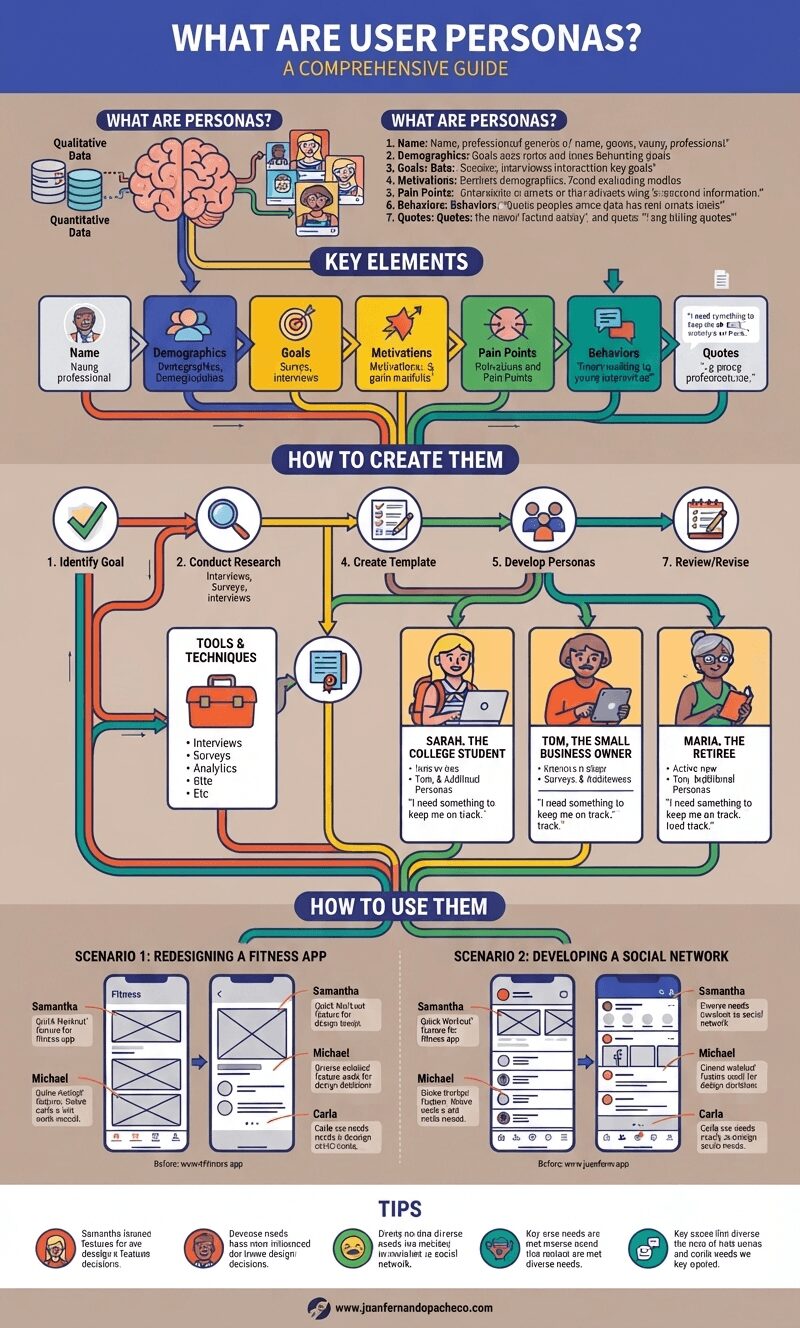
A detailed infographic titled "WHAT ARE USER PERSONAS? A COMPREHENSIVE GUIDE," set against a muted, earthy background. The image is a flowchart and structured text guide that explains user personas. It features sections for "What are Personas?" with a brain icon and data inputs, "Key Elements" with seven categorized steps, "How to Create Them" with a seven-step process, "Tools & Techniques," and "How to Use Them" with two detailed scenarios (Redesigning a Fitness App, Developing a Social Network). It concludes with "Tips." The infographic includes illustrative portraits of Sarah, Tom, and Maria, and app wireframe examples. The URL www.juanfernandopacheco.com is at the bottom.

In the world of user experience (UX) design, User Personas play a pivotal role. These fictional, yet representative, characters embody the different types of users for a product or service.

Crafted from extensive research and data, personas help designers and stakeholders understand the diverse needs, goals, and behaviors of their target audience. In this blog post, we’ll dive deep into the concept of user personas, how to create them, and their role in the design process.

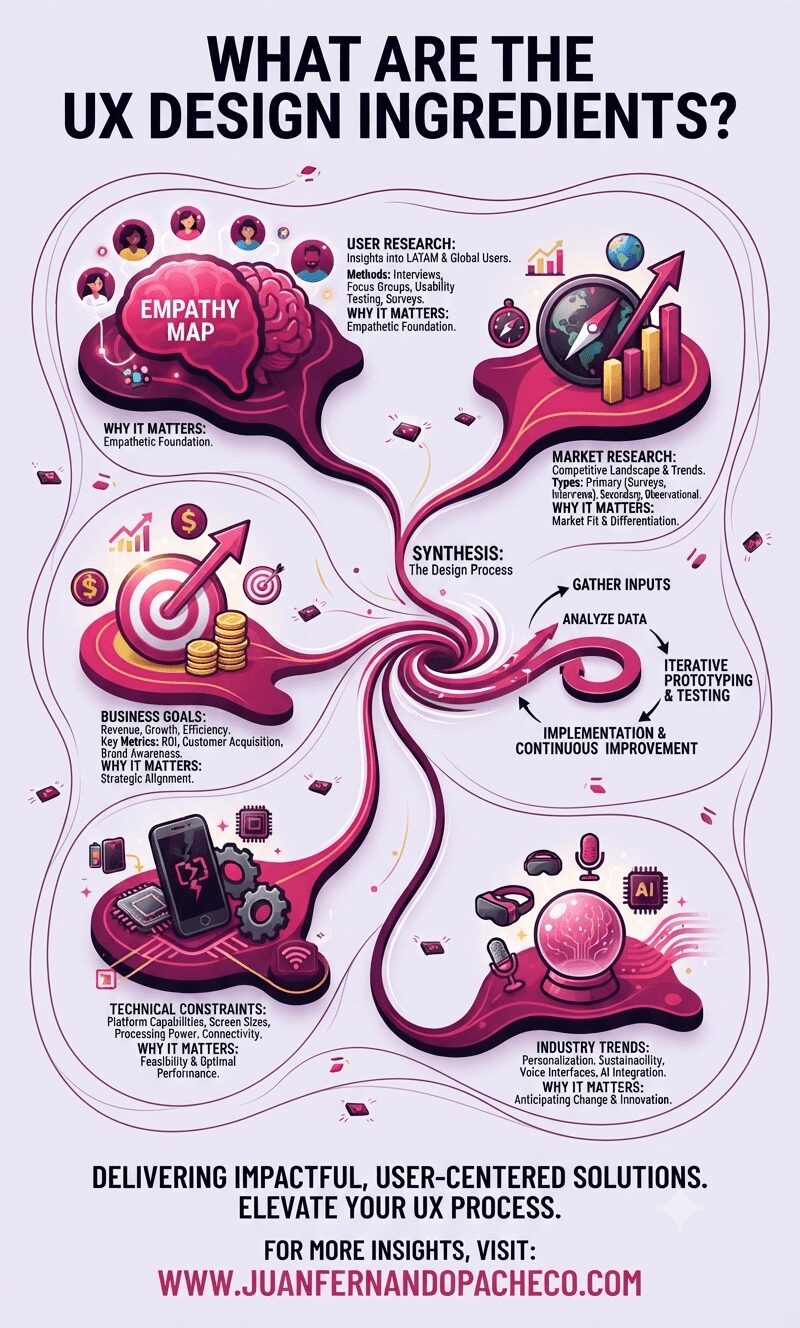
An illustrative infographic titled "WHAT ARE THE UX DESIGN INGREDIENTS?" displayed against a light purple background. It features five distinct, interconnected sections—User Research, Market Research, Business Goals, Technical Constraints, and Industry Trends—represented by 3D icons like a brain, compass, target, broken phone, and crystal ball. These sections flow into a central spiral labeled "Synthesis: The Design Process." Below the diagram, the text reads: "DELIVERING IMPACTFUL, USER-CENTERED SOLUTIONS. ELEVATE YOUR UX PROCESS." followed by the website "WWW.JUANFERNANDOPACHECO.COM".

UX design (user experience design) is a multifaceted field requiring the integration of diverse inputs to create user-centric solutions.

The term “UX design ingredients” refers to the core elements that inform and shape the design process. These ingredients provide the foundation for building products and services that meet both user needs and business goals.

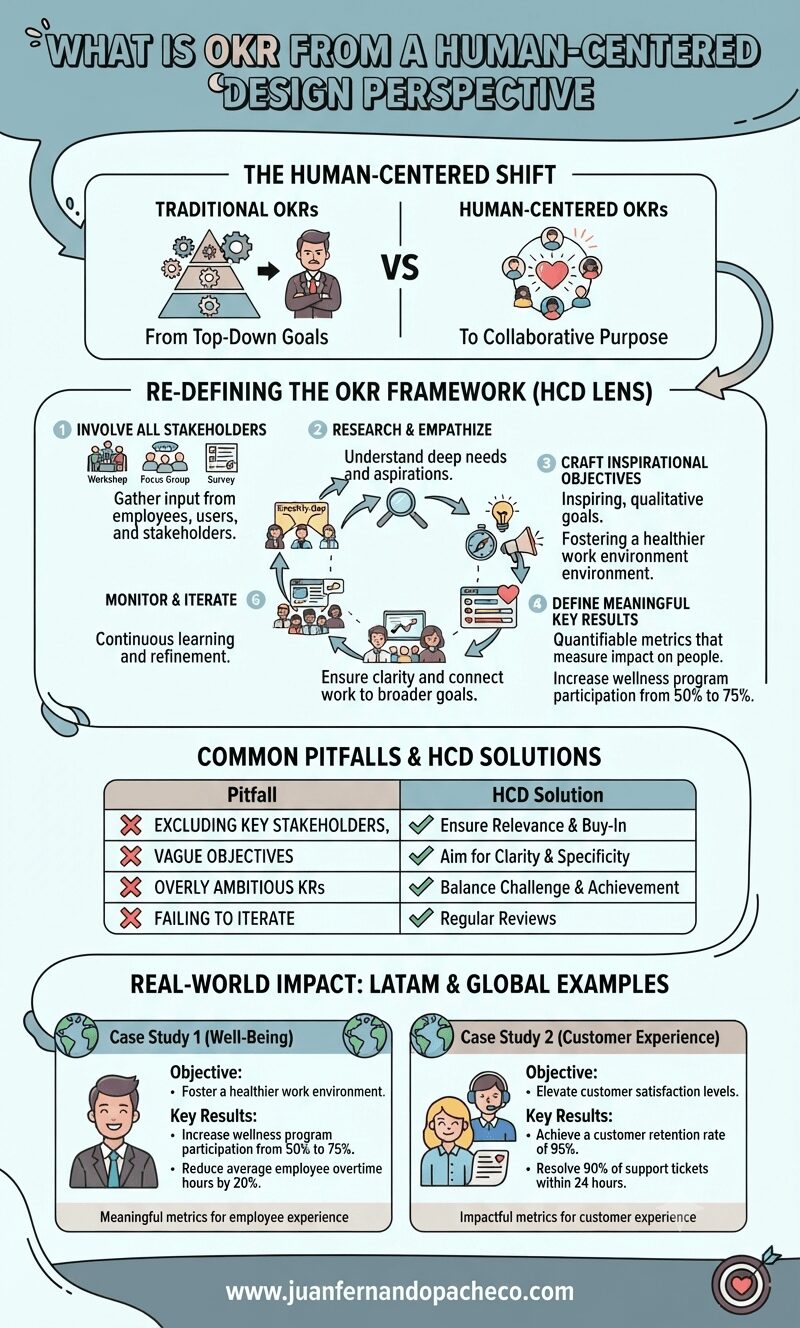
An infographic titled "What is OKR from a Human-Centered Design Perspective" illustrates a six-step framework for setting goals with empathy and collaboration. It compares traditional top-down goal setting with human-centered approaches, lists common pitfalls and solutions, and provides real-world examples for employee well-being and customer experience. The design uses a color palette of teal, cream, mauve, and grey. The footer includes the website www.juanfernandopacheco.com.

OKRs, or “Objectives and Key Results,” are a widely used framework for setting, tracking, and achieving goals within organizations.
Originally developed at Intel in the 1970s and later popularized by John Doerr in Measure What Matters, OKRs have become a cornerstone of goal management for companies like Google, LinkedIn, and Twitter.

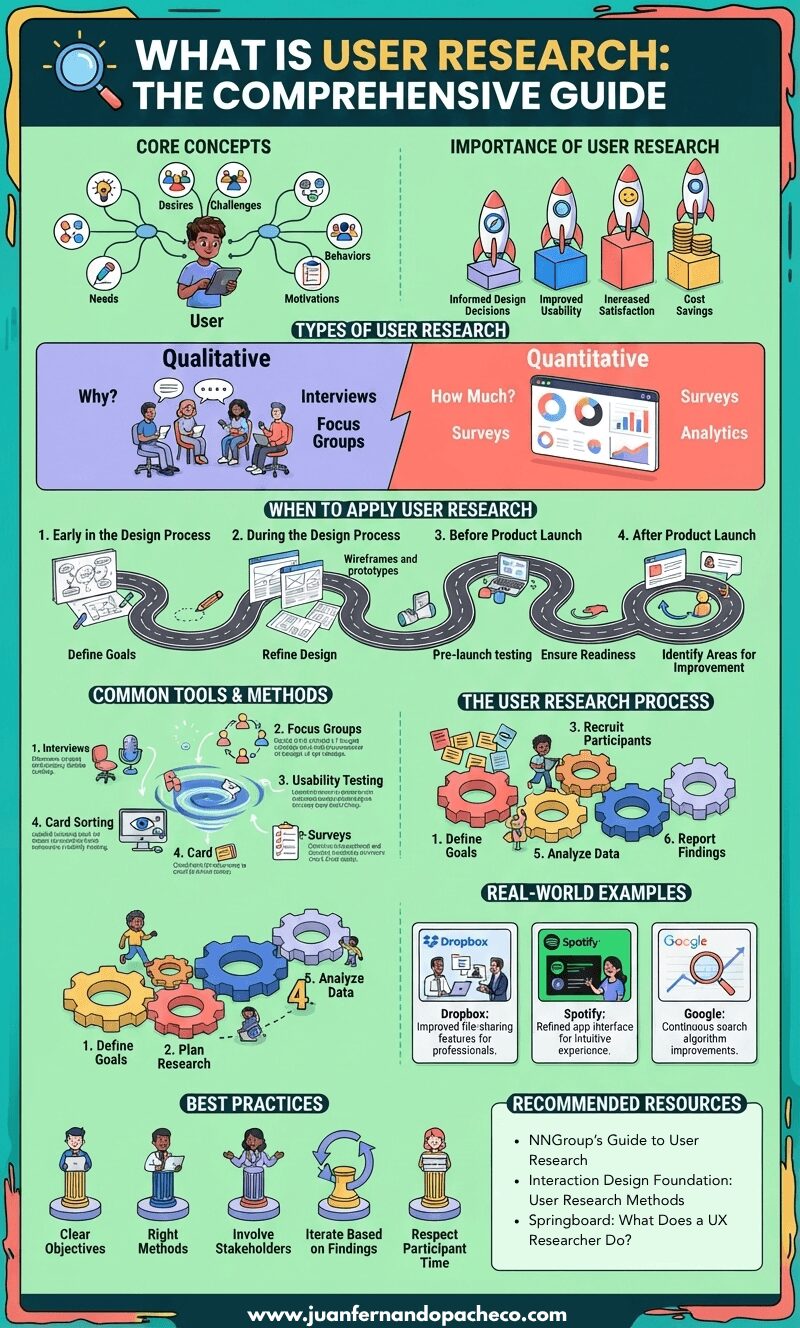
Infographic titled "What is User Research: The Comprehensive Guide" featuring sections on core concepts, importance, qualitative and quantitative types, a timeline of when to apply research, common tools, the research process, real-world examples, best practices, and recommended resources, all grounded in a user-centered design approach.

User research is the process of analyzing, studying, and understanding the needs, desires, challenges, behaviors, and motivations of the people who use a product or service.

It’s typically conducted to inform the design of new products or features or to improve an existing product. By uncovering how real users interact with a product, user research ensures that your designs are grounded in reality rather than assumptions.