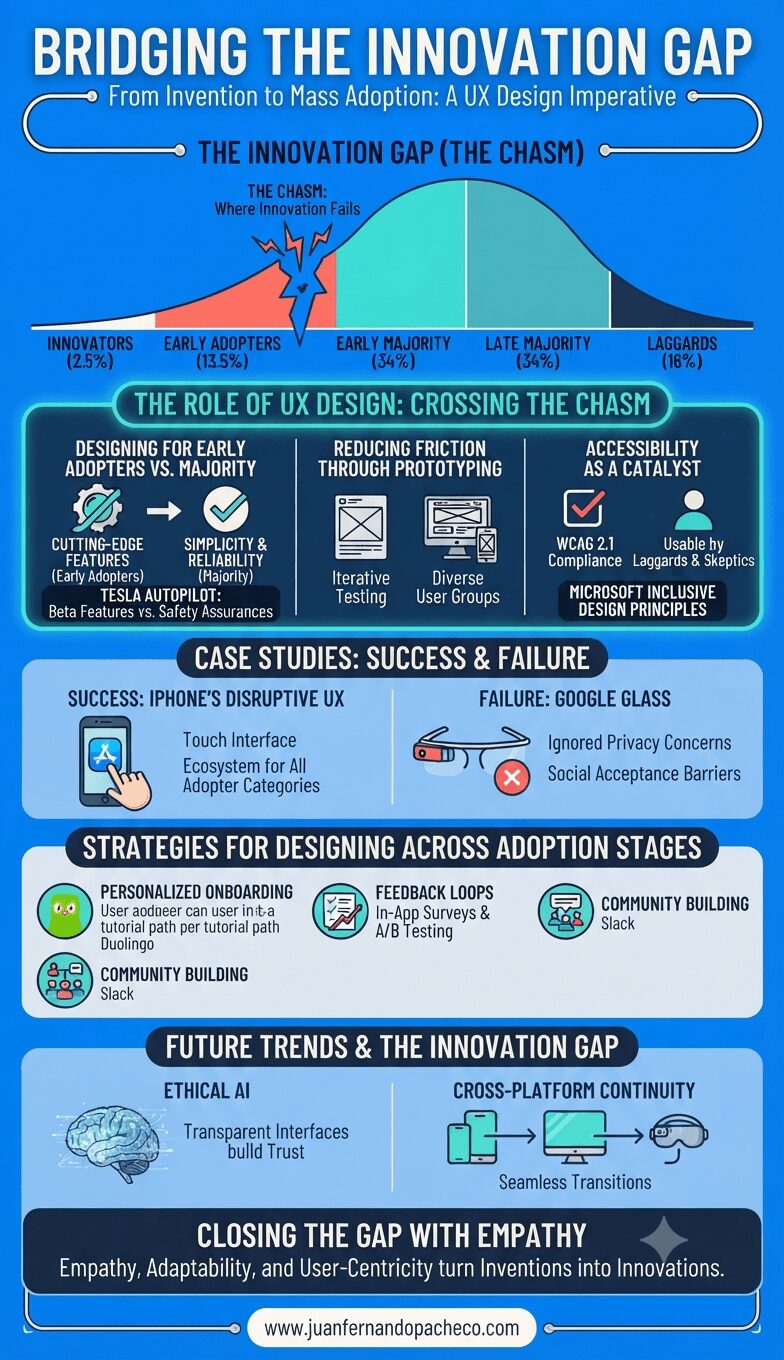
An infographic titled "Bridging the Innovation Gap: From Invention to Mass Adoption" with a central bell curve graph showing adopter categories and a "Chasm" between Early Adopters and Early Majority. Below, sections detail "The Role of UX Design," "Case Studies: Success & Failure" (iPhone vs. Google Glass), "Strategies," "Future Trends," and "Conclusion." The design uses blue, navy, coral, and teal colors.

Bridging the innovation gap requires more than technical prowess—it demands empathy, adaptability, and relentless user-centricity. By leveraging UX research, inclusive design, and iterative testing, designers can turn groundbreaking inventions into indispensable innovations.

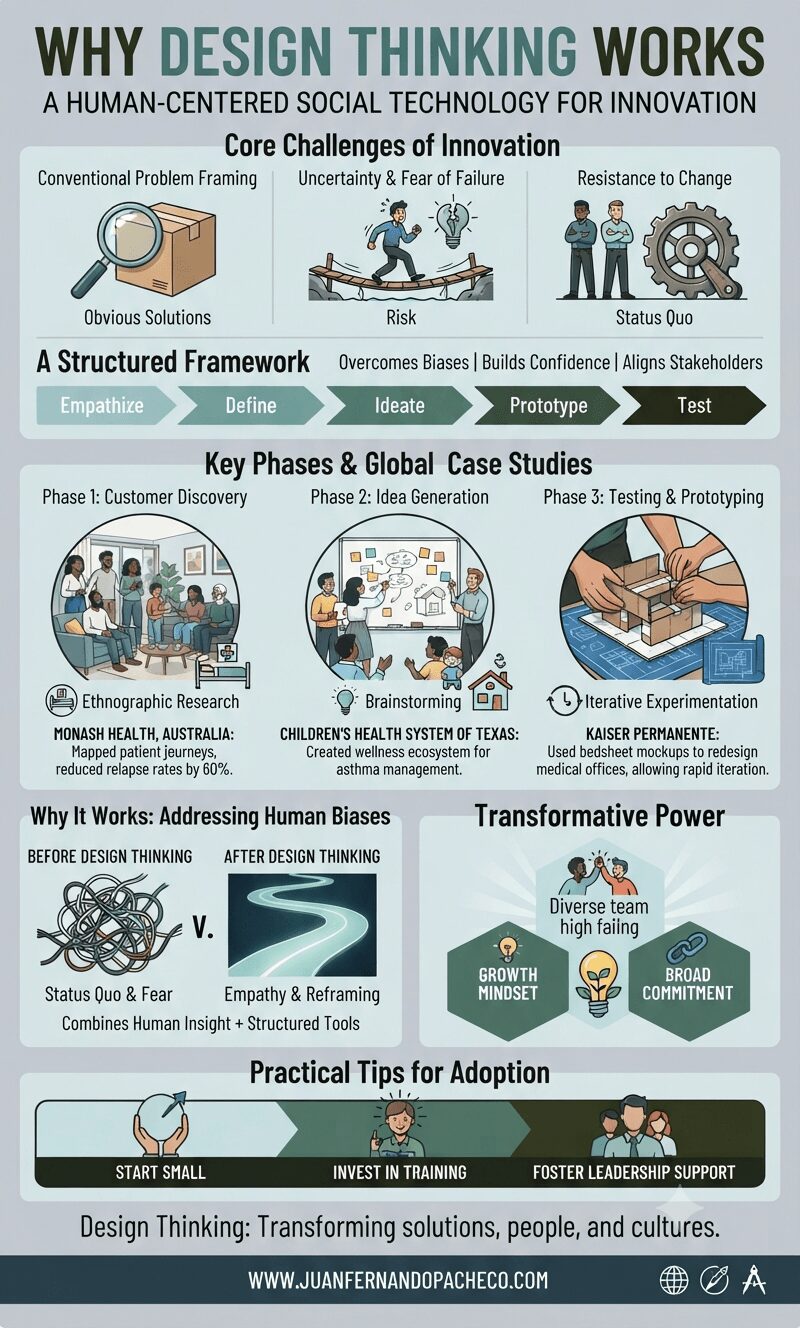
An infographic titled "Why Design Thinking Works" detailing the methodology's core principles, phases, and impact through text blocks and illustrations, including global case studies from Monash Health, Children's Health System of Texas, and Kaiser Permanente. The footer includes the URL WWW.JUANFERNANDOPACHECO.COM.

Design Thinking works because it combines the best of human insight with structured tools to drive innovation.

By addressing biases, fostering collaboration, and emphasizing empathy, it transforms not only the solutions organizations create but also the people and cultures behind them. As a social technology, its potential to reshape industries is unparalleled, making it a cornerstone of modern innovation strategies.

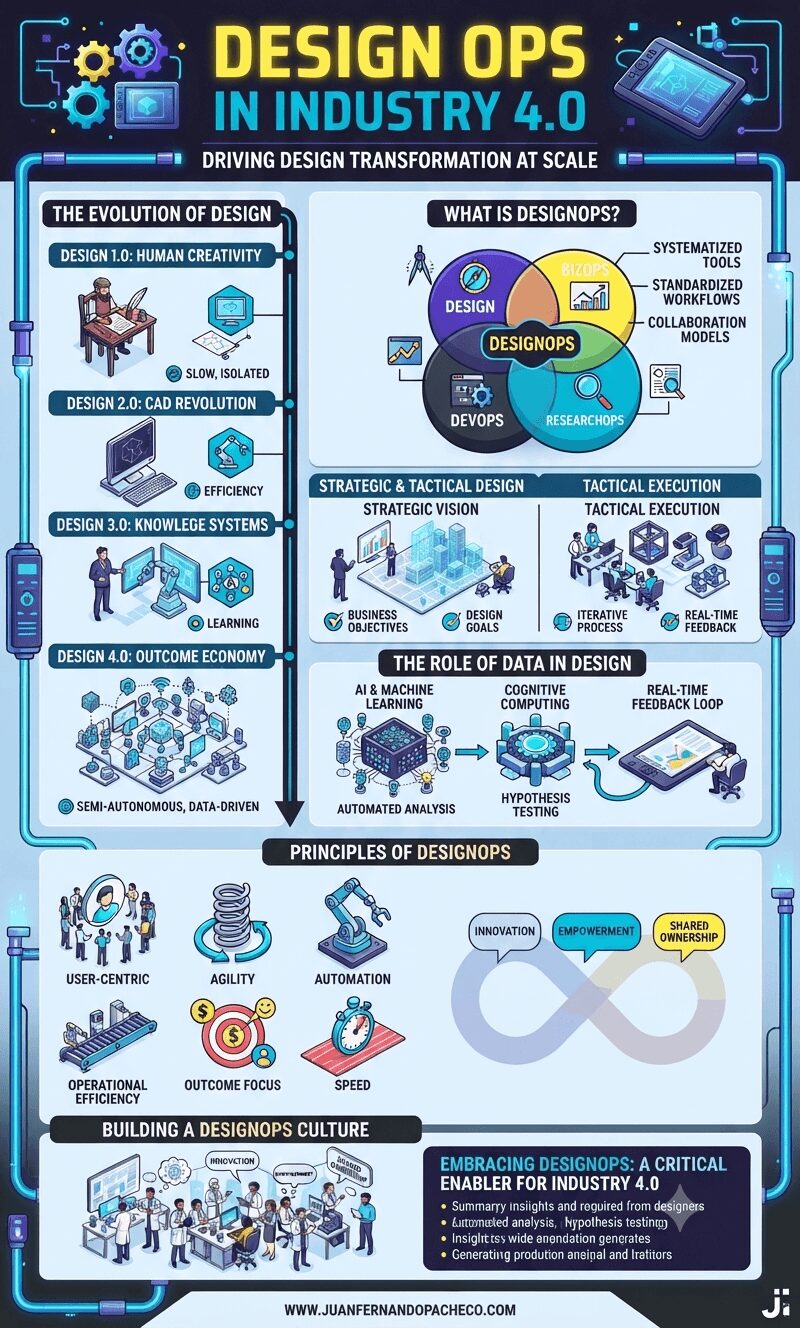
A comprehensive vertical infographic titled "Design Ops in Industry 4.0: Driving Design Transformation at Scale," with a new color palette of light blues, purples, teals, and yellow accents against a #edf5fc background. The infographic is structured in clear, stacked sections: "The Evolution of Design" (1.0 to 4.0), a central "What is DesignOps?" Venn diagram, "Strategic & Tactical Design," "The Role of Data in Design," "Principles of DesignOps" (User-Centric, Agility, Automation, Operational Efficiency, Outcome Focus, Speed), "Building a DesignOps Culture," and "Embracing DesignOps: A Critical Enabler for Industry 4.0." Small illustrations, icons, and connecting lines guide the eye. The bottom includes a reference to www.juanfernandopacheco.com.

As organizations navigate the complexities of Industry 4.0, DesignOps emerges as a critical enabler of success. By operationalizing design, fostering collaboration, and leveraging data, companies can deliver innovative solutions at scale.

Embracing DesignOps is not just about optimizing processes; it’s about transforming how businesses think, design, and deliver value in a rapidly changing world.

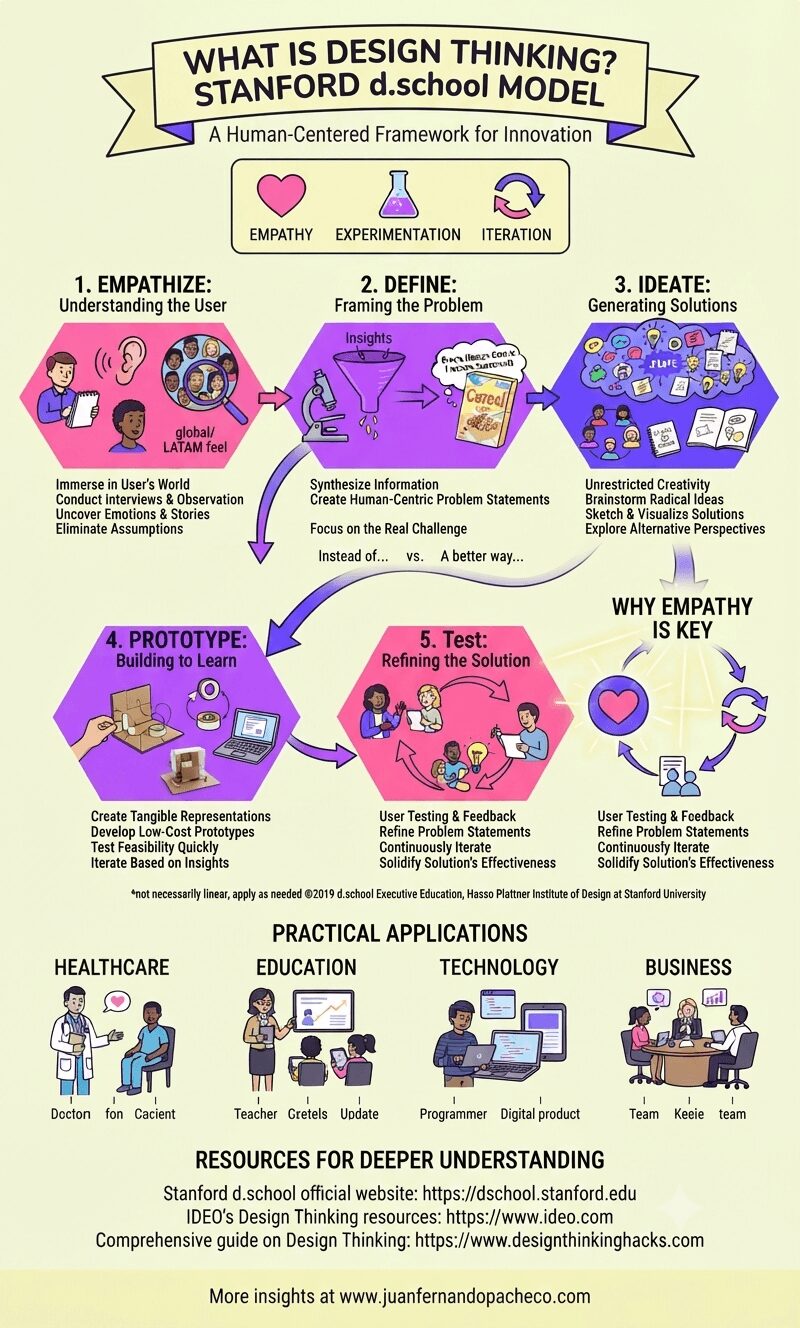
Infographic illustrating the five stages of the Stanford d.school Design Thinking model: Empathize, Define, Ideate, Prototype, and Test, presented as an interconnected, non-linear process with examples and applications for a global and LATAM context.

The Stanford d.school’s Design Thinking model is more than a methodology; it’s a mindset that fosters creativity, innovation, and human-centered problem-solving.

By emphasizing empathy, iteration, and flexibility, it equips teams to tackle complex challenges and deliver impactful solutions.

Whether you’re a seasoned designer or a newcomer to the field, embracing this model can transform how you approach problems, unlocking new possibilities for success.

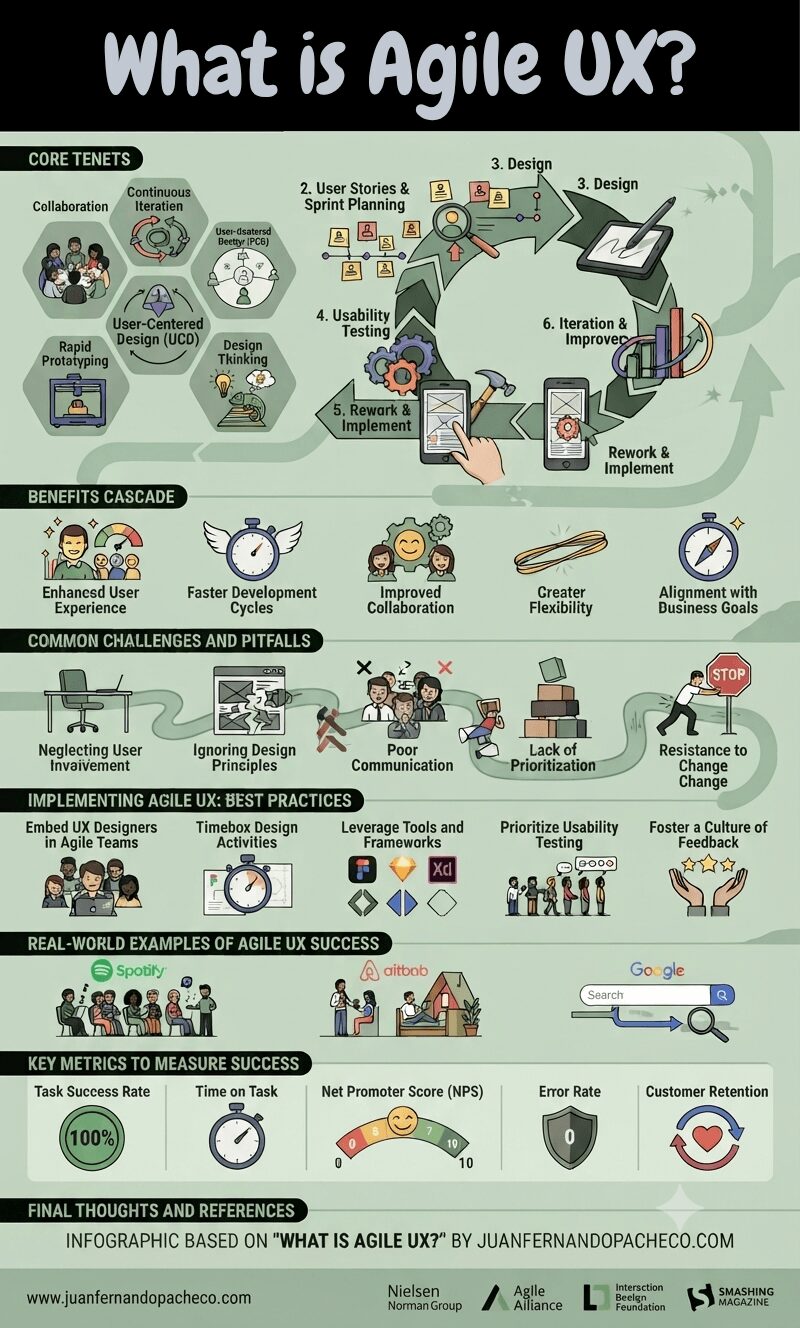
A detailed infographic titled "WHAT IS AGILE UX?" presented as a structured guide on a light green background. It covers six main sections: "CORE TENETS" (Collaboration, Continuous Iteration, User-Centered Design, Rapid Prototyping, Design Thinking, Design), the "AGILE UX PROCESS" (a 6-step circular flow from Planning to Iteration), "BENEFITS CASCADE" (User Experience, Development Cycles, Collaboration, Flexibility, Business Goals), "COMMON CHALLENGES AND PITFALLS" (Neglecting User Involvement, Ignoring Principles, Poor Communication, Lack of Prioritization, Resistance to Change), "IMPLEMENTING AGILE UX: BEST PRACTICES" (Embed Designers, Timebox Activities, Leverage Tools, Prioritize Testing, Foster Feedback), "REAL-WORLD EXAMPLES" (Spotify, Airbnb, Google), "KEY METRICS TO MEASURE SUCCESS" (Success Rate, Time on Task, NPS, Error Rate, Retention), and "FINAL THOUGHTS AND REFERENCES."

Agile UX is a user experience design methodology that integrates seamlessly with Agile software development principles.
It emphasizes collaboration, flexibility, and continuous iteration to create user-centric and high-quality products.

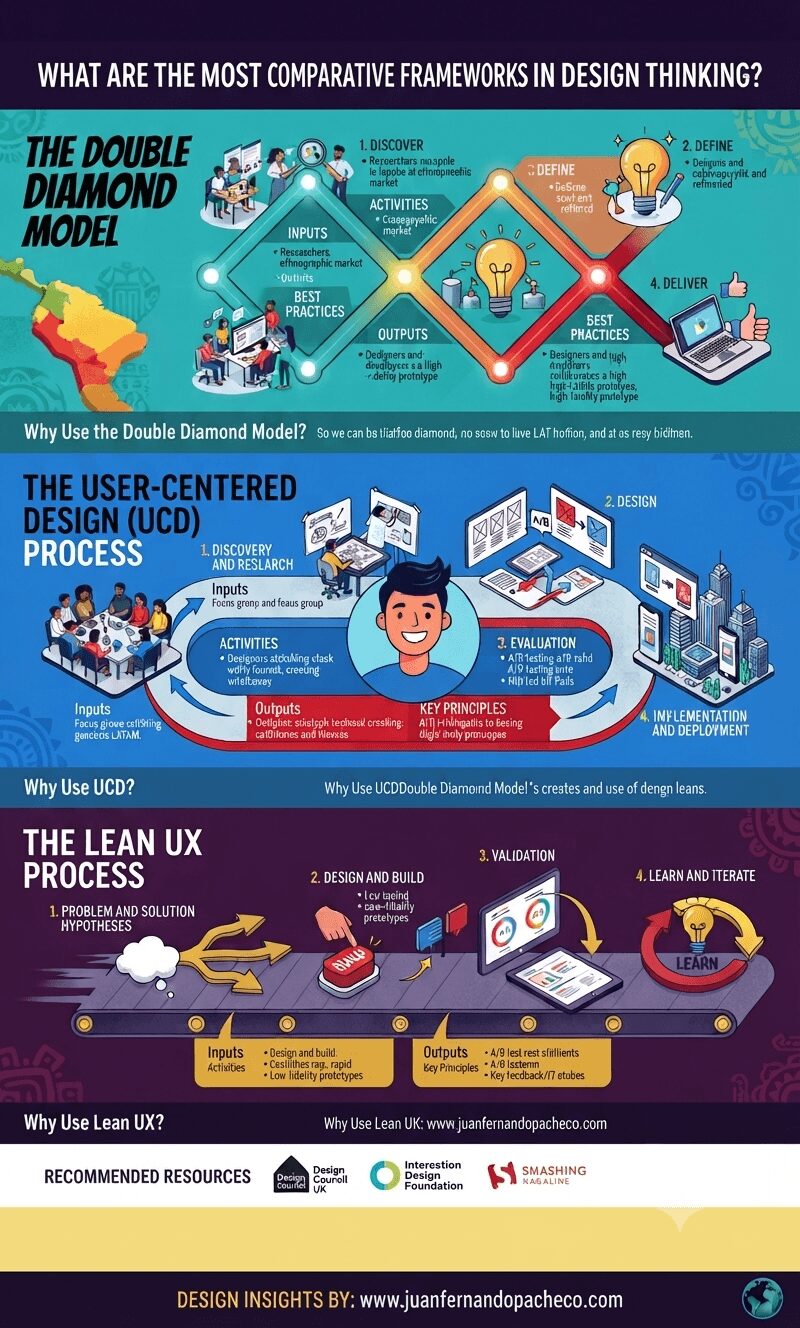
A comprehensive infographic comparing three design thinking frameworks: the Double Diamond Model, the User-Centered Design (UCD) Process, and the Lean UX Process. It details the stages, inputs, activities, outputs, and key principles for each, including illustrations of people, a map of Latin America, and a conveyor belt system for Lean UX.

Each of these frameworks—the Double Diamond model, UCD process, and Lean UX process—offers unique advantages. The Double Diamond excels in providing a structured approach to complex problems, UCD ensures user-centricity, and Lean UX fosters rapid experimentation and delivery. By understanding these methodologies, UX teams can choose the one that best aligns with their project goals and constraints.

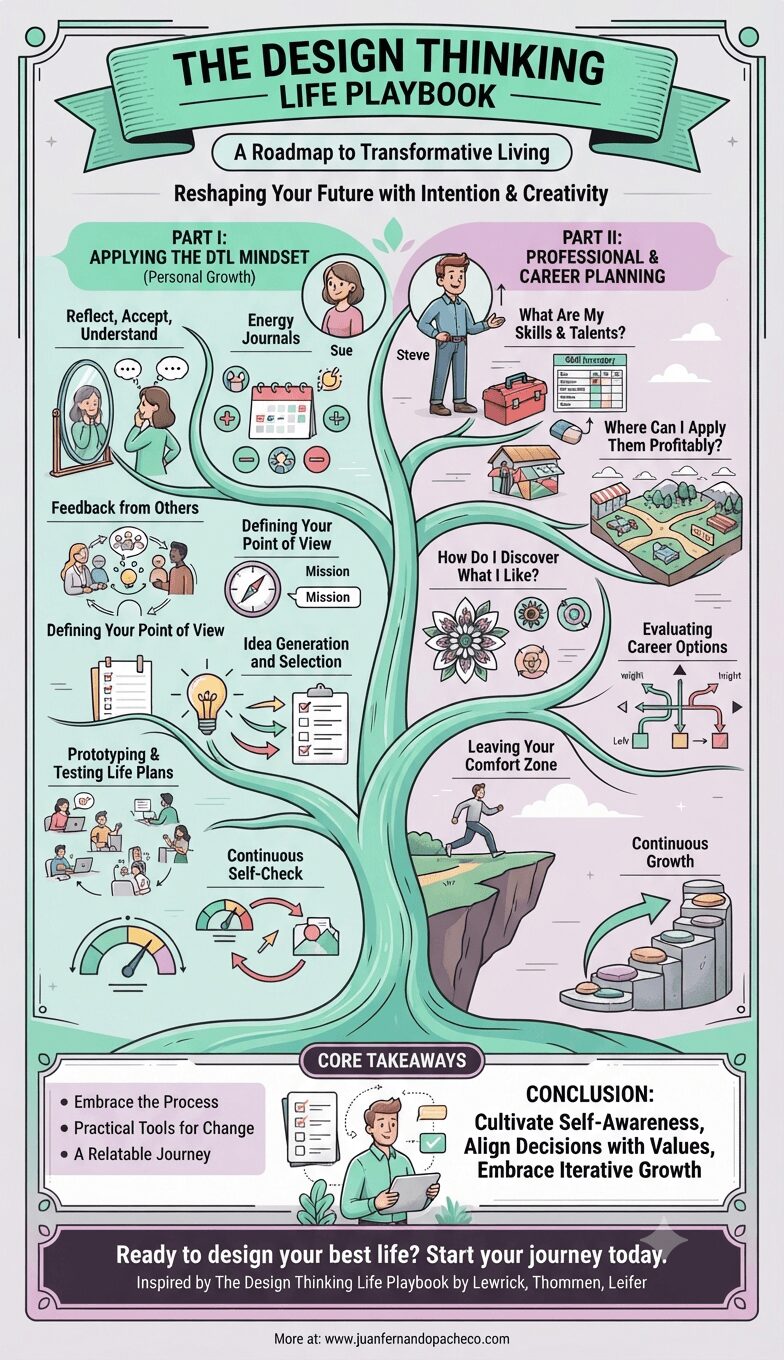
An infographic titled "The Design Thinking Life Playbook" presented as a branching tree diagram. The left side, "Applying the DTL Mindset," shows a character named Sue using methods like energy journals and prototyping life plans. The right side, "Professional and Career Planning," shows a character named Steve evaluating options and seeking growth. The base lists "Core Takeaways" and the URL www.juanfernandopacheco.com.

Navigating personal and professional transitions can feel overwhelming. The Design Thinking Life Playbook by Michael Lewrick, Jean-Paul Thommen, and Larry Leifer offers a groundbreaking guide to managing these shifts.

Rooted in design thinking principles, the book provides actionable strategies to reshape your future with intention and creativity. This blog post delves into the essence of the book, exploring its methodologies, insights, and transformative potential.