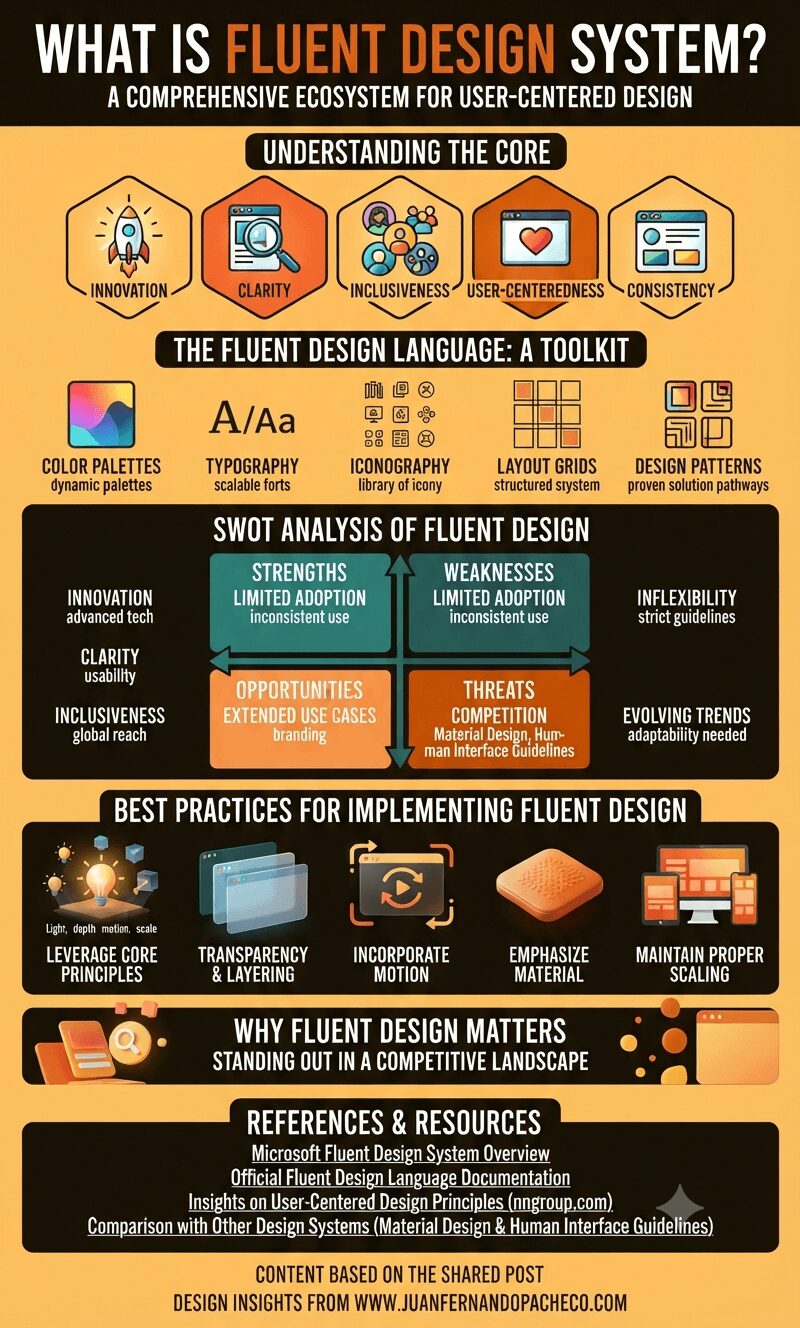
An infographic titled "What Is Fluent Design System?" featuring sections on its core principles, design toolkit, SWOT analysis, and best practices, all using a warm, orange-to-brown color palette.

Fluent Design is more than just a design system—it is a philosophy that prioritizes user satisfaction through innovation, inclusivity, and consistency. By creating interfaces that are both functional and aesthetically pleasing, Fluent Design helps Microsoft stand out in a competitive digital landscape.

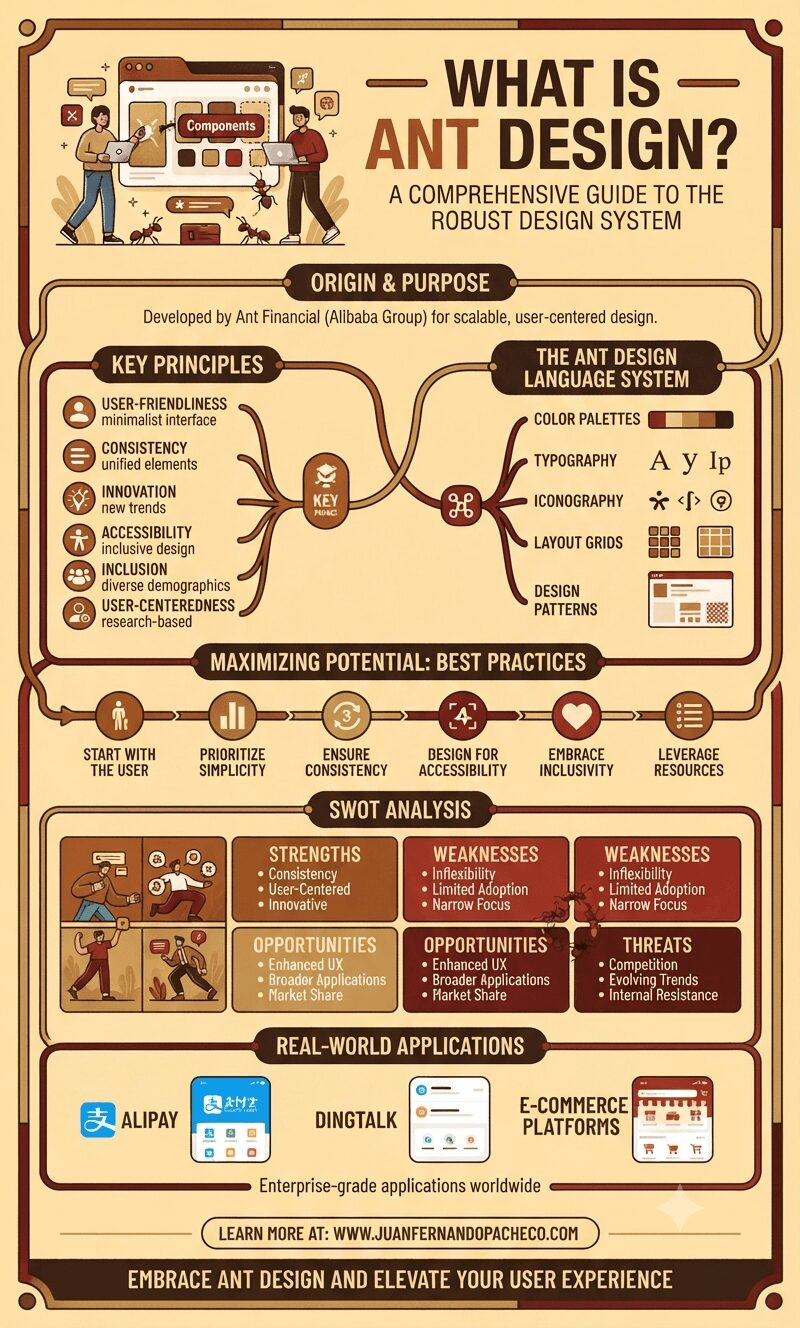
An infographic titled "What is Ant Design?" presented in a warm, vintage-inspired color palette of creams and browns. The infographic uses a flow-chart and diagram style to explain the design system, starting with its origin from Ant Financial. It covers Key Principles, The Ant Design Language System, Best Practices, a SWOT Analysis with illustrated sections, Real-World Applications like Alipay and DingTalk, and concludes with links to learn more at juanfernandopacheco.com.

Ant Design, is a robust design system developed by Ant Financial, a subsidiary of the Alibaba Group. The design system has rapidly gained traction among designers and developers for its ability to simplify the design process while ensuring superior user experiences.

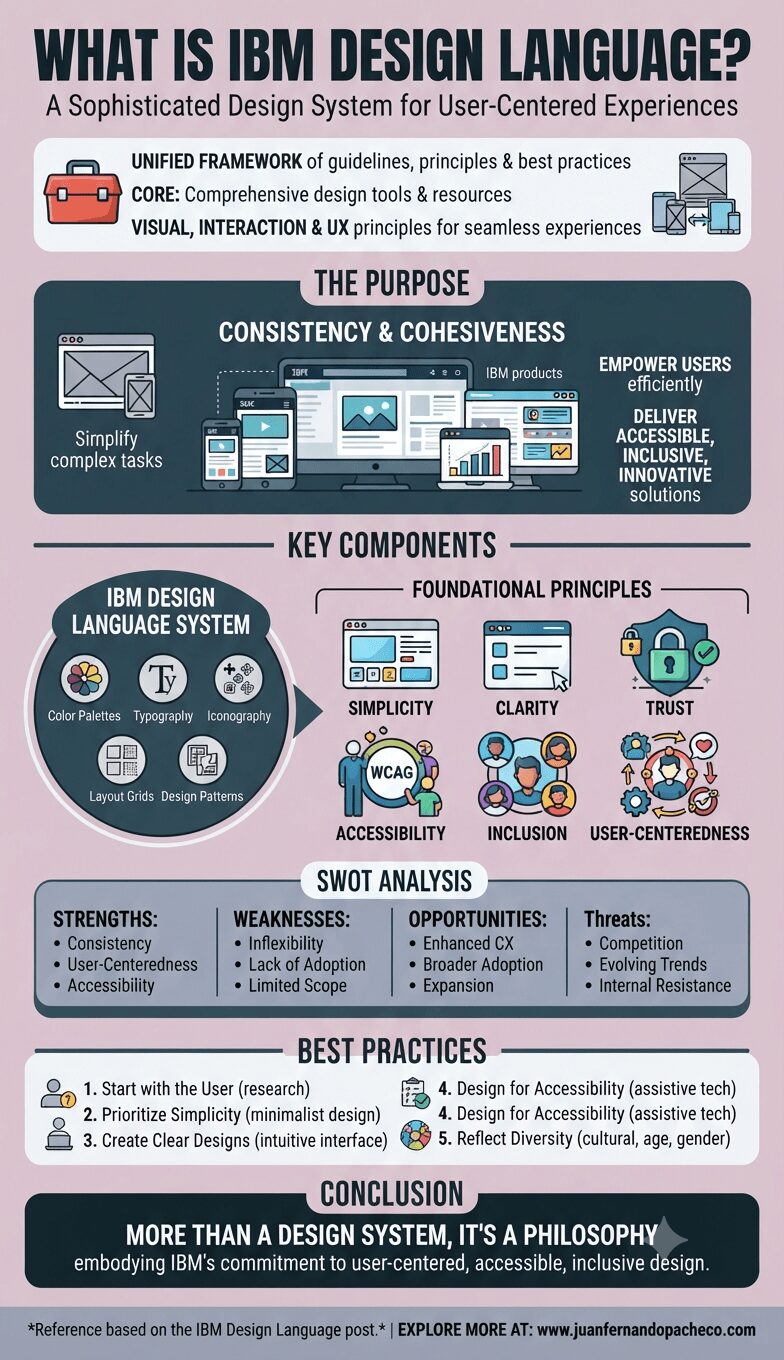
Infographic titled "WHAT IS IBM DESIGN LANGUAGE?" summarizing the design system's purpose, key components (system and principles), SWOT analysis, best practices, and conclusion.

IBM Design Language is more than just a design system; it’s a philosophy that embodies IBM’s commitment to user-centered, accessible, and inclusive design. By adhering to its principles, IBM delivers consistent and reliable experiences that resonate with its global audience. Whether you’re a designer, developer, or stakeholder, embracing IBM Design Language can transform the way you create and innovate.

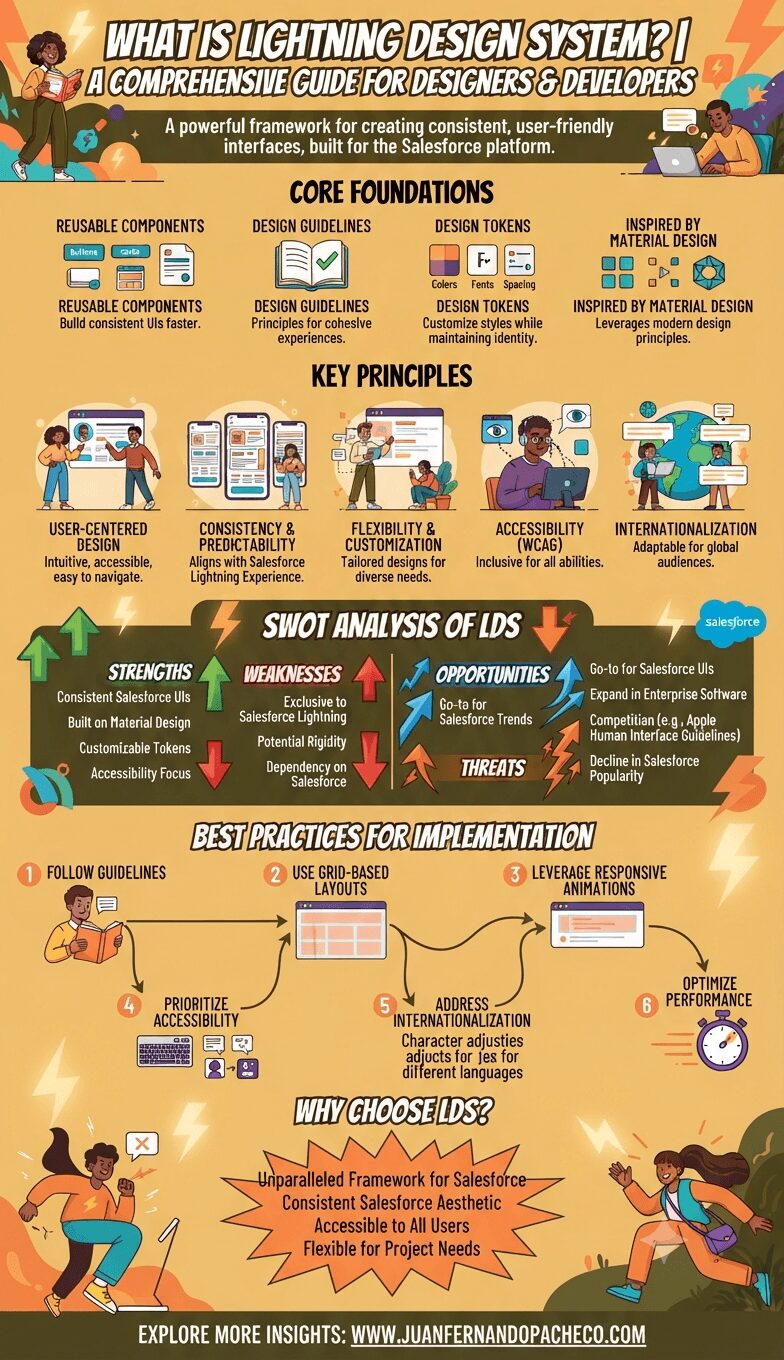
A detailed vertical infographic titled "WHAT IS LIGHTNING DESIGN SYSTEM? A COMPREHENSIVE GUIDE," presented in a warm orange and yellow color scheme. It is segmented into five clear sections: "CORE FOUNDATIONS" (reusable components, design guidelines), "KEY PRINCIPLES" (user-centered, accessibility, internationalization), "SWOT ANALYSIS OF LDS" (strengths, weaknesses, opportunities, threats), "BEST PRACTICES FOR IMPLEMENTATION" (a six-step process from guidelines to performance), and "WHY CHOOSE LDS?". The infographic features illustrated characters, UI mockups, icons, and diagrams, concluding with the reference "WWW.JUANFERNANDOPACHECO.COM."

The Lightning Design System (LDS) is a robust collection of design guidelines, principles, and reusable components designed to ensure consistency within the Salesforce Lightning Experience. By using LDS, designers and developers can create user interfaces (UIs) that are visually cohesive, accessible, and easy to customize.

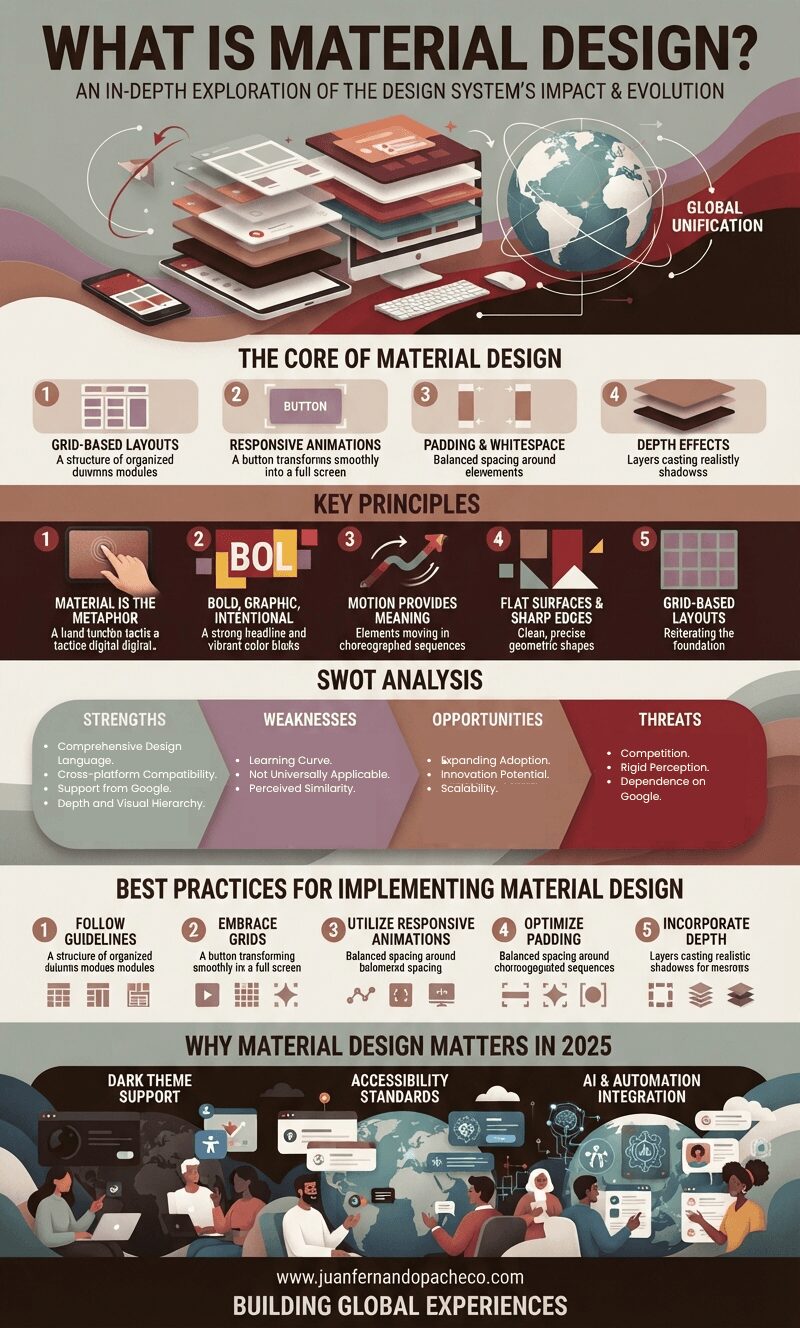
A comprehensive vertical infographic titled "WHAT IS MATERIAL DESIGN?" composed of stacked, layered digital devices and a globe. It breaks down the design system into sections: Core Principles (Grid, Animation, Padding, Depth), Key Principles (Metaphor, Bold Design, Motion, Flat Surfaces, Grid), a SWOT Analysis (Strengths, Weaknesses, Opportunities, Threats), Best Practices (Guidelines, Grids, Animation, Padding, Depth), and future relevance in 2025 (Dark Theme, Accessibility, AI Integration). The footer includes the URL www.juanfernandopacheco.com and the tagline "BUILDING GLOBAL EXPERIENCES."

Material Design’s comprehensive approach revolutionized digital interfaces. Its guiding principles of realism, bold design, intuitive motion, and structured layouts provide a robust framework for creating user-friendly and visually stunning applications. Whether you’re a seasoned designer or a developer exploring UI/UX design, understanding and implementing Material Design principles can elevate your projects.

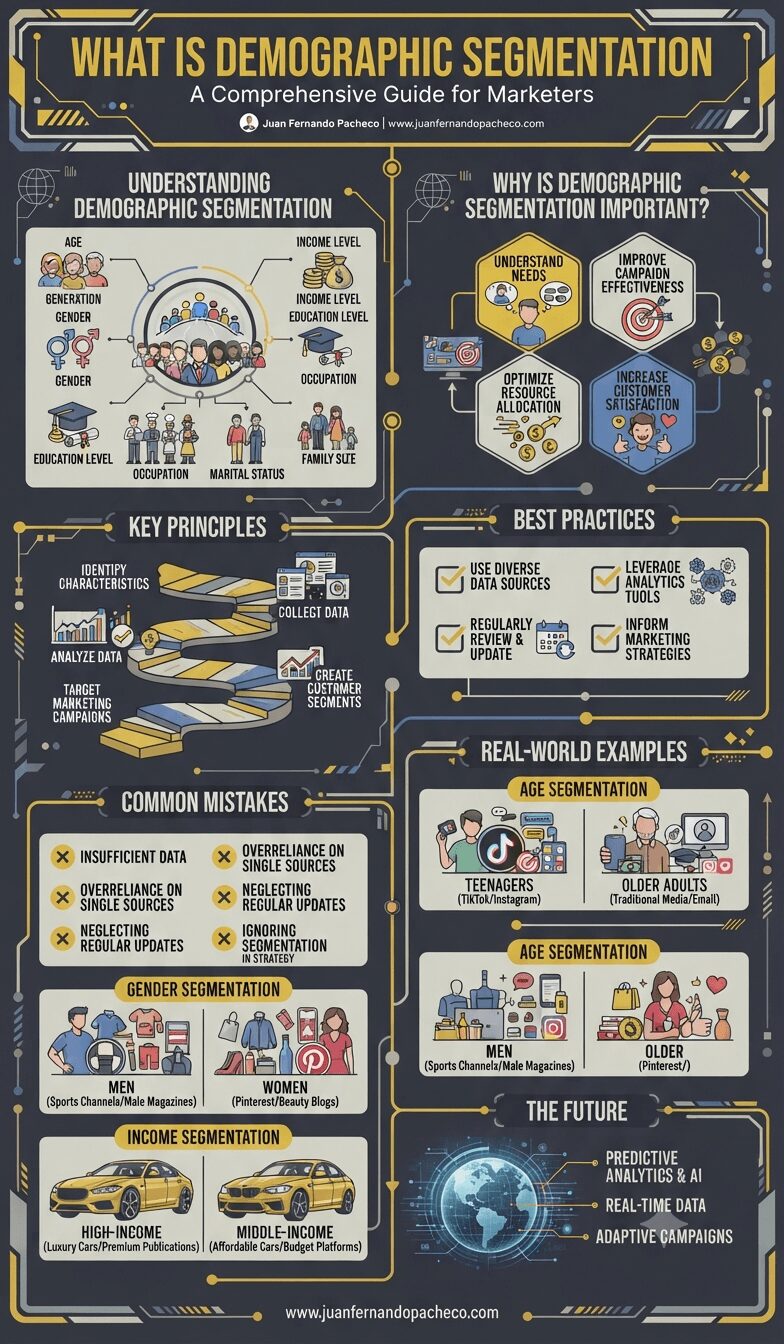
An infographic titled "What is Demographic Segmentation," designed with a dark background and yellow/blue accents. The chart visually explains the concept of dividing an audience based on shared characteristics like age, gender, and income. It covers key principles, importance, best practices, common mistakes, real-world examples (such as luxury vs. affordable cars and TikTok vs. traditional media), and future trends like AI analytics. The footer includes the URL www.juanfernandopacheco.com.

Demographic segmentation is a powerful tool for marketers aiming to understand their audience and craft effective campaigns. By following best practices and avoiding common pitfalls, businesses can achieve better results, foster customer loyalty, and gain a competitive edge. Start implementing demographic segmentation today and watch your marketing efforts soar!

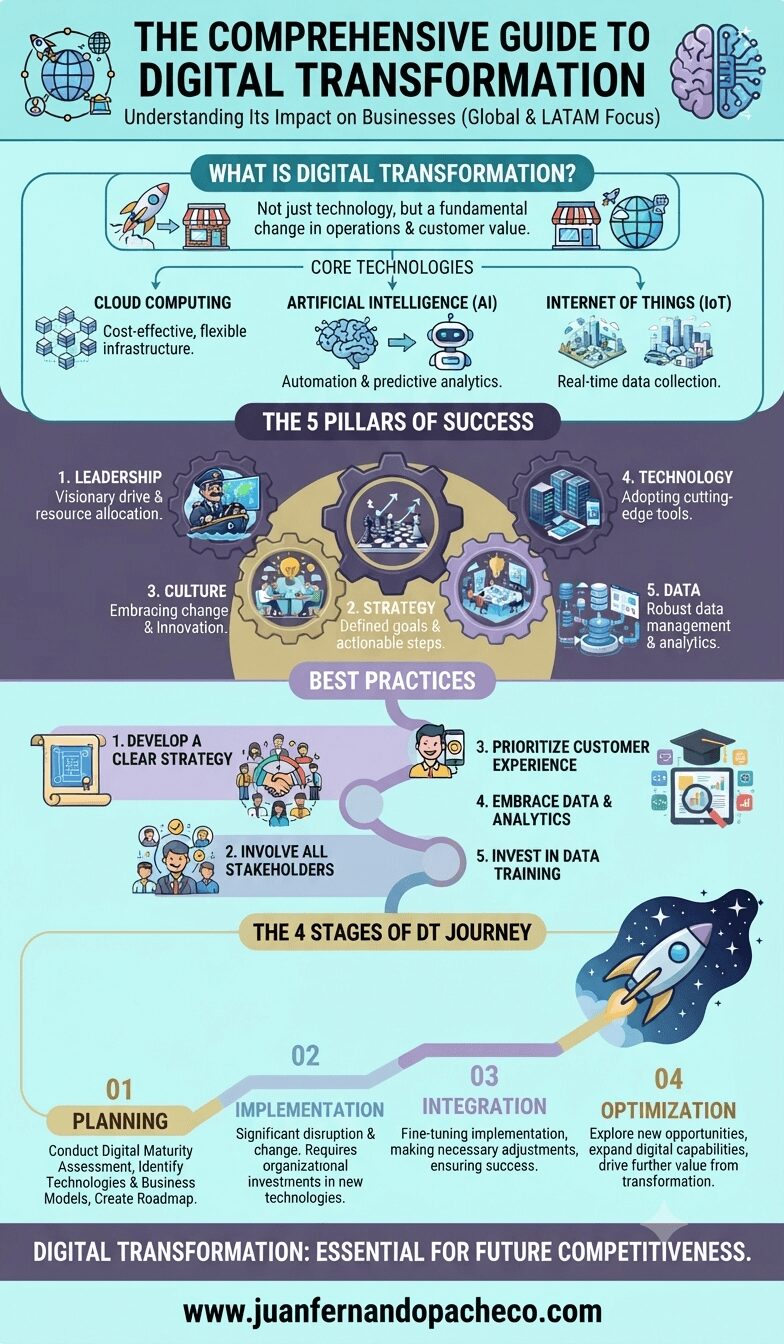
A detailed infographic illustrating the journey of digital transformation across a vertical, flowing timeline, featuring sections on core technologies, foundational pillars, best practices, and the four key stages, with illustrative icons and the URL www.juanfernandopacheco.com at the base.

Digital transformation is no longer optional but essential for organizations that wish to stay competitive in today’s fast-paced, technology-driven market. By understanding the core pillars, best practices, stages, and common mistakes, organizations can navigate the complexities of digital transformation and drive long-term success. As companies embrace these changes, they will enhance their customer experiences, optimize operations, and create new growth opportunities that will propel them forward in the digital age.

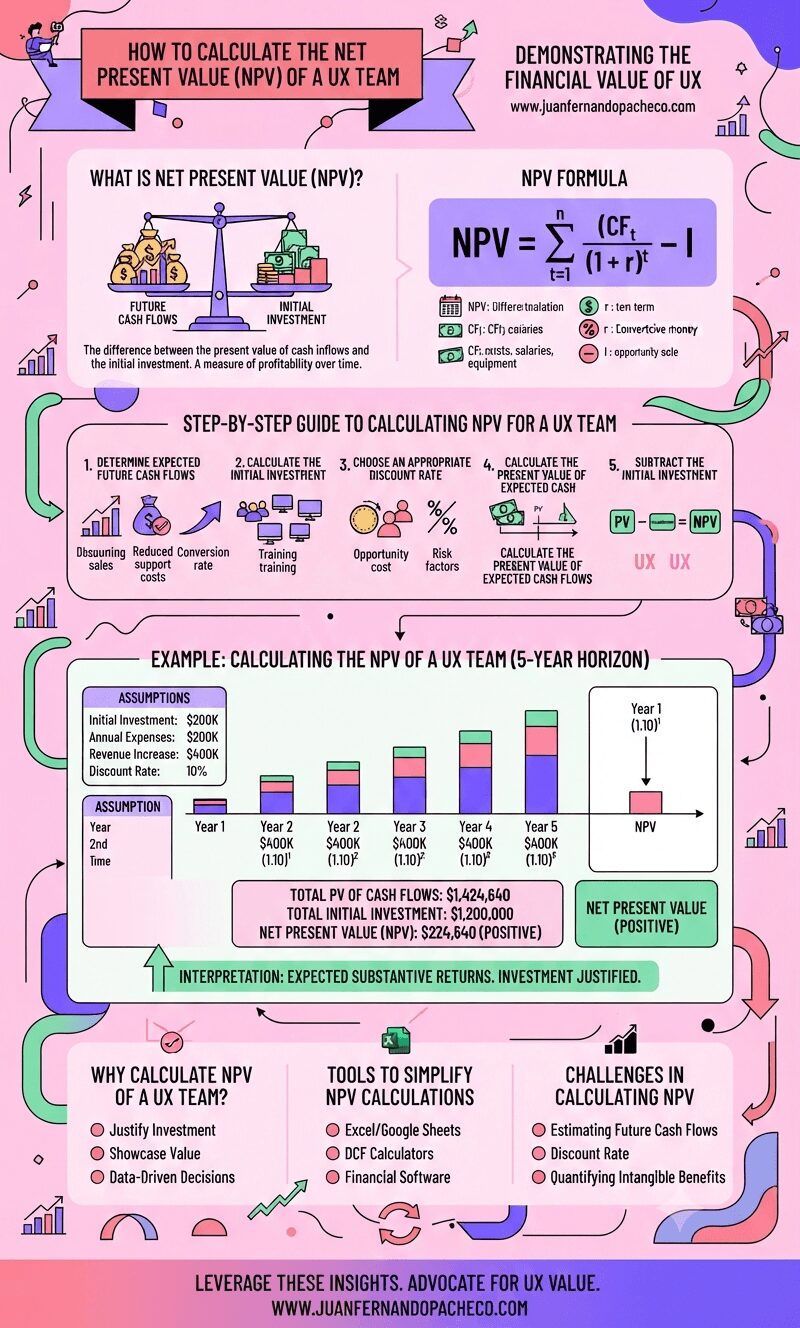
An infographic with a pink background and vibrant purple and teal accents, titled "How to Calculate the Net Present Value (NPV) of a UX Team." It features sections defining NPV, the mathematical formula, a step-by-step calculation guide, a practical 5-year example with a bar chart, and lists for rationale, tools, and challenges. The footer includes the URL www.juanfernandopacheco.com.

Calculating the Net Present Value (NPV) of a UX team is a powerful way to demonstrate their financial impact. By considering expected future cash flows, initial investments, and the time value of money, organizations can make informed decisions about investing in UX resources. As UX continues to play a pivotal role in business success, quantifying its value through NPV ensures that its importance is recognized in strategic planning.