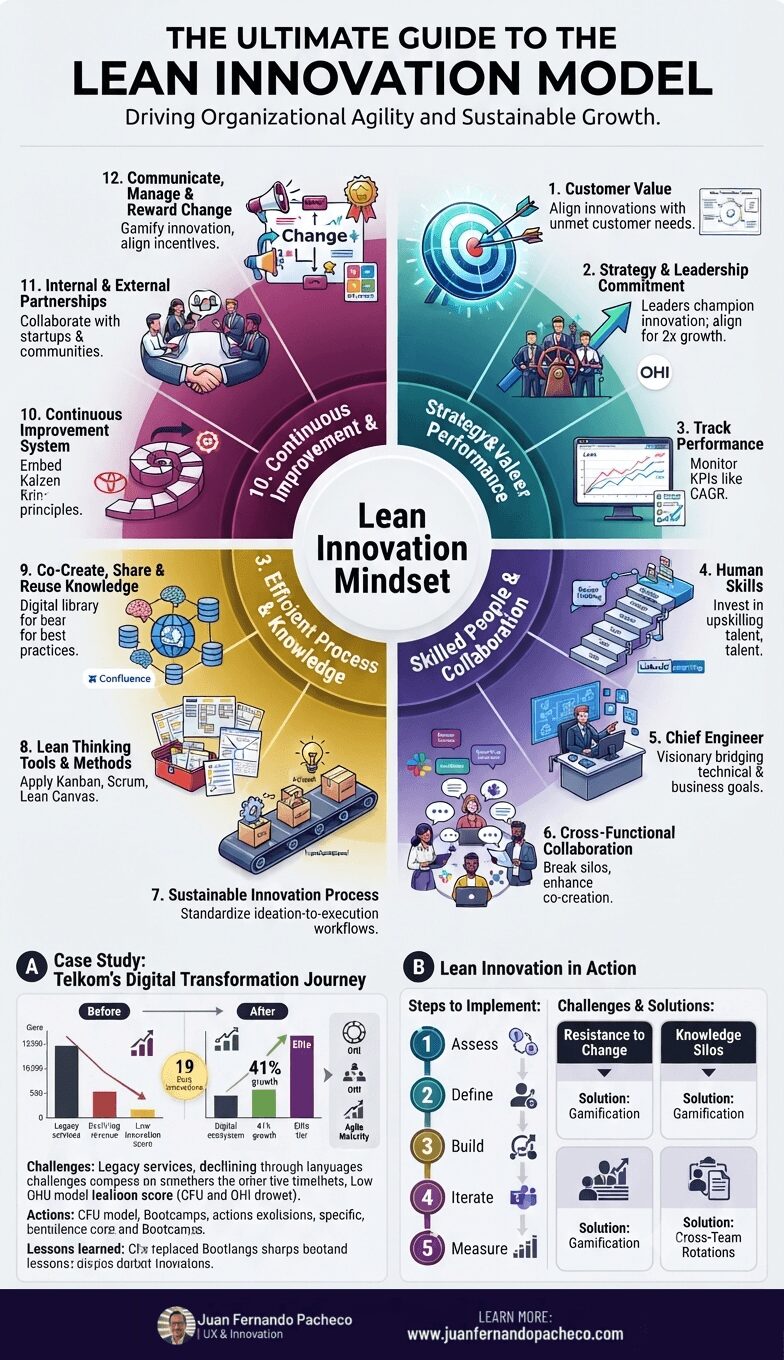
Infographic titled "THE ULTIMATE GUIDE TO THE LEAN INNOVATION MODEL," featuring a circular diagram divided into four colored quadrants representing 12 enablers (strategy, skills, process, continuous improvement). Below the main diagram are two sections: (A) a case study of Telkom's digital transformation with before/after charts, and (B) an implementation guide detailing steps, challenges, and solutions. The overall aesthetic is professional and data-driven.

The Lean Innovation Model isn’t just a framework—it’s a mindset. By integrating customer value, agile structures, and continuous learning, organizations like Telkom can thrive in disruption.

Start your journey by auditing organizational health and embedding lean principles into every process.
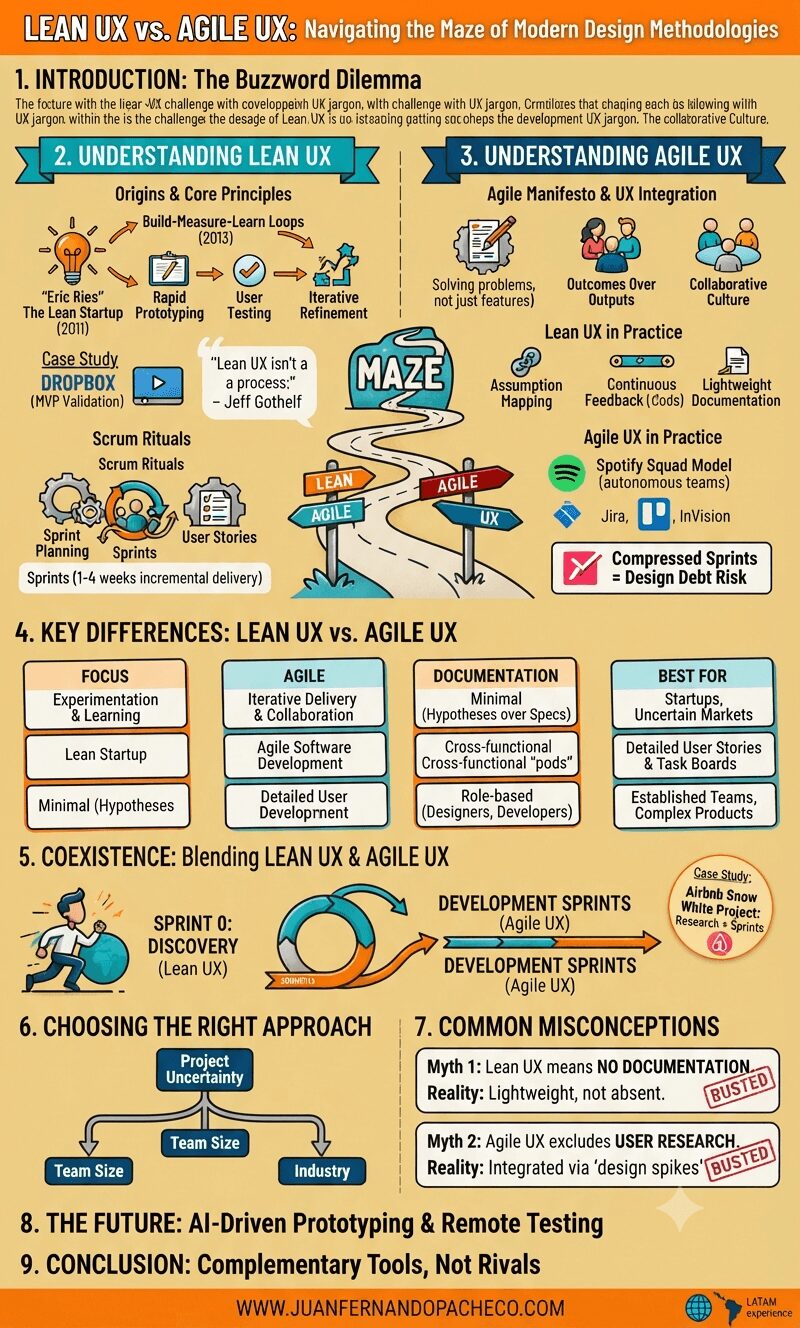
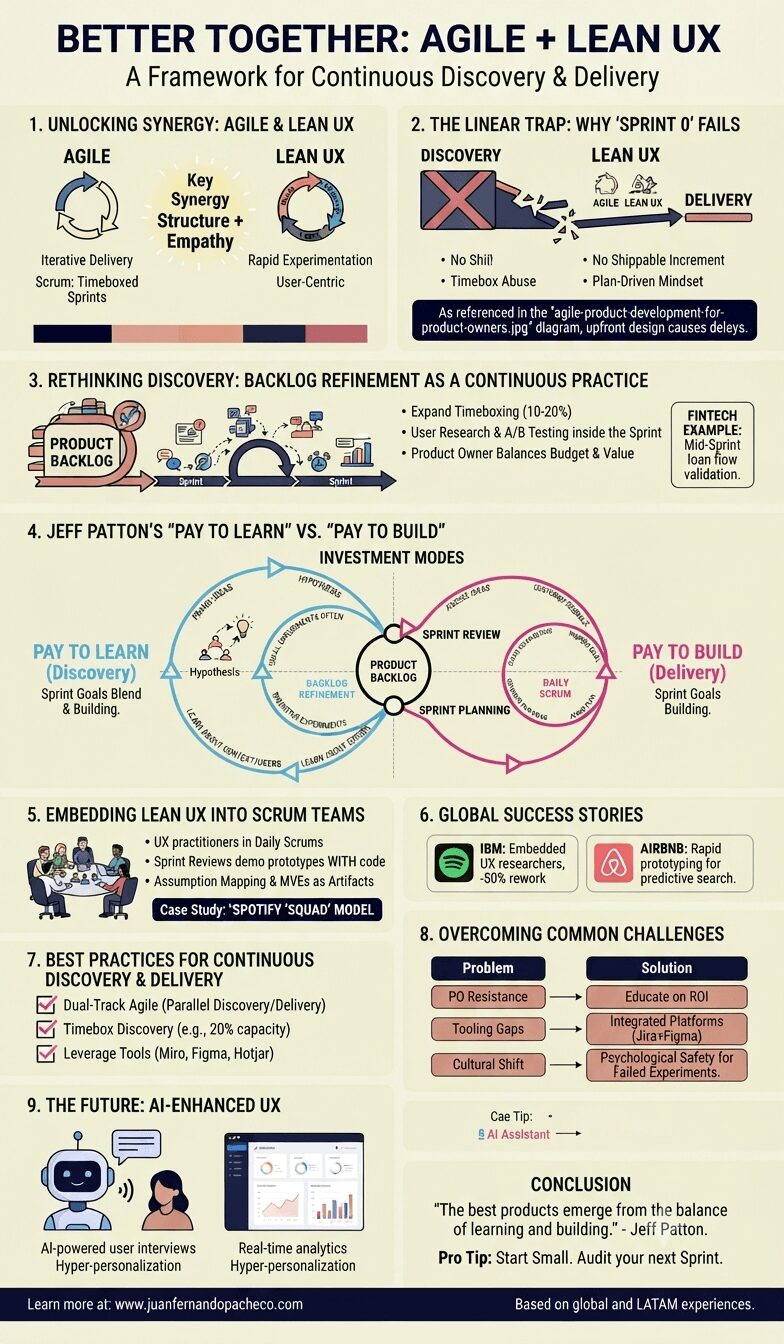
A detailed vertical infographic titled "Better Together: Agile + Lean UX: A Framework for Continuous Discovery & Delivery." The image is organized into nine numbered sections with illustrations, icons, and text, utilizing a color palette of cream, navy, pink, peach, and dark blue. It details how to integrate Lean UX principles like continuous discovery and "Pay to Learn" into Agile Scrum rituals, and includes case studies from Spotify, IBM, and Airbnb, as well as future trends like AI. The central diagram visually merges "Pay to Learn" and "Pay to Build" cycles.

Agile + Lean UX are not competing frameworks—they’re complementary forces. By embedding continuous discovery into Sprints, teams can deliver value faster while staying user-centric. As Jeff Patton says, “The best products emerge from the balance of learning and building.”

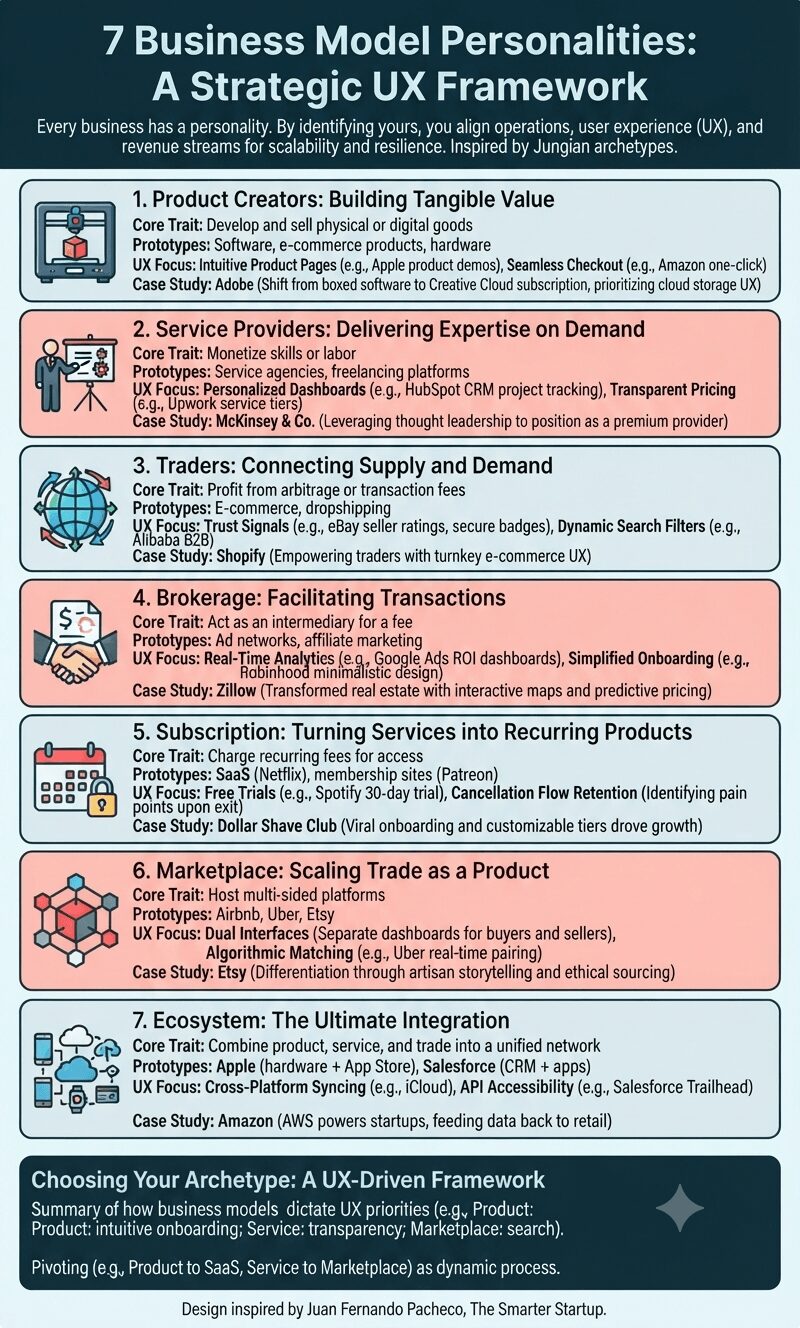
"Infographic titled '7 Business Model Personalities: A Strategic UX Framework' on a light background, detailing seven archetypes—Product Creators, Service Providers, Traders, Brokerage, Subscription, Marketplace, and Ecosystem—each with an icon, core traits, prototypes, UX focus, and a real-world case study."

Every business operates like a machine—input resources, process value, and output profits. But without a clear “instruction manual,” even brilliant ideas risk failure.

Inspired by Carl Jung’s personality archetypes, the 7 Business Model Personalities framework offers a strategic lens to align your operations, user experience (UX), and revenue streams.

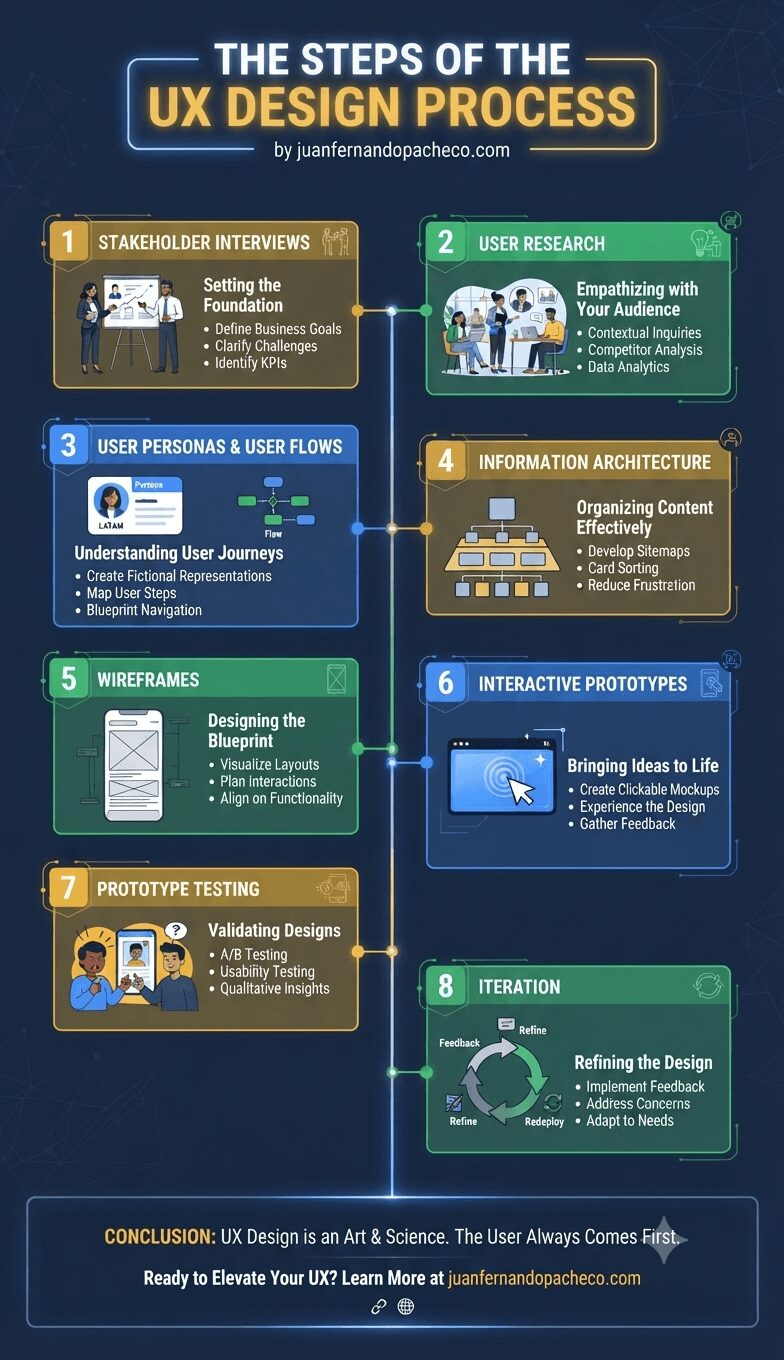
Infographic titled "The Steps of the UX Design Process by juanfernandopacheco.com" presented in a vertical, connected layout against a dark blue background. Eight numbered steps are detailed sequentially: 1. Stakeholder Interviews, 2. User Research, 3. User Personas & User Flows, 4. Information Architecture, 5. Wireframes, 6. Interactive Prototypes, 7. Prototype Testing, and 8. Iteration. Each step features a descriptive icon or illustration, a subtitle explaining the goal, and three specific bullet points outlining the activity. The infographic concludes with a summary banner emphasizing user-centered design and a call to action for the provided website.

The UX design process is both an art and a science. By following these steps, you’ll create products that resonate with users and achieve business goals. Whether you’re designing a simple app or a complex enterprise platform, remember: the user always comes first.

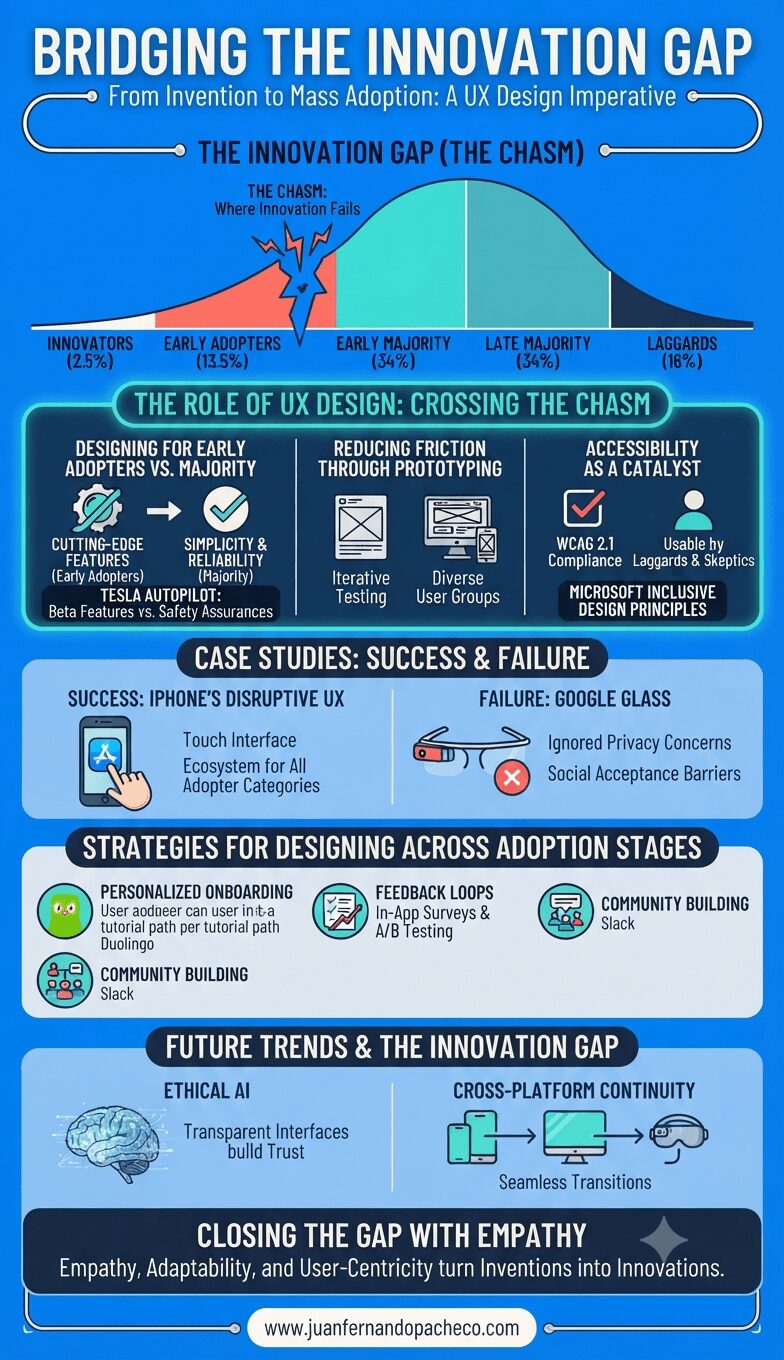
An infographic titled "Bridging the Innovation Gap: From Invention to Mass Adoption" with a central bell curve graph showing adopter categories and a "Chasm" between Early Adopters and Early Majority. Below, sections detail "The Role of UX Design," "Case Studies: Success & Failure" (iPhone vs. Google Glass), "Strategies," "Future Trends," and "Conclusion." The design uses blue, navy, coral, and teal colors.

Bridging the innovation gap requires more than technical prowess—it demands empathy, adaptability, and relentless user-centricity. By leveraging UX research, inclusive design, and iterative testing, designers can turn groundbreaking inventions into indispensable innovations.

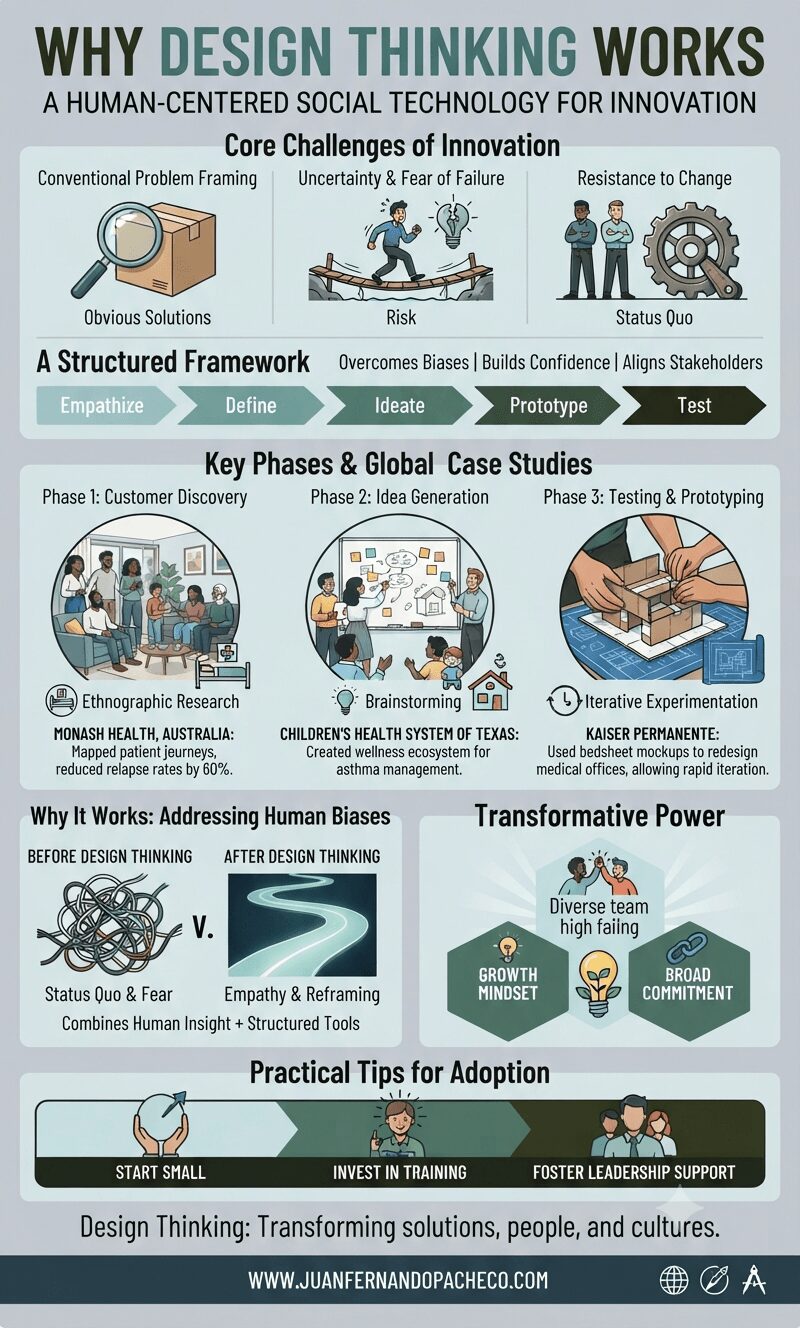
An infographic titled "Why Design Thinking Works" detailing the methodology's core principles, phases, and impact through text blocks and illustrations, including global case studies from Monash Health, Children's Health System of Texas, and Kaiser Permanente. The footer includes the URL WWW.JUANFERNANDOPACHECO.COM.

Design Thinking works because it combines the best of human insight with structured tools to drive innovation.

By addressing biases, fostering collaboration, and emphasizing empathy, it transforms not only the solutions organizations create but also the people and cultures behind them. As a social technology, its potential to reshape industries is unparalleled, making it a cornerstone of modern innovation strategies.