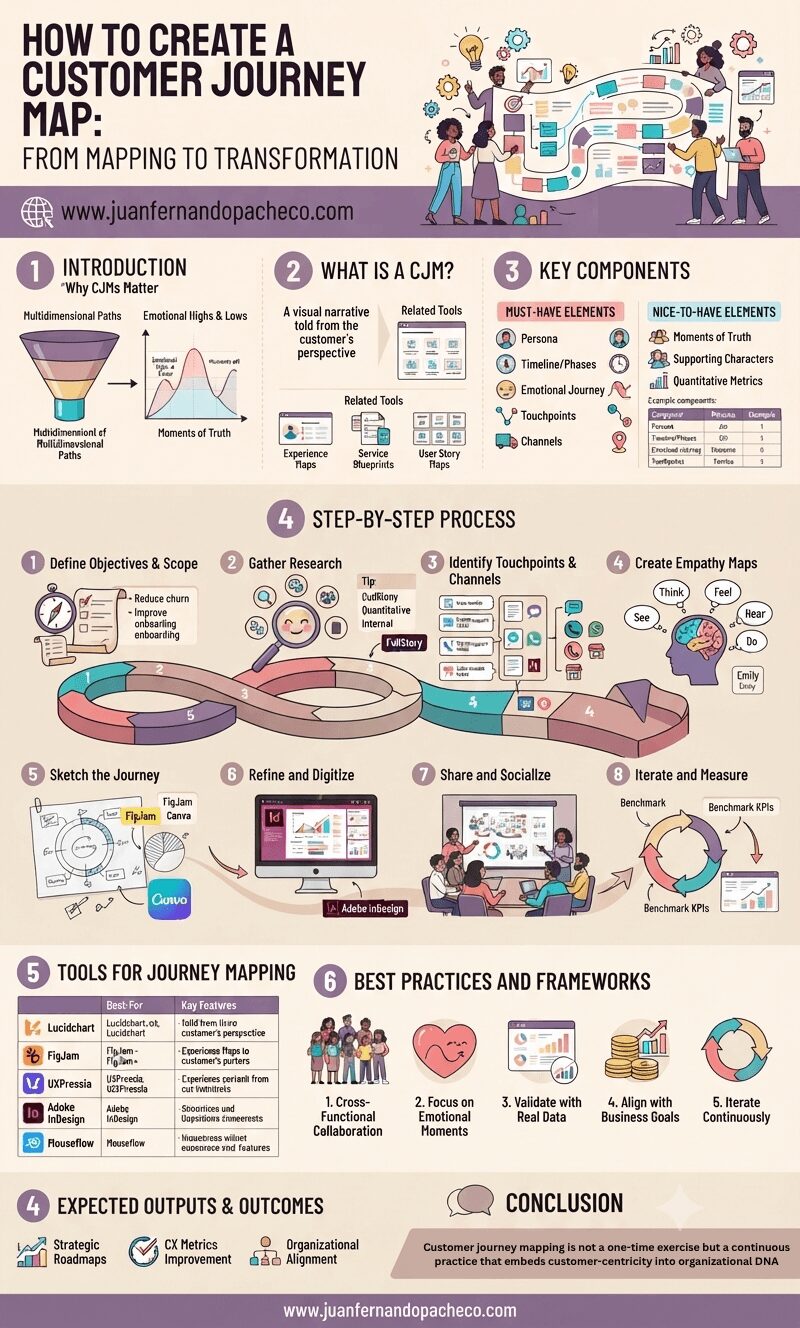
An intricate, vertically-oriented infographic detailing the eight-step process of creating a Customer Journey Map (CJM). The image includes sections on "Why CJMs Matter," "What Is a CJM," "Key Components," "Tools for Journey Mapping," and "Best Practices," using a color palette of lavenders, rose, and beige. It features illustrations of diverse CX teams, charts, a helical journey timeline, and the website www.juanfernandopacheco.com.

Customer journey mapping is not a one-time exercise but a continuous practice that embeds customer-centricity into organizational DNA.

By visualizing the intersection of human emotions and business processes, UX professionals can drive transformative change—turning fragmented interactions into cohesive, respectful experiences that build long-term loyalty.

As CX expectations escalate, the brands that thrive will be those who listen, adapt, and design journeys that resonate deeply with the people they serve.
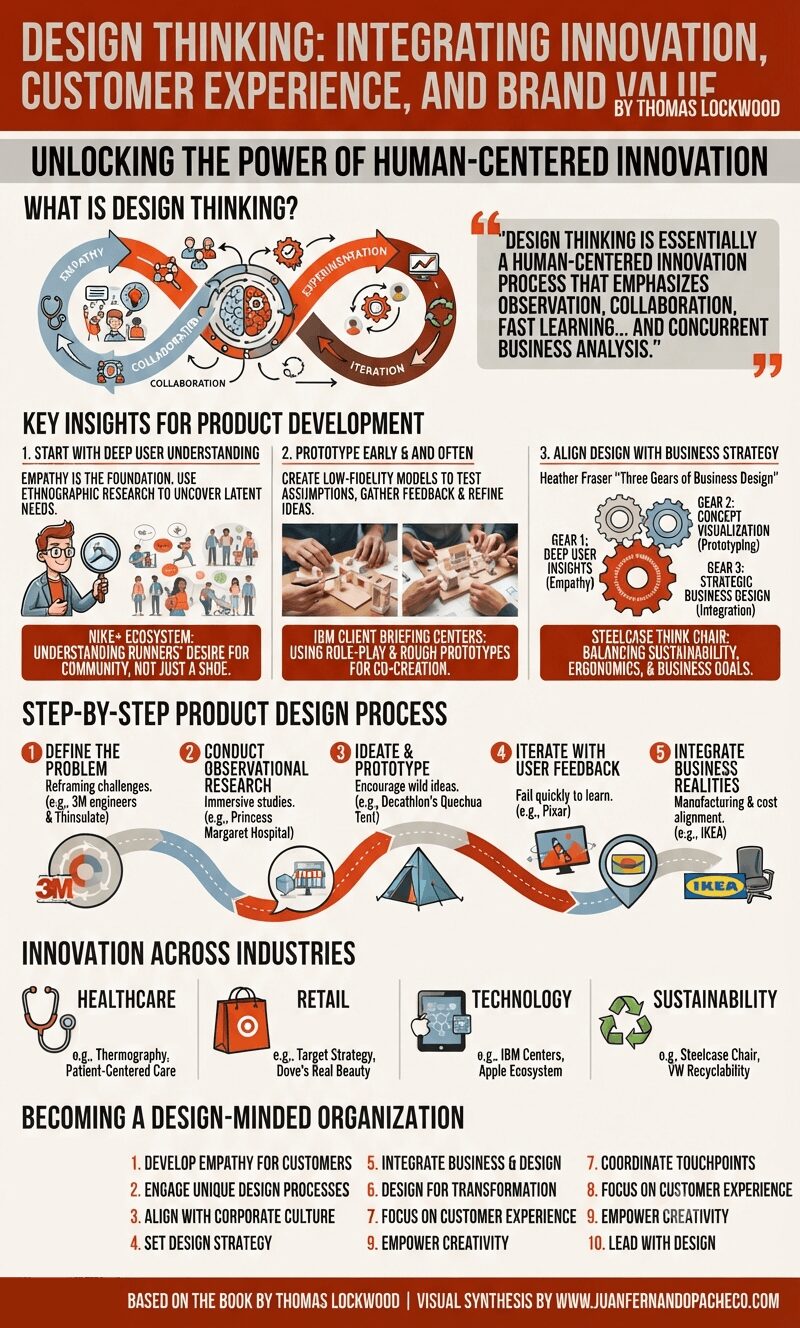
An infographic titled "Design Thinking: Integrating Innovation, Customer Experience, and Brand Value by Thomas Lockwood" set against a light off-white background. The image is a comprehensive visual guide, structured in sections with bold text and diagrams in a palette of red, orange, grey, and blue. It covers "What is Design Thinking?" with a cyclical process diagram and a quote from Lockwood; "Key Insights for Product Development" with examples from Nike, IBM, and Steelcase; a "Step-by-Step Product Design Process" timeline; "Innovation Across Industries" (Healthcare, Retail, Technology, Sustainability); and "Becoming a Design-Minded Organization" listing ten principles. The bottom footer references "www.juanfernandopacheco.com".

Design Thinking: Integrating Innovation, Customer Experience, and Brand Value is more than a manual—it’s a call to action. By blending human insight with business acumen, organizations can navigate complexity, foster loyalty, and drive growth. As Lockwood writes:

“The real value of design is in discovering and solving all manner of problems. It’s not about what design is—it’s about what design does.”

Whether you’re refining a product, reimagining a service, or transforming a business model, this book offers the tools and inspiration to lead with creativity. In a world where change is the only constant, design thinking isn’t just an advantage—it’s a necessity.

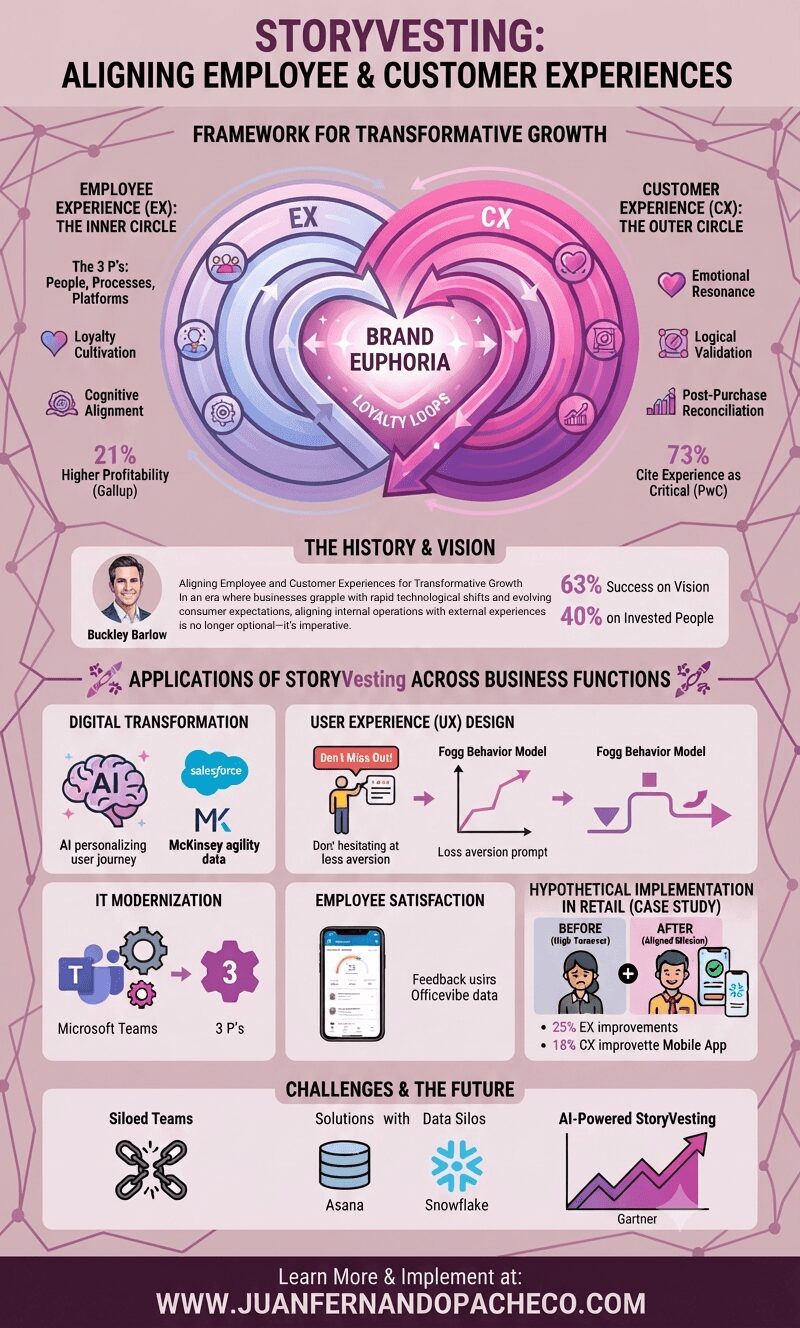
A comprehensive infographic visualizing the "StoryVesting" business framework. It details the concentric EX (Employee Experience) and CX (Customer Experience) circles, leading to "Brand Euphoria," and includes sections on history, applications across functions (Digital Transformation, UX, IT, Employee Satisfaction), a retail case study, and challenges/future outlook. The design uses a purple-pink color palette and features references to Gallup, PwC, Buckley Barlow, and www.juanfernandopacheco.com.

StoryVesting™, a business transformation framework developed by RocketSource that bridges the gap between employee engagement and customer loyalty. By harmonizing these two pillars, organizations can unlock sustainable growth, even in volatile markets.

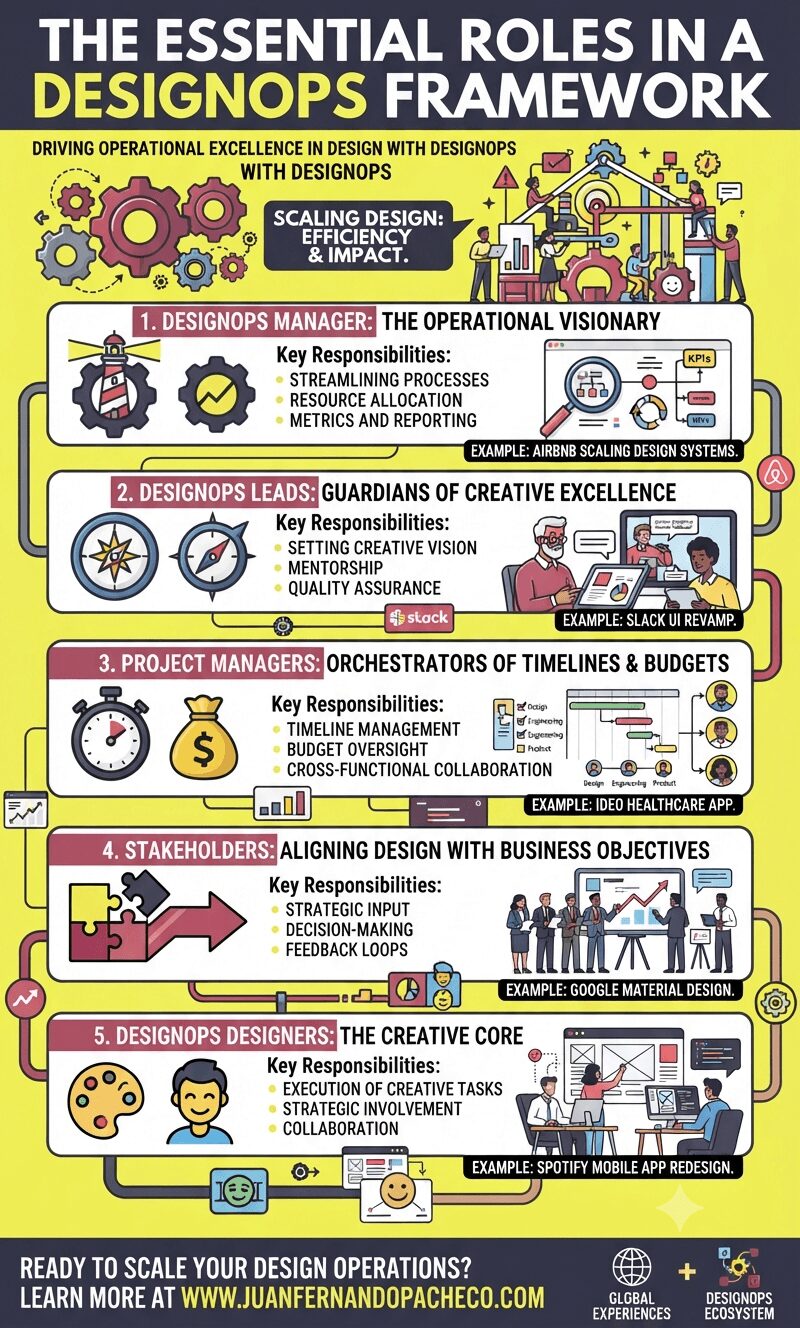
A vertical infographic titled "The Essential Roles in a DesignOps Framework" on a bright yellow background, detailing five key roles. From top to bottom: 1. DesignOps Manager (Lighthouse icon), responsible for processes, resources, metrics (with an Airbnb example). 2. DesignOps Leads (Compass icon), focused on vision, mentorship, quality assurance (with a Slack example). 3. Project Managers (Stopwatch icon), managing timelines, budgets, and collaboration (with an IDEO example). 4. Stakeholders (Puzzle piece icon), aligning design with business objectives (with a Google example). 5. DesignOps Designers (Palette icon), the creative core executing tasks and collaborating (with a Spotify example). The bottom features a call to action for www.juanfernandopacheco.com.

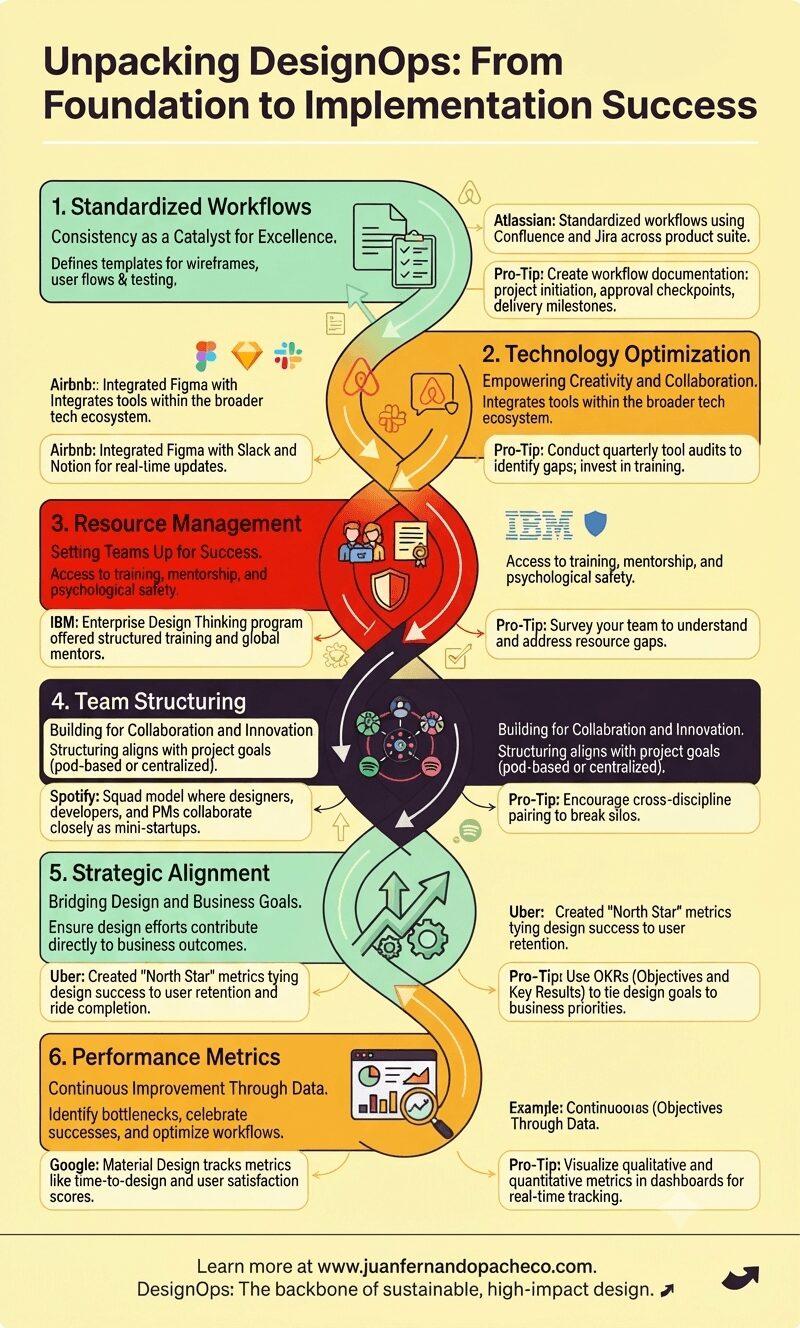
The rapid pace of digital transformation has propelled organizations to place greater emphasis on design as a strategic lever for innovation and customer satisfaction.

Yet, scaling design efforts across teams, tools, and workflows remains a formidable challenge. This is where DesignOps (Design Operations) emerges as a critical discipline, providing the scaffolding for designers to focus on what they do best: creating impactful experiences.

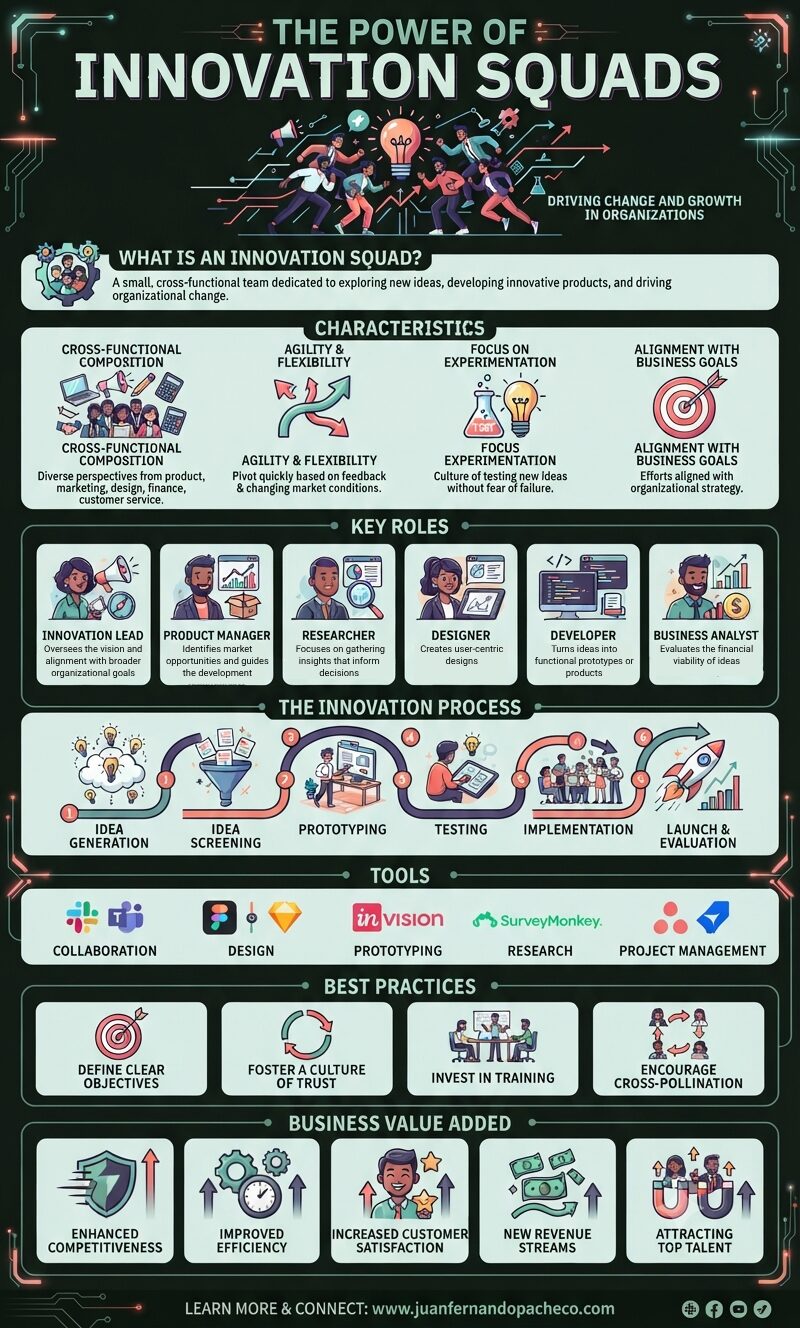
An infographic titled "The Power of Innovation Squads: Driving Change and Growth in Organizations" summarizing team roles, processes, and tools against a dark background.

Innovation squads represent a transformative approach to problem-solving and growth in modern organizations. By embracing cross-functional collaboration and fostering a culture of trust and experimentation, companies position themselves to thrive amidst uncertainty.

As we venture into the future, nurturing environments that prioritize creativity and innovation will be pivotal to unlocking new opportunities and achieving sustained success.