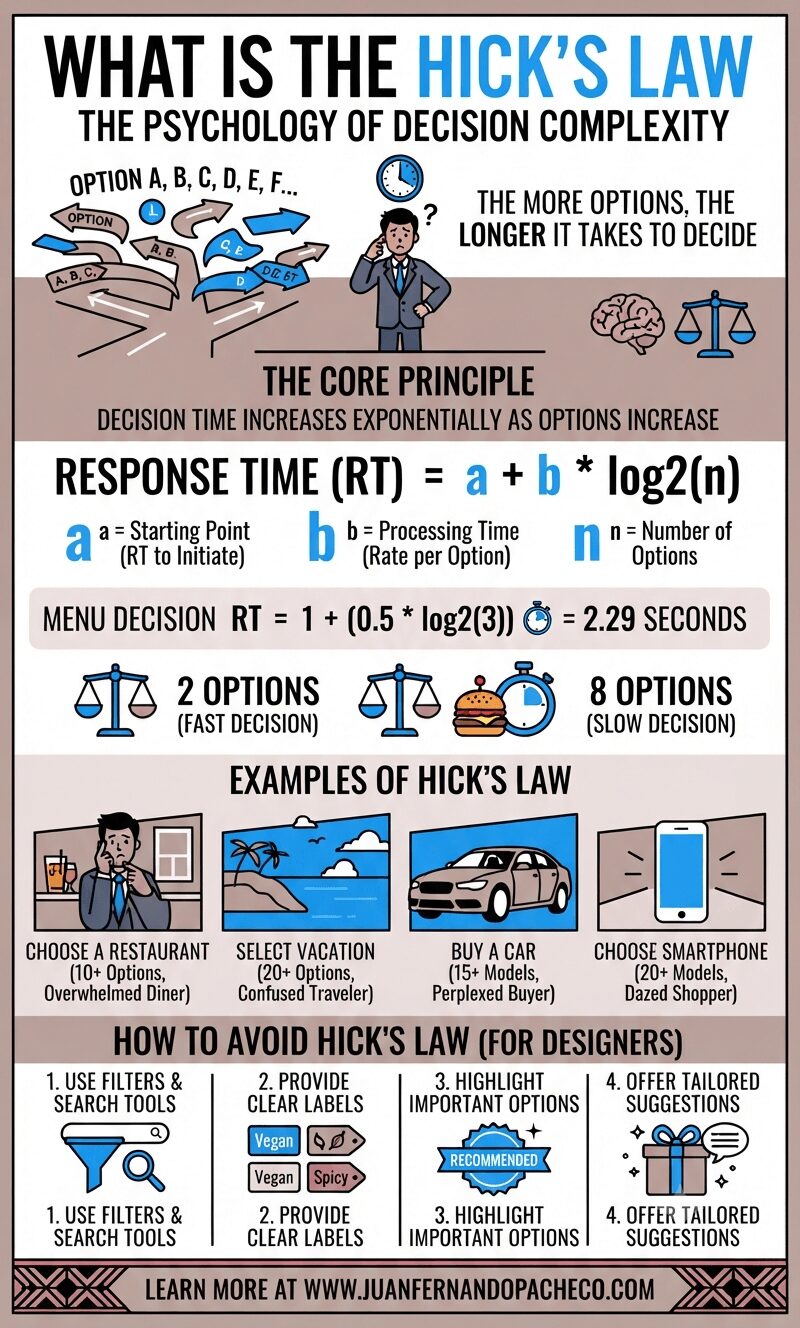
An infographic illustrating Hick's Law, showing that more options lead to longer decision times. It includes the mathematical formula (RT = a + b * log2(n)), a menu example resulting in 2.29 seconds, examples like choosing a restaurant or car, and four tips for designers to avoid decision overload.

Hick’s law, also known as the Hick-Hyman law, is a psychological principle that describes the relationship between the complexity of a decision and the time it takes to make that decision.
The law states that the more options a person has to choose from, the longer it will take them to make a decision.
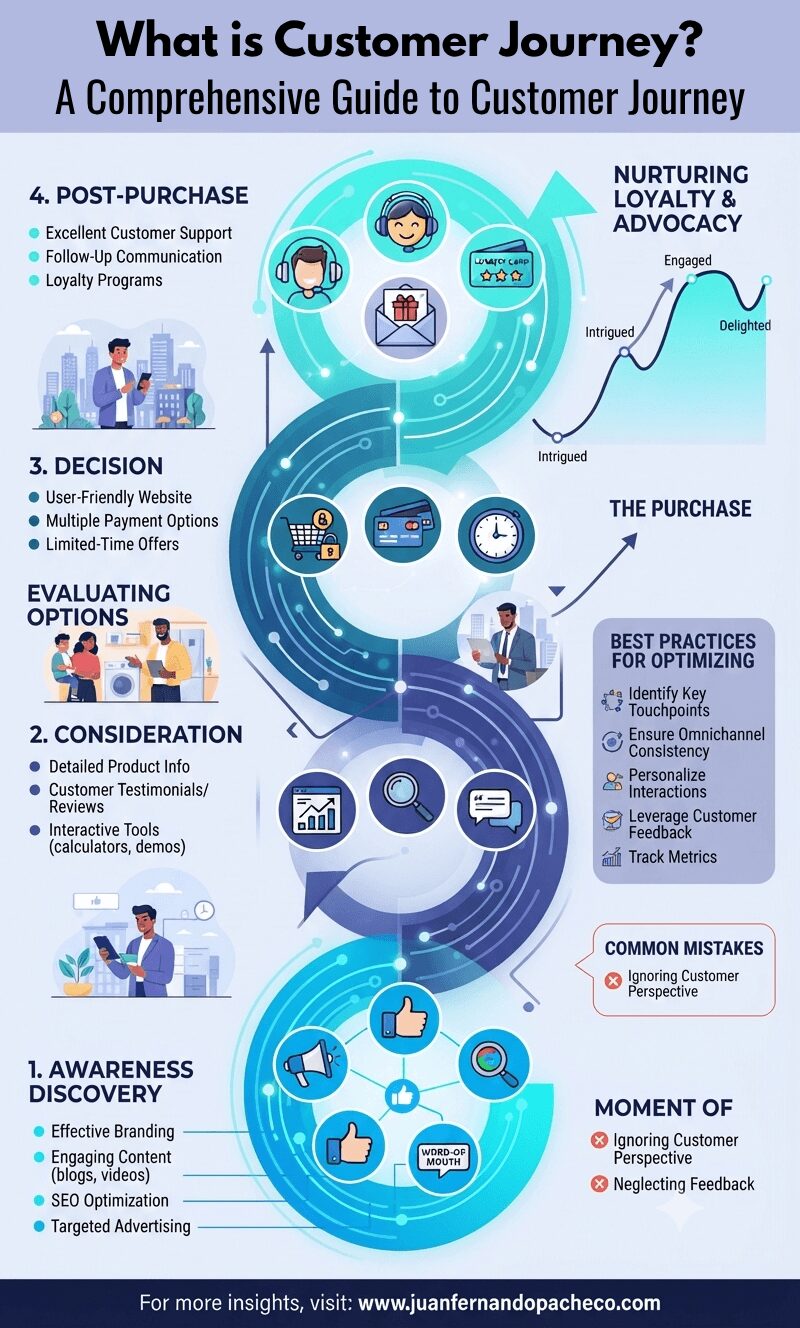
A comprehensive vertical infographic titled "The Ascending Customer Journey: A Comprehensive Guide," detailing four stages: Awareness, Consideration, Decision, and Post-Purchase. The design uses a flowing, interconnected path with icons, character illustrations, and text lists for each stage. It includes side panels on "Best Practices for Optimizing," "Common Mistakes," and a customer emotion curve. The background is light blue with darker blue and teal graphics and a footer referencing "www.juanfernandopacheco.com."

Understanding and optimizing the customer journey is a powerful way to build stronger relationships, enhance customer satisfaction, and drive revenue growth. By addressing customer needs at every stage and avoiding common pitfalls, businesses can create experiences that resonate with their audience and inspire loyalty.
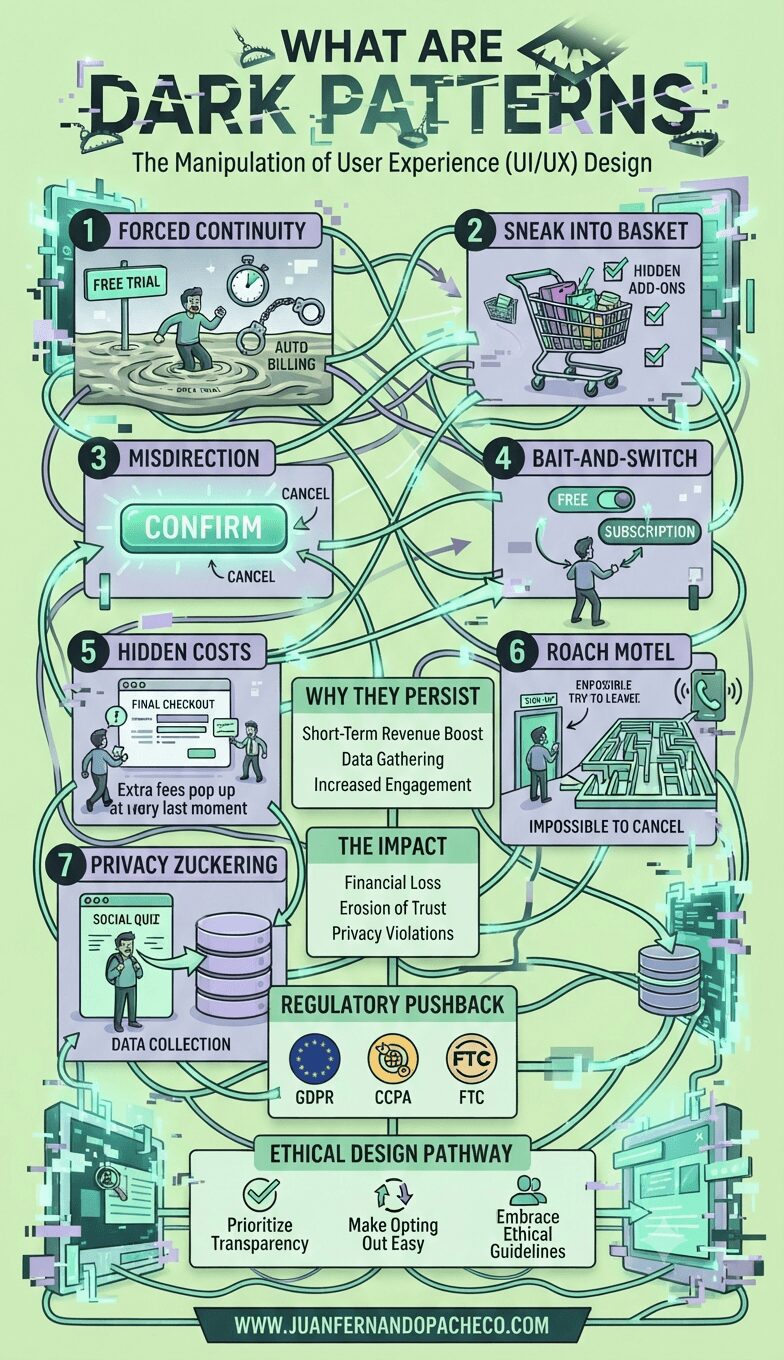
A detailed infographic titled "What are Dark Patterns" explaining manipulative UI/UX design techniques. It illustrates seven common examples: Forced Continuity, Sneak into Basket, Misdirection, Bait-and-Switch, Hidden Costs, Roach Motel, and Privacy Zuckering. Central sections outline why they persist and their impact on users, followed by regulatory pushback from GDPR, CCPA, and FTC. The footer promotes ethical design and lists the website www.juanfernandopacheco.com.

Dark patterns represent the darker side of design, exploiting user vulnerabilities for profit. While effective in the short term, they erode trust, invite regulatory scrutiny, and harm users. By embracing ethical design principles, businesses can foster loyalty, build sustainable relationships, and lead with integrity.
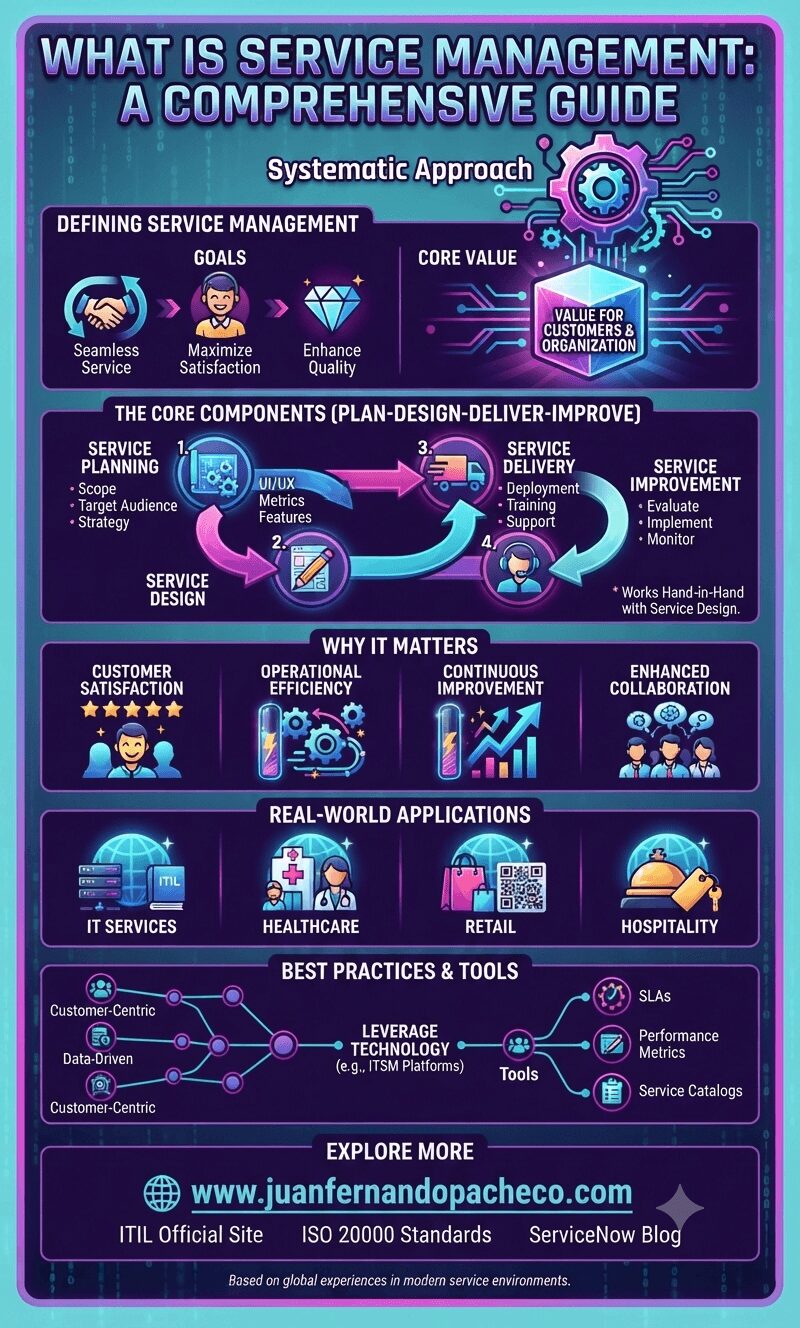
An intricate, vertical infographic titled "WHAT IS SERVICE MANAGEMENT: A COMPREHENSIVE GUIDE" with a systematic approach, organized into distinct modules: Defining Service Management (Goals, Core Value), The Core Components (Plan, Design, Deliver, Improve), Why It Matters, Real-World Applications, Best Practices & Tools, and an "Explore More" section with the URL "www.juanfernandopacheco.com". The design uses a vibrant, neon-tech aesthetic with a color palette of purples, blues, and magentas against a teal background.

Service management is a cornerstone of modern business operations. By systematically planning, designing, delivering, and improving services, organizations can drive customer satisfaction, operational efficiency, and long-term success.

Whether you’re a small business or a global enterprise, adopting robust service management practices is essential for thriving in today’s dynamic marketplace.
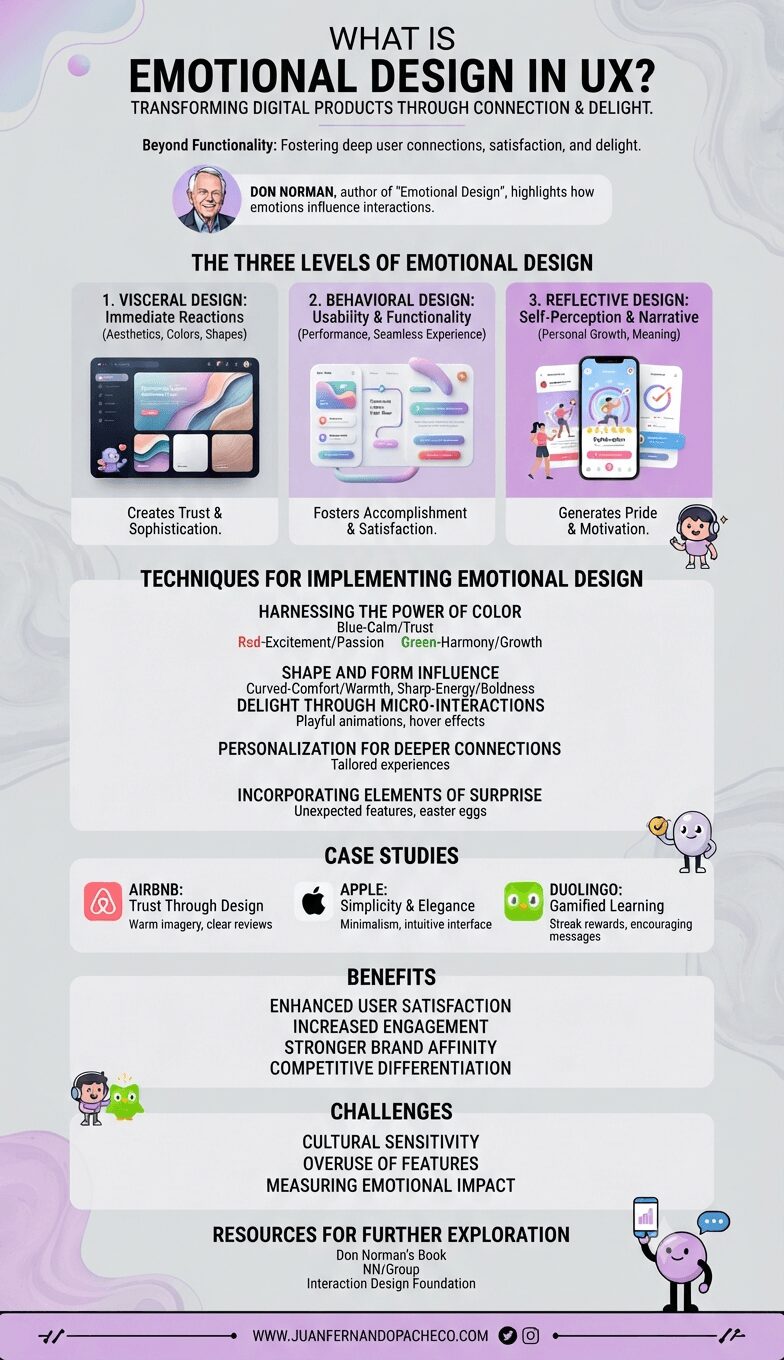
An infographic titled "What is Emotional Design in UX?" detailing Don Norman’s framework of Visceral, Behavioral, and Reflective Design. The image outlines techniques like using color psychology and micro-interactions, provides case studies of Airbnb, Apple, and Duolingo, and lists key benefits and challenges. It includes a footer with the website JuanFernandoPacheco.com.

Emotional Design in UX (User Experience) represents a transformative approach to creating products and services that resonate deeply with users.
By crafting experiences that evoke specific emotional responses, designers can foster a sense of connection, satisfaction, and delight that extends beyond mere functionality.