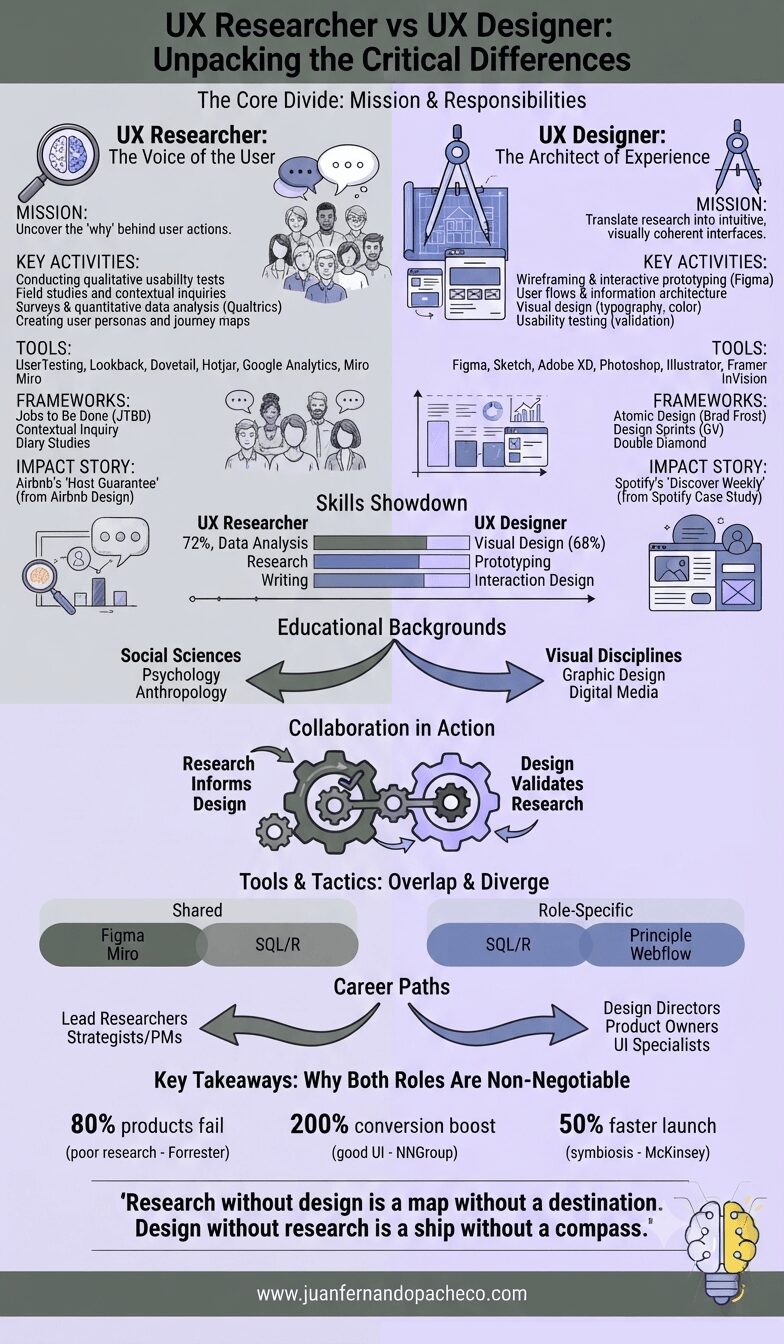
An infographic comparing UX Researchers and UX Designers, detailing their missions, key activities, tools, frameworks, skills showdown, educational backgrounds, collaboration, and career paths, styled in soft purple tones with references to www.juanfernandopacheco.com.

UX Researchers and Designers aren’t rivals—they’re co-pilots navigating the same destination: user delight. Researchers illuminate the path with data; designers pave it with ingenuity. In an era where user expectations skyrocket daily, investing in both isn’t optional—it’s existential.

“Research without design is a map without a destination. Design without research is a ship without a compass.”
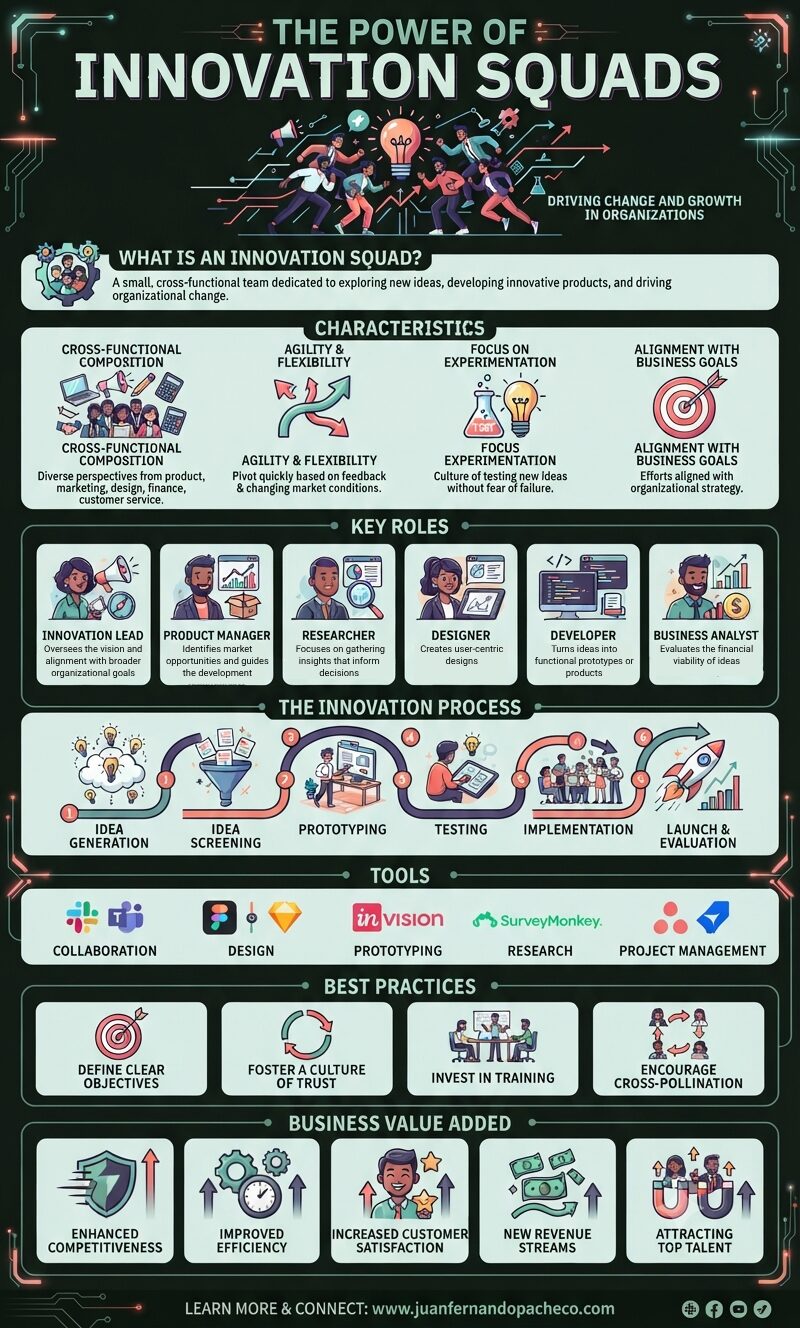
An infographic titled "The Power of Innovation Squads: Driving Change and Growth in Organizations" summarizing team roles, processes, and tools against a dark background.

Innovation squads represent a transformative approach to problem-solving and growth in modern organizations. By embracing cross-functional collaboration and fostering a culture of trust and experimentation, companies position themselves to thrive amidst uncertainty.

As we venture into the future, nurturing environments that prioritize creativity and innovation will be pivotal to unlocking new opportunities and achieving sustained success.

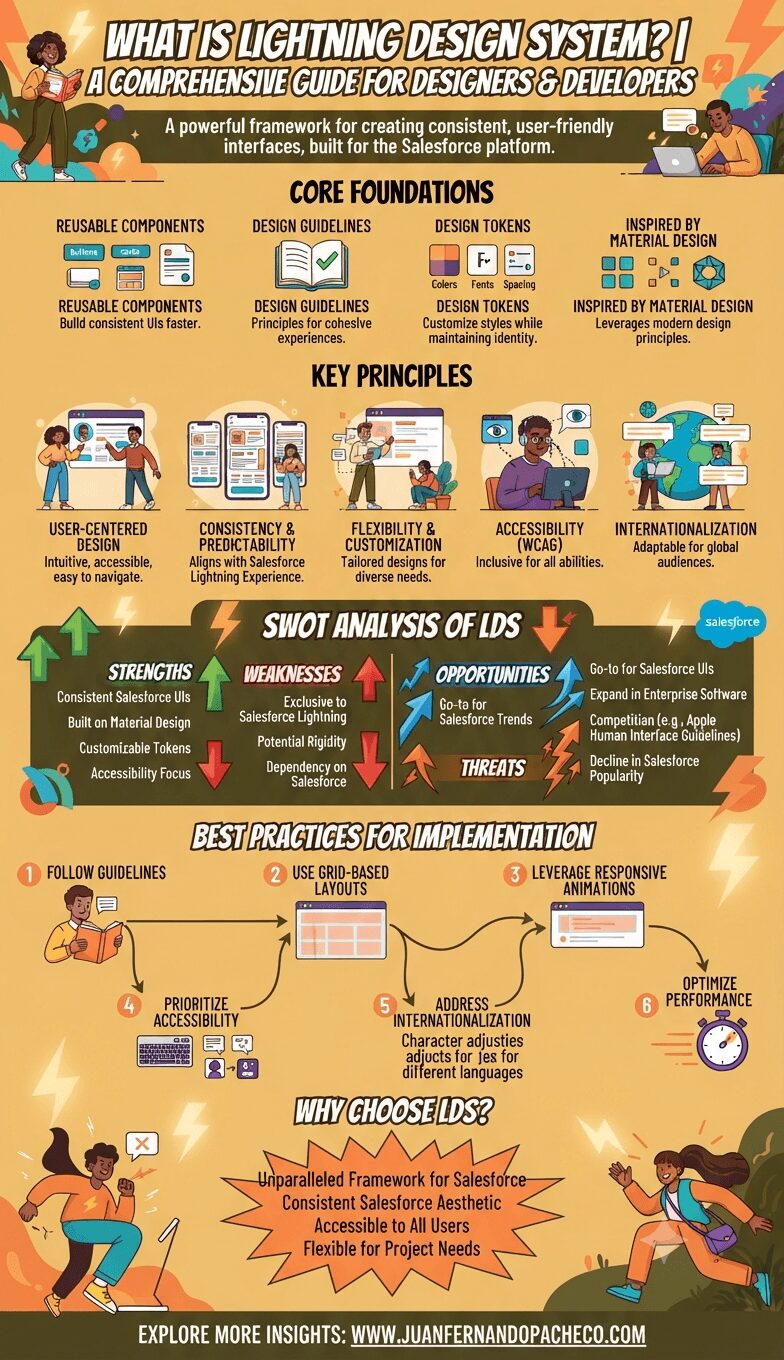
A detailed vertical infographic titled "WHAT IS LIGHTNING DESIGN SYSTEM? A COMPREHENSIVE GUIDE," presented in a warm orange and yellow color scheme. It is segmented into five clear sections: "CORE FOUNDATIONS" (reusable components, design guidelines), "KEY PRINCIPLES" (user-centered, accessibility, internationalization), "SWOT ANALYSIS OF LDS" (strengths, weaknesses, opportunities, threats), "BEST PRACTICES FOR IMPLEMENTATION" (a six-step process from guidelines to performance), and "WHY CHOOSE LDS?". The infographic features illustrated characters, UI mockups, icons, and diagrams, concluding with the reference "WWW.JUANFERNANDOPACHECO.COM."

The Lightning Design System (LDS) is a robust collection of design guidelines, principles, and reusable components designed to ensure consistency within the Salesforce Lightning Experience. By using LDS, designers and developers can create user interfaces (UIs) that are visually cohesive, accessible, and easy to customize.

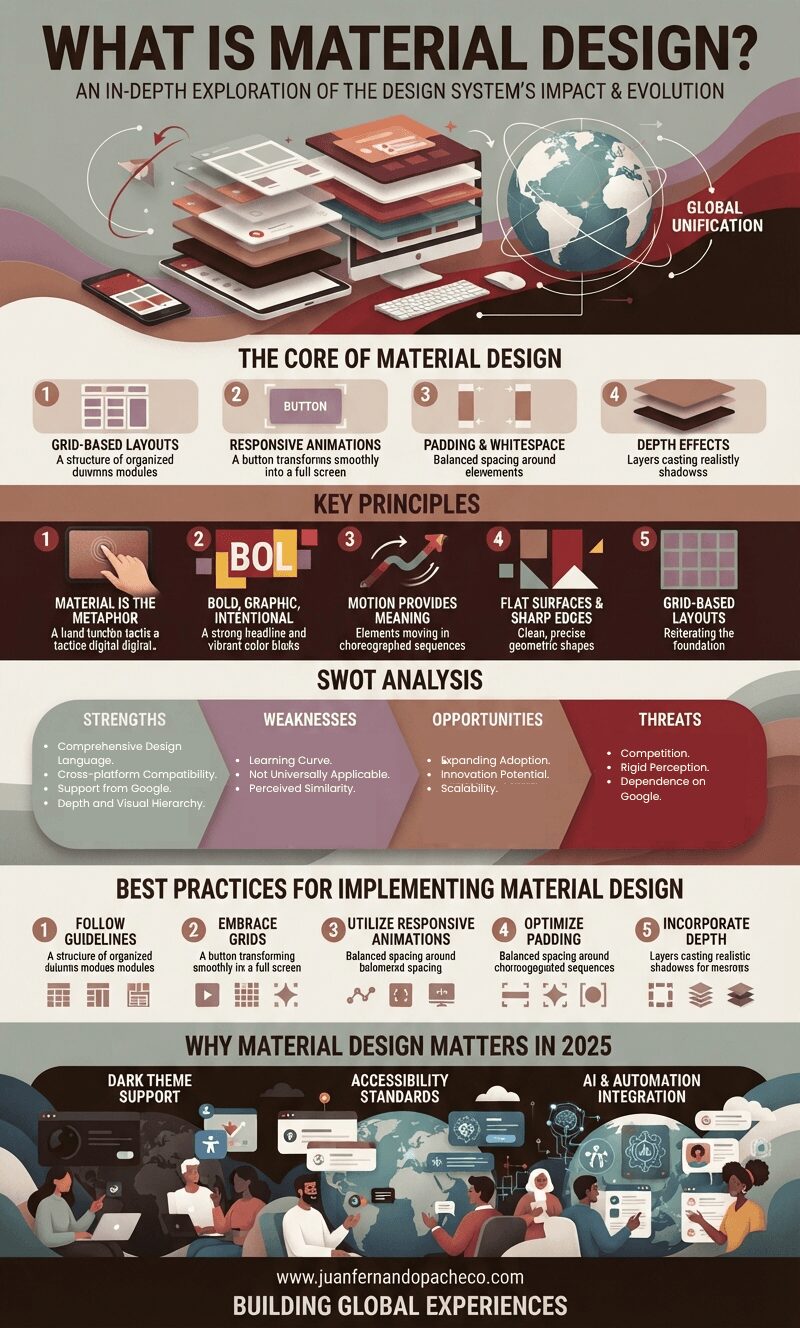
A comprehensive vertical infographic titled "WHAT IS MATERIAL DESIGN?" composed of stacked, layered digital devices and a globe. It breaks down the design system into sections: Core Principles (Grid, Animation, Padding, Depth), Key Principles (Metaphor, Bold Design, Motion, Flat Surfaces, Grid), a SWOT Analysis (Strengths, Weaknesses, Opportunities, Threats), Best Practices (Guidelines, Grids, Animation, Padding, Depth), and future relevance in 2025 (Dark Theme, Accessibility, AI Integration). The footer includes the URL www.juanfernandopacheco.com and the tagline "BUILDING GLOBAL EXPERIENCES."

Material Design’s comprehensive approach revolutionized digital interfaces. Its guiding principles of realism, bold design, intuitive motion, and structured layouts provide a robust framework for creating user-friendly and visually stunning applications. Whether you’re a seasoned designer or a developer exploring UI/UX design, understanding and implementing Material Design principles can elevate your projects.

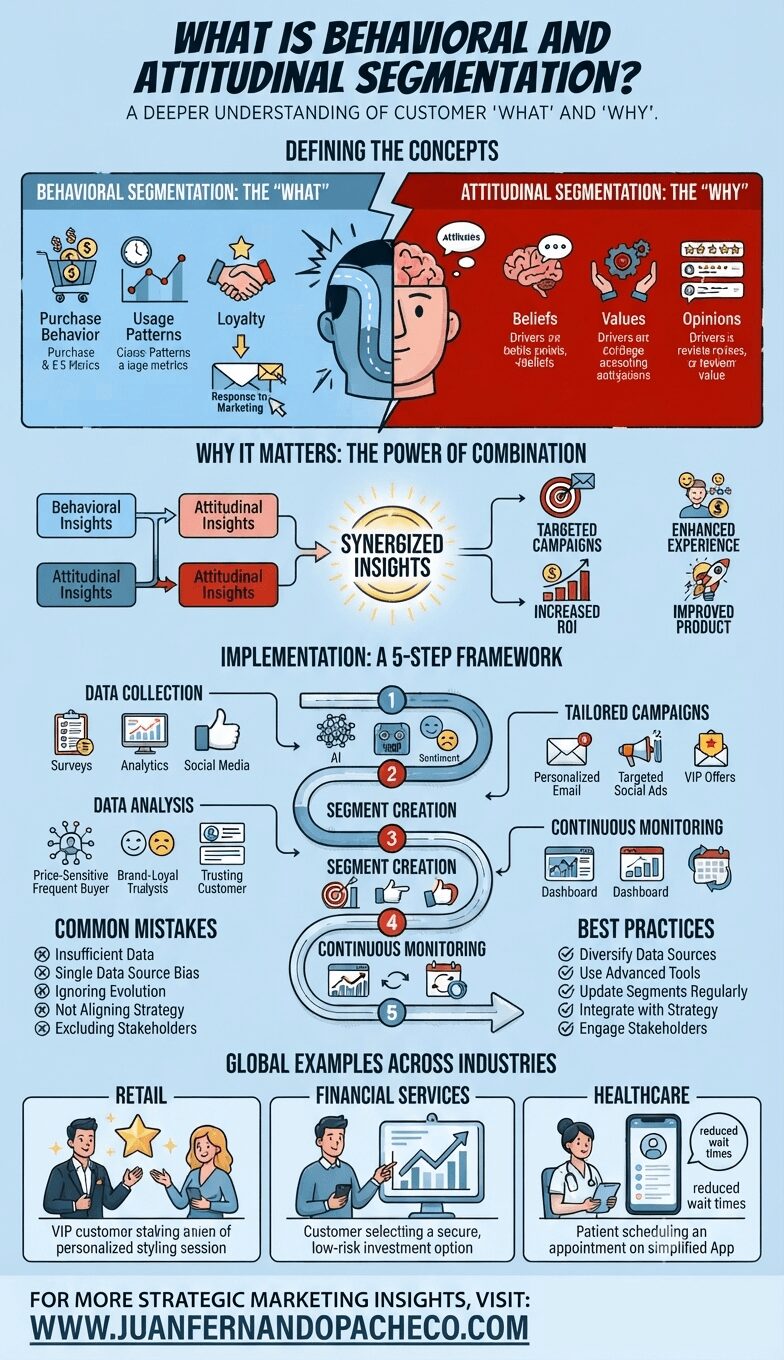
An infographic titled 'What is Behavioral and Attitudinal Segmentation?' illustrating a comprehensive marketing framework. It defines behavioral segmentation (the 'What') and attitudinal segmentation (the 'Why'), shows their combined power for 'Synergized Insights,' outlines a five-step implementation framework, details common mistakes and best practices, and provides global industry examples for retail, financial services, and healthcare. The infographic concludes with a call-to-action for WWW.JUANFERNANDOPACHECO.COM.

Behavioral and attitudinal segmentation is a powerful strategy for marketers aiming to connect with their audience on a deeper level. By understanding both what customers do and why they do it, businesses can craft personalized experiences that drive engagement and loyalty. By avoiding common pitfalls and following best practices, organizations can maximize the effectiveness of their segmentation efforts, ultimately leading to stronger customer relationships and improved ROI.