.](https://juanfernandopacheco.com/wp-content/uploads/2026/08/Influence-Skills-From-Insight-to-Action-for-Strategists.png)
Strategy fails more often in the room than in the analysis. This post breaks down the three influence skills — synthesis, storytelling and decision making — with practical habits that keep working no matter the year, the tool or the market.
Month: August 2026
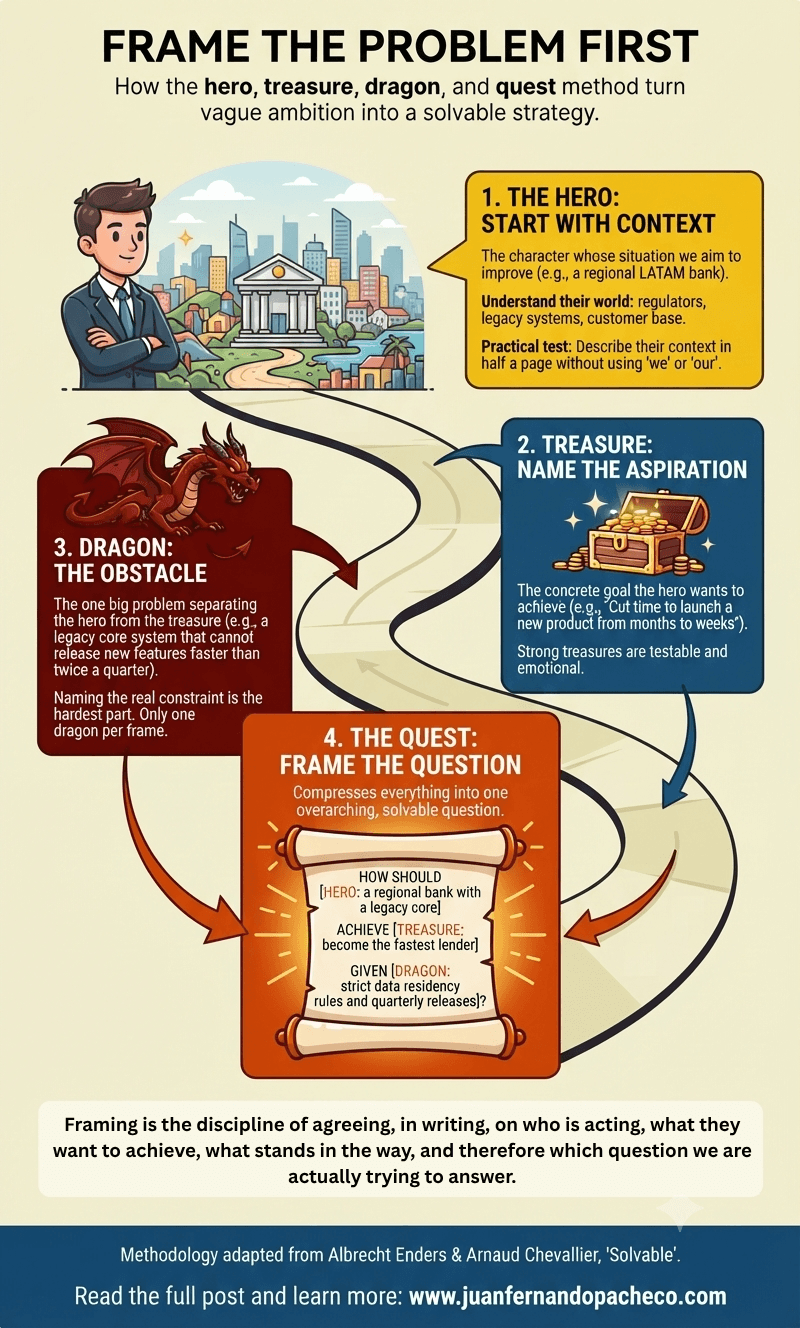
Most strategies and enterprise deals fail because teams rush to solve a problem nobody bothered to define. This post walks through a simple four part framing method (hero, treasure, dragon, quest) and shows how to apply it to products, sales deals and RFx processes so your effort always lands on the real issue.
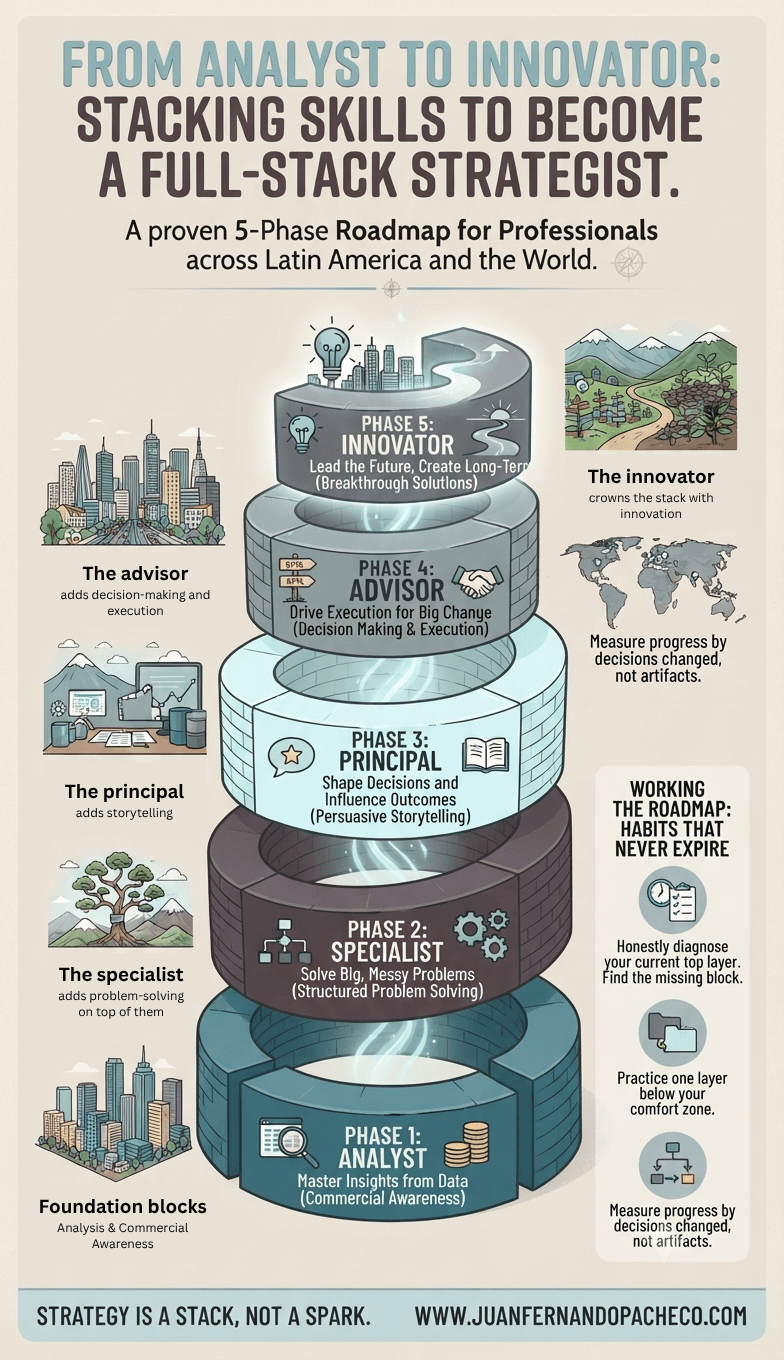
Strategy is not a title you are given; it is a stack of skills you build in a deliberate order. This post walks the five-phase roadmap — analyst, specialist, principal, advisor, innovator — and translates each layer into habits you can practice in any market, in any era.
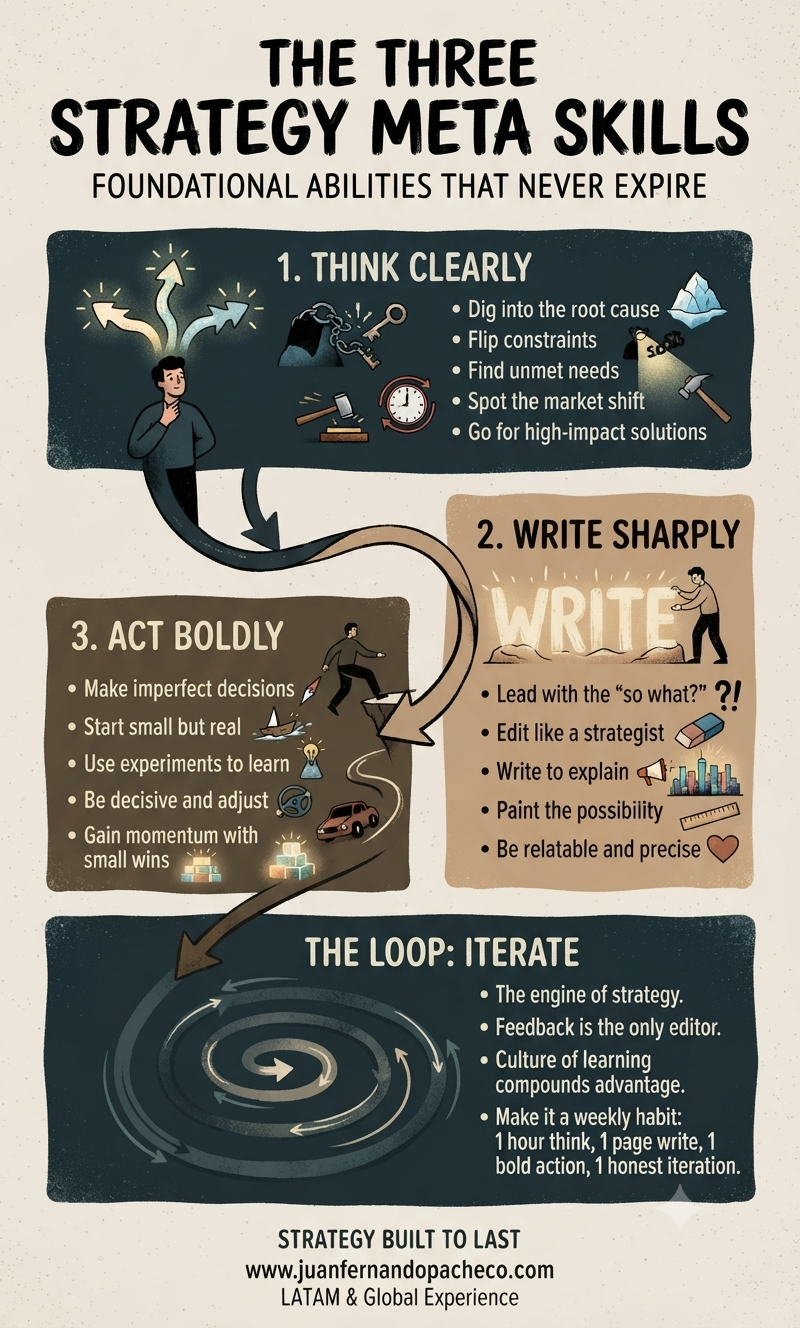
The three strategy meta skills that never expire. Most strategy fails quietly – fuzzy thinking, vague writing, hesitant execution. This post breaks down the three strategy meta skills (think clearly, write sharply, act boldly) and the iteration loop that turns them into a durable advantage, with lessons from two decades of product and deal leadership across Latin America.
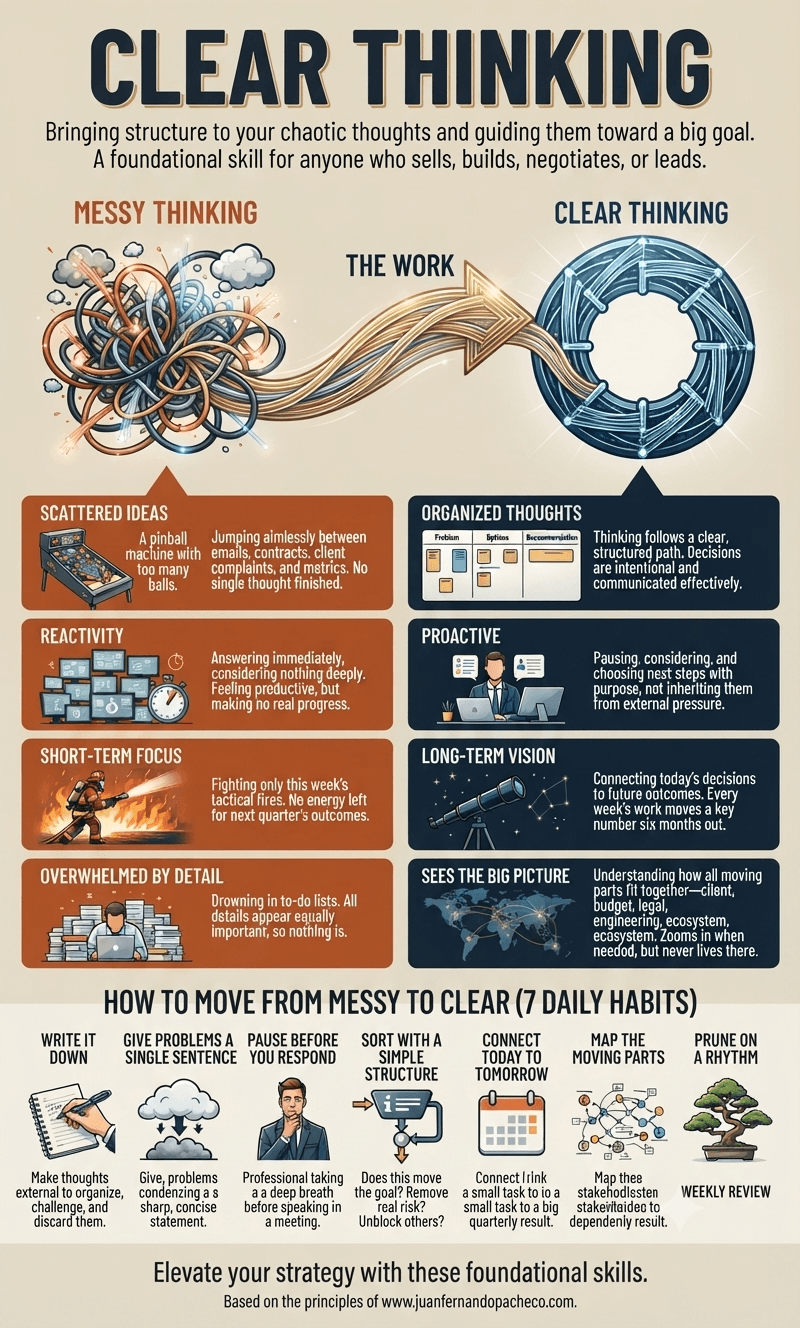
Clear thinking is the practice of bringing structure to your thoughts and guiding them toward a big goal, instead of juggling too many at once. This post looks at how messy thinking shows up in real commercial and product work, and how to build the organized, proactive, long-term habits that turn noise into judgment.
![An infographic titled "The Point of View Strategy Formula" on a light green background, illustrating a three-step process of Insight, Action, and Outcome. The Insight section shows an iceberg labeled "HUMAN TRUTH," the Action section shows a gear mechanism, and the Outcome section shows an upward-trending graph with a rocket. Below the steps, the formula reads: "This [key insight] means we should do [action] and it will create [outcome]." It includes sections on "Common Shallow Traps to Avoid" and "Case Examples" for a Designer, Business Developer, and Career Manager. The footer contains the URL "www.juanfernandopacheco.com".](https://juanfernandopacheco.com/wp-content/uploads/2026/08/The-Point-of-View-POV-Strategy-Formula-Infographic.png)
A clear point of view is the smallest usable unit of strategy. This guide breaks down the insight–action–outcome formula, shows how to pressure-test each part, and applies it to product decisions, enterprise deals, and career moves — as useful today as it will be in five years.
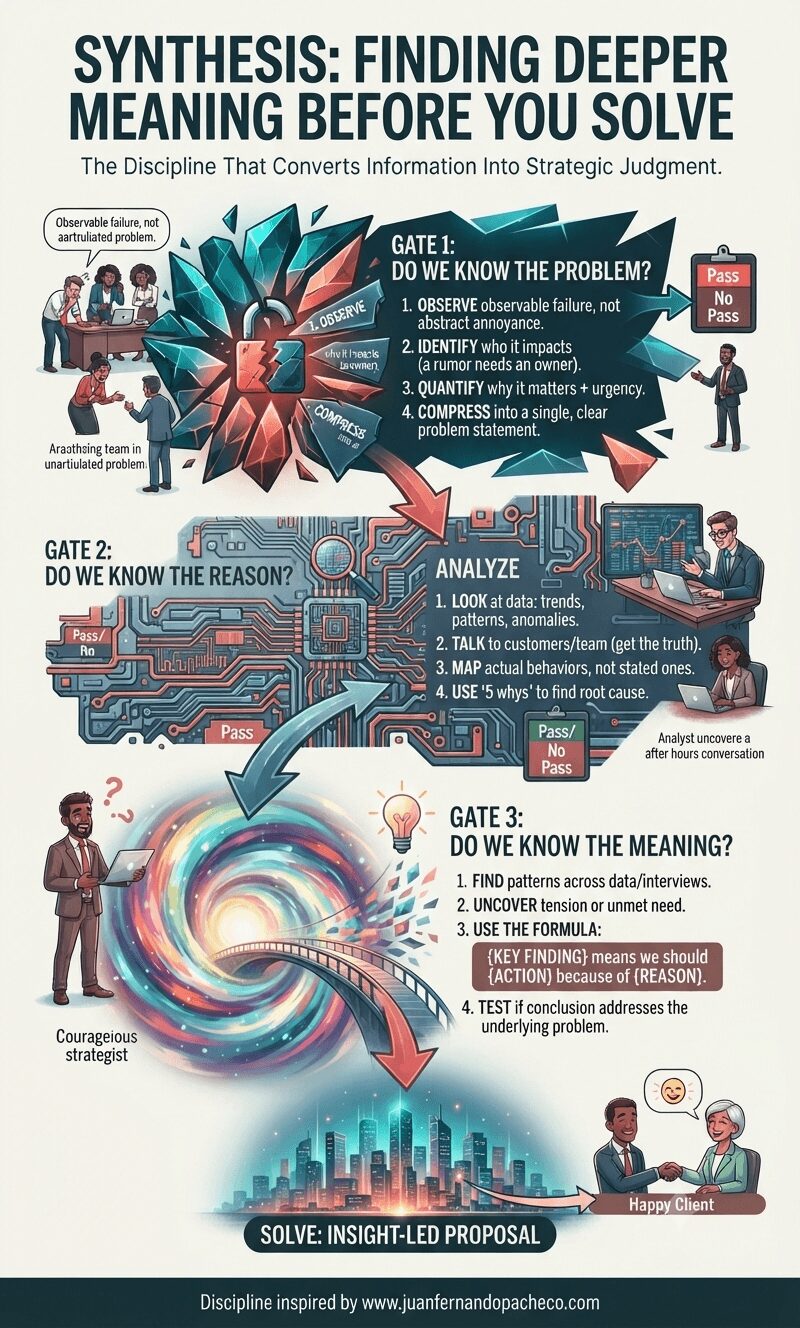
A practical, evergreen field guide to the define–analyse–synthesise map: know the problem, know the reason, know the meaning, and only then solve. Written for product people, strategists and commercial leaders who want decisions that hold up for years, not quarters.
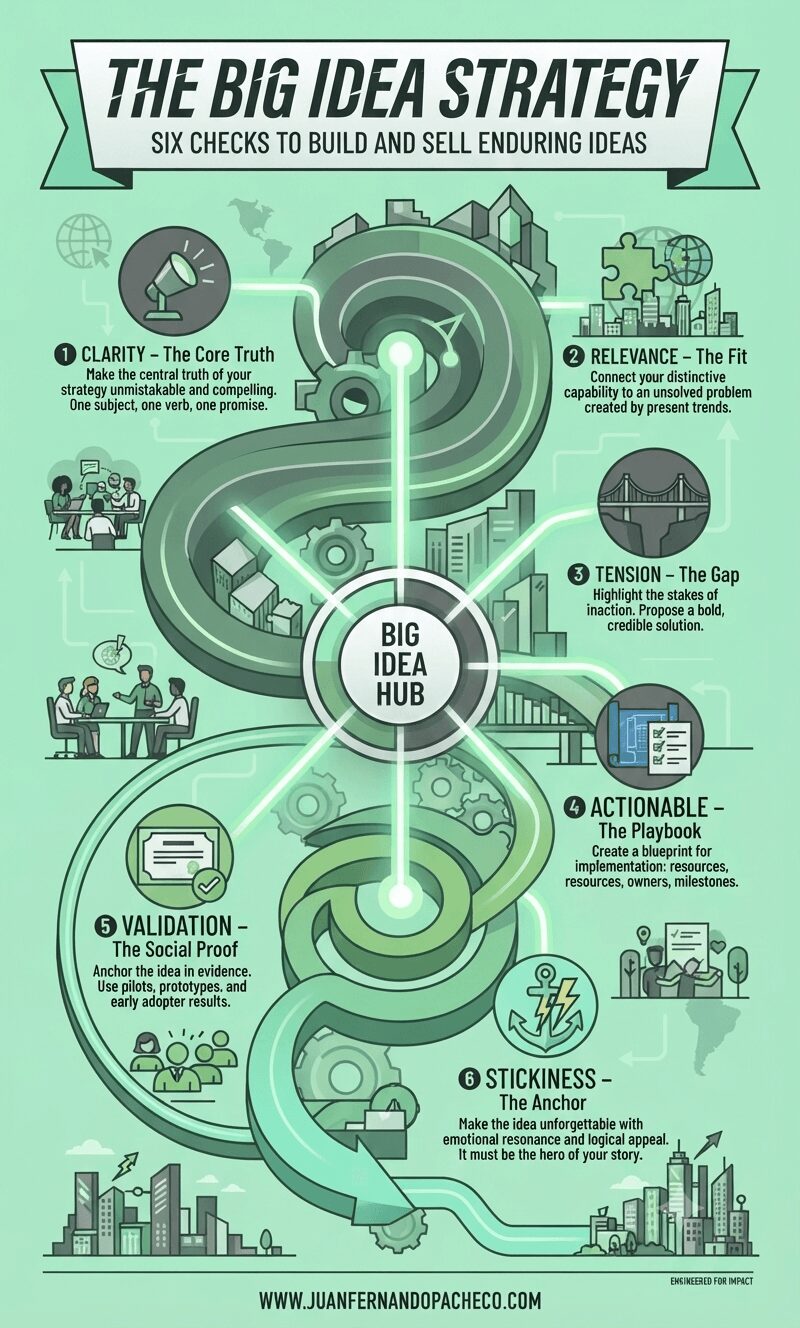
The big idea is the central, unifying concept that gives a strategy purpose, momentum and difference. This post walks through the six checks – clarity, relevance, tension, an actionable playbook, validation and stickiness – and shows how to apply them to products, plans and high-stakes enterprise deals.
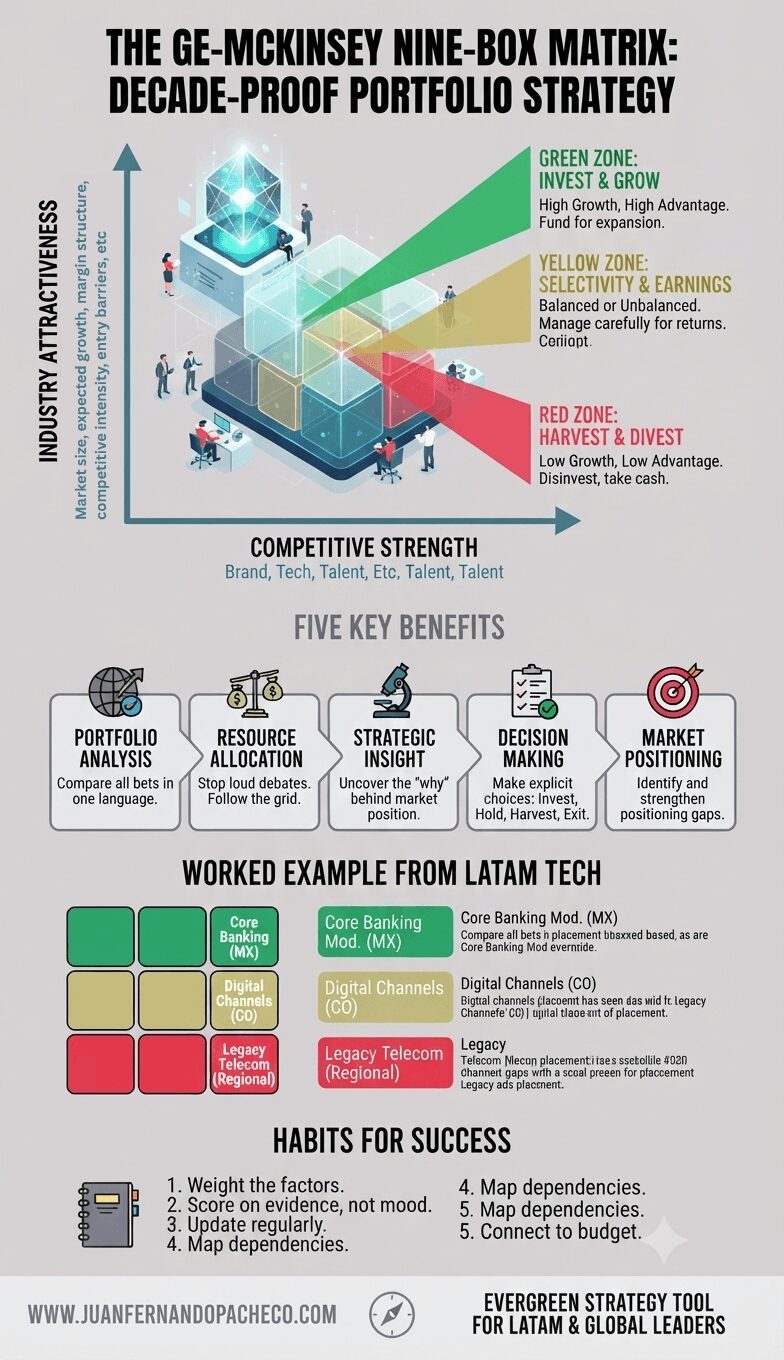
A field-tested, plain-language guide to the GE-McKinsey nine-box matrix, from scoring the two axes honestly to turning the nine boxes into clear invest, hold, and exit decisions. Written for leaders who manage products, services, markets, or deal pipelines and want a portfolio tool that stays useful for years.
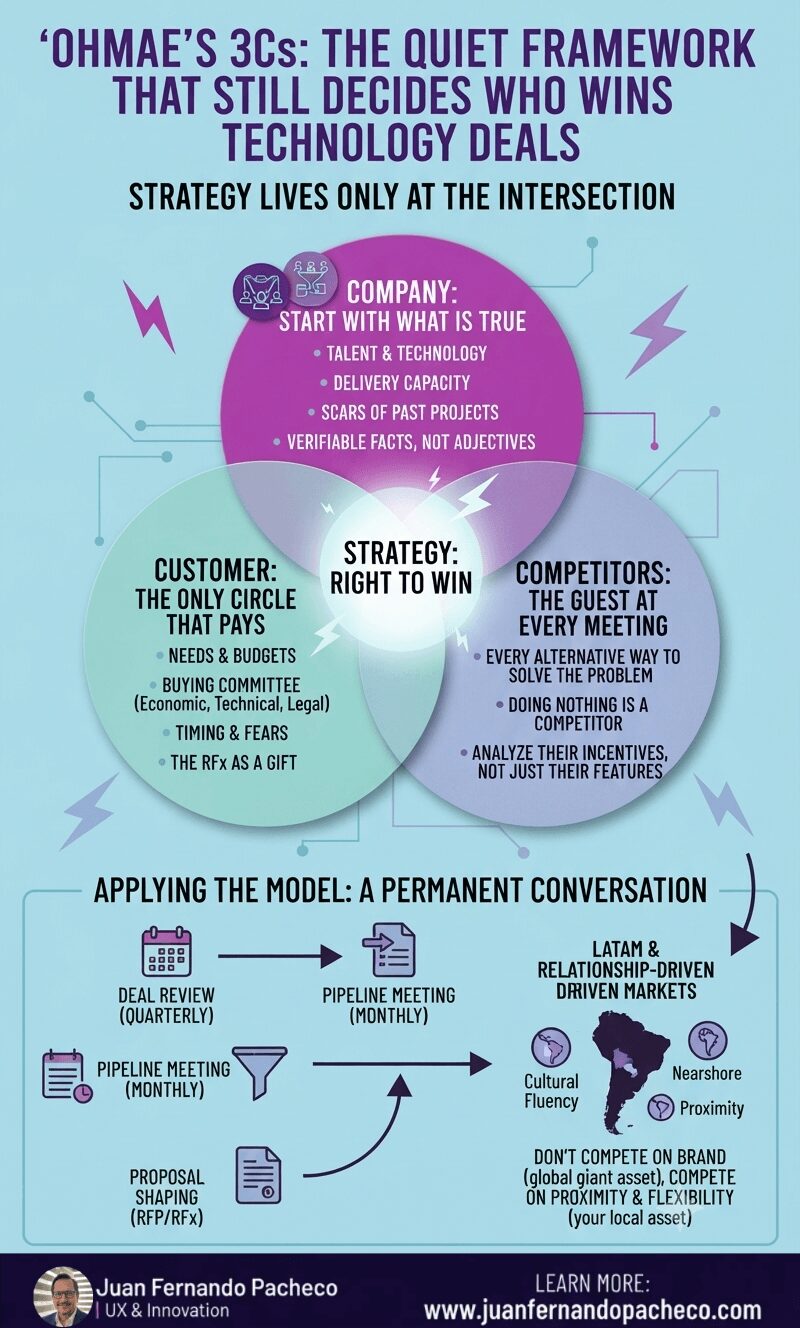
Ohmae’s 3Cs — company, customer and competitors — remain one of the clearest tests of whether a strategy actually exists. This post explains the triangle in plain language and shows how to use it in offers, RFx responses and LATAM deal strategy, today and five years from now.
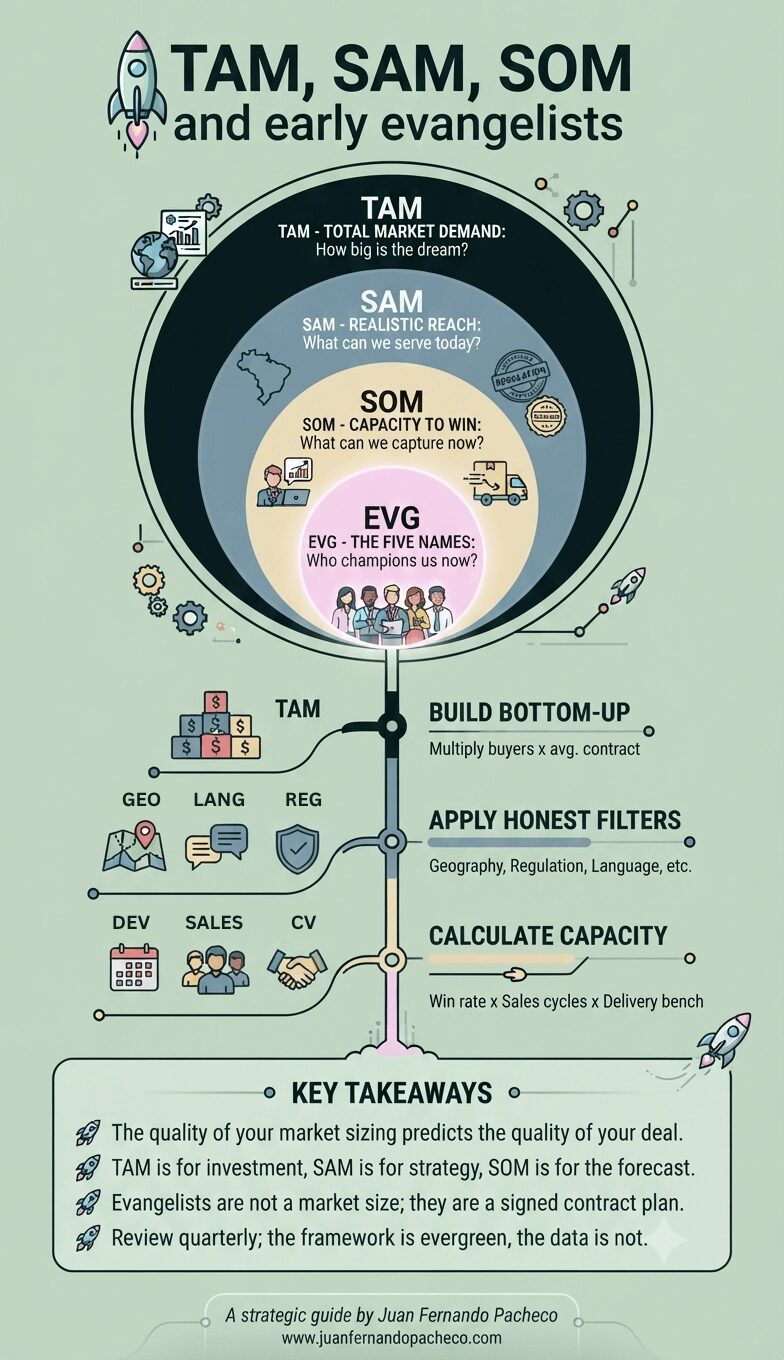
A plain-language, evergreen guide to the tam sam som framework and the early evangelist layer that turns market maps into signed contracts. Written from more than twenty years of designing, selling and delivering technology across Latin America.
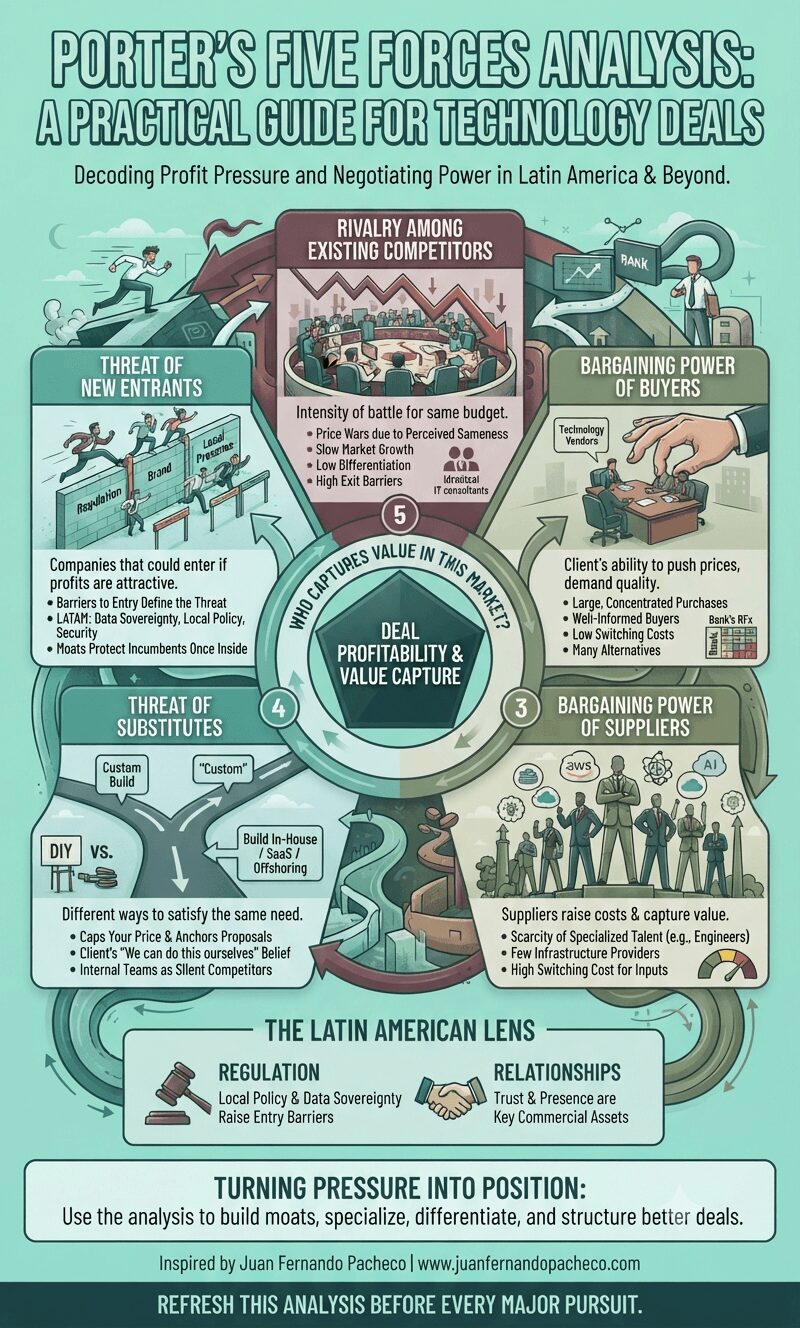
For most of my career, I learned to read those pressures by instinct, deal by deal, loss by loss.
Then I realized Michael Porter had already given us a disciplined way to see them in advance. His five forces model, first published in 1979, is still one of the most practical strategy tools ever created, not because it is sophisticated, but because it forces you to look beyond the competitors you can name and examine the entire structure of the market you fight in.