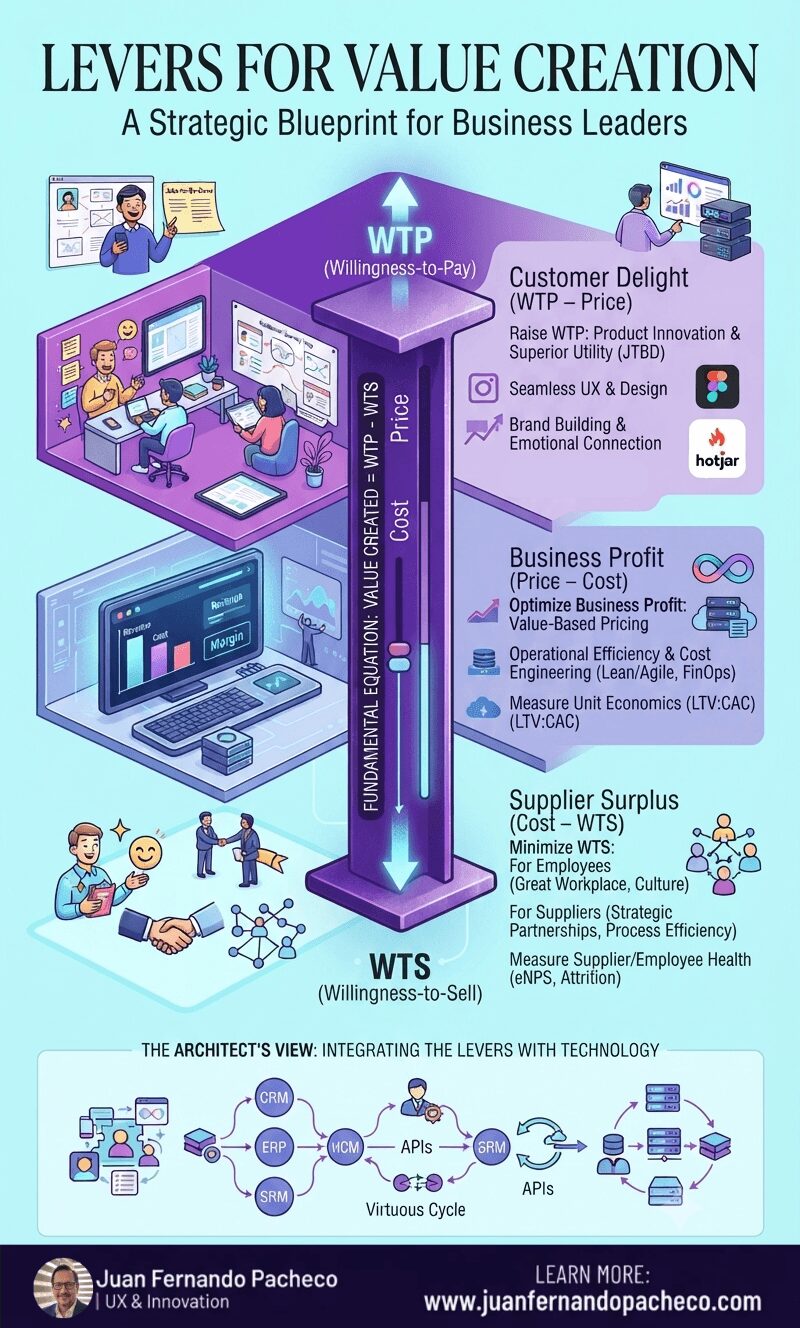
Infographic illustrating the "Levers for Value Creation" framework by Juan Fernando Pacheco, using a central "Value Stick" with WTP and WTS, surrounded by interconnected illustrated sections on Customer Delight, Business Profit, and Supplier Surplus, and an architectural view of technology integration.

The Value Stick is more than a diagram; it is a mindset. It forces a holistic view of your business ecosystem. You cannot win by delighting customers while exploiting employees. You cannot sustain profit by cutting costs without regard for the value you destroy.

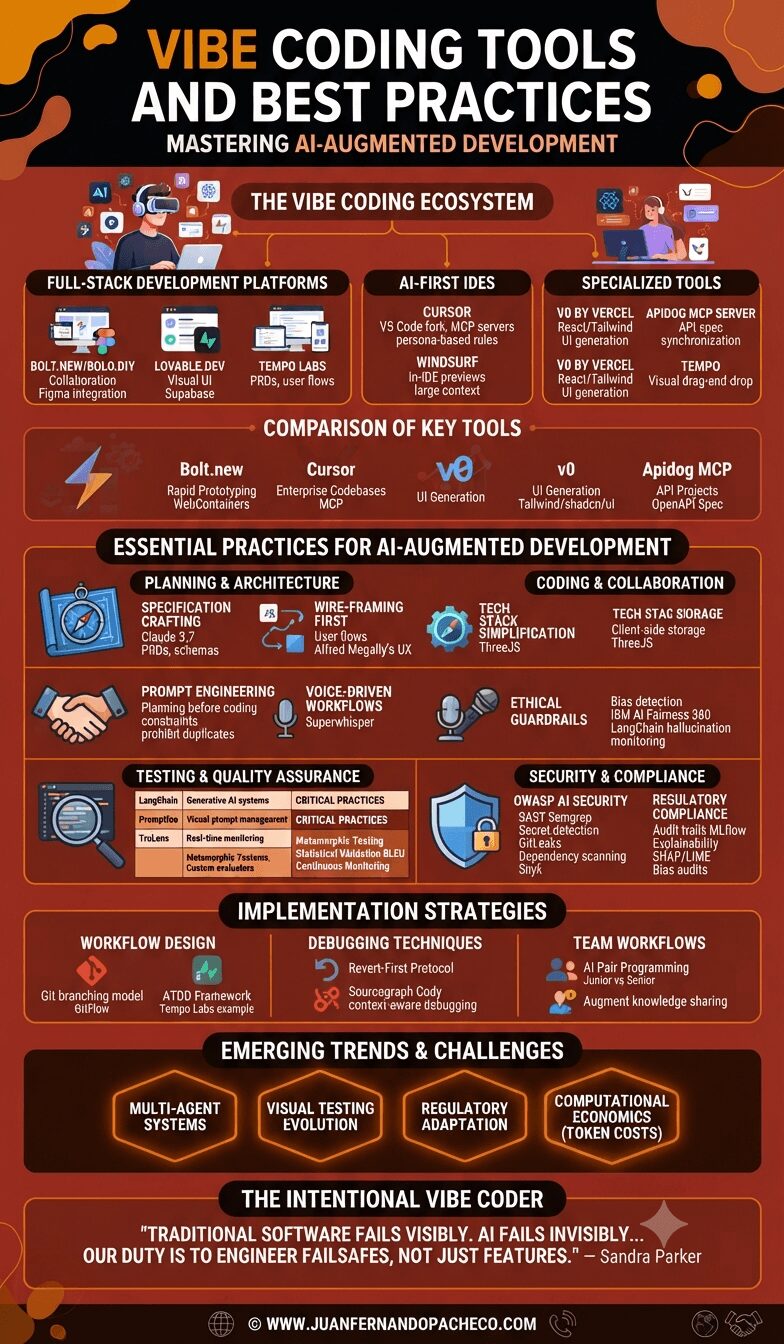
A comprehensive vertical infographic titled "Vibe Coding Tools and Best Practices" set against a dark reddish-brown background with sections detailing AI development ecosystems, tool comparisons, architectural practices, testing, security, and implementation strategies, concluding with a quote by Sandra Parker and the website WWW.JUANFERNANDOPACHECO.COM.

Vibe coding transforms natural language into functional code through AI-powered tools, creating a paradigm shift where developers prioritize intention over implementation.

Coined by Andrej Karpathy, this approach enables programmers to “vibe” with their creative flow rather than wrestle with syntax.
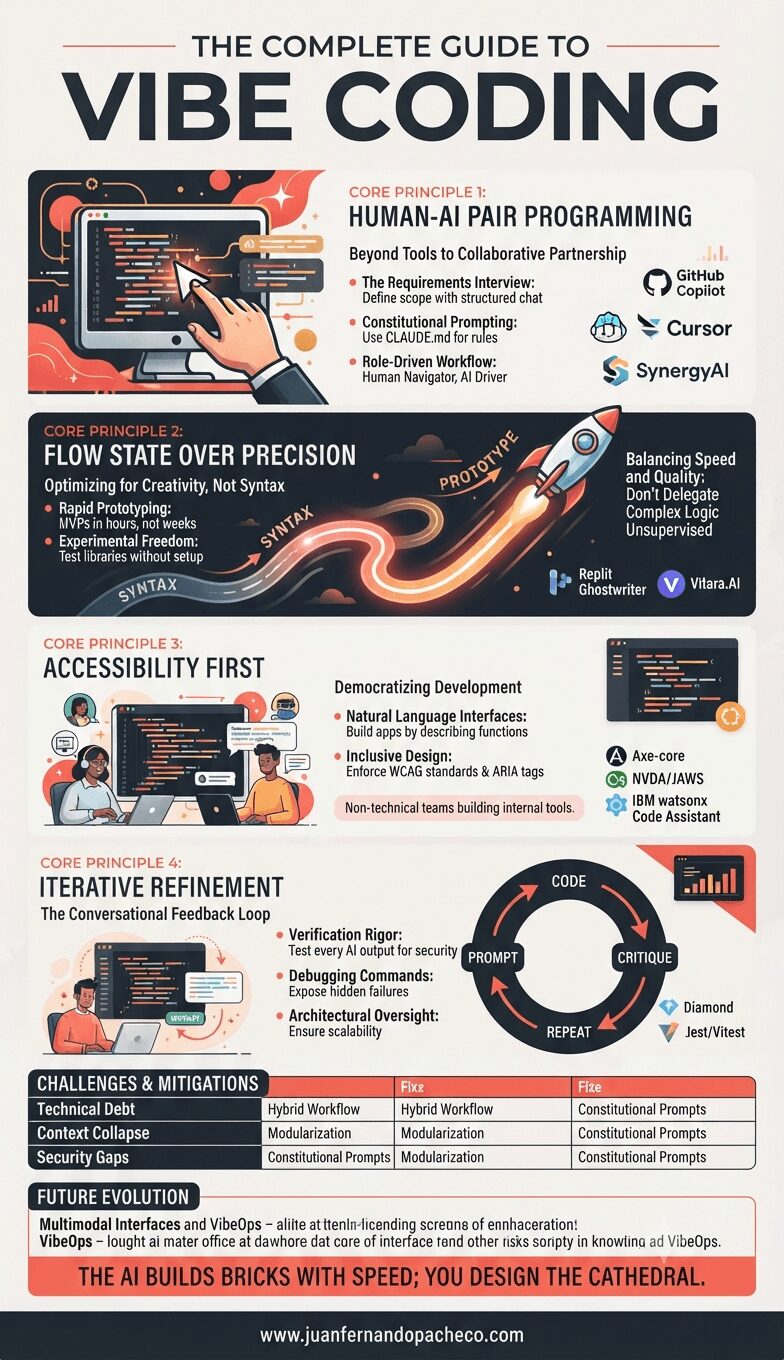
An infographic titled "THE COMPLETE GUIDE TO VIBE CODING," presenting a structured overview of AI-driven software development. The visual is divided into four main sections: "Human-AI Pair Programming," "Flow State Over Precision," "Accessibility First," and "Iterative Refinement." Each section uses diagrams, icons, and bullet points to explain core principles, practices, and lists relevant tools like GitHub Copilot and Replit. The bottom includes a challenges matrix and future predictions, with the quote, "THE AI BUILDS BRICKS WITH SPEED; YOU DESIGN THE CATHEDRAL." The background is light beige with accents of deep red and dark charcoal.

Coined by AI researcher Andrej Karpathy in 2025, vibe coding transcends traditional programming by treating natural language as the primary interface between human intent and machine execution.

For UX designers and architects like us, this represents more than a productivity boost—it’s a fundamental shift in how we translate vision into reality.
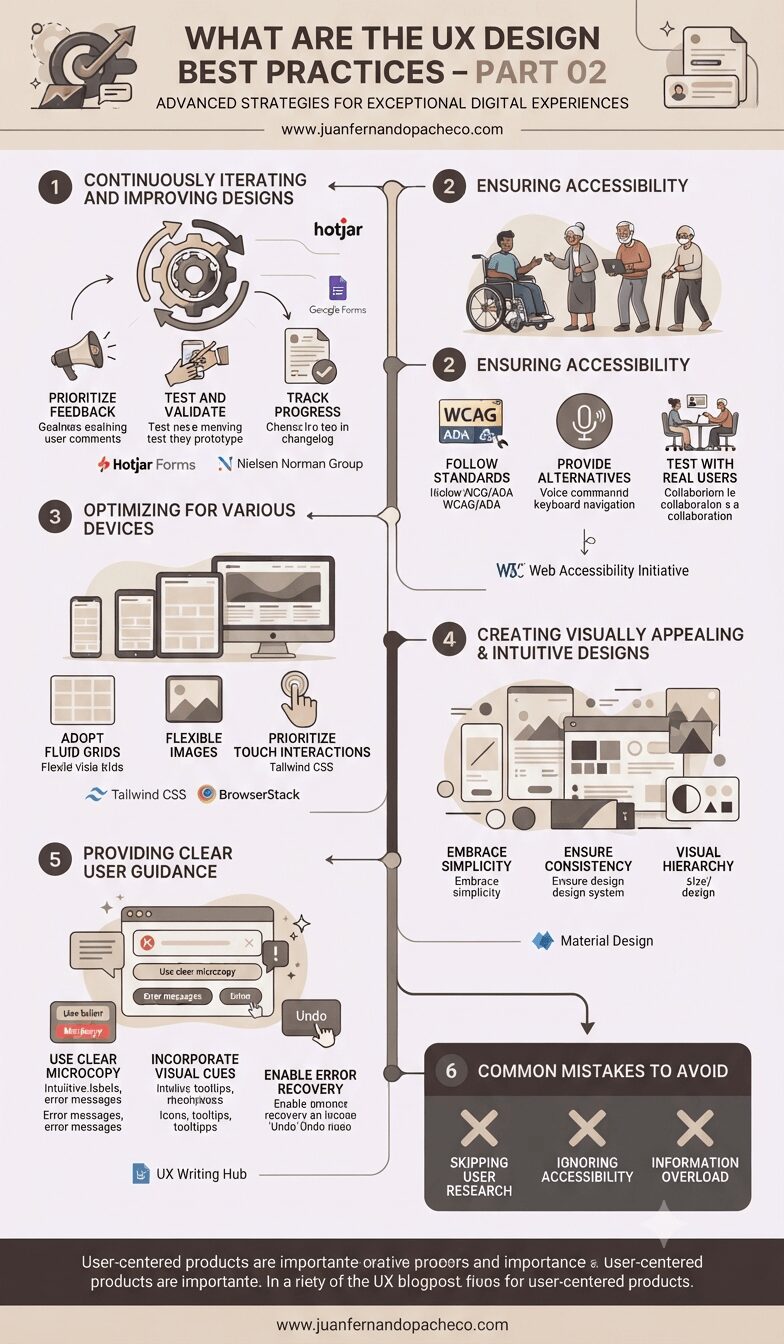
An infographic titled "WHAT ARE THE UX DESIGN BEST PRACTICES – PART 02" from www.juanfernandopacheco.com, presented in a vertical timeline format against a muted, professional background. It details six strategic steps: 1. Iterating based on feedback (with Hotjar and Nielsen Norman Group resources); 2. Ensuring accessibility (following WCAG/ADA standards and including a diverse group of users); 3. Optimizing for various devices (using fluid grids and tools like Tailwind CSS and BrowserStack); 4. Creating visually appealing designs (referencing Material Design and visual hierarchy); 5. Providing clear guidance (including microcopy and error recovery); and 6. Avoiding common mistakes (skipping research, ignoring accessibility, and information overload).

Adhering to UX design best practices ensures the creation of intuitive, inclusive, and visually compelling digital experiences. By embracing continuous iteration, prioritizing accessibility, optimizing for diverse devices, crafting intuitive designs, and providing clear guidance, designers can deliver products that delight users and drive engagement.