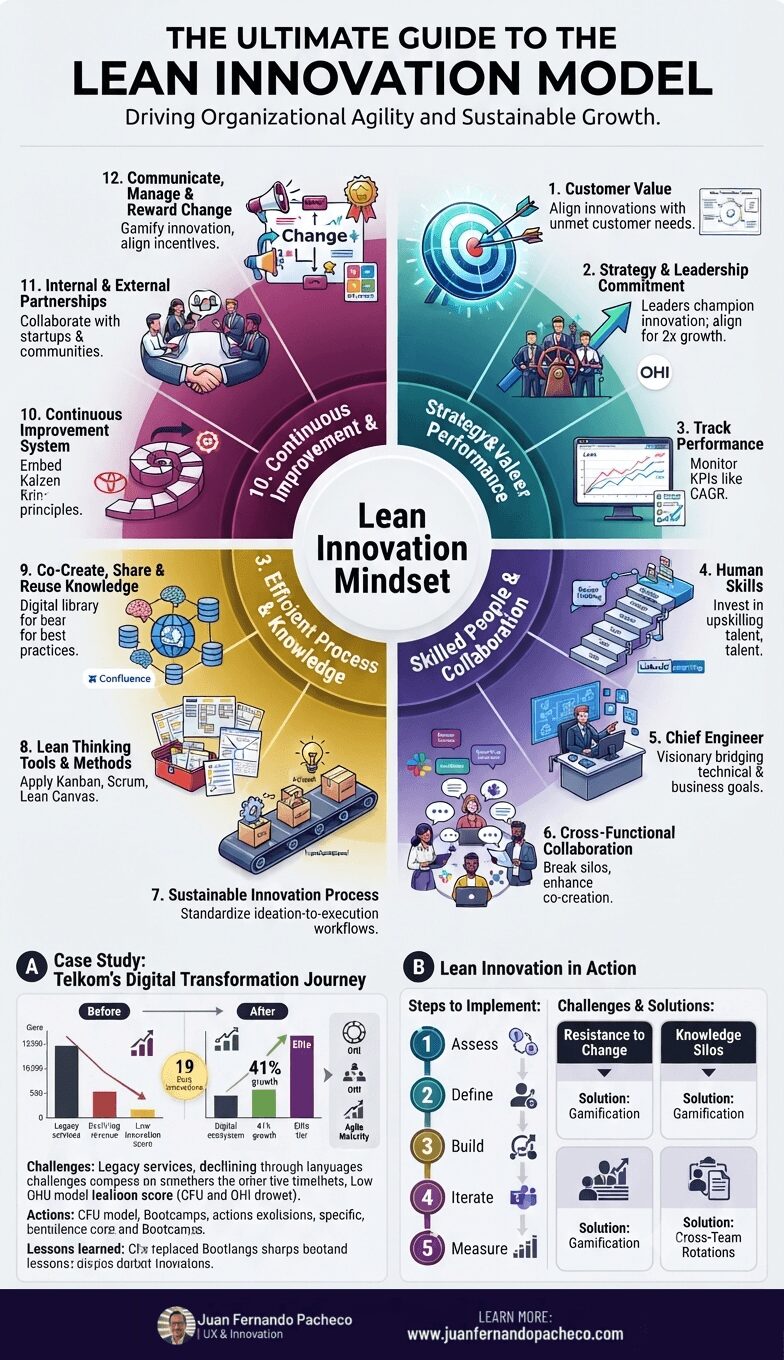
Infographic titled "THE ULTIMATE GUIDE TO THE LEAN INNOVATION MODEL," featuring a circular diagram divided into four colored quadrants representing 12 enablers (strategy, skills, process, continuous improvement). Below the main diagram are two sections: (A) a case study of Telkom's digital transformation with before/after charts, and (B) an implementation guide detailing steps, challenges, and solutions. The overall aesthetic is professional and data-driven.

The Lean Innovation Model isn’t just a framework—it’s a mindset. By integrating customer value, agile structures, and continuous learning, organizations like Telkom can thrive in disruption.

Start your journey by auditing organizational health and embedding lean principles into every process.
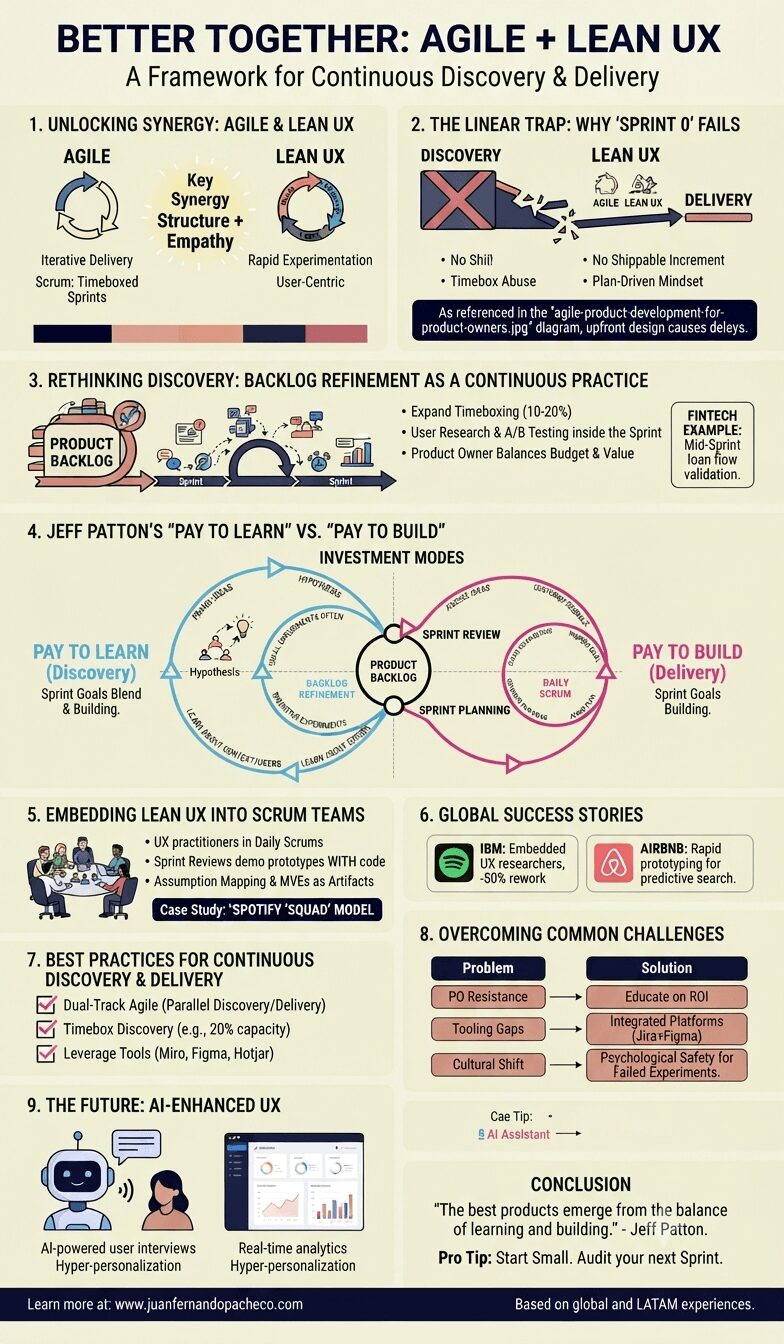
A detailed vertical infographic titled "Better Together: Agile + Lean UX: A Framework for Continuous Discovery & Delivery." The image is organized into nine numbered sections with illustrations, icons, and text, utilizing a color palette of cream, navy, pink, peach, and dark blue. It details how to integrate Lean UX principles like continuous discovery and "Pay to Learn" into Agile Scrum rituals, and includes case studies from Spotify, IBM, and Airbnb, as well as future trends like AI. The central diagram visually merges "Pay to Learn" and "Pay to Build" cycles.

Agile + Lean UX are not competing frameworks—they’re complementary forces. By embedding continuous discovery into Sprints, teams can deliver value faster while staying user-centric. As Jeff Patton says, “The best products emerge from the balance of learning and building.”

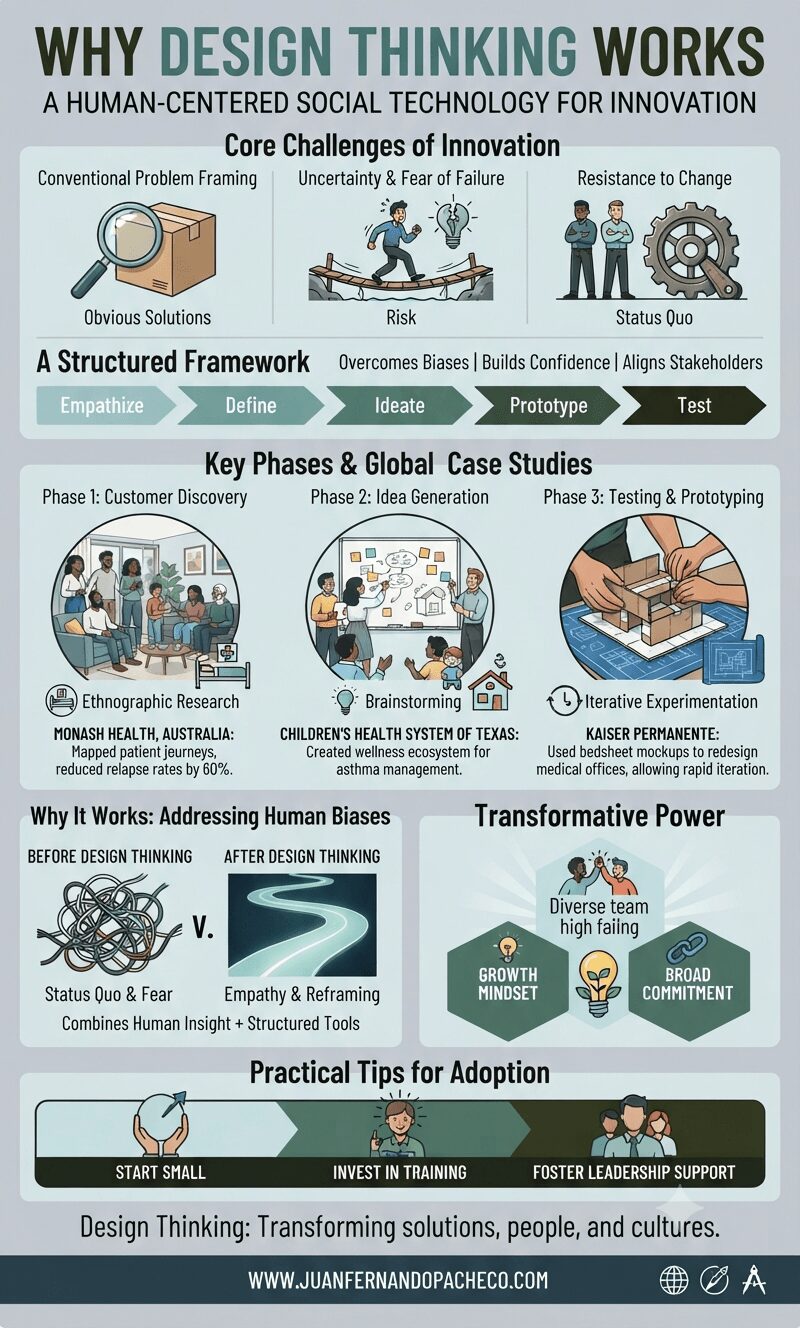
An infographic titled "Why Design Thinking Works" detailing the methodology's core principles, phases, and impact through text blocks and illustrations, including global case studies from Monash Health, Children's Health System of Texas, and Kaiser Permanente. The footer includes the URL WWW.JUANFERNANDOPACHECO.COM.

Design Thinking works because it combines the best of human insight with structured tools to drive innovation.

By addressing biases, fostering collaboration, and emphasizing empathy, it transforms not only the solutions organizations create but also the people and cultures behind them. As a social technology, its potential to reshape industries is unparalleled, making it a cornerstone of modern innovation strategies.

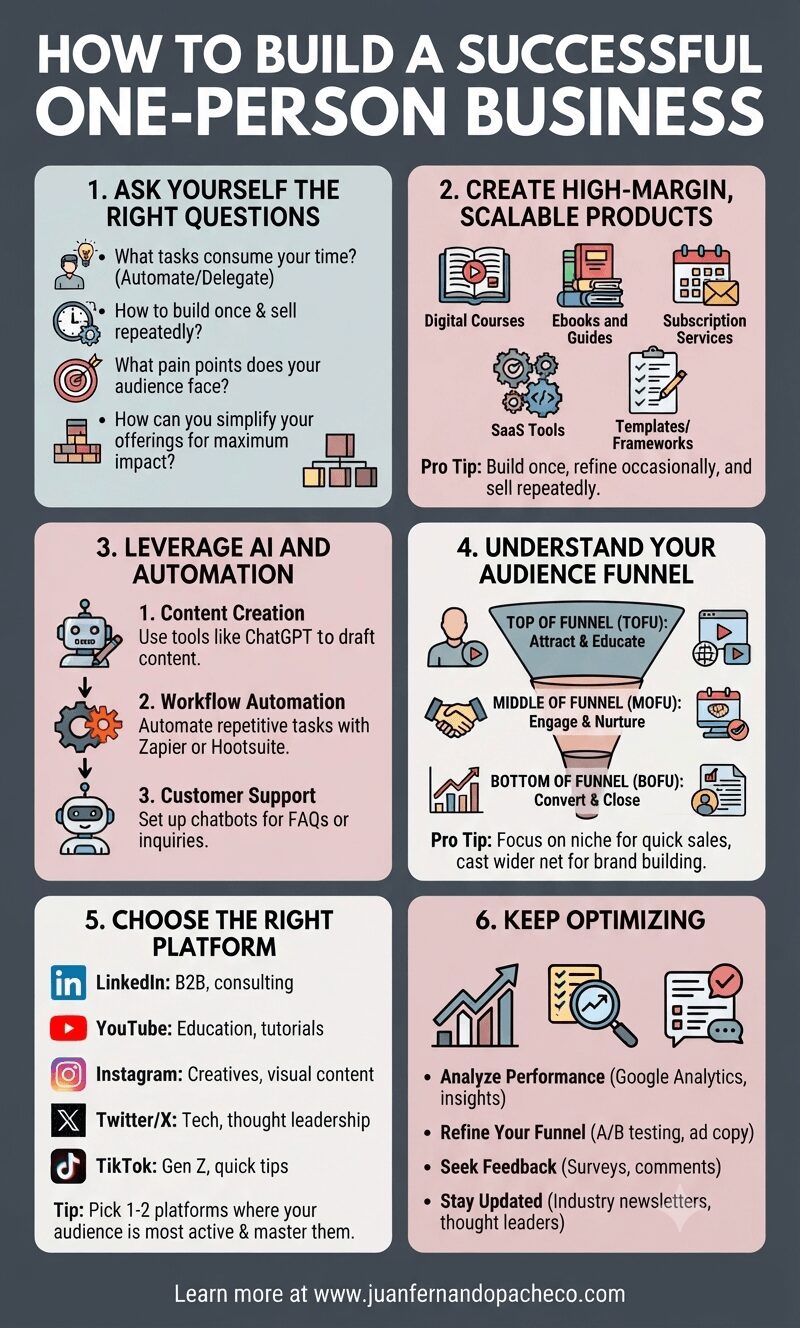
An infographic titled "How to Build a Successful One-Person Business," outlining six steps: asking the right questions, creating scalable products, leveraging AI, understanding the audience funnel, choosing platforms, and continuous optimization. Includes a URL for www.juanfernandopacheco.com at the bottom.

Building a one-person business is an exciting and rewarding journey. By asking the right questions, leveraging scalable products, automating workflows, and optimizing continuously, you can create a sustainable venture that aligns with your passions and skills.

Remember, consistency and adaptability are your greatest assets. Whether you’re just starting or looking to refine your business, the steps outlined here will help you achieve success.

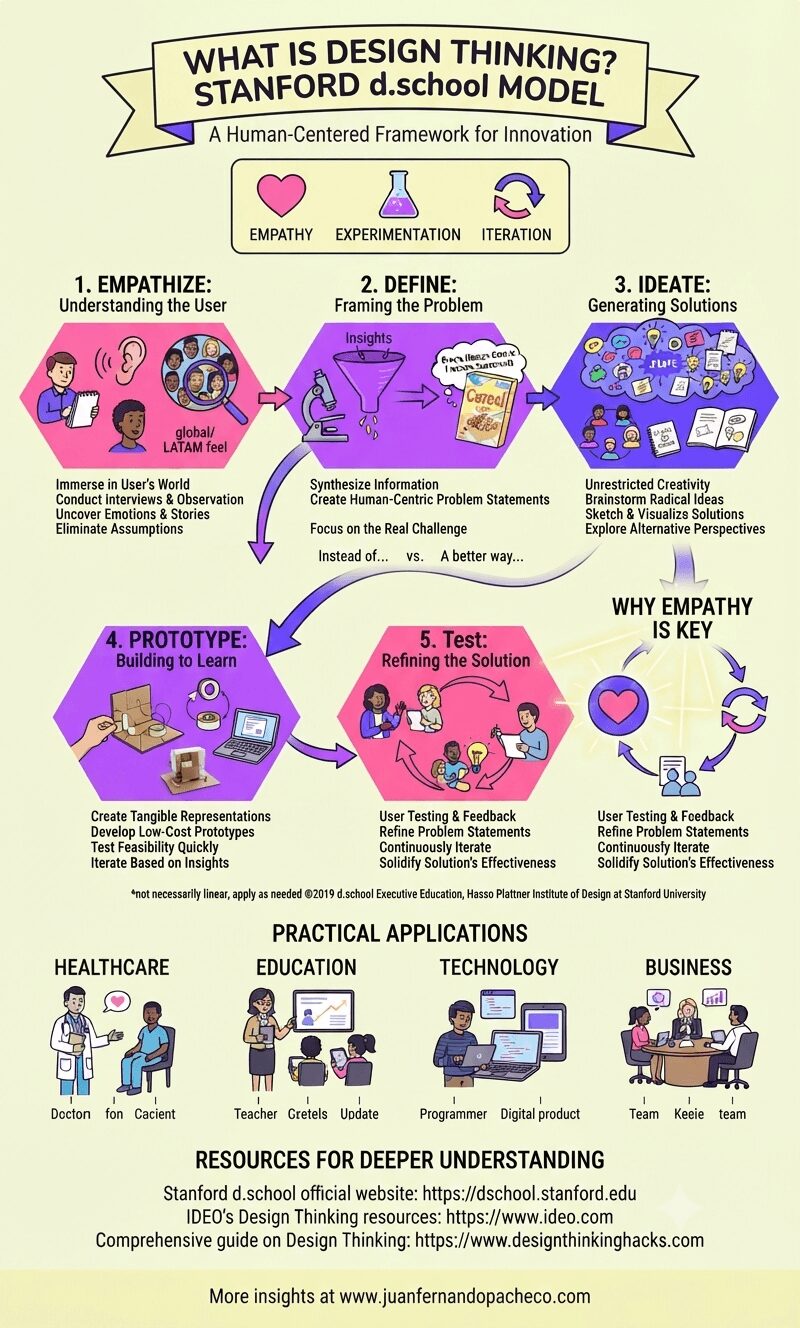
Infographic illustrating the five stages of the Stanford d.school Design Thinking model: Empathize, Define, Ideate, Prototype, and Test, presented as an interconnected, non-linear process with examples and applications for a global and LATAM context.

The Stanford d.school’s Design Thinking model is more than a methodology; it’s a mindset that fosters creativity, innovation, and human-centered problem-solving.

By emphasizing empathy, iteration, and flexibility, it equips teams to tackle complex challenges and deliver impactful solutions.

Whether you’re a seasoned designer or a newcomer to the field, embracing this model can transform how you approach problems, unlocking new possibilities for success.

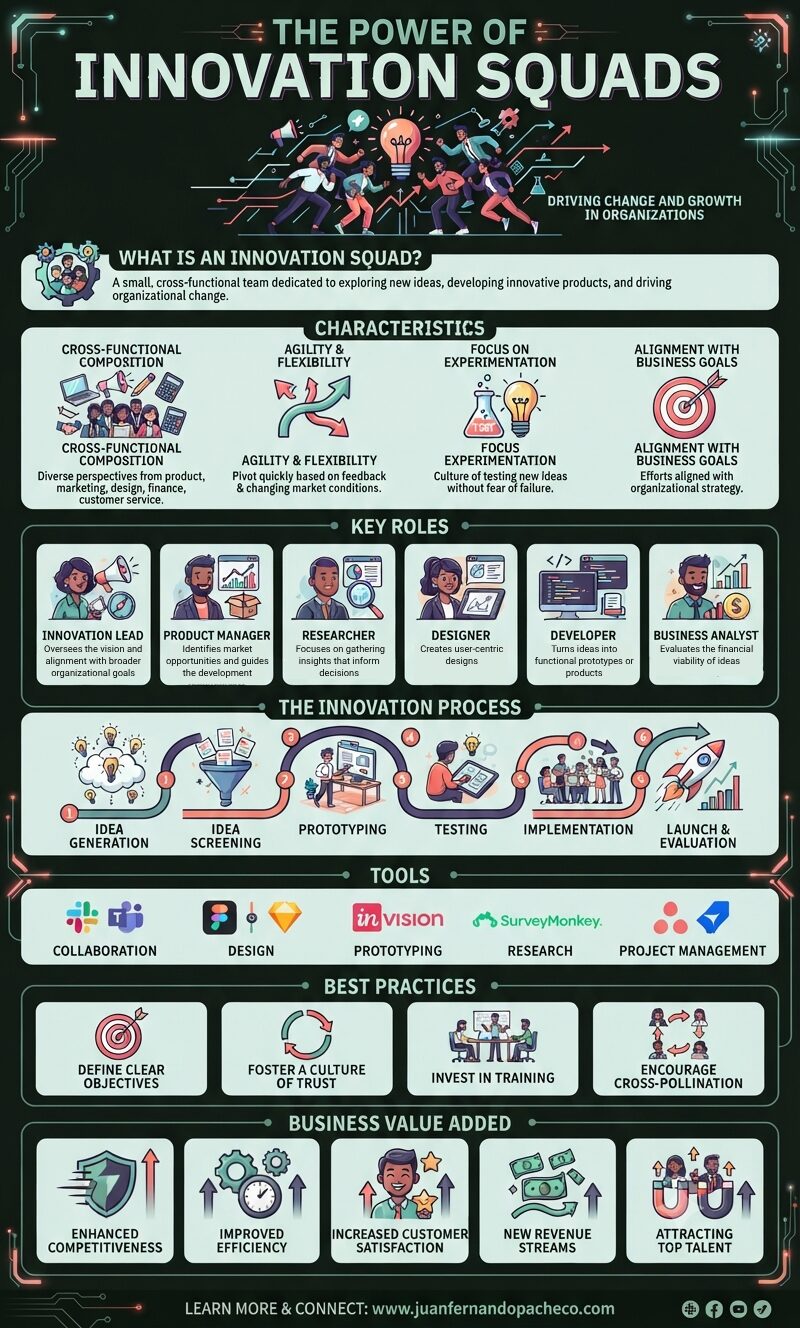
An infographic titled "The Power of Innovation Squads: Driving Change and Growth in Organizations" summarizing team roles, processes, and tools against a dark background.

Innovation squads represent a transformative approach to problem-solving and growth in modern organizations. By embracing cross-functional collaboration and fostering a culture of trust and experimentation, companies position themselves to thrive amidst uncertainty.

As we venture into the future, nurturing environments that prioritize creativity and innovation will be pivotal to unlocking new opportunities and achieving sustained success.